Equateur occupies a second-floor address in Moto Azabu, the quieter residential quarter of Roppongi that Tokyo's dining regulars know as a stronghold of serious French cooking. The room draws a loyal clientele who return not for spectacle but for the kind of precision and consistency that defines Tokyo's French dining tier at its most focused. It belongs to a city where European technique and Japanese ingredient standards routinely intersect at a high level.
- Address
- 3-6-34 2F Moto Azabu, Roppongi, Tokyo, Japan
 Saves & bookings on Pearl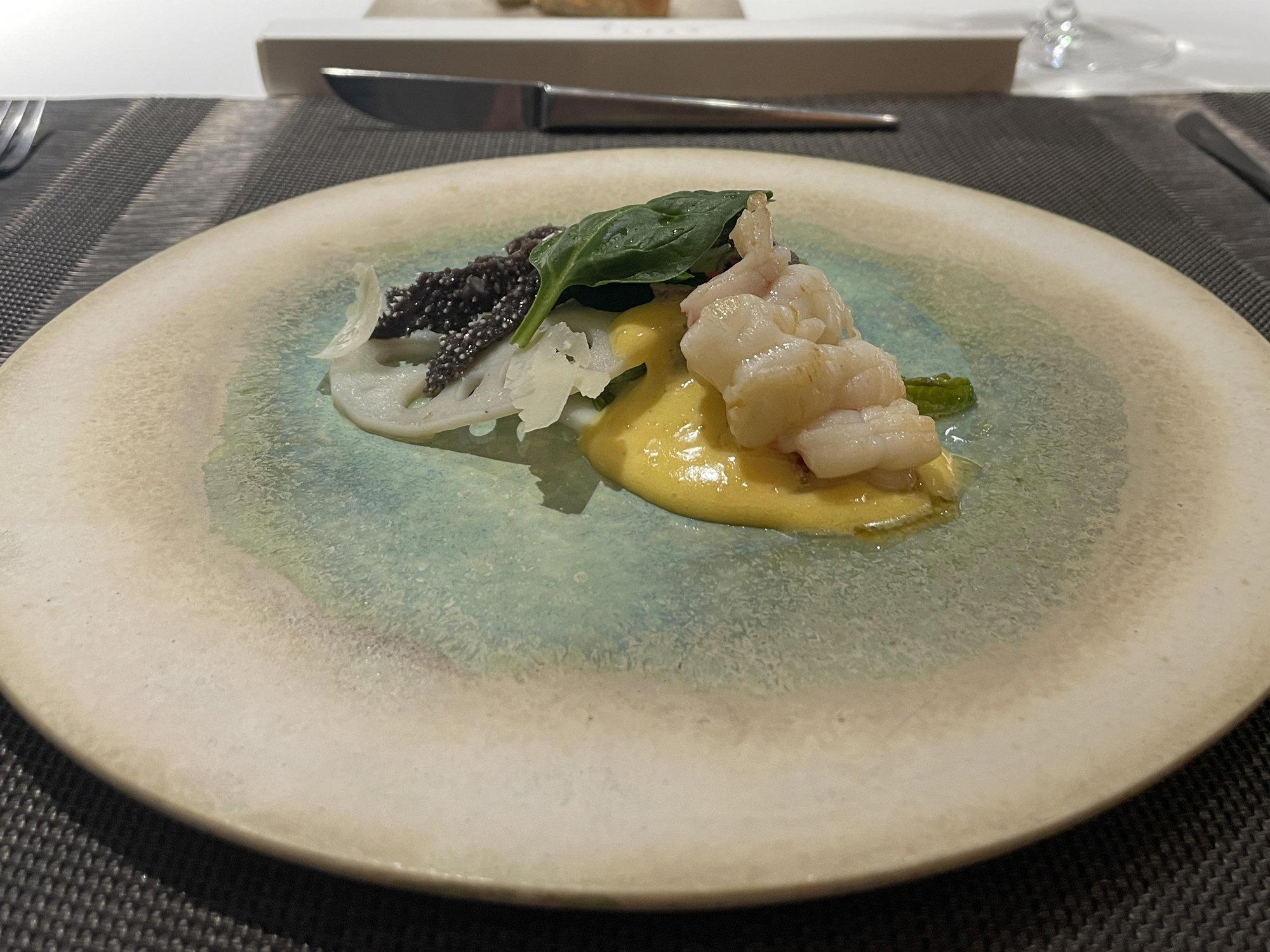
A Second-Floor Room in Moto Azabu, and What That Address Says
Equateur is a French-Chinese Fusion Tasting Menu restaurant in Moto Azabu, Tokyo, with a price tier of 4 and an estimated spend of about $450 per person. Moto Azabu sits behind the louder Roppongi main drag, in a part of Tokyo where embassies, long-tenured French restaurants, and quietly serious wine bars share the same low-rise residential blocks. Second-floor rooms on streets like this are not accidents of real estate, they are choices. The clientele who find their way up to Equateur are not browsing; they already know where they are going, and that self-selection shapes the atmosphere inside more than any interior design decision could.
Tokyo's French dining scene has always had a different gravity than its European counterpart. The city runs some of the most technically precise French kitchens outside France, and the competition for loyal regulars in neighbourhoods like Moto Azabu, Minami-Aoyama, and Hiroo is substantial. L'Effervescence and Sézanne, both three-Michelin-star addresses, represent the visible peak of that scene, but the more instructive observation is the depth beneath them: a tier of focused, high-craft rooms that hold long-term regular clientele without necessarily chasing or requiring the same public recognition.
What the Regulars Know
In Tokyo, restaurants with enduring regular clientele tend to earn that loyalty through consistency over novelty. The city's most committed diners are not primarily seeking surprise, they are seeking confirmation that the kitchen is still doing what first made them pay attention. A French room in Moto Azabu that holds repeat visitors does so by maintaining a standard across seasons and staff rotations, a discipline that is harder to sustain than an opening-week performance.
The regulars at a room like Equateur tend to be Tokyo residents with a strong working knowledge of French cooking, the kind of guests who will notice if the butter sauce breaks or if the sourcing has shifted. This is not a room built around spectacle. The draw is the quality of the cooking itself, assessed against a personal benchmark the guest brings through the door.
This contrasts with the format at Crony, the two-Michelin-star address that leans into innovative French-influenced cooking with a younger, more experimental clientele in mind. The two rooms sit in different parts of the same broad category, appealing to different kinds of commitment. Crony rewards curiosity; a room like Equateur rewards familiarity.
French Cooking in Tokyo: The comparable set and the Positioning
Tokyo's French restaurant tier occupies an unusual position globally. The city has more Michelin-starred French restaurants than most French cities outside Paris, and the ingredient standards, particularly for proteins, produce, and dairy sourced domestically or imported through Japan's rigorous supply chains, are among the highest a French kitchen can access anywhere. This raises the floor for every serious French room in the city, including those operating below the three-star tier.
At the three-star level, L'Effervescence has built its reputation around a philosophy of restraint and Japanese-sourced ingredients, while Sézanne under Daniel Calvert has attracted international attention for technically classical French cooking. These rooms define one pole of the market. Equateur's Moto Azabu positioning places it in a different conversation, a neighbourhood-anchored room where the regulars are the reference point, not the annual guide cycle.
For context across Japan's fine dining map, French-influenced technique appears across multiple cities. HAJIME in Osaka and akordu in Nara each work within European frameworks adapted to their local settings, demonstrating that this synthesis of European cooking and Japanese ingredient culture is a nationwide pattern rather than a Tokyo-specific phenomenon.
The Neighbourhood and How to Arrive
Moto Azabu is walkable from Hiroo Station on the Hibiya Line or from Roppongi Station on the Hibiya and Oedo lines, though the residential street grid here rewards knowing your destination address in advance. The area is home to a cluster of long-running French and wine-focused restaurants that have built their clientele over years, and the general atmosphere is quieter and more residential than central Roppongi or Azabu-Juban.
Guests arriving for dinner in this part of Tokyo will find the evening pace more measured than the louder entertainment districts nearby. For those exploring the broader Tokyo dining circuit on the same visit, the neighbourhood's proximity to Hiroo and Azabu-Juban means several other serious restaurants are within reasonable reach.
Tokyo French vs. the Broader Japan Fine Dining Scene
Tokyo's French rooms compete on a playing field that also includes world-class Japanese formats. RyuGin at the kaiseki level and Harutaka in the sushi tier each represent domestic Japanese cooking at its most refined, and the guest choosing between a French room and a kaiseki counter in this city is weighing two equally serious options. The French rooms that thrive in Tokyo do so by offering something distinct: a Western framework applied with Japanese discipline, producing cooking that appeals both to residents who know French cuisine deeply and to international visitors for whom Tokyo has become a destination for French food in its own right.
For visitors tracing fine dining across Japan, comparison points outside Tokyo are worth noting. Gion Sasaki in Kyoto, Goh in Fukuoka, and 1000 in Yokohama each sit in their own city's tier of serious cooking, while 6 in Okinawa represents an outlier format further south. The comparable French-dining conversation in a non-Japan context runs through rooms like Le Bernardin in New York City and Atomix, which approaches French-Korean fine dining from a comparable depth-of-craft position.
Planning Your Visit
Address: 3-6-34 2F Moto Azabu, Roppongi, Tokyo, Japan. Reservations: essential. Getting there: Hiroo Station (Hibiya Line) and Roppongi Station (Hibiya/Oedo lines) are the closest transit options. Dress: smart casual. Budget: about $450 per person.
A Credentials Check
Comparable venues nearby, for context on price, style, and recognition.
| Venue | Cuisine | Price | Awards | Notes |
|---|---|---|---|---|
| EquateurThis venue — the venue you are viewing | French-Chinese Fusion Tasting Menu | $$$$ | , | |
| Izaki | Chinese–Italian Omakase | $$$$ | , | Minato |
| Tapas Molecular Bar | Molecular Fusion Tasting | $$$$ | Chūō | |
| TexturA | Chinese-Spanish Fusion | $$$ | , | Chiyoda |
| Motoyoshi (天ぷら 元吉) | Michelin-Starred Modern Tempura Omakase | $$$$ | , | Ebisu |
| Fukuji (ふぐ福治) | Natural Tiger Fugu Fine Dining | $$$$ | , | Ginza |









At a Glance
- Intimate
- Elegant
- Sophisticated
- Modern
- Special Occasion
- Date Night
- Chefs Counter
- Extensive Wine List
- Sommelier Led
- Street Scene
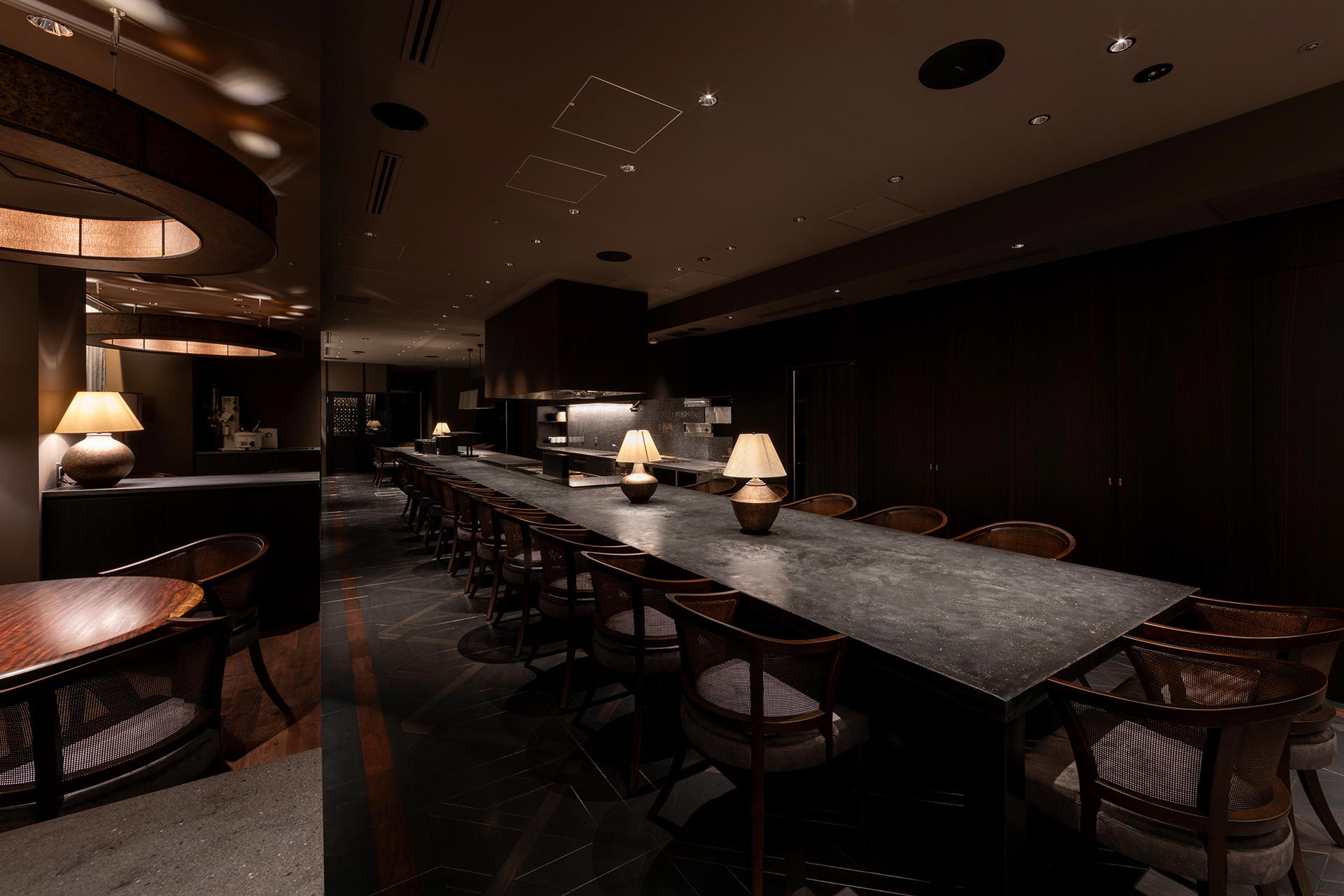
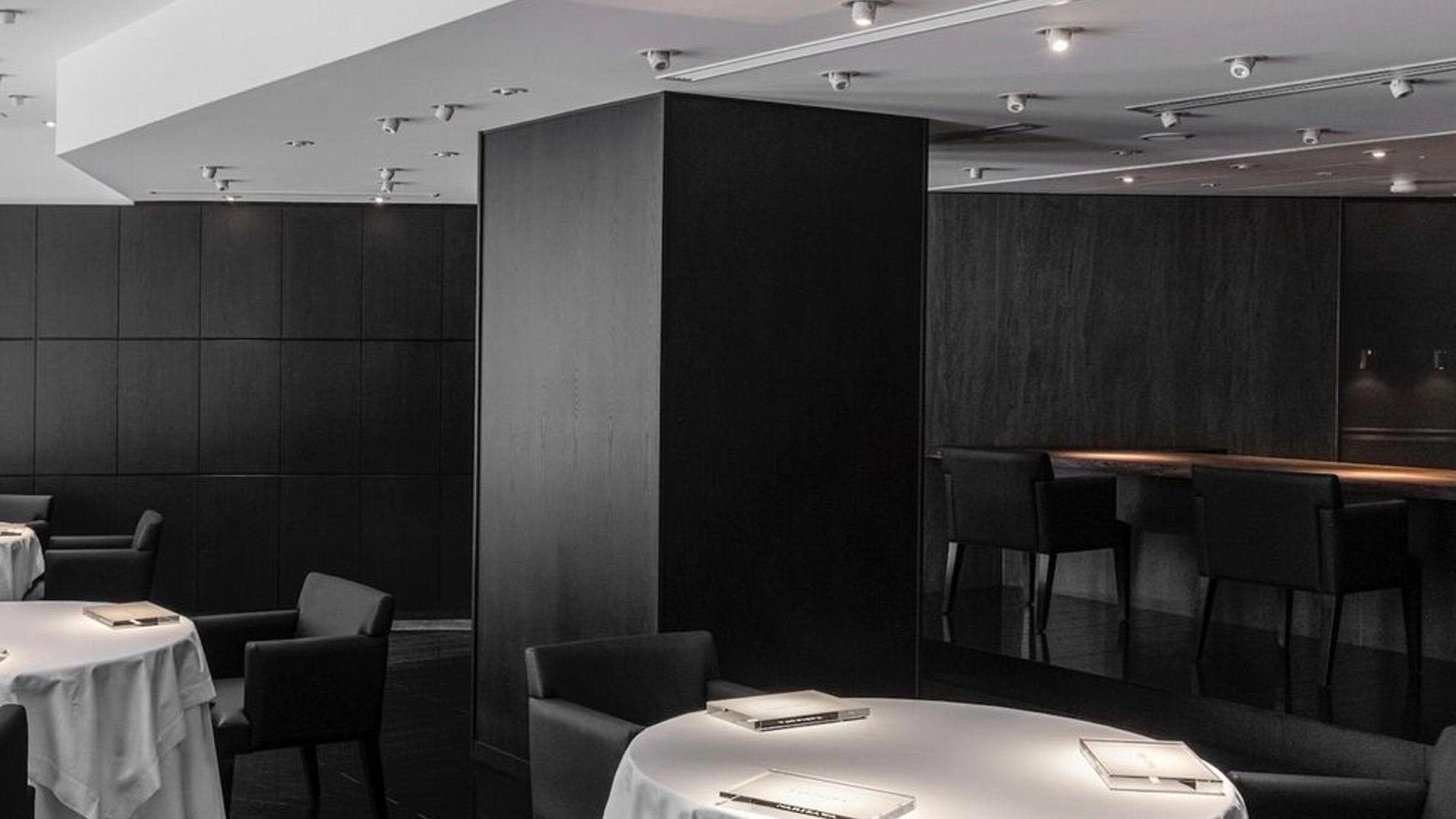
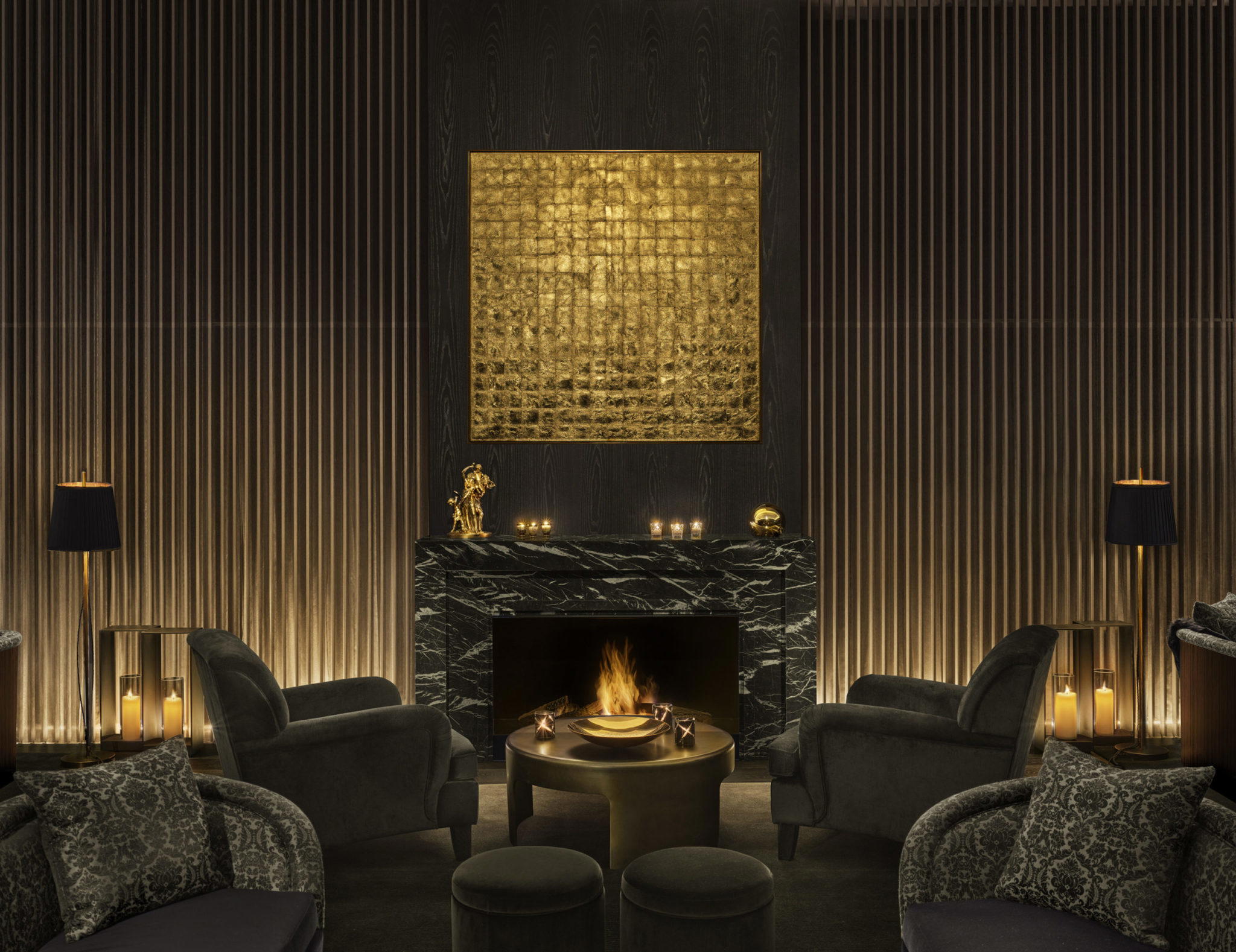
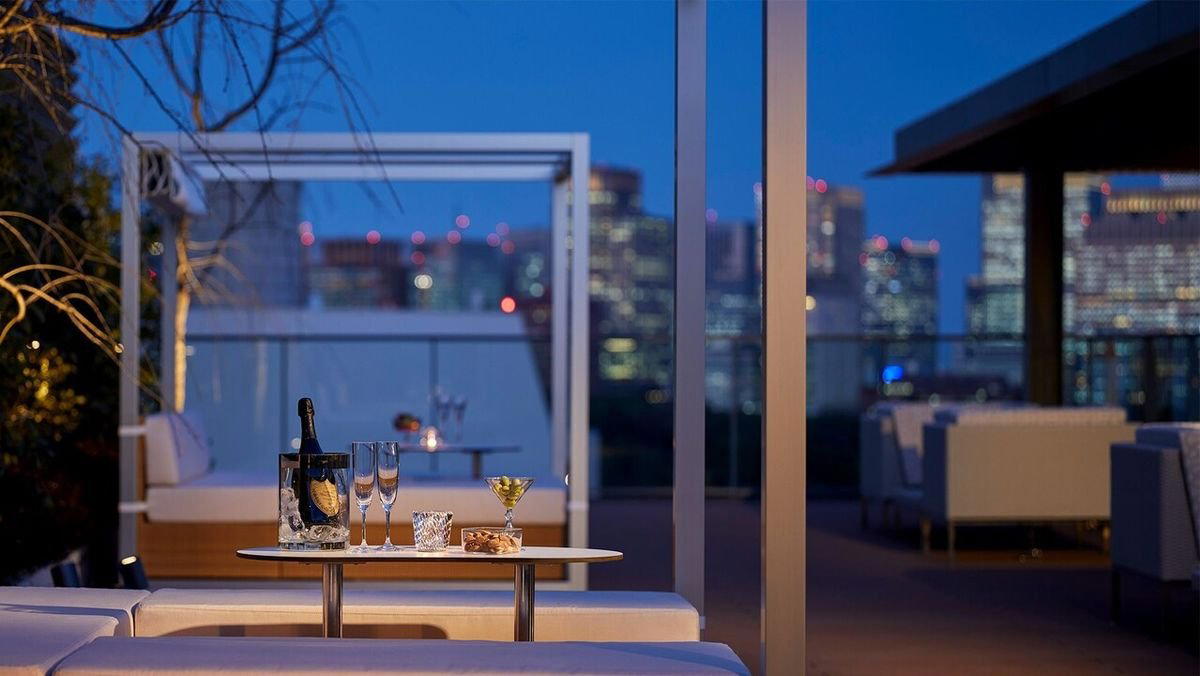
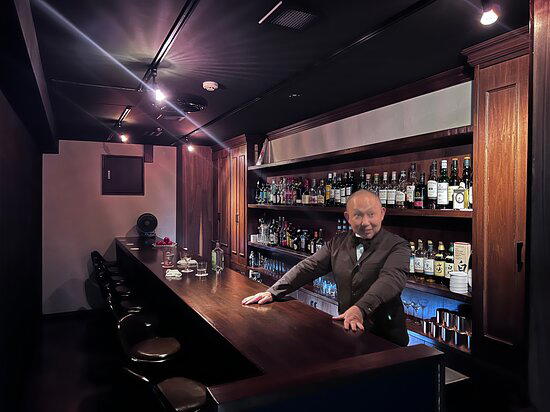
Subtle lighting in a restrained, small room with calm residential street views, fostering a quiet and focused atmosphere for intimate conversations.