Enzian Stube
Our verdict
Enzian Stube sits in Zürs, within the wider Lech am Arlberg resort area, placing it inside one of the Austrian Alps' most concentrated corridors of serious dining. The address at Zürs 84 positions it on the quieter, higher-altitude side of the Lech valley, where the dining register tends toward intimate and deliberate rather than convivial and loud. Visitors to the Arlberg region with a serious interest in Austrian alpine dining should account for it when planning their table itinerary.

Pearl is the En Primeur Club membership app, where members save venues, book tables and use the concierge.

The menu
What to order
- Beef tartare
- Pink roasted saddle of venison
- Fillets of Zug brook trout
- Fondues
Where Zürs Sits in the Arlberg Dining Order
The Arlberg region, spanning Lech, Zürs, and the adjacent Vorarlberg valley floor, has developed one of the densest concentrations of serious alpine restaurants in the German-speaking world. That density is not accidental. The resort's seasonality (peak winter, a shorter summer season) creates conditions where a small number of restaurants compete intensely for a well-travelled, high-spending clientele with defined expectations about what Austrian alpine dining should deliver. The result is a peer group that includes Griggeler Stuba, Rote Wand Chef's Table, Aurelio, and Fux, each occupying a distinct stylistic position within a relatively small geographic radius.
Zürs itself sits above Lech at roughly 1,720 metres, separated from the main village by a short road that closes in heavy snowfall. That physical separation gives Zürs a quieter character than central Lech, fewer après-ski crowds, a smaller total guest count, and a dining atmosphere that tilts toward residents of the handful of hotels clustered around the village. Enzian Stube at Zürs 84 occupies this context: a name associated with the alpine gentian flower, embedded in a village where the primary economy is skiing and the secondary economy is making dinner genuinely worth staying in for.
The Cultural Logic of the Stube Format
The word Stube carries specific cultural weight in Austrian and southern German alpine architecture. It refers to the warm, panelled inner room of a traditional farmhouse or inn, the room where the family and guests gathered around a tiled stove (Kachelofen) when the mountain cold made outdoor life impractical. In a restaurant context, the Stube format signals a deliberate commitment to that aesthetic register: low ceilings, wood panelling, enclosed warmth, and a dining rhythm that is unhurried by design.
Across the Alps, the Stube template has split into two distinct directions. One preserves the format as a heritage dining experience, hearty regional dishes, communal pacing, wine lists built around Austrian and South Tyrolean producers. The other uses the Stube aesthetic as a shell for technically ambitious cooking that contrasts deliberately with its rustic surroundings. You find versions of the latter approach at restaurants like Gourmetrestaurant Tannenhof in Sankt Anton am Arlberg and Stüva in Ischgl, both working within the visual grammar of the alpine interior while delivering menus that read as contemporary.
Austrian Alpine Dining: The Broader Frame
To understand any serious restaurant in the Arlberg region requires some understanding of what Austrian alpine cuisine actually is, and what it has become in the past two decades. The tradition draws from Vorarlberg's own larder: dairy from high-altitude summer pastures (Alpen), freshwater fish from mountain lakes and rivers, cured meats and game from a hunting culture that predates tourism by centuries. The regional specificity is real, not decorative. Vorarlberg's food culture differs meaningfully from Viennese or Styrian cooking in its reliance on mountain dairy, its preference for subtler spicing, and its historical connection to Switzerland and southern Germany rather than to the eastern imperial kitchen.
That tradition has been taken seriously at a national level. Restaurants like Steirereck im Stadtpark in Vienna, Döllerer in Golling an der Salzach, and Landhaus Bacher in Mautern an der Donau have built international reputations on the argument that Austrian cooking, taken seriously, belongs in the same critical conversation as French or Nordic cuisine. The Arlberg region's better restaurants make a local version of that argument: that the ingredients and traditions of Vorarlberg's mountains justify careful, deliberate cooking rather than casual resort food. Obauer in Werfen and Kräuterreich by Vitus Winkler in Sankt Veit im Pongau represent similar commitments in other parts of the Austrian alps. Enzian Stube, by choosing the Stube name and a Zürs address, positions itself within that conversation, even if the specifics of its current programme require verification on the ground.
Within the immediate Lech-Zürs corridor, the dining tier splits roughly between high-format contemporary restaurants and more casual alpine operations. Die Ente von Zürs represents a long-established address within Zürs itself, and its presence alongside Enzian Stube means visitors to the village have at minimum two serious dinner options within walking distance. That compression of quality into a small geographic area, similar in logic to what you find at Schwarzer Adler in Hall in Tirol or Restaurant 141 by Joachim Jaud in Mieming within their respective towns, benefits the traveller who is willing to build an itinerary around the dining as much as the skiing.
The format logic of mountain resort dining also differs from city dining in one structural way: the audience is captive in a useful sense. Guests at Zürs hotels are not going to drive down the mountain to Bludenz for dinner on a cold January night. That captive dynamic raises the stakes for in-village restaurants, but it also creates a more forgiving booking window than you might expect for addresses at this altitude. Compare this to the advance planning required at tightly capacity-constrained urban counters, Le Bernardin in New York City or Lazy Bear in San Francisco, and the Zürs experience is operationally different, though no less deliberate in its ambitions. For the full picture of what Lech's dining scene offers across price points and formats, the EP Club Lech restaurants guide maps the options systematically. Similarly, Ois in Neufelden offers a useful comparison point for how Austrian regional cooking operates when it steps further outside the resort economy.
Planning a Visit
Zürs 84 is the registered address, locating Enzian Stube in the small Zürs village cluster rather than in central Lech, which lies roughly 5 kilometres along the Flexenstrasse. Guests staying in Lech will need to account for road conditions in high winter, when the connecting road can close temporarily in avalanche warning periods. The sensible approach is to treat Zürs as a destination evening, book dinner, plan to stay in the village for a drink afterward, and return to Lech once the road is confirmed clear. The Arlberg season runs primarily from December through late March, with a shorter summer reopening in July and August, timing a visit to mid-season avoids both the chaotic early weeks and the winding-down atmosphere of late March.
Frequently asked questions
Does Enzian Stube work for a family meal?
The Stube format, a warm, panelled inner room rooted in Austrian alpine domestic architecture, has historically accommodated multi-generational gatherings rather than exclusively adult dining. Enzian Stube sits at Zürs 84 in the small Zürs village cluster, a quieter setting than central Lech, which gives it a neighbourhood rather than destination-resort atmosphere.
What is the difference between dining at Enzian Stube in Zürs versus restaurants in central Lech?
Enzian Stube is registered at Zürs 84, placing it in the Zürs village cluster approximately 5 kilometres from central Lech, a distinct setting that sits at higher altitude and carries a quieter, more contained atmosphere than the main Lech village. The Arlberg dining corridor spans both locations, but Zürs operates on a smaller scale, with fewer venues and a pace shaped by its position as a high-alpine waypoint rather than a resort centre. Dining in Zürs tends to feel more local in character, even within the same broader Vorarlberg alpine tradition.
What should I order at Enzian Stube?
Across the Arlberg's Stube-format restaurants, Austrian alpine cuisine typically features dishes built around regional produce: Vorarlberg dairy, game from the surrounding mountains, and preparations rooted in the Bregenzerwald culinary tradition. For current menu specifics, reaching out to the venue directly will give you the most accurate picture.
Where is Enzian Stube located?
Enzian Stube is located at Zürs 84, 6763 Lech, Austria, Lech.
Is Enzian Stube reservation-only?
In the Lech-Zürs corridor, serious dining venues, particularly those operating within the compressed winter ski season, tend to fill quickly, and walk-in availability at small Stube-format restaurants in Zürs village is rarely reliable. Securing a table in advance is the standard approach for this part of the Arlberg.
Price Lens
Comparable venues nearby, for context on price, style, and recognition.
| Venue | Cuisine | Price | Awards | Notes |
|---|---|---|---|---|
| Enzian StubeThis venue (the venue you are viewing) | Traditional Austrian Alpine | Not listed | Not listed | Not listed |
| Die Ente von Zürs | Classic Austrian Fine Dining with Duck Specialties | Not listed | Not listed | Zürs am Arlberg, Classic Austrian Fine Dining with Duck Specialties |
| Goldener Berg Johannesstübli | Plant-based Alpine Gourmet | Not listed | Falstaff Restaurant - 93 Falstaff Points | Oberlech, Plant-based Alpine Gourmet |
| Postblick | Modern Austrian Alpine Cuisine | $100–150 | Not listed | Lech, Modern Austrian Alpine Cuisine |
| Kristiania Lech | Modern Austrian Alpine | Not listed | Not listed | Lech am Arlberg, Modern Austrian Alpine |
| Hotel Sonnenburg | Alpine Austrian with Creative Vegan Options | $100–150 | Not listed | Oberlech, Lech am Arlberg, Alpine Austrian with Creative Vegan Options |
Continue exploring
More in Lech am Arlberg
Restaurants in Lech am Arlberg
All restaurants in Lech am Arlberg →
Bars in Lech am Arlberg
Browse all →
Hotels in Lech am Arlberg
All hotels in Lech am Arlberg →
Wineries in Lech am Arlberg
Browse all →
Details
- Cozy
- Classic
- Rustic
- Elegant
- Special Occasion
- Terrace
- Panoramic View
- Hotel Restaurant
- Historic Building
- Extensive Wine List
- Local Sourcing
- Mountain
- A La Carte
- Set Menu
- Wine
- Vegetarian Friendly
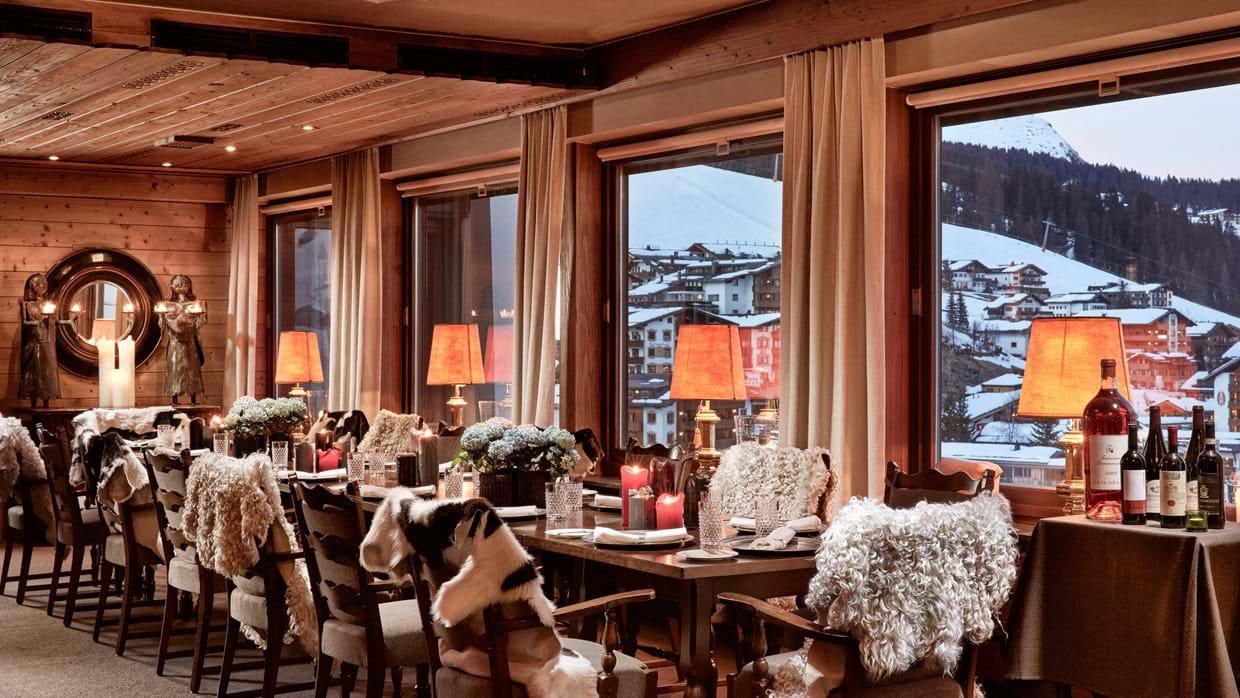
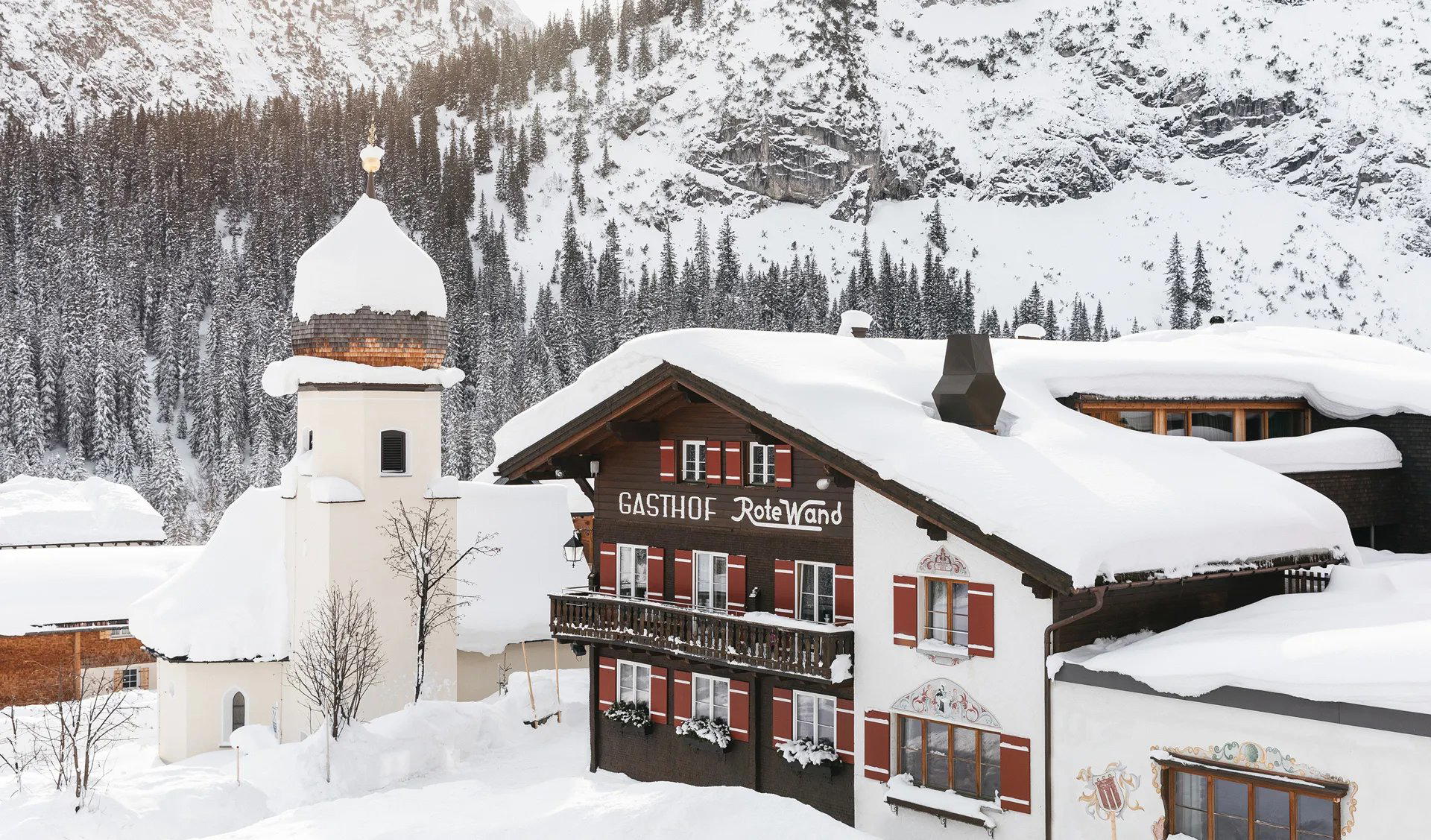
Cosy and inviting with characteristic alpine style, featuring original wood-paneled interiors and a sun terrace with fantastic views of the Zürs ski and mountain landscape.