Alpin Gourmet Stube

Alpin Gourmet Stube in Sankt Anton am Arlberg presents Contemporary Alpine cuisine led by chef Paul Markovics. Must-try plates include Tyrolean venison loin with porcini purée, pistachio hollandaise and dried peach; the monthly fine-dining set menu; and the set menu of the day that spotlights local producers. Located within Hotel Gletscherblick in the quiet St. Jakob district, the restaurant pairs precise technique with regional ingredients. A MICHELIN star and Gault Millau three toques underscore the kitchen’s focus. Intimate service, an approachable yet expert wine program by Sophia Jehle, and seating for just 18 make reservations essential for special-occasion dining.
Pearl is the En Primeur Club membership app — saves, bookings, and concierge access live there. Same editors, same standards.
- Address
- St. Jakober Dorfstraße 35, 6580 St. Anton am Arlberg, Austria
- Phone
- +43 5446 3285
- Website
- hotel-gletscherblick.at
- Directions
- Get directions
 Saves & bookings on Pearl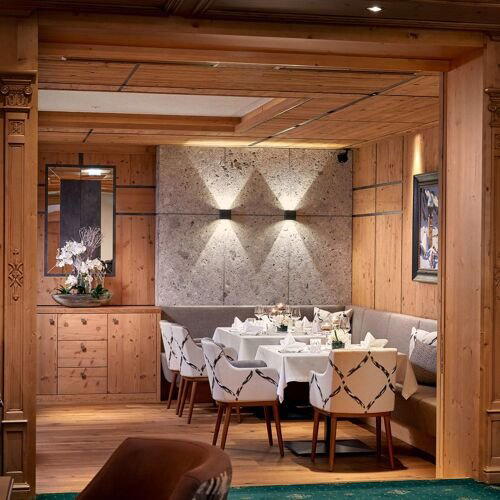
St. Jakob in Winter: What Fine Dining Looks Like Away from the Après-Ski Circuit
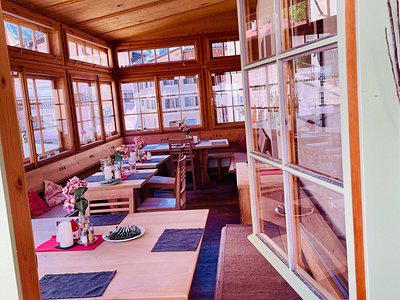
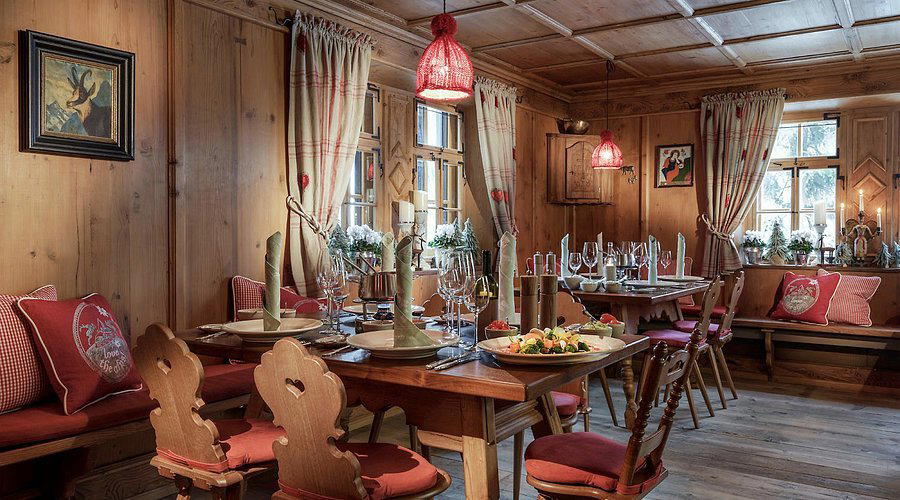
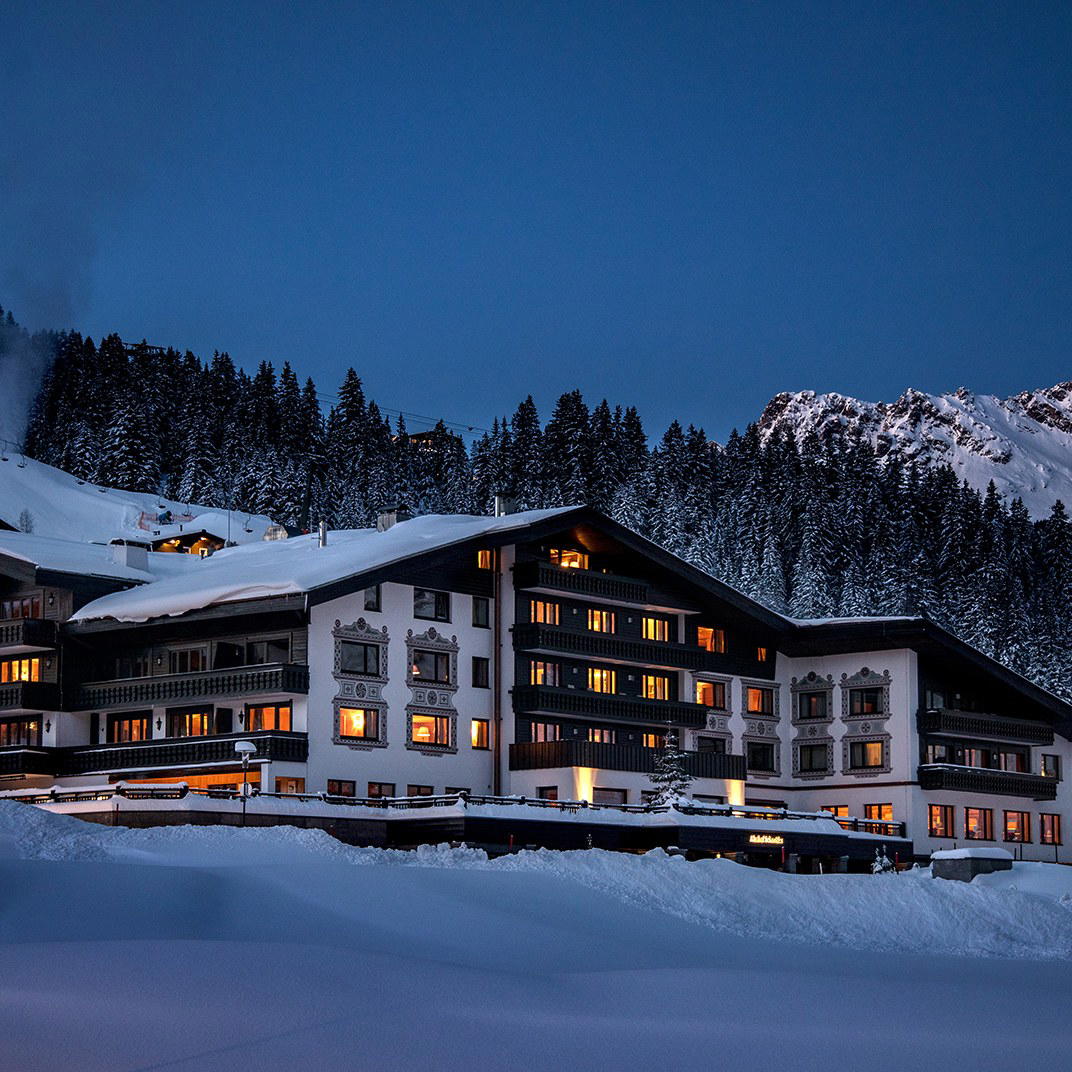
The village of St. Jakob sits at a remove from Sankt Anton's main drag, where the après-ski bars thin out and the streets settle into something closer to a residential Alpine neighbourhood. It is here, on St. Jakober Dorfstraße, that the Gletscherblick hotel houses Alpin Gourmet Stube, a small, elegantly appointed dining room that operates at a frequency quite different from the resort's louder evening options. The room is styled in the manner of an Alpine Stube: warm materials, restrained decoration, a scale that keeps the atmosphere close and considered rather than performative. You arrive expecting mountain hospitality and find that the kitchen has something more precise in mind.
Why Provenance Matters at Altitude
Austrian Alpine fine dining has long grappled with a specific tension: the region produces genuinely notable ingredients, Tyrolean game, Alpine dairy, mountain herbs, freshwater fish, but the resort dining economy has historically rewarded broad European menus over hyper-local ones. The restaurants that have broken through at Michelin level in this part of the Alps tend to be those that resolved that tension clearly, committing to regional sourcing as an editorial statement rather than a marketing footnote.
Alpin Gourmet Stube, holding a Michelin Star, sits in that category. The kitchen places a deliberate emphasis on Tyrolean and regional ingredients, and the menu reads as a direct consequence of that commitment. Tyrolean venison loin, described in Michelin's own notes as of excellent quality, arrives medium-rare, paired with porcini purée and a pistachio hollandaise that introduces richness without obscuring the meat's character. Dried peach provides a fruity counterpoint that lifts the plate rather than complicating it. The combination illustrates something worth noting about current Alpine fine dining: particularly interesting kitchens are not simply sourcing locally but using that sourcing as a structural principle, letting the ingredient define the flavour logic of a dish rather than treating provenance as decoration.
Within Sankt Anton itself, this positions the Stube in a distinct tier. Gourmetrestaurant Tannenhof, which holds two Michelin Stars, operates at a higher level of ambition and price. Endlich takes a Scandinavian approach at the €€€ price point. Hospiz Alm and Verwallstube occupy the contemporary and international ends of the market respectively. Alpin Gourmet Stube, at €€€€, functions as a one-star Alpine address where the regional sourcing argument is made through the plate itself, a slightly different proposition from either the two-star ambition of Tannenhof or the more accessible formats below it.
The Menu Format and How It Works
Two menu options run in parallel: a set menu of the day and a fine dining set menu. The structure is common in Austrian hotel restaurants at this level, where a broader daily menu accommodates guests with varying appetites, while the fine dining menu functions as the kitchen's more considered statement. At one-star level, the expectation is that the fine dining menu reflects the chef's ingredient sourcing and flavour contracting most clearly, and here it does, with Markovics using it to present what Michelin describes as a variety of flavours and interesting contrasts. That framing is characteristic of a kitchen that treats the plate as an argument: each component is chosen for what it contributes technically and in terms of provenance, not simply for luxury signal value.
The approach places the Stube in a lineage of Austrian fine dining that extends well beyond the Arlberg. Restaurants like Döllerer in Golling an der Salzach and Obauer in Werfen have long made the case that Austrian regional ingredients, game, alpine fish, dairy, foraged produce, can anchor serious fine dining without resorting to French technique as the primary credential. Kräuterreich by Vitus Winkler in Sankt Veit im Pongau takes a herb-forward approach that shares the same localist logic. The Stube's Michelin recognition confirms its place within that broader Austrian movement, even from its ski resort context. For comparison, the longer-established end of Austrian fine dining, Steirereck im Stadtpark in Vienna and Landhaus Bacher in Mautern an der Donau, operates with greater scale and deeper track records, while the Stube's intimacy and mountain context give it a different register entirely.
The Wine Program: Affordability as a Deliberate Stance
Wine lists in ski resort fine dining tend toward one of two models: a trophy cellar designed to absorb après-ski spending power, or a tight, considered selection that treats the wine as a supporting element for the food rather than a revenue vehicle. Michelin's tasting notes single out the wine recommendations at Alpin Gourmet Stube as pleasingly down-to-earth and affordable, an observation that carries more weight than it might initially appear. At €€€€ price point in a resort dining context, an accessible wine program is an editorial choice, not a limitation. It signals that the kitchen's primary investment is in ingredient sourcing and technique rather than in margin-building through markup-heavy bottles. For the diner, it means the overall bill stays proportionate to the food, which at one-star level in an Alpine hotel is not something to take for granted.
The pairing model of accessible selection alongside considered food also has precedents in some of Europe's most technically serious kitchens. At a different scale, Frantzén in Stockholm has demonstrated that wine programs defined by curation rather than prestige signaling can coexist with the highest level of cooking. FZN by Björn Frantzén in Dubai applies a similar philosophy in a resort-adjacent market. The principle scales down: even at a one-star Alpine Stube, the wine list's tone communicates something about the kitchen's values.
The Broader Alpine Fine Dining Context
The Arlberg region, spanning Sankt Anton and the adjacent resorts of Lech and Zürs, has become one of Austria's more concentrated areas for serious restaurant dining, a development driven partly by the spending power the ski season concentrates here each winter. Griggeler Stuba in Lech, a few kilometres up the valley, represents the higher end of that development. Ikarus in Salzburg operates on an entirely different structural model as a rotating guest chef format. What unites the more interesting addresses in this mountain corridor is a willingness to treat the regional pantry as a serious resource rather than a tourism convenience, and to price and format accordingly.
St. Jakob location matters here. Dining rooms embedded in the main resort village are structurally oriented toward transient traffic: skiers who are in town for a week and unlikely to return for years. St. Jakob's residential character means the Stube operates with a slightly different guest profile, one where the Jehle-Kathrein family's long-standing relationship with the property, and the hotel's identity as a smaller, guest-focused address, shapes the room's atmosphere in ways that a larger resort hotel rarely achieves. The warmth noted in Michelin's assessment is not incidental; it reflects a scale and ownership model that prioritises a particular kind of hospitality.
Planning Your Visit
The restaurant opens each evening from 7 PM to midnight, Tuesday through Saturday. Reservations are essential. The address, St. Jakober Dorfstraße 35, places the restaurant a short distance from the main resort centre, easily reached by taxi or on foot from the St. Jakob end of town. Dress tends toward smart-casual in Alpine fine dining at this level, though the room's warmth rather than formality sets the tone. The dual menu format means the evening can be calibrated to appetite and occasion: the fine dining set menu for a considered dinner, the daily set menu for something less committed in length.
In Context: Similar Options
Comparable venues nearby, for context on price, style, and recognition.
| Venue | Cuisine | Price | Awards | Notes |
|---|---|---|---|---|
| Alpin Gourmet StubeThis venue — the venue you are viewing | Contemporary Alpine Fine Dining | $$$$ | Michelin 1 Star | Not listed |
| Verwallstube | Modern Austrian Gourmet | $$$$ | Michelin Plate | Galzig |
| Hospiz Alm | Tyrolean Fine Dining | $$$$ | Michelin Plate | St. Christoph |
| Endlich | Modern Scandinavian Contemporary | $$$$ | Michelin Plate | Dorfstraße |
| Gourmetrestaurant Tannenhof | Creative Alpine Modern Cuisine | $$$$ | Michelin 2 Star | Sankt Anton am Arlberg |
| dahoam by Andreas Herbst | Modern Alpine Fine Dining | $$$$ | Michelin 1 Star | Rain |
Recognition history
Dated appearances from independent guides and award organizations, with the underlying list record or original source where available.
Michelin 1 Star
Michelin
Michelin 1 Star
Michelin
Michelin 1 Star
Michelin
Continue exploring
More in Sankt Anton am Arlberg
Restaurants in Sankt Anton am Arlberg
Browse all →
Bars in Sankt Anton am Arlberg
Browse all →


Hotels in Sankt Anton am Arlberg
Browse all →
Wineries in Sankt Anton am Arlberg
Browse all →
At a Glance
- Cozy
- Elegant
- Intimate
- Rustic
- Sophisticated
- Date Night
- Special Occasion
- Hotel Restaurant
- Extensive Wine List
- Sommelier Led
- Local Sourcing
- Mountain
Current opening hours
- Monday
- Closed
- Tuesday
- 7 PM–12 AM
- Wednesday
- 7 PM–12 AM
- Thursday
- 7 PM–12 AM
- Friday
- 7 PM–12 AM
- Saturday
- 7 PM–12 AM
- Sunday
- Closed
Hours can change for holidays and private events. Last verified .
Alpine chic with warm woods, muted fabrics, soft lighting calibrated for conversation, creating a cozy and elegant intimate atmosphere.