Our verdict
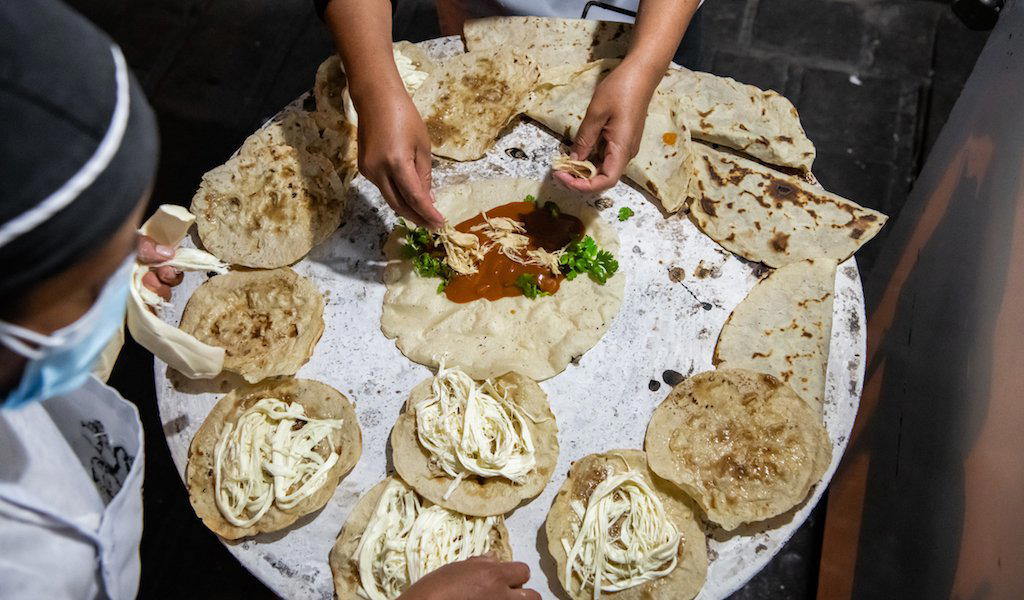
In Oaxaca's street-food tradition, the empanada carries a different weight than its Chilean or Argentine cousins: filled with chapulines, quesillo, or black bean paste and sealed on a comal, it is a complete expression of the valley's pantry. Empanadas del Carmen Alto places that format in the context of the Carmen Alto neighbourhood, where market rhythms and local sourcing define what lands on your plate.

Pearl is the En Primeur Club membership app — saves, bookings, and concierge access live there. Same editors, same standards.
- Address
- Oaxaca, Mexico
- Directions
- Get directions
The menu
What to order
- Empanadas de Amarillo con Pollo
- Empanadas con Flor de Calabaza
Where Oaxaca's Pantry Comes to the Comal
The streets around Carmen Alto move at a different pace than Oaxaca's tourist-heavy centro. The physical signal is sensory before it is visual: masa pressed and sealed against hot metal, chiles dried and ground nearby, the faint char that tells you the dough has been given time rather than hurried. Empanadas del Carmen Alto occupies that neighbourhood register, where the food is priced for the community it serves and the sourcing reflects what Oaxaca's agricultural valleys actually produce.
The Oaxacan Empanada as a Distinct Format
Visitors arriving from Mexico City or from further afield sometimes conflate the Oaxacan empanada with its baked South American counterparts. The distinction matters. In Oaxaca, the empanada is made from masa — the same nixtamalised corn dough that anchors tlayudas and memelas — pressed flat, filled, and cooked on a comal rather than in an oven. The result is softer, earthier, and more immediately tied to the corn supply chain than any wheat-flour version. The fillings rotate around the Oaxacan canon: quesillo (string cheese pulled fresh in the Valles Centrales), black bean paste cooked with hierba santa, and, in season, chapulines, toasted grasshoppers harvested from the surrounding milpa fields that have fed this valley for centuries. That last ingredient alone places the format in a conversation that restaurants like Levadura de Olla Restaurante and Alfonsina are having at a more formal price point: what does it mean to cook with Oaxaca's actual ingredients, not approximations of them?
Sourcing and the Valles Centrales Supply Chain
Oaxaca's culinary authority rests, in large part, on ingredient geography. The Valles Centrales, the broad agricultural plain that cradles the city, produce a specific set of ingredients that define regional cooking: black-veined corn varieties that produce deeper-flavoured masa, Oaxacan chocolate ground from cacao blended with cinnamon and sugar in the markets of 20 de Noviembre, and chiles that include the pasilla negro and the mulato, both of which behave differently from the ancho varieties more common in central Mexico. A street-level operation in Carmen Alto draws from this supply chain at its most direct tier: the vendor who sources from the market rather than a consolidated distributor is working closer to the farm than any restaurant that has scaled to multiple covers per night. That proximity is not a romantic abstraction. It is the difference between masa made from corn dried this season and masa from industrial masa harina, a difference that registers in texture, moisture content, and the faint mineral quality that good nixtamal carries through the heat of the comal.
Across the broader Mexican restaurant scene, from Pujol in Mexico City to KOLI Cocina de Origen in Monterrey, the conversation about indigenous ingredient sourcing has moved from niche concern to central argument. Empanadas del Carmen Alto sits at the opposite end of that price spectrum but participates in the same logic: cook with what the region actually grows, prepared in the way the region actually cooks it.
Placing Carmen Alto in Oaxaca's Neighbourhood Hierarchy
Oaxaca's dining scene has split along familiar lines. The centro histórico, around the Zócalo and Macedonio Alcalá, hosts the restaurants that trade on reputation and tourist traffic: Los Danzantes Oaxaca and the higher-end mezcal-driven dining rooms that have proliferated over the past decade. A parallel tier operates at the neighbourhood level, in barrios like Carmen Alto and Jalatlaco, where the food serves residents before visitors. Street-level operations in these areas price accordingly. Where Casa Oaxaca sits at the $$$ tier and Criollo at $$$$ for formally plated Oaxacan tasting menus, the market-and-street format of Carmen Alto occupies the $ end of the scale, comparable to Itanoní (the masa-specialist restaurant that has built a reputation around heirloom corn varieties) and Adamá. That positioning is not a concession. It is a structural feature of how street food in Oaxaca works: the food is more affordable because the operation is leaner, not because the ingredients are lesser.
For readers building a full picture of where to eat across the city, our full Oaxaca restaurants guide maps the tiers and neighbourhoods in detail. Those curious about how Oaxacan sourcing philosophy scales into fine-dining territory can cross-reference with Aguacate Oaxaca or consider how the same conversation plays out in other Mexican regions at places like Animalón in Valle de Guadalupe, Alcalde in Guadalajara, or Huniik in Merida.
Planning Your Visit
Street-level operations in Oaxacan neighbourhoods follow market logic rather than restaurant logic: they open when produce arrives and close when the day's supply is gone. Carmen Alto is leading approached in the morning or at midday rather than as an evening destination. No reservation system operates at this format level, arriving early is the relevant booking strategy. The absence of a formal website or phone listing is consistent with how this tier of the Oaxacan food economy functions; local knowledge and neighbourhood presence substitute for digital infrastructure. For visitors arriving from outside Mexico, the broader context of the Mexican sourcing-forward dining movement is worth understanding before arrival: operations like Le Chique in Puerto Morelos, Olivea Farm to Table in Ensenada, and HA' in Playa del Carmen each approach regional ingredient philosophy from different price points and formats, providing useful comparison when assessing what Empanadas del Carmen Alto does at the street level.
Frequently asked questions
Is Empanadas del Carmen Alto good for families?
Street-level comal operations in Oaxacan neighbourhoods like Carmen Alto tend to be informal and quick-moving, which suits families with children better than a formal sit-down setting. Ordering is typically face-to-face at the point of preparation, and portions are individual rather than shared plates. The neighbourhood itself runs at a slower pace than the centro histórico, which reduces the crowding pressure common around the Zócalo.
How would you describe the vibe at Empanadas del Carmen Alto?
Carmen Alto operates on market logic: the clientele is mostly neighbourhood regulars and market vendors rather than tourists working through a guidebook list. The rhythm is transactional in the best sense — you watch the empanada meet the comal, you eat, you move on. It sits outside Oaxaca's restaurant-as-performance circuit entirely.
How does the Oaxacan empanada at Carmen Alto differ from what you'd find in the centro histórico?
Venues around Oaxaca's Zócalo and Macedonio Alcalá increasingly pitch their menus toward visitors, with pricing and presentation adjusted accordingly. Carmen Alto sits in a neighbourhood tier where the product answers to local repeat custom rather than tourist appetite, which typically means tighter focus on the comal-based Oaxacan format and ingredients sourced from the surrounding Valles Centrales agricultural plain. It is one of the clearer examples in the city of street food operating without a tourist premium attached.
What's the best thing to order at Empanadas del Carmen Alto?
The Oaxacan empanada is a distinct format from its baked South American counterpart: masa is pressed and cooked directly on the comal, folded around fillings that typically draw from Valles Centrales produce and regional staples like quesillo, black beans, or mole negro.
Is Empanadas del Carmen Alto reservation-only?
Street comal operations in Oaxaca do not take reservations. They open when produce arrives from market and close when the day's supply runs out, which in active Oaxacan neighbourhoods can be mid-afternoon. Coming early is the functional equivalent of securing a table.
Comparison Snapshot
| Venue | Cuisine | Price | Awards | Notes |
|---|---|---|---|---|
| Empanadas del Carmen AltoThis venue — the venue you are viewing | Traditional Oaxacan Empanadas | $1–10 | Not listed | Not listed |
| Casa Oaxaca | Modern Oaxacan | $50–100 | Michelin Plate · La Liste Top Restaurants | Not listed |
| Criollo | Modern Oaxacan Tasting Menu | $100–150 | Michelin Plate · La Liste Top Restaurants | Not listed |
| Itanoní | Traditional Oaxacan Corn Antojitos | $10–20 | Michelin Plate | Not listed |
| Levadura de Olla Restaurante | Traditional Oaxacan | $10–20 | 1 Michelin Star | Mexican |
| Adamá | Authentic Middle Eastern | $20–30 | Michelin Plate | Not listed |
Continue exploring
More in Oaxaca
Restaurants in Oaxaca
Browse all →
Bars in Oaxaca
Browse all →
Hotels in Oaxaca
Browse all →
Details
- Well Known
- Rustic
- Lively
- Casual Hangout
- Late Night
- Solo
- Open Kitchen
- Local Sourcing
- A La Carte