1 Michelin Star · Wine Spectator Award of Excellence
Our verdict
Among Bangkok's Michelin-starred French contemporary restaurants, Elements, Inspired by Ciel Bleu operates with an Amsterdam connection that separates it from the city's purely Western-trained kitchens. Housed on the upper floors of a Lumphini tower, it structures its menu around three named tasting progressions, Ku-Ki, Chikyu, and Mizu, each framing French technique through a Japanese conceptual lens.

Pearl is the En Primeur Club membership app, where members save venues, book tables and use the concierge.
Where the Meal Begins Before the First Course
Bangkok's fine-dining scene has spent the last decade sorting itself into distinct competitive tiers. At the top end of the ฿฿฿฿ bracket, restaurants like Sorn (Southern Thai) and Maison Dunand have staked out positions through deeply regional or chef-specific identities. Elements, Inspired by Ciel Bleu on Witthayu Road in Lumphini occupies a different coordinate: a formal French contemporary kitchen working in direct creative dialogue with its Amsterdam parent, Ciel Bleu, and filtered through a consistent Japanese sensibility. The result is a restaurant that reads, on paper, as European fine dining but delivers something that Bangkok's French-trained cohort alone cannot replicate.
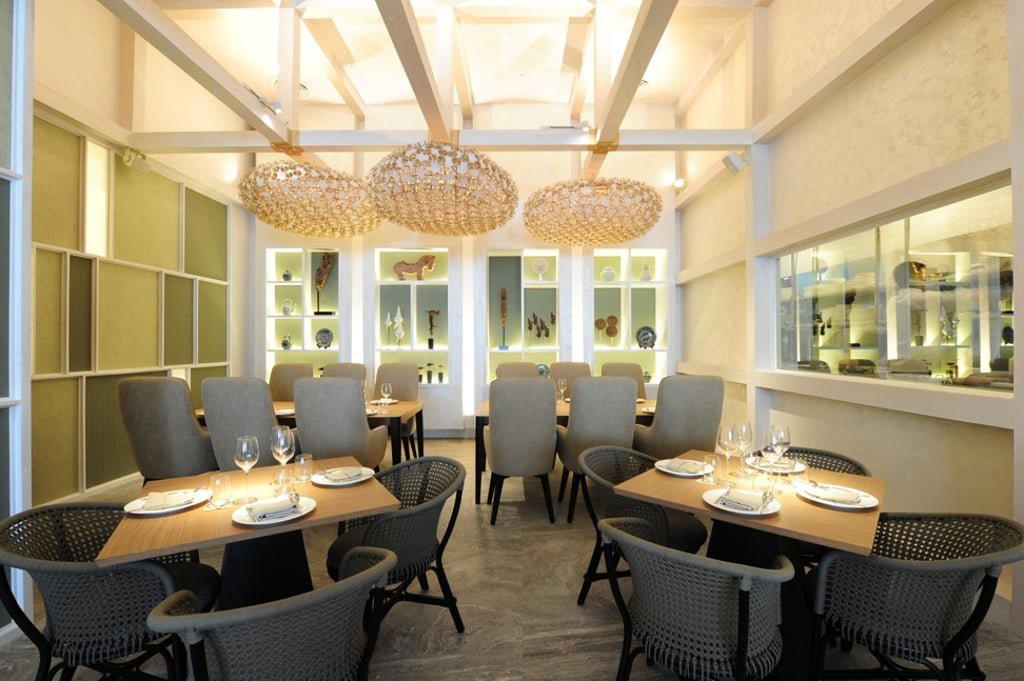
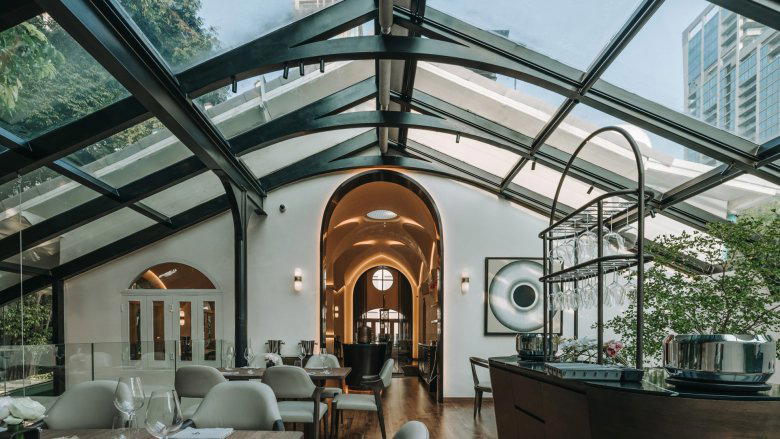
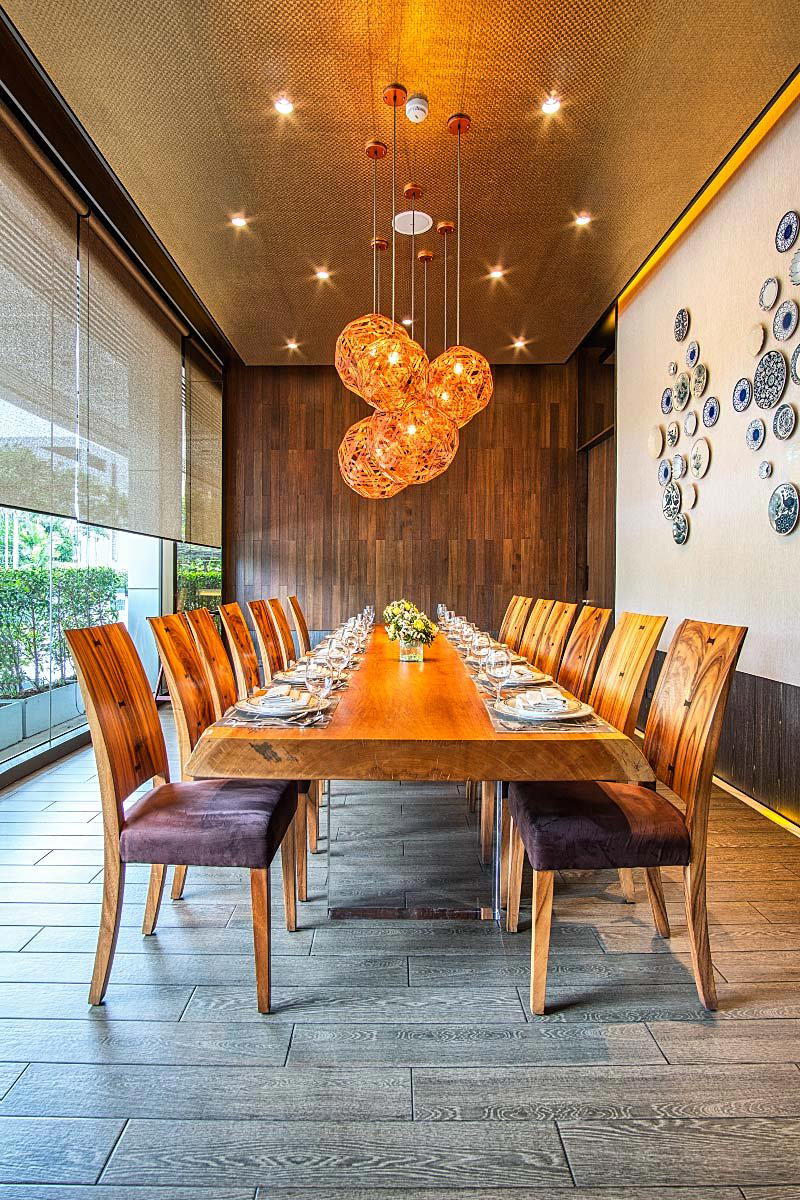
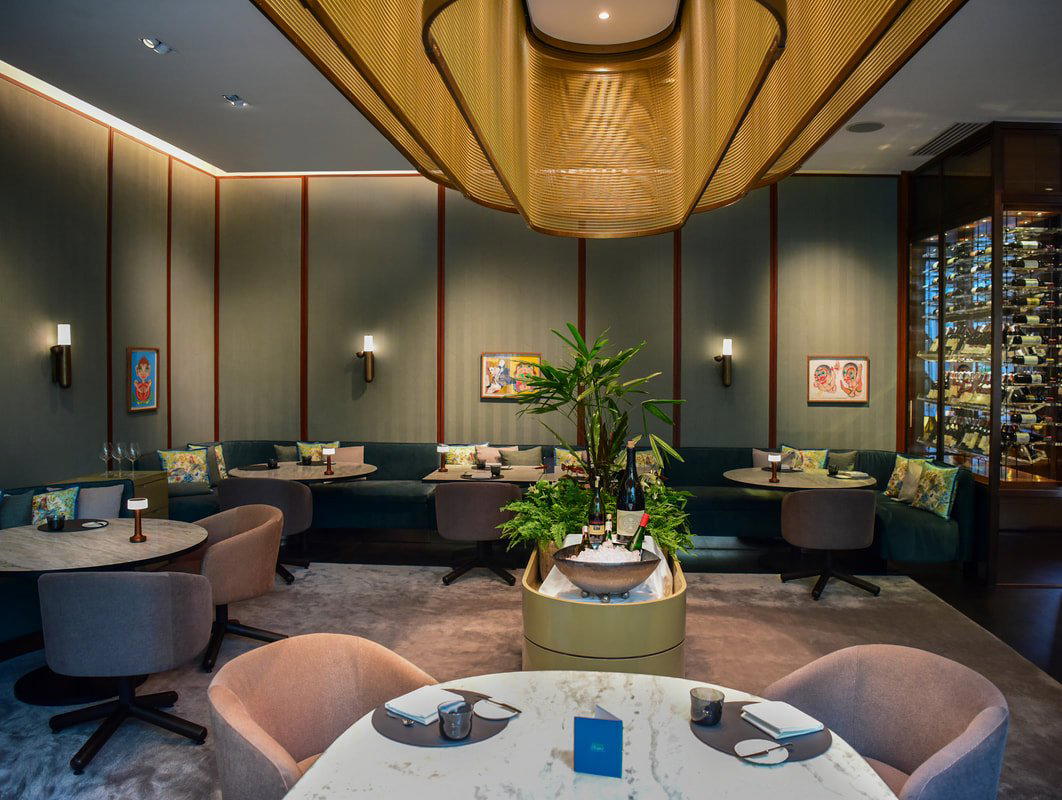
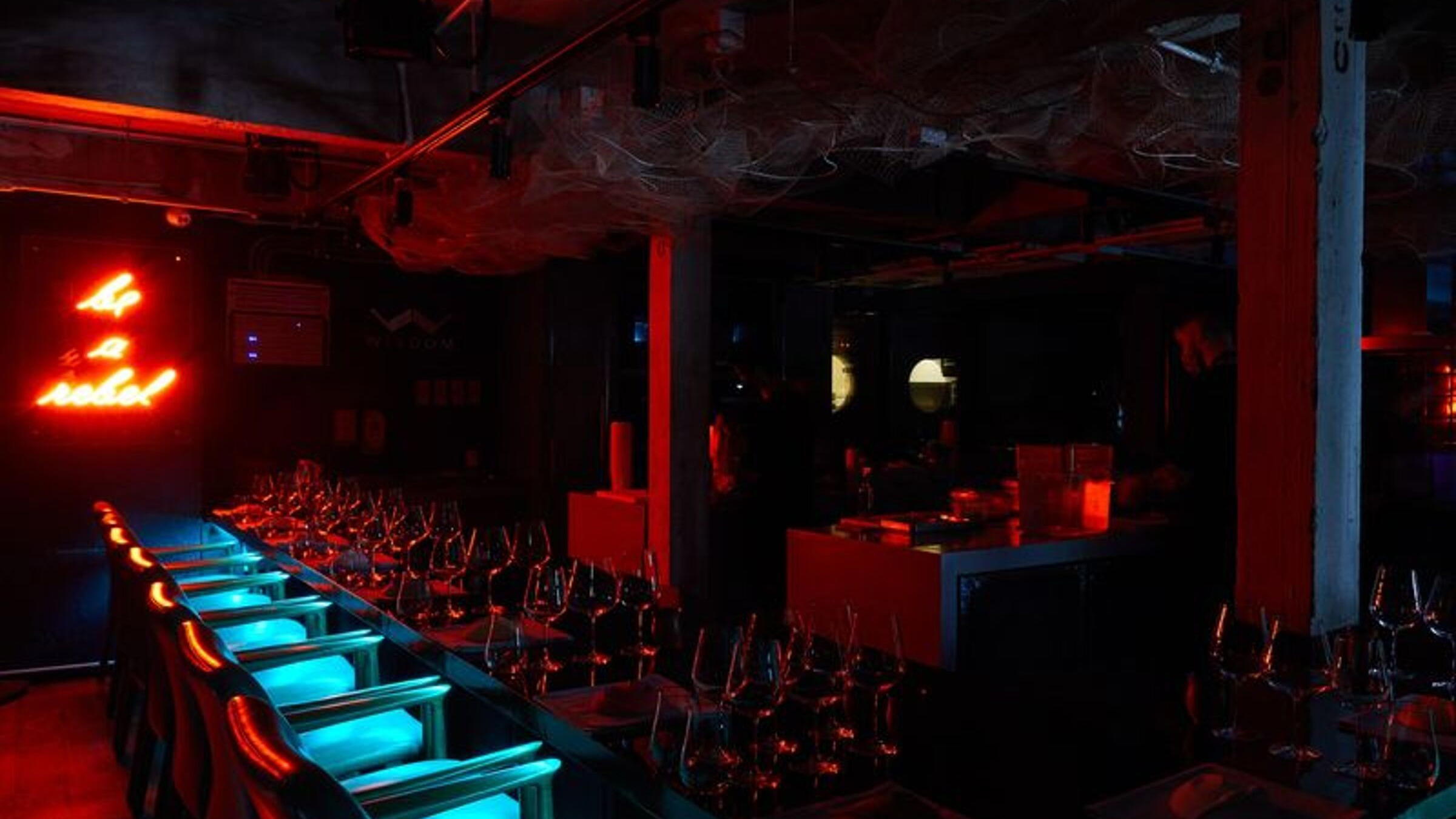
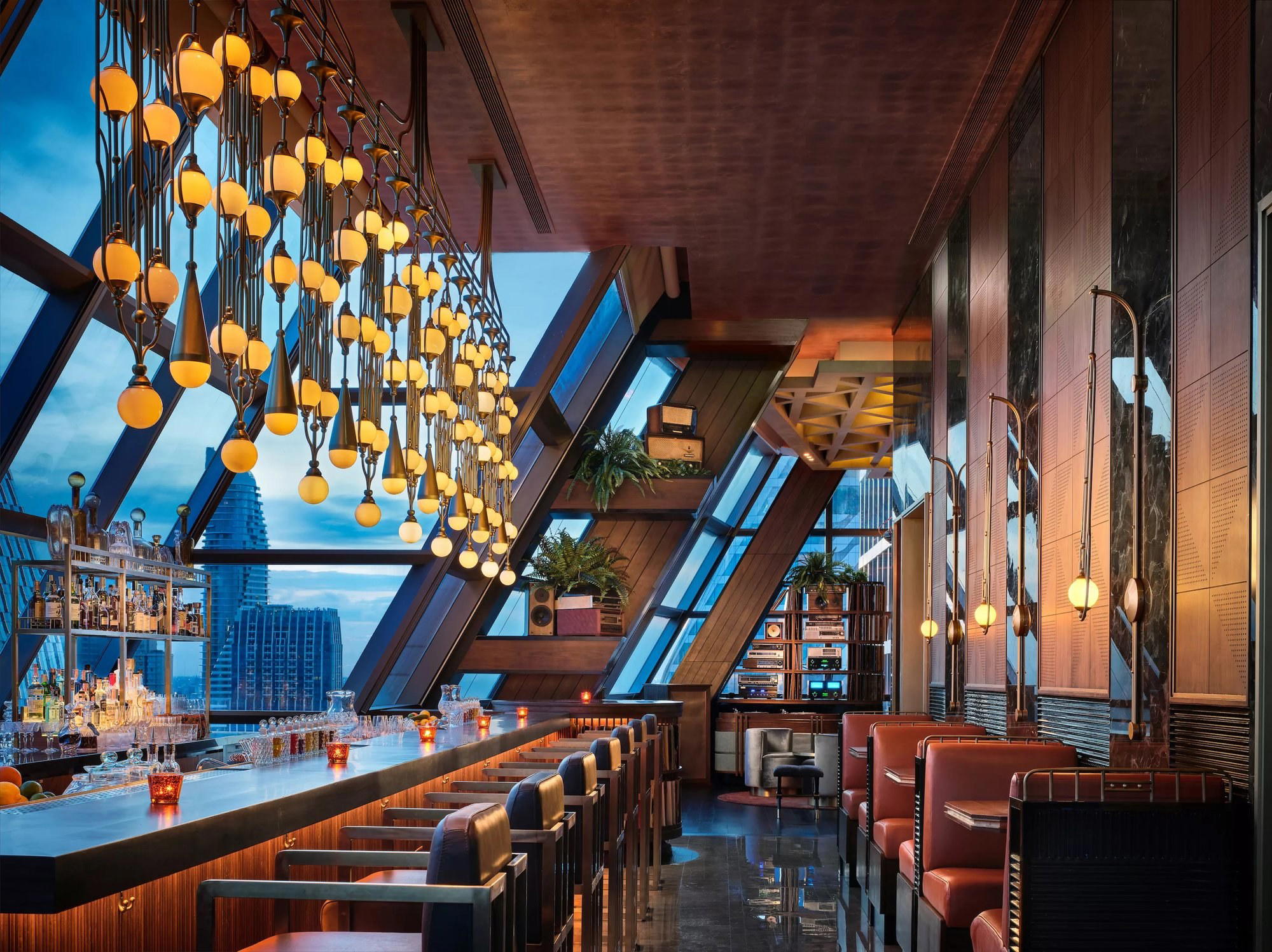
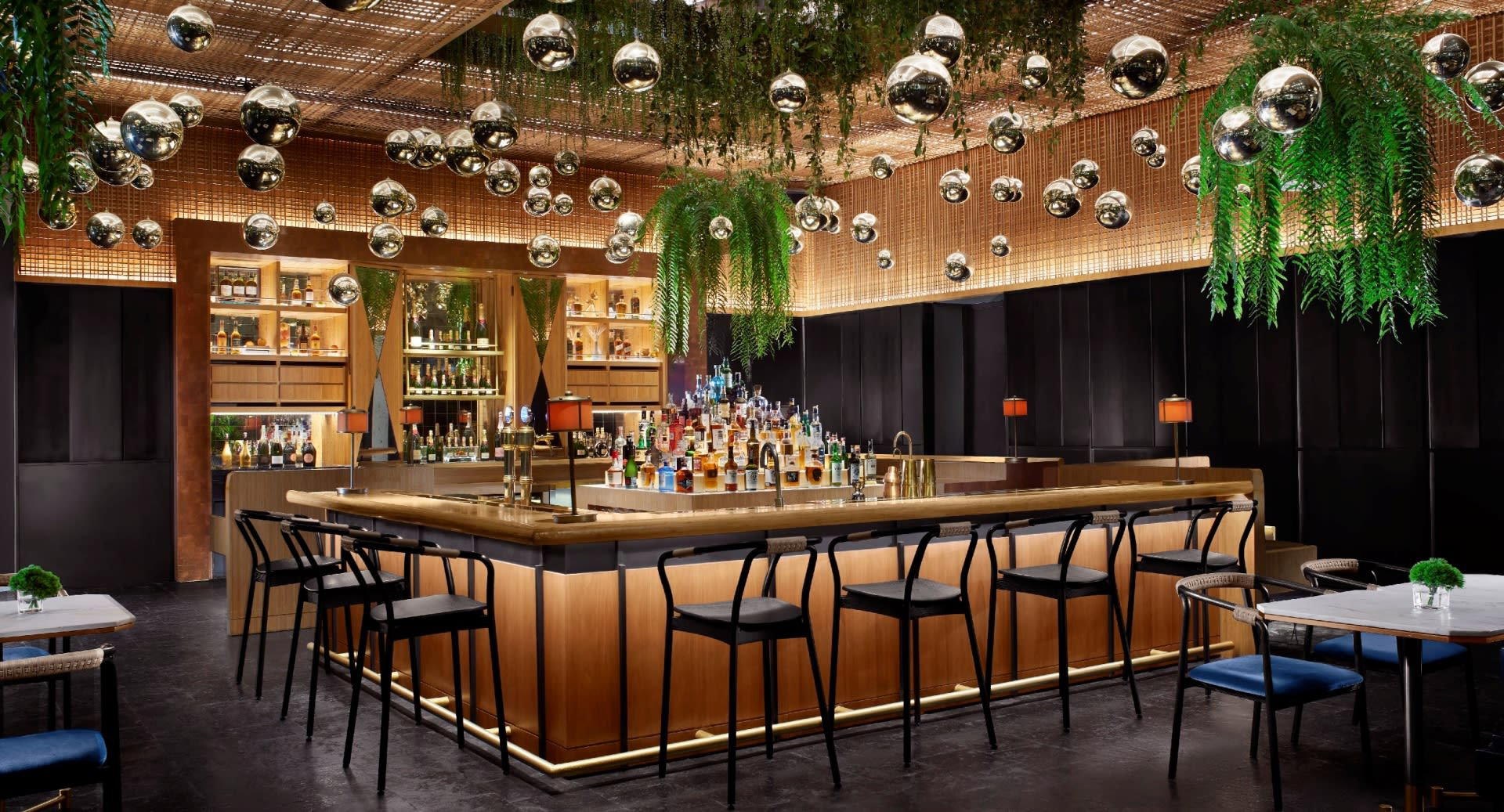
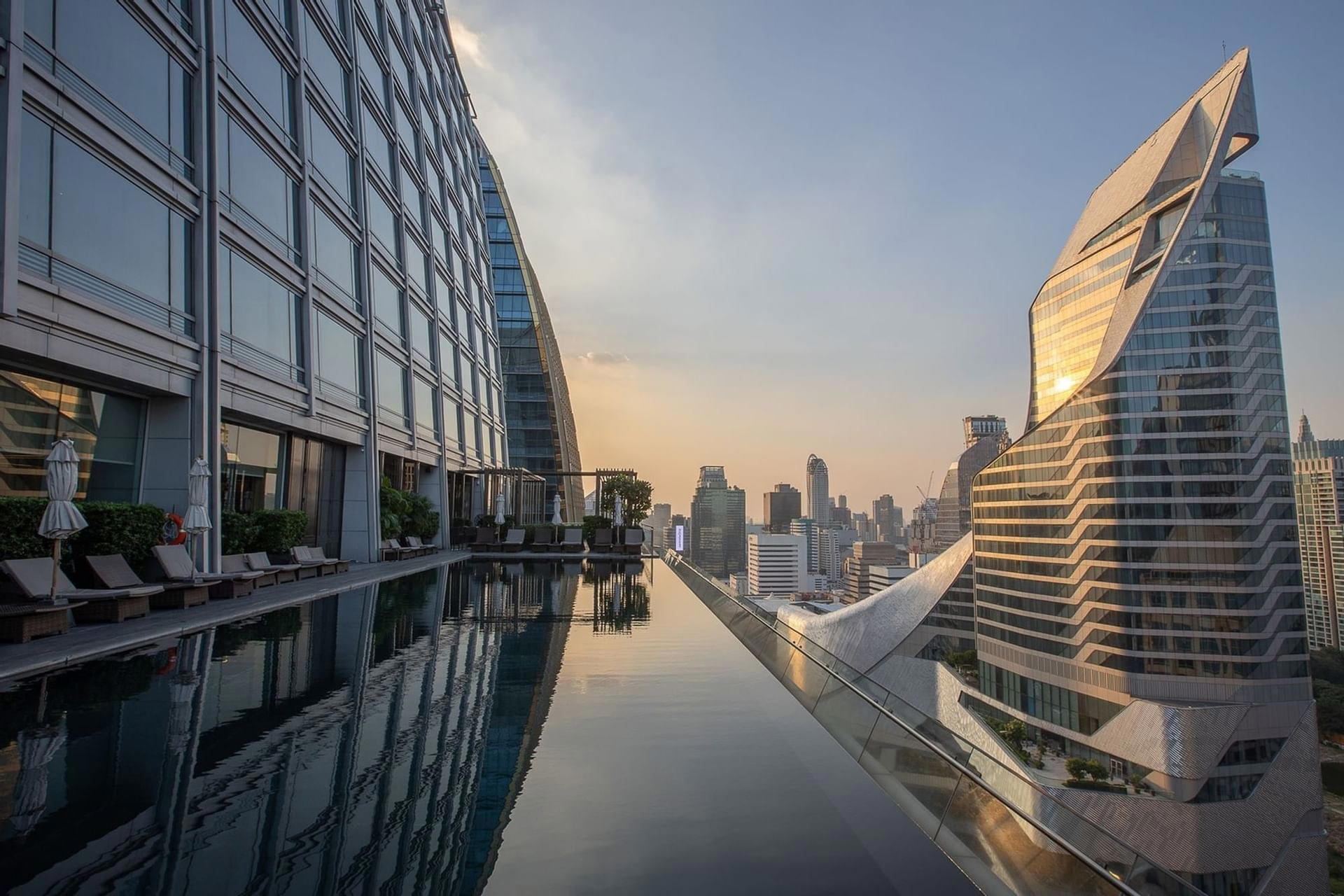
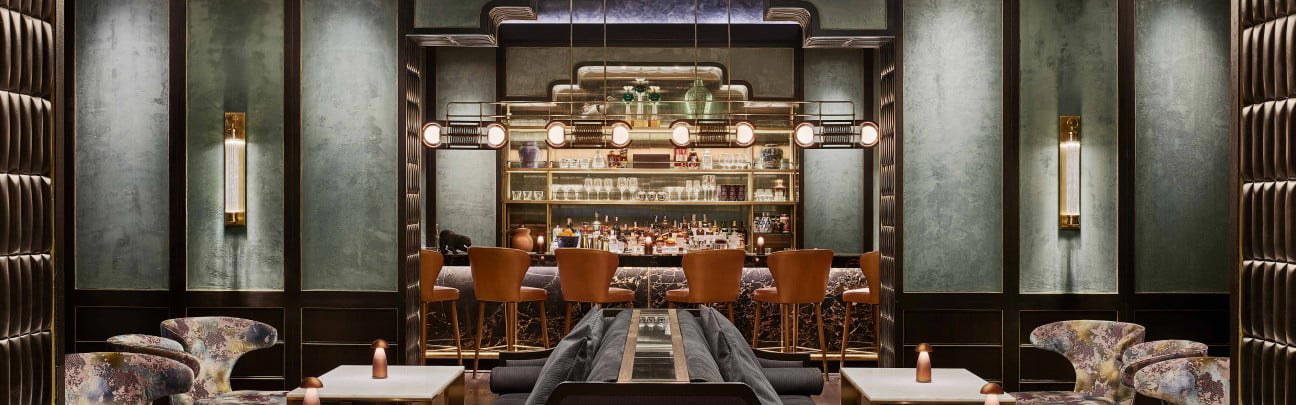
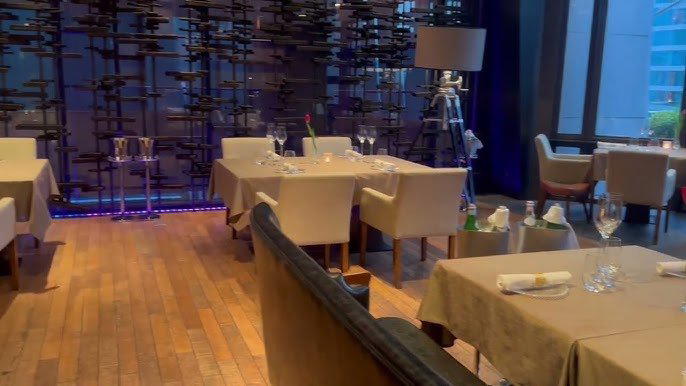
The room announces its intentions before the amuse-bouche arrives. Charcoal walls, oversized pendant lighting, and an open kitchen set the register clearly: this is a space designed for a meal that unfolds in stages, where the architecture and the progression of courses operate in parallel. The city view, visible from the dining room at Witthayu Road in Pathum Wan, functions less as backdrop and more as a structural element of the evening, the shift from daylight to night Bangkok over the course of three or four hours marks time in a way that no clock on a wall could. For a date dinner or an occasion meal, few rooms in this price tier are composed this deliberately.
The Architecture of the Menu
French contemporary tasting menus in Bangkok generally follow one of two formats: a single chef's progression with minimal choice, or a longer experience with one or two decision points built in. Elements offers four named formats, Ku-Ki, Chikyu, Mizu, and The Complete Experience, each title drawn from Japanese concepts relating to air, earth, and water. This framing is not decorative. The names signal that the sequencing of each menu is thematic rather than simply chronological, with each progression building a particular tonal arc from first course to dessert.
Across all formats, guests retain a degree of agency at the end of the meal: a choice of main course, with premium Japanese Wagyu available as an upgrade, and a choice between a creamy dessert creation or a seasonal fruit dish. In the context of tasting menu culture broadly, this is a thoughtful structural decision. The early courses establish the kitchen's language on the diner's terms; the final courses allow the diner to steer the ending. It is a format that works well for groups with differing preferences and for guests who find full chef's-table menus with zero optionality too prescriptive.
The Amsterdam connection to Ciel Bleu is not purely nominal. Working closely with the parent restaurant means the kitchen at Elements operates with reference to a European fine-dining sensibility that has itself been shaped by Japanese technique and restraint. Ciel Bleu in Amsterdam has long operated at the intersection of classical French and Japanese refinement, and that influence travels.
French Technique, Japanese Sensibility: A Bangkok Niche
The French-Japanese register is not new to fine dining globally, but in Bangkok it occupies a smaller space than in cities like Singapore or Hong Kong. At Odette in Singapore or Amber in Hong Kong, the French-inflected multi-course format with Japanese discipline in plating and ingredient sourcing has long been established. Bangkok's fine-dining market has historically leaned either toward French classicism or toward the city's own extraordinary Thai contemporary tradition, represented at the leading end by restaurants awarded two and three Michelin stars. Elements sits in the gap between those poles: rigorous European in structure, Japanese in sensibility, Bangkok in address.
That positioning matters when considering what kind of meal you are booking. This is not a kitchen deploying local Thai ingredients through a French lens, as some of the city's more fusion-oriented rooms do. Nor is it a traditional French operation transplanted wholesale. The Japanese influence appears in the conceptual layering of each menu's arc and in the precision applied to individual courses. For diners who have eaten their way through Bangkok's Thai contemporary scene and are looking for a different register, Elements provides a genuinely distinct experience within the same price tier.
For broader context across the city's eating options, our full Bangkok restaurants guide maps the competitive field at every level. Those planning a longer trip can also reference our Bangkok hotels guide, bars guide, and experiences guide for the full picture.
The Michelin Context
Elements received its 2024 Michelin star, placing it in the first tier of Bangkok's recognized fine-dining addresses. The city's Michelin Guide has grown considerably since its launch in 2018, and one-star restaurants now form a substantial and varied cohort. Within the French contemporary subset of that group, the star confirms that Elements is operating at a consistent level of technical execution across its tasting formats. It is the entry credential for a restaurant that asks for a full evening commitment and charges accordingly at ฿฿฿฿ pricing.
Elements sits one tier below the two-star cohort in formal recognition, though the Amsterdam creative partnership and the structured four-menu format give it a conceptual specificity that not all one-star restaurants in the city possess.
Planning the Evening
Elements is located at 57 Witthayu Road in the Lumphini district of Pathum Wan, one of Bangkok's primary business and luxury corridors. The Lumphini area is well served by BTS and MRT connections, and the address is accessible from most of Bangkok's major hotel districts without significant traffic difficulty during early evening, though late-night departures from the area are notably smoother than arrivals during peak hours. Given the tasting menu format and the evening view that forms part of the experience, booking for a dinner start time that captures the city at dusk adds a layer to the progression that a late seating alone cannot replicate.
As a Michelin-starred tasting menu destination in one of Asia's most competitive restaurant cities, advance reservation is advisable. Bangkok's upper fine-dining tier fills on weekends several weeks ahead, and occasions dining around public holidays or peak travel periods warrants booking further in advance still. The four-format menu structure means that groups with varying appetites or dietary considerations have more flexibility than at a single-menu kitchen, but it is worth communicating preferences at the time of booking rather than on arrival.
Beyond Bangkok, Thailand's Michelin-recognized dining extends to properties like PRU in Phuket and AKKEE in Pak Kret, while the country's broader regional dining culture is represented by addresses such as Aeeen in Chiang Mai and Angeum in Phra Nakhon Si Ayutthaya. For those building a Thailand itinerary around food, our Bangkok wineries guide covers the city's growing wine culture, which pairs naturally with a tasting menu evening at this level.
Frequently asked questions
Where do I go for Elements, Inspired by Ciel Bleu?
Elements, Inspired by Ciel Bleu is located at 57 Witthayu Rd, Khwaeng Lumphini, Pathum Wan, Krung Thep Maha Nakhon 10330, Thailand, Bangkok.
What distinctions does Elements, Inspired by Ciel Bleu have?
Elements, Inspired by Ciel Bleu has received recognition including: Boasting impressive city views, this spot is ideal for a date and features a chic décor with an open kitchen, oversized light fittings and charcoal walls. Working closely with Ciel Bleu in Amsterdam, and inspired by French fine dining with ….
What should I eat at Elements, Inspired by Ciel Bleu?
The menu is built around three named tasting experiences: Ku-Ki, Chikyu, and Mizu, plus The Complete Experience for the full progression. Within those formats, guests choose their main and dessert, options include premium Japanese Wagyu for the main course and either a creamy preparation or a seasonal fruit dish to close. The kitchen works in close alignment with Ciel Bleu in Amsterdam, applying French technique with Japanese influences throughout.
What type of food is Elements, Inspired by Ciel Bleu known for?
Is Elements, Inspired by Ciel Bleu more mid-range or high-end?
Pricing at Elements, Inspired by Ciel Bleu is listed as ฿฿฿฿.
How far ahead should I plan for Elements, Inspired by Ciel Bleu?
Elements holds a 2024 Michelin star and sits at the top of Bangkok's ฿฿฿฿ tier, which places it among the city's more competitive bookings. Reservations at addresses in this bracket in Bangkok typically require at least two to four weeks' lead time, with weekends and prime date-night slots filling faster. Booking through the venue directly via 57 Witthayu Road, Lumphini is advisable.
What's the standout thing about Elements, Inspired by Ciel Bleu?
The French-Japanese tasting format, developed in partnership with the two-Michelin-starred Ciel Bleu in Amsterdam, gives Elements a clear identity in a Bangkok fine-dining scene that more commonly draws on Thai or pan-Asian registers. The room adds to that positioning: an open kitchen, charcoal walls, and oversized light fittings frame a view across the city. It earned its first Michelin star in 2024.
The Quick Read
Comparable options at a glance, pulled from our tracked venues.
| Venue | Cuisine | Price | Awards | Notes |
|---|---|---|---|---|
| Elements, Inspired by Ciel BleuThis venue (the venue you are viewing) | French with Japanese Influences | $150–200 | 1 Michelin Star · Wine Spectator Award of Excellence | Not listed |
| Sorn | Fine Southern Thai | $200–300 | 3 Michelin Stars · World's 50 Best #12 | Southern Thai, ฿฿฿฿ |
| Côte by Mauro Colagreco | Riviera Mediterranean Fine Dining | $200–300 | 2 Michelin Stars · World's 50 Best #91 | Mediterranean, Modern Cuisine, ฿฿฿฿ |
| Baan Tepa | Creative Thai Fine Dining | $150–200 | 2 Michelin Stars · World's 50 Best #53 | Thai contemporary, ฿฿฿฿ |
| Gaa | Modern Indian Fine Dining with Thai Influences | $150–200 | 2 Michelin Stars · World's 50 Best #95 | Modern Indian, Indian, ฿฿฿฿ |
| Sühring | Modern German Fine Dining | $200–300 | 3 Michelin Stars · World's 50 Best #18 | German, ฿฿฿฿ |
Recognition history
Dated appearances from independent guides and award organizations, with the underlying list record or original source where available.
Michelin 1 Star
Michelin
Opinionated About Dining Top Restaurants in Asia Recommended
Opinionated About Dining
Wine Spectator Award of Excellence
Wine Spectator
Full recognition history (6 entries)
Michelin 1 Star
Michelin
Michelin 1 Star
Michelin
Opinionated About Dining Top Restaurants in Asia Recommended
Opinionated About Dining