





Ranked #41 on The World's 50 Best Restaurants in 2024, Mayta has been among Lima's most consistent modern Peruvian addresses since relocating and relaunching in 2018. Chef Jaime Pesaque structures the menu around Peru's regional biodiversity, from Amazonian fish to Andean algae, across a nine-course tasting format and a parallel plant-based programme that earned a fifth radish in the We're Smart Green Guide.
Pearl is the En Primeur Club membership app — saves, bookings, and concierge access live there. Same editors, same standards.
- Address
- Av. Mariscal La Mar 1285, Miraflores 15027, Peru
- Phone
- +51 937 220 734
- Website
- maytalima.com
- Directions
- Get directions
 Saves & bookings on Pearl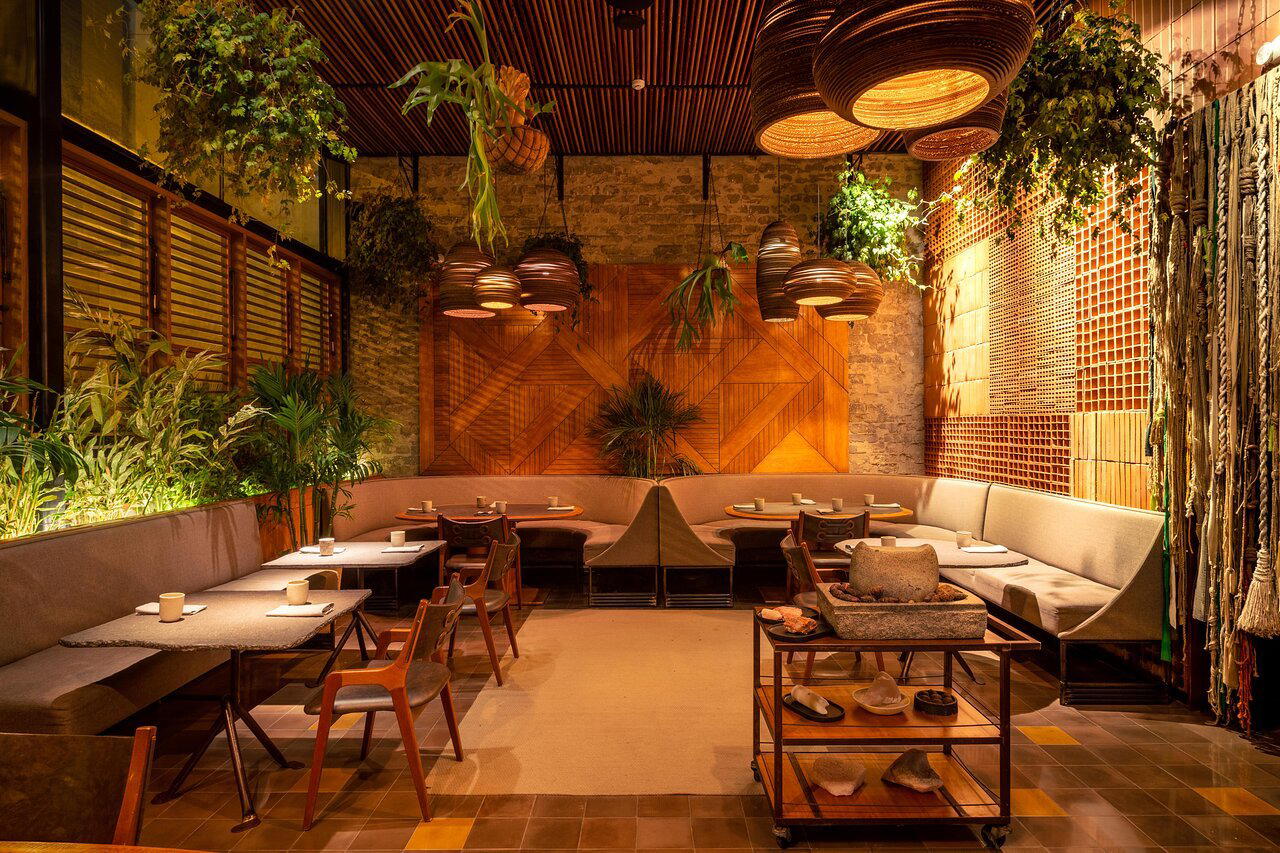
Where Peru's Geography Becomes a Menu
Mayta is a Modern Peruvian Fine Dining restaurant in Lima’s Miraflores district. Miraflores, Lima's most polished dining district, has spent the better part of two decades producing restaurants that treat Peruvian geography as raw culinary material. The logic is consistent: a country that runs from Pacific coastline through high-altitude Andean plateau to lowland Amazon basin carries more ecological range than most continents, and the upper tier of Lima's modern restaurants have made that range legible on the plate. Central does it through altitude-indexed courses. Kjolle does it through seasonal produce sequences. Mayta, on Av. Mariscal La Mar, does it through the concept of terroir, a term borrowed from wine culture that here means the accumulated flavour signatures of Peru's distinct ecosystems read together, not in isolation.
That framing matters because it shapes everything about how the menu is architected. This is not a restaurant that moves course by course through regions like chapters in a geography textbook. The approach is more integrated: ingredients from the desert coast, the sierra, and the jungle appear within single dishes, so that the comparison between ecosystems happens on the palate rather than across the table. Corn from the highlands sits alongside Amazonian fish. Andean algae, cushuro, arrives in the same plate as traditional potato preparations. The menu's internal logic is associative rather than sequential.
The Tasting Menu as Structural Argument
The centrepiece of Mayta's format is the nine-course Mayta Experience, a tasting menu that draws its structure from this cross-ecosystem philosophy. Individual dishes documented in the restaurant's public record give a precise read on how this plays out in practice: ribs with potatoes, cushuro, and chincho (an Andean herb) combine animal protein with highland botanicals and ancient fermentation-adjacent algae; corn arrives with chullpi, a traditional dried variety, and quinoa flower, layering three distinct expressions of ingredients that Peruvian agriculture has cultivated for millennia. These are not decorative garnishes. The secondary ingredients carry cultural and agricultural weight that changes the meaning of what they accompany.
One dish from the public record that illustrates the kitchen's technical range is a construction of thinly sliced paiche, an Amazonian river fish, shaped into the form of a rose. That kind of precision requires both classical knife skills and an understanding of how to honour an ingredient whose presence on the menu carries ecological reasoning as well as aesthetic intent. Paiche is a species whose population requires active management; eating it is, in a specific and documented sense, a conservation act. Pesaque has worked consistently with the fish as part of a broader sustainability programme that extends to the Yachay project, his research initiative aimed at recovering biodiversity in Peru's Ica region, a fertile desert area whose agricultural heritage had been in decline. The menu, in other words, is not structured around sentiment about ingredients. It is structured around relationships with supply chains that took years to establish.
Alongside the tasting menu, Mayta operates an à la carte format that brings the same ingredients into a less prescribed context. Dishes such as Amazonian ceviche and a muña tart with passionfruit ice cream and white chocolate give diners a way into the kitchen's register without committing to the full sequence. Muña is an Andean mint variety with a flavour profile distinct from its European counterpart, its appearance in a dessert alongside white chocolate and the acidity of passionfruit is a strong signal of how the kitchen thinks about the balance between the unfamiliar and the accessible.
The Plant Programme as Parallel Logic
A meaningful development in Mayta's recent evolution is the addition of a fully plant-based menu. This is not a vegetarian accommodation or a trend-driven sidebar. The restaurant earned a fifth radish in the We're Smart Green Guide, a rating system that assesses plant-forward cuisine with the same rigour that Michelin applies to conventional fine dining, and the upper tier of that system indicates a programme that is architecturally complete rather than supplementary. Peru's agricultural diversity is particularly well-suited to ambitious plant cooking: the country has more cultivated potato varieties than any other, along with quinoa, multiple corn races, native herbs, and jungle fruits that remain largely unknown outside the region. A kitchen with the sourcing infrastructure Mayta has built can construct an entirely plant-based tasting menu without defaulting to international produce. The fifth radish suggests it has done exactly that.
Trajectory and Recognition
Lima's place in the global restaurant conversation has been secured for years, but Mayta's specific trajectory within that conversation has a clear inflection point. The following year it entered Latin America's 50 Best Restaurants. In 2024, it was ranked 41st globally, having also held the 47th position in 2023. The La Liste ranking, which uses a separate aggregation methodology drawing from multiple critical sources, gave Mayta 92 points in 2025 and 91 points in 2026. Opinionated About Dining, a platform that aggregates data from experienced diners rather than professional critics, ranked Mayta 15th in South America in 2023, 25th in 2024, and 16th in 2025. Together, these data points describe a restaurant that has maintained its position across multiple evaluation systems over several consecutive years, which in Lima's competitive modern Peruvian tier is a harder achievement than a single debut ranking suggests.
The competitive context is worth holding in mind. Astrid y Gastón defined Lima's modern Peruvian identity before the current wave. Maido operates in the Nikkei tradition, a distinct Lima-specific fusion category. Mérito brings Venezuelan-inflected thinking into the city's dining mix. Within the specifically terroir-driven modern Peruvian sub-category, Mayta and Central occupy the same upper tier but approach the logic differently. At restaurants like Le Bernardin in New York City or Atomix in New York City, the tasting menu as a structural form has been refined over decades. In Lima, that refinement has happened in a compressed period, and Mayta is one of the restaurants that compressed it.
For those extending their time in Peru, the broader ecosystem of serious regional cooking is worth mapping. Mil in Cusco takes a high-altitude approach to many of the same Andean ingredients Mayta works with, while Cirqa in Arequipa represents the southern highland tradition. Cosme in San Isidro and Costanera 700 in Miraflores offer further contrast within Lima itself. The Amazon dimension of Peruvian cuisine extends geographically to experiences like Delfin Amazon Cruises in Iquitos and the Delfin I dining room in Nauta.
Planning a Visit
Mayta is located at Av. Mariscal La Mar 1285 in Miraflores. The restaurant operates lunch and dinner every day of the week, with lunch service from 12 pm to 3 pm and dinner from 6 pm to 10 pm. The consistency of that schedule across all seven days makes it more accessible than many peers in its tier, though the restaurant's recognition across multiple 50 Best cycles means booking ahead is advisable, particularly for dinner.6 rating. Mayta remains the flagship address.
The Quick Read
Comparable venues nearby, for context on price, style, and recognition.
| Venue | Cuisine | Price | Notes |
|---|---|---|---|
| MaytaThis venue — the venue you are viewing | Miraflores, Modern Peruvian Fine Dining | $$$$ | Not listed |
| Astrid & Gastón | San Isidro, Modern Peruvian Fine Dining | $$$$ | Not listed |
| Rafael | Miraflores, Modern Peruvian Fine Dining | $$$ | Not listed |
| Mérito | Not listed | $$$ | Barranco, Modern Venezuelan-Peruvian Fusion |
| Maido | Not listed | $$$$ | Miraflores, Nikkei (Japanese-Peruvian Fusion) |
| Central | Barranco, Modern Peruvian Tasting Menu | $$$$ | Not listed |
Recognition history
Dated appearances from independent guides and award organizations, with the underlying list record or original source where available.
La Liste Top Restaurants
La Liste
Opinionated About Dining Top Restaurants in South America Ranked #20
Opinionated About Dining
Star Wine List
Star Wine List
La Liste Top Restaurants
La Liste
Opinionated About Dining Top Restaurants in South America Ranked #16
Opinionated About Dining
The Best Chef Two Knives
The Best Chef
We're Smart World 5 Radishes
We're Smart World
We're Smart World Top 100 #85
We're Smart World
World's 50 Best Best Restaurants #39
World's 50 Best
World's 50 Best Latin America's Best Restaurants #11
World's 50 Best
Opinionated About Dining Top Restaurants in South America Ranked #25
Opinionated About Dining
World's 50 Best Best Restaurants #41
World's 50 Best
Opinionated About Dining Top Restaurants in South America Ranked #15
Opinionated About Dining
World's 50 Best Best Restaurants #47
World's 50 Best
World's 50 Best Best Restaurants #32
World's 50 Best
Continue exploring
More in Lima
Restaurants in Lima
Browse all →
Bars in Lima
Browse all →
Hotels in Lima
Browse all →
Wineries in Lima
Browse all →
At a Glance
- Elegant
- Sophisticated
- Modern
- Special Occasion
- Celebration
- Date Night
- Open Kitchen
- Extensive Wine List
- Local Sourcing
Current opening hours
- Monday
- 12–3 PM, 6–10 PM
- Tuesday
- 12–3 PM, 6–10 PM
- Wednesday
- 12–3 PM, 6–10 PM
- Thursday
- 12–3 PM, 6–10 PM
- Friday
- 12–3 PM, 6–10 PM
- Saturday
- 12–3 PM, 6–10 PM
- Sunday
- 12–3 PM, 6–10 PM
Hours can change for holidays and private events. Last verified .
Refined and comforting atmosphere with beautiful, artful plating, custom tableware, and a peaceful, sophisticated design that enhances the dining experience.