
Michelin Plate
Our verdict
On Praterstraße in Vienna's 2nd district, Edlingers Tempel has held a Michelin Plate in both 2024 and 2025, marking it as a dependable address for regional Austrian cooking at accessible prices. The kitchen draws on seasonal and locally sourced produce, placing it within a growing tier of Vienna restaurants that treat provenance as a structural commitment rather than a marketing note.

Pearl is the En Primeur Club membership app, where members save venues, book tables and use the concierge.
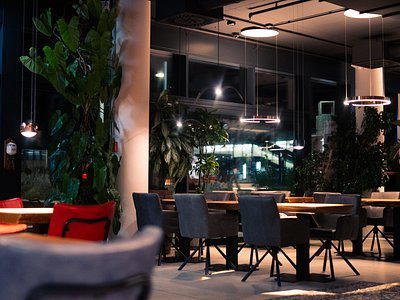
Praterstraße and the Return to Regional Cooking
Vienna's second district, the Leopoldstadt, has shifted considerably over the past decade. Once associated primarily with transit corridors and weekend market crowds near the Prater, the stretch of Praterstraße running northeast from the city centre has quietly accumulated a clutch of kitchens that take local and seasonal sourcing seriously. Edlingers Tempel, at number 56, sits within this pattern: a regional cuisine address in a neighbourhood that now reads less as a dining afterthought and more as a credible alternative to the first-district concentration of high-end restaurants.
Approaching the address, the contrast with Vienna's grander dining rooms is immediate. There is none of the marble-lobby formality that frames a meal at Steirereck im Stadtpark or the studied minimalism that signals the price point at Konstantin Filippou. The register here is more direct, more rooted in the Viennese tradition of the neighbourhood table, the kind of room where the cooking is the argument, not the décor.
Regional Austrian Cooking and What It Actually Means
The category label "regional cuisine" carries specific weight in the Austrian context. It signals a commitment to produce drawn from identifiable geographic sources, Styrian pumpkin oil, Waldviertel grey cattle, Burgenland paprika, alpine cheeses, rather than a generic pan-European larder. At its most disciplined, it also implies seasonality: the menu in October is structurally different from the menu in April, not because a designer tweaked the typography but because the underlying ingredients have changed.
This is the culinary tradition in which Edlingers Tempel operates. The approach places it in a peer group that includes addresses like Gasthaus Stern, where the same broad commitment to Austrian regional sourcing is the organising principle. It also creates a meaningful contrast with the creative-tasting-menu tier, venues like Doubek or Amador, where regional ingredients appear as one element within a larger technical or conceptual programme rather than as the primary frame.
Outside Vienna, the regional cuisine tradition runs deep across Austria. Landhaus Bacher in Mautern an der Donau and Döllerer in Golling an der Salzach have both built substantial reputations on the same foundational logic: cook what grows nearby, cook it in its season, and let the produce do the editorial work. Kräuterreich by Vitus Winkler in Sankt Veit im Pongau pushes the model further into herb-focused foraging territory. In the alpine west, Griggeler Stuba in Lech and Gourmetrestaurant Tannenhof in Sankt Anton am Arlberg demonstrate how the same sourcing philosophy scales upward in price and formality without abandoning its core logic.
The Sustainability Argument in Austrian Regional Kitchens
Within European dining, the sustainability conversation has fractured into two distinct positions. The first is performative: menus annotated with provenance footnotes, pressed-wildflower garnishes, and supplier names displayed like credits. The second is structural: kitchens that have built procurement, waste management, and menu design around what is actually available at a given moment rather than what was pre-ordered weeks in advance from a consolidated wholesale list.
The regional cuisine model, when executed with discipline, belongs to the second category. Short supply chains reduce transport emissions, seasonal buying reduces cold-storage demand, and cooking around the whole animal or vegetable, root to tip, nose to tail, reduces what goes to waste. None of this requires a manifesto; it was simply how Austrian provincial cooking functioned before industrialised supply chains made year-round uniformity the default. Kitchens operating in this tradition are, in a sense, recovering a practice rather than inventing a new one.
Across Austria, this approach has found recognition at multiple price points. Gannerhof in Innervillgraten and Fahr in Künten-Sulz both exemplify the model at a farm-adjacent level, where the distance between field and plate is sometimes measured in metres. Ikarus in Salzburg takes a different route, rotating international guest chefs through a fixed seasonal-produce framework, demonstrating that the underlying sustainability logic can accommodate creative variation without collapsing.
At Edlingers Tempel, the same structural logic applies at an accessible price tier. The single-euro-sign price range positions the kitchen within reach for a broad audience, a point worth noting when the sustainability conversation in dining so frequently defaults to premium formats that remain inaccessible to most of the population. Cooking regionally and seasonally at affordable prices is a harder operating model than doing so with a luxury margin to absorb supplier premiums.
Recognition and Peer Position
Michelin awarded Edlingers Tempel a Plate in both 2024 and 2025, the Guide's marker for cooking that is technically sound and worth seeking out, below the star threshold but above anonymity. In a city where the starred tier is crowded and well-documented, the Plate tier represents a different kind of value proposition: reliable quality without the booking difficulty or price commitment that stars typically attach.
The regional cuisine category at the Plate level forms a coherent peer group in Vienna and across Austria. These are not consolation-prize kitchens; they are addresses where the cooking is precise, the sourcing is considered, and the format does not require three months of forward planning. For readers building an itinerary across Vienna's full range, the EP Club's full Vienna restaurants guide maps the complete spectrum from Plate-level neighbourhood tables to the multi-starred creative rooms.
Planning a Visit
Edlingers Tempel is located at Praterstraße 56 in the 1020 postal district, Vienna's Leopoldstadt. The address is reachable by U-Bahn on the U1 line (Nestroyplatz or Praterstern, depending on direction of approach) and sits within a walkable cluster of neighbourhood eating options that makes the area practical for a longer evening in the second district.
The single-euro price range suggests meal costs that sit well below the Vienna average for Michelin-recognised cooking, making it a practical option for multiple visits rather than a single occasion.7-rated kitchen draws a consistent local crowd.
For broader planning across the city, the EP Club's Vienna hotels guide, Vienna bars guide, Vienna wineries guide, and Vienna experiences guide cover the full range of the city's premium options.
What Should I Order at Edlingers Tempel?
What the Michelin Plate recognition in 2024 and 2025, combined with the regional cuisine classification, does indicate is that the kitchen's strengths are rooted in seasonal Austrian produce and traditional technique rather than in technical showmanship or international reference points. In that context, dishes built around whatever is in peak season at the time of your visit will typically reflect the kitchen's core logic better than anything carried over from a different part of the year. Spring visits bring different sourcing possibilities than autumn, and a kitchen at this level in this tradition will adjust accordingly. For the most current menu picture, the venue's own channels or local review platforms will have up-to-date information.
Frequently asked questions
What's Edlingers Tempel's location?
Edlingers Tempel is located at Praterstraße 56, 1020 Wien, Austria, Vienna.
Comparable options at a glance, pulled from our tracked venues.
| Venue | Cuisine | Price | Awards | Notes |
|---|---|---|---|---|
| Edlingers TempelThis venue (the venue you are viewing) | Modern Austrian Regional | $30–50 | Michelin Plate | Not listed |
| Steirereck im Stadtpark | Modern Austrian Fine Dining | $200–300 | 3 Michelin Stars · World's 50 Best #33 | Creative |
| Mraz & Sohn | Contemporary Austrian Fusion | $150–200 | 2 Michelin Stars · La Liste Top Restaurants | Modern Austrian, Creative |
| Silvio Nickol Gourmet Restaurant | Modern Austrian Fine Dining | $300–500 | 2 Michelin Stars · La Liste Top Restaurants | Modern Cuisine |
| Konstantin Filippou | Modern Fish-Led Fine Dining | $200–300 | 2 Michelin Stars · La Liste Top Restaurants | Modern European, Modern Cuisine |
| APRON | Modern Austrian Fine Dining | $150–200 | 1 Michelin Star · Falstaff Restaurant - 95 Falstaff Points | Austrian, Creative |
Recognition history
Dated appearances from independent guides and award organizations, with the underlying list record or original source where available.
Michelin Plate
Michelin
Full recognition history (3 entries)
Michelin Plate
Michelin
Michelin Plate
Michelin
Continue exploring
More in Vienna
Restaurants in Vienna
All restaurants in Vienna →
Bars in Vienna
All bars in Vienna →
Hotels in Vienna
All hotels in Vienna →

Details
- Cozy
- Romantic
- Intimate
- Date Night
- Special Occasion
- Family
- Terrace
- Courtyard
- Historic Building
- Extensive Wine List
- Local Sourcing
- Garden
- A La Carte
- Set Menu
- Wine
- Vegetarian Friendly
- Gluten Free Options
Current opening hours
- Monday
- Closed
- Tuesday
- 11 AM–3 PM, 6–11 PM
- Wednesday
- 11 AM–3 PM, 6–11 PM
- Thursday
- 11 AM–3 PM, 6–11 PM
- Friday
- 11 AM–3 PM, 6–11 PM
- Saturday
- 11 AM–3 PM, 6–11 PM
- Sunday
- Closed
Hours can change for holidays and private events. Hours as of .
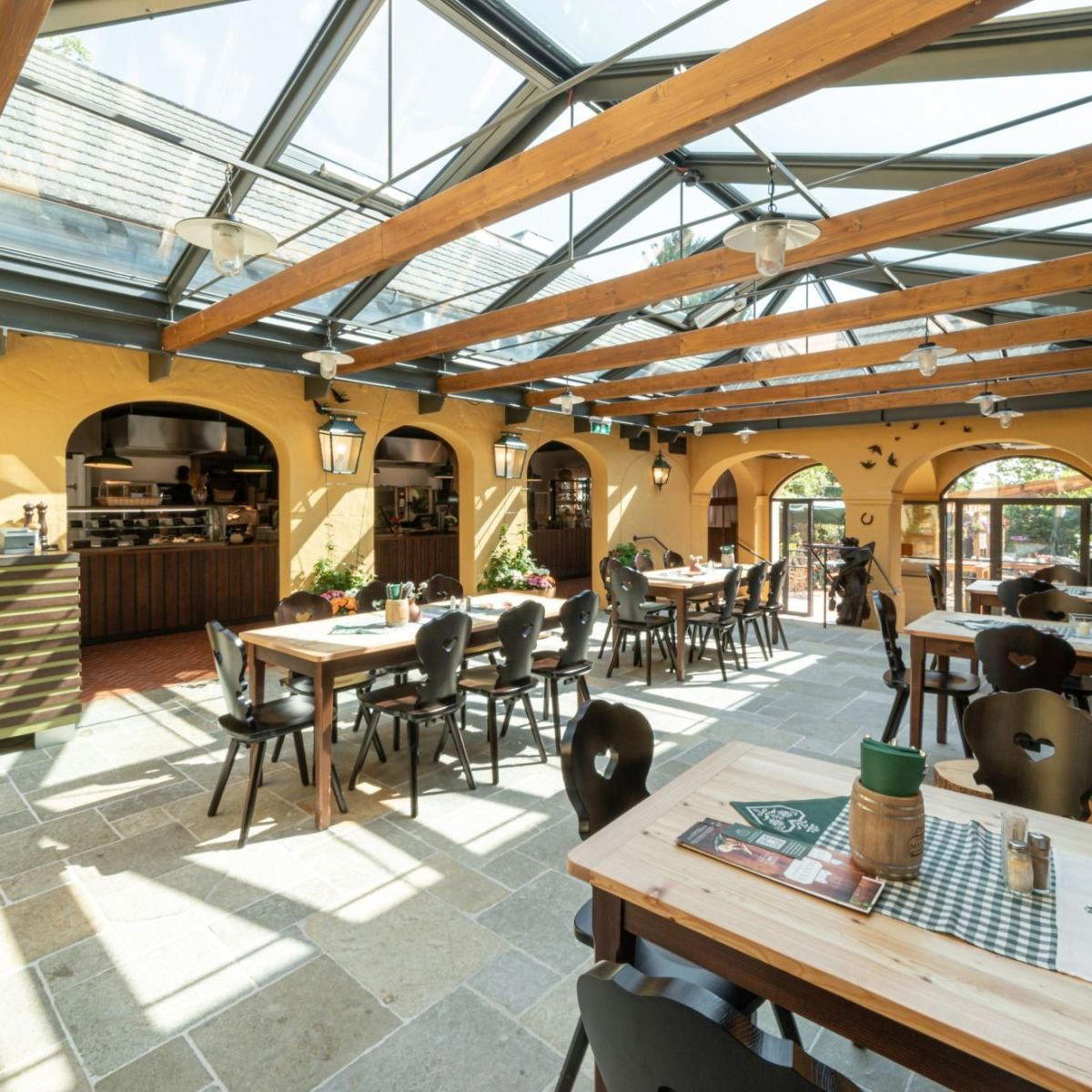
Cozy and inviting interior with vaulted ceilings, romantic atmosphere, and serene garden terrace surrounded by trees.