
Tabelog 100 #24
Our verdict
Echigo Tsuruy belongs to Tokyo’s quieter wagashi circuit, where craft is measured in texture, restraint, and the discipline of take-away sweets rather than dining-room theatre. Its Tabelog 100 selection for Tokyo Japanese traditional sweets and sweets cafés in 2023 places it in a serious category for travellers looking beyond sushi counters and kaiseki rooms.

Pearl is the En Primeur Club membership app, where members save venues, book tables and use the concierge.
The menu
What to order
- 無水杵つき餅 (water-free hand-pounded mochi)
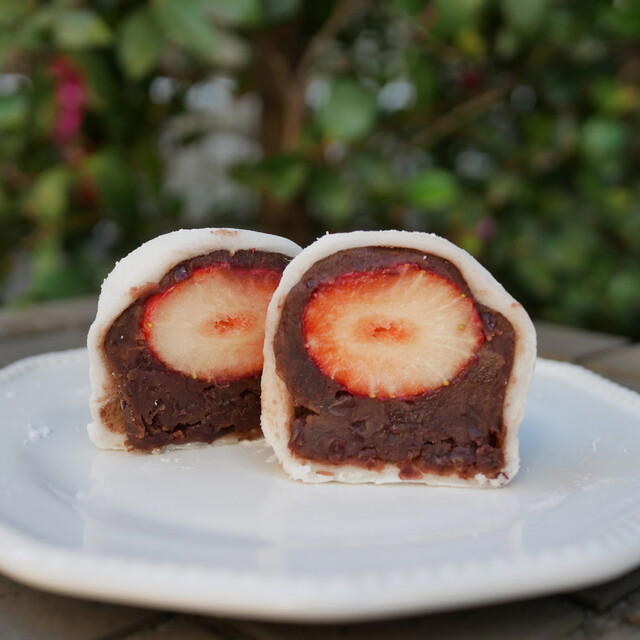
- 開運大福 (good-luck daifuku)
- 一期大福(いちご大福)
- 開運豆大福
- みたらし団子
A proper Tokyo wagashi shop moves to a different rhythm from the city’s restaurant culture: no bar seat, sommelier choreography, or counter performance. The experience is a small act of selection: glass, trays, wrapped sweets, a brief exchange, then the city again. In Tokyo, that stripped-back format matters. The city has long rewarded small specialists over spectacle, and wagashi fits that habit: precise, portable, seasonal by implication, and judged on balance rather than volume.
Echigo Tsuruy belongs to that circuit. Its listed categories are Japanese traditional sweets and daifuku. That separates it from Tokyo’s dessert cafés, hotel pâtisseries, and matcha parlours. The pleasure is not necessarily a long plated-course experience; it is choosing sweets for immediate gifting, home tea, or a short detour through the city. The 2023 Tabelog 100 selection is the useful signal, not because it turns a modest shop into a luxury address, but because wagashi recognition in Tokyo is crowded and detail-driven.
Tokyo wagashi at counter scale, not restaurant scale
Tokyo food writing often over-rewards performance formats: omakase sushi, yakitori counters, tempura rooms, French-Japanese tasting menus. Wagashi asks for quieter attention. The craft is in rice cake texture, bean paste handling, shape, sweetness, and how a sweet holds its character after purchase. A sweets specialist has little room to soften weak work; the product carries the whole argument.
That is why daifuku remains a useful test. It looks plain beside plated desserts, but leaves little room for distraction. Mochi must be supple rather than heavy; filling has to register sweetness without smothering the rice; portion and finish need control. Strong Tokyo wagashi shops do not compete with pastry counters on gloss. They compete on repetition, freshness, and the confidence to let two or three elements do the work.
Tokyo also changes the reading. This is not only the city’s gift-box economy or design-forward café culture. The wider dining scene rewards destination errands and focused specialists: curry at FRENCH CURRY SPOON, ramen at Menson Rage, spice-focused cooking such as Curry Shop Fennel, wine-led dining at オルガン, and sweets specialists such as Amai Ko. Echigo Tsuruy fits that pattern: a focused stop rather than an all-evening plan. Travellers can place it alongside more familiar restaurant routes in Tokyo, but the tempo is completely different.
Why the Tabelog 100 signal matters for sweets
The Tabelog 100 recognition for Japanese traditional sweets in Tokyo is a more specific credential than a generic popularity cue. It points to a category where the audience is unusually granular: locals compare textures, regional styles, seasonality, packaging, and value with unforgiving attention. Echigo Tsuruy’s 2023 selection places it inside that specialist conversation. Its Tabelog score of 3.74 reinforces the point, though the stronger editorial reading is the combination of category focus and recognition within a city dense with wagashi competition.
The economics are part of the appeal. Tokyo has become expensive at the high end, yet wagashi remains one of the city’s accessible forms of craft. This is not a consolation prize for travellers priced out of sushi. It is a separate tradition with its own hierarchy and rules. In the same city where a counter meal can require advance planning and a serious budget, a sweets errand can deliver precise Japanese technique without turning lunch into a project.
That contrast helps trip planning. A day built around major dining can become heavy; a wagashi stop gives the itinerary a smaller, more local punctuation mark. It also reflects how Tokyo actually eats: not only in reservation rooms, but through bakeries, depachika counters, kissaten, onigiri shops, fruit parlours, and old sweets specialists. Other casual Tokyo dining addresses show how much of the city’s eating life happens outside the formal tasting-menu frame.
How to fit a wagashi stop into a Tokyo day
Use Echigo Tsuruy as a targeted stop in Tokyo. The sweets-shop format rewards decisiveness rather than lingering, making it easy to combine with a Tokyo walk, a park visit, or a second food stop without committing to a full meal slot.
There is broader Japan itinerary logic here. Wagashi is often treated as a Kyoto subject, but Tokyo has its own dense sweets culture, shaped by department-store gifting, tea practice, train-station errands, and small local shops. Compare this stop with other casual Japanese food addresses in broad terms, and the point sharpens: Japan’s strongest everyday food experiences are often narrow, disciplined, and local in scale.
International comparisons can mislead, but are useful in one respect. Outside Japan, some venues translate parts of Japanese eating culture for a different audience. Tokyo needs no translation. A wagashi counter in Tokyo operates within its native rhythm, which can feel more instructive than another high-profile reservation.
For the wider city, use this as a reminder to balance headline meals with smaller, category-specific stops. Our full Tokyo restaurants guide covers the dining map, while our full Tokyo hotels guide, our full Tokyo bars guide, our full Tokyo wineries guide, and our full Tokyo experiences guide frame the rest of the trip. The case for Echigo Tsuruy is compact: a recognized Tokyo wagashi specialist, grounded in daifuku and traditional-sweets craft, in a city that rewards travellers who leave the obvious dining corridors.
Cuisine and Credentials
Comparable venues by cuisine and category.
| Venue | Cuisine | Price | Awards | Notes |
|---|---|---|---|---|
| Echigo TsuruyThis venue (the venue you are viewing) | Traditional Japanese mochi & wagashi shop | $1–10 | Tabelog 100 #24 | Not listed |
| Hekkelun | Classic Japanese kissaten & pudding café | $1–10 | Tabelog 100 | Toranomon/Shinbashi |
| Nishieifuku no Niboshi Bako | Niboshi-focused Ramen | $10–20 | Tabelog 100 #39 | Suginami |
| Oishii Curry | Japanese Curry House | $10–20 | Tabelog 100 #43 | Setagaya |
| Chonan Hosono Takashi | Tsukemen & ramen | $10–20 | Tabelog 100 #53 | Nerima |
| Ishida Ya | Traditional Sushi & Japanese Cuisine | $10–20 | Tabelog 100 #3 | Itabashi |
Recognition history
Dated appearances from independent guides and award organizations, with the underlying list record or original source where available.
Tabelog 100 #24 · No. 24
Tabelog · Tabelog 100 - Japanese traditional sweets / Japanese sweets cafe - TOKYO - 2023
Continue exploring
More in Tokyo
Restaurants in Tokyo
All restaurants in Tokyo →




Bars in Tokyo
All bars in Tokyo →







Details
- Cozy
- Classic
- Solo
- Family
- Casual Hangout
- Standalone
- Local Sourcing
- A La Carte
- Counter Dining
- Organic Focus
Current opening hours
- Monday
- Closed
- Tuesday
- Closed
- Wednesday
- 9 AM–6 PM
- Thursday
- 9 AM–6 PM
- Friday
- 9 AM–6 PM
- Saturday
- 9 AM–6 PM
- Sunday
- 9 AM–6 PM
Hours can change for holidays and private events. Hours as of .
A small, traditional wagashi shop with an open kitchen where craftsmen hand-make mochi and daifuku, giving it a warm, artisanal neighborhood feel rather than a sit-down restaurant atmosphere.