
Tabelog 100 #53
Our verdict
Chonan Hosono Takashi sits in Ekoda’s small-counter ramen culture, with tsukemen rather than wine service doing the serious curatorial work. The eight-seat room, cash-only payment, no reservations, and repeated Tabelog Ramen TOKYO 100 selection in 2023, 2024, and 2025 place it in a practical, queue-driven tier of Tokyo dining where precision matters more than ceremony.

Pearl is the En Primeur Club membership app, where members save venues, book tables and use the concierge.
The menu
What to order
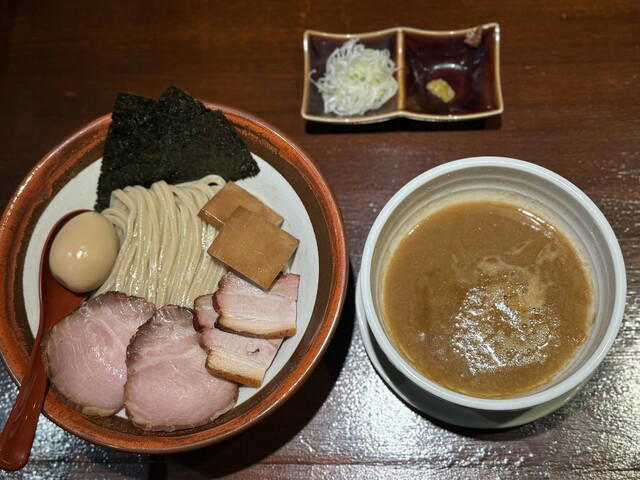
- Tokusei tsukemen
- Tsukemen
- Mitarashi abura soba
- Spicy brothless hiyashi chuka
- Rich squid niboshi soup tsukemen
Ekoda’s ramen streets are not built for ceremony. The approach is ordinary Tokyo in the useful sense: station exits, narrow shopfronts, quick turnover, and counters where the room tells diners how to behave before a menu does. In that setting, Chonan Hosono Takashi belongs to the city’s serious tsukemen bracket, a format where the kitchen’s discipline is measured through noodle texture, dipping broth balance, and pacing rather than table service or cellar architecture.
The wine-list assignment, in this case, has to be read against the category. Tokyo’s ramen and tsukemen counters rarely use beverage programs as a marker of ambition; the curation sits in the bowl. At an eight-seat counter, the equivalent of a sommelier’s hand is portion control, broth concentration, noodle timing, and the confidence to keep the offer narrow. That makes this a useful corrective for travelers who read Tokyo dining only through omakase, tasting menus, and hotel bars. The city’s technical food culture is just as visible in a low-price, reservation-free room.
Tsukemen as Tokyo's counter-service precision test
Tsukemen changes the diner’s rhythm. Instead of noodles arriving submerged, the dish separates noodle and broth, which puts more pressure on texture and temperature management. That distinction matters in Tokyo, where ramen subgenres are not minor variations but separate competitive lanes. Chonan Hosono Takashi is listed for tsukemen, and its selection for Tabelog Ramen TOKYO 100 in 2023, 2024, and 2025 gives the room a clear trust signal in a city where ramen recognition is crowded and granular.
The price band keeps the experience grounded: lunch and dinner sit at JPY 1,000 to JPY 1,999. That range puts it closer to everyday Tokyo eating than destination fine dining, yet the eight-seat capacity makes the meal feel more constrained than the tariff suggests. Reservations are unavailable, so the real cost is timing and patience. This is where the Tokyo ramen counter differs from premium restaurant planning: there is no concierge choreography, no deposit, no long tasting arc. The decision is tactical, not theatrical.
Within the immediate comparison set, the pricing aligns with Golden time and L'AUTOMNE Nakano ten, while Parlor Ekoda and Machi no Parlor sit in the JPY 2,000 to JPY 2,999 band. That does not make one category superior; it clarifies the buyer’s choice. Ekoda can support both simple-counter noodle eating and higher-spend neighborhood dining, and Chonan Hosono Takashi occupies the tighter, faster, more noodle-specific end of that spectrum.
Ekoda keeps the meal local, not performative
Tokyo visitors often over-index on central wards, but Nerima’s value is that it does not need to act like Ginza, Aoyama, or Roppongi. Ekoda is a station-neighborhood dining district, and its better small restaurants tend to function for repeat local use as much as cross-town pilgrimage. The address sits in Asahigaoka, near Ekoda Station, with Shin-Ekoda also within walking range. That dual access matters because a no-reservations, eight-seat format rewards flexible routing rather than rigid itinerary planning.
The practical read is simple. Weekdays divide service between lunch and dinner, while weekends and public holidays run continuously through the day. Payment is cash only, with credit cards, electronic money, and QR code payments not accepted. The room is non-smoking, private rooms are unavailable, and parking is not offered. Families are explicitly accommodated, including babies, preschoolers, school-age children, and strollers, which is not always a given at compact Tokyo counters.
That family-friendly note also says something about the venue’s place in the neighborhood. This is not a hushed luxury room borrowing ramen as a concept; it is a small counter in a residential-commercial district where technical noodle work coexists with everyday use. For Tokyo dining context beyond ramen, EP Club’s restaurant coverage ranges from central-city Japanese dining such as . 鮪と炭火焼き うお炭 秋葉原店, 12/10 Shinjuku ten, and 124. KAGURAZAKA (Yakitori) to lighter or more casual addresses such as 2D Cafe and 3 Chome no Curry Ya San.
How to place it in a Tokyo food itinerary
The strongest reason to come is category clarity. Chonan Hosono Takashi is a tsukemen counter with repeated Ramen TOKYO 100 recognition, not a broad izakaya, not a chef’s-menu dining room, and not a drinks-led address. Diners seeking a deep bottle list or formal pairings should route elsewhere; those interested in how Tokyo expresses precision at everyday prices will understand the appeal quickly.
Its constraints are part of the editorial point. Eight seats means capacity is materially limited. No reservations shifts control back to the day’s flow. Cash-only payment favors preparation. The JPY 1,000 to JPY 1,999 band keeps the risk low, but the small room makes timing the main variable. For a traveler moving across Tokyo, this is better treated as an Ekoda-focused stop than a casual add-on between distant neighborhoods.
For broader planning, use Our full Tokyo restaurants guide alongside Our full Tokyo hotels guide, Our full Tokyo bars guide, Our full Tokyo wineries guide, and Our full Tokyo experiences guide. Readers extending the trip beyond Tokyo can compare how casual Japanese dining changes by city through -Grilled beef Sukiyaki- KAMAKURA TANUKIAN 鎌倉 たぬき庵 in Kamakura.cafe in Osaka.know in Kumamoto, (Shoku) Vietnam in Kawasaki, [Curry Senmon Ten] Maruyama Kyoju. in Sapporo, and [ki:] in Kyoto. Across the Pacific, Jōdo Saké Bar in Los Angeles and Onigiri Time in Pasadena show a different diaspora expression of Japanese food culture, useful as contrast rather than direct comparison.
The verdict is narrow and confident: this is for diners who care about tsukemen as a technical form and accept that the practical grammar of Tokyo ramen is queues, small counters, and limited payment flexibility. The reward is not luxury signaling. It is seeing how much seriousness Tokyo can compress into a modestly priced bowl.
Frequently asked questions
Is Chonan Hosono Takashi more mid-range or high-end?
Pricing at Chonan Hosono Takashi is listed as JPY 1,000 - JPY 1,999 JPY 1,000 - JPY 1,999.
When can I go to Chonan Hosono Takashi?
Hours at Chonan Hosono Takashi: Mon: 11 AM–2:50 PM, 5:30–9 PM; Tue: 11 AM–2:50 PM, 5:30–9 PM; Wed: 11 AM–2:50 PM, 5:30–9 PM; Thu: 11 AM–2:50 PM, 5:30–9 PM; Fri: 11 AM–2:50 PM, 5:30–9 PM; Sat: 11 AM–8 PM; Sun: 11 AM–8 PM.
What's Chonan Hosono Takashi's location?
Chonan Hosono Takashi is located in Tokyo.
What's the defining dish or idea at Chonan Hosono Takashi?
The defining format is tsukemen, or dipping noodles, served at an 8-seat counter in Ekoda, Tokyo. That narrow setup fits the Tabelog Ramen TOKYO 100 selection for 2025 and keeps the focus on the noodle-and-broth contrast rather than a broad menu.
Is Chonan Hosono Takashi allergy-friendly?
The venue is non-smoking and family friendly, and it accepts children and strollers. For allergies, Those details are not published. Check the venue's official channels for the latest details.
Cuisine Context
Comparable venues for context, by category and price tier.
| Venue | Cuisine | Price | Awards | Notes |
|---|---|---|---|---|
| Chonan Hosono TakashiThis venue (the venue you are viewing) | Tsukemen & ramen | $10–20 | Tabelog 100 #53 | Not listed |
| Ayu Ramen Plus (鮎ラーメンプラス) | Traditional Ayu Ramen | $1–10 | Not listed | Toranomon |
| Golden time | Award-winning ramen & brothless tantanmen | $10–20 | Tabelog 100 #1 | Nerima |
| Pneuma Curry | Japanese Curry | $1–10 | Tabelog 100 #84 | Shinjuku |
| Jun Teuchi Daruma | Handmade Noodle Ramen (Light Shoyu) | $10–20 | Tabelog 100 #7 | Suginami |
| Kuromatsu Honpo Sogetsu | Traditional Japanese Wagashi & Dorayaki Shop | $1–10 | Tabelog 100 #77 | Kita |
Recognition history
Dated appearances from independent guides and award organizations, with the underlying list record or original source where available.
Tabelog 100 #53 · No. 53
Tabelog · Tabelog 100 - Ramen - TOKYO - 2025
Continue exploring
More in Tokyo
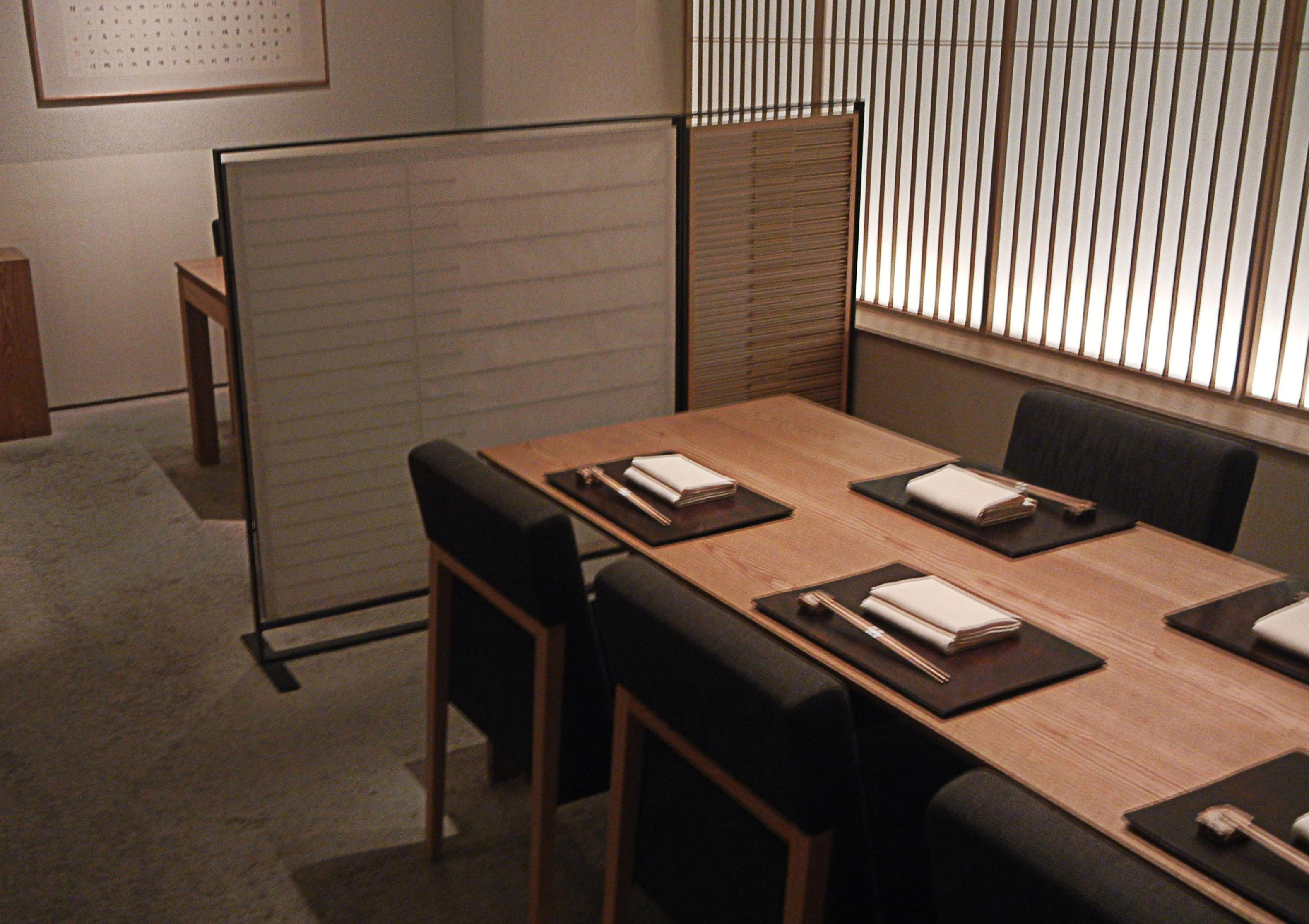
Restaurants in Tokyo
All restaurants in Tokyo →



Bars in Tokyo
All bars in Tokyo →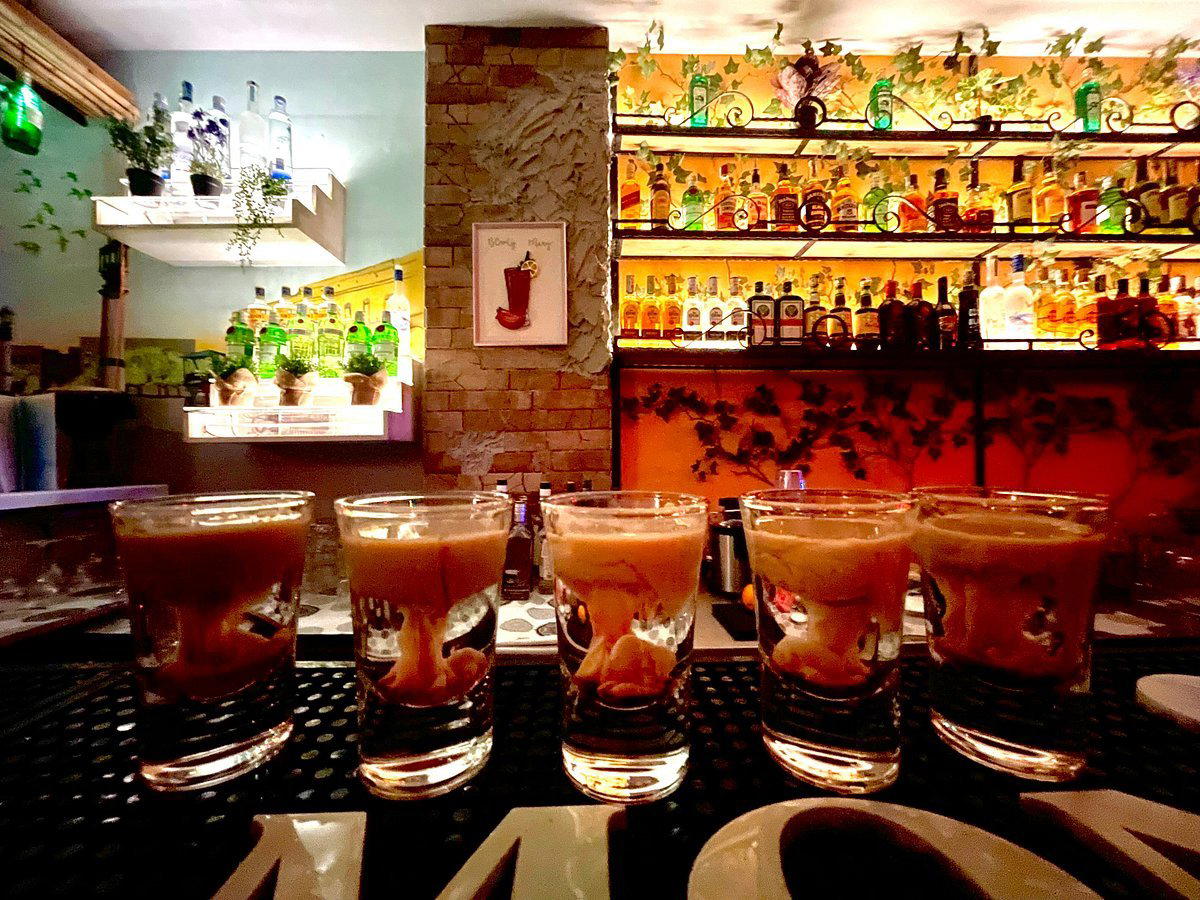





Details
- Lively
- Cozy
- Solo
- Casual Hangout
- After Work
- Family
- Chefs Counter
- Standalone
- A La Carte
- Counter Dining
Current opening hours
- Monday
- 11 AM–2:50 PM, 5:30–9 PM
- Tuesday
- 11 AM–2:50 PM, 5:30–9 PM
- Wednesday
- 11 AM–2:50 PM, 5:30–9 PM
- Thursday
- 11 AM–2:50 PM, 5:30–9 PM
- Friday
- 11 AM–2:50 PM, 5:30–9 PM
- Saturday
- 11 AM–8 PM
- Sunday
- 11 AM–8 PM
Hours can change for holidays and private events. Hours as of .
A compact, counter-only ramen shop with a casual, energetic feel, bright functional lighting, and a bustling atmosphere typical of popular neighborhood tsukemen spots.