Durum Bar
Our verdict
Durum Bar on Nørrebrogade sits inside Copenhagen's most food-literate neighbourhood, where the city's appetite for casual precision meets the döner tradition on its own terms. The format is deliberate: queue, choose, eat. No reservations, no ceremony, just a tight operation that takes the wrap seriously in a city that applies the same scrutiny to street food as it does to its tasting-menu circuit.

Pearl is the En Primeur Club membership app, where members save venues, book tables and use the concierge.
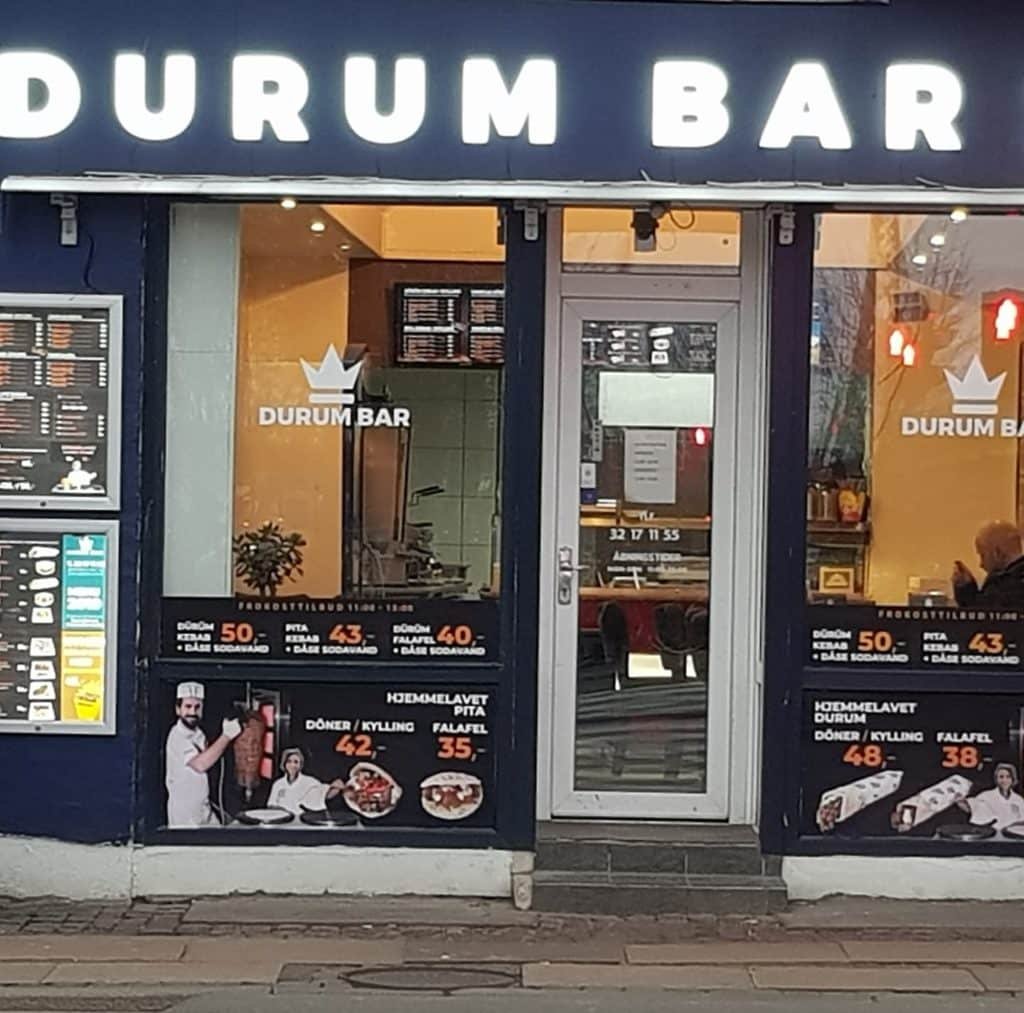
The menu
What to order
- Durum Wrap
- Falafel Wrap
- Shawarma
- Kebab Wrap
- Grilled Kebabs
Where Nørrebro's Street Food Logic Takes Shape
Nørrebrogade runs through one of Copenhagen's most demographically layered districts, a street where kebab shops, specialty coffee roasters, and natural wine bars occupy the same block without much friction. It is the kind of neighbourhood that has always eaten this way: practically, hungrily, without pretension, but increasingly with a standard. Durum Bar at number 195 sits inside that current. Copenhagen has spent two decades building a reputation for ingredient discipline at its upper end, with venues like Geranium, Noma, and Alchemist anchoring a global conversation about what Nordic cooking can mean. That seriousness eventually filters down, into bakeries, into lunch spots, into the city's appetite for the döner done with the same care applied to a tasting-menu component.
The durum wrap format itself has a long trajectory in Scandinavian cities. Unlike the late-night kebab counter defined primarily by volume and speed, a well-run durum operation is closer to a composed plate in portable form: flatbread quality matters, the balance of meat to fresh garnish to sauce is a structural question, and the temperature of each component at the moment of eating determines whether the thing holds together or collapses. Copenhagen diners, trained by years of exposure to Kadeau and Koan-level precision at the high end, bring that attentiveness even to street-format eating. The neighbourhood notices the difference.
The Ritual of the Queue and the Counter
Street-food dining has its own etiquette, and Nørrebro enforces it unselfconsciously. You arrive, you read the board, you decide before you reach the counter. There is no extended menu consultation here, the format assumes you know what you want, or that you can narrow it down quickly. This is part of what separates a durum counter from a sit-down restaurant: the pacing is externally set, not by a kitchen's tasting-menu rhythm, but by the queue behind you and the speed of the wrap-station ahead. The transaction is brief; the eating is the event.
That brevity is not a limitation. It is a different kind of ritual. In the same way that a sushi counter in Tokyo compresses the distance between preparation and consumption, a well-run döner station compresses the distance between assembly and eating, the wrap leaves the press warm, and the window before the flatbread softens is short. Timing is built into the format. Eating at Durum Bar is a decision to engage with that format on its own terms, not to import the pacing expectations of a restaurant with a reservation system.
For comparison, the city's formal dining circuit, stretching from Copenhagen's Michelin-dense centre out to Jordnær in Gentofte and across Denmark to Frederikshøj in Aarhus, Henne Kirkeby Kro, Frederiksminde in Præstø, Ti Trin Ned in Fredericia, Dragsholm Slot Gourmet, LYST in Vejle, Tri in Agger, Pearl by Paul Proffitt in Kruså, and Syttende in Sønderborg, operates on entirely different terms. Those venues ask for two to four hours, a reservation made weeks or months in advance, and a willingness to surrender control of the menu. Durum Bar asks for none of that. It belongs to a separate category of eating experience, one that coexists with the fine-dining circuit rather than competing with it. Many Copenhagen visitors spend an evening at a Michelin table and the following afternoon on Nørrebrogade, and the contrast is part of the point.
Nørrebro as a Dining District
Understanding Durum Bar means understanding Nørrebro. The neighbourhood has a higher proportion of residents from Middle Eastern and North African backgrounds than most of Copenhagen's inner districts, and that demographic fact has shaped its food culture directly. Falafel, shawarma, and durum wraps are not imports here, they are part of the neighbourhood's embedded food language, refined over decades by operators who have been making this food longer than Copenhagen's new-Nordic wave has existed. The question of authenticity in this context is less interesting than the question of execution: who is making the flatbread fresh, who is rotating the meat correctly, who is building the wrap to stay structurally sound for the ten minutes between purchase and consumption.
That attention to execution is what places Durum Bar in conversation with the broader Copenhagen food scene, not because it aspires to tasting-menu status, but because it operates in a city where the baseline expectation for food quality has been raised across formats. The same dynamic plays out internationally: at Le Bernardin in New York City or Lazy Bear in San Francisco, the existence of technically serious fine dining in a city eventually raises the floor for every category of eating. Nørrebro's döner culture has benefited from that effect in Copenhagen.
Planning Your Visit
Nørrebrogade 195 is accessible by bus and a short walk from several S-tog and metro connections serving the inner Nørrebro area. The format does not require advance booking, walk-in and queue is the standard approach, which makes it one of the few Copenhagen food experiences with no planning overhead. Copenhagen's broader dining scene rewards advance planning significantly: Michelin-level tables fill weeks or months ahead, and the city's seasonal patterns mean summer weekends can compress availability across the board. Durum Bar operates outside that pressure, making it a reliable option for the kind of eating that fits between planned reservations rather than requiring one of its own. For anyone mapping a fuller Copenhagen itinerary across formats and price points, the EP Club Copenhagen restaurants guide covers the city's dining circuit from street level to its highest-end tasting counters.
Frequently asked questions
Can I bring kids to Durum Bar?
The counter format at Nørrebrogade 195 is well-suited to families with children. Ordering is quick, the setting is informal, and there is no sit-down service structure to navigate. The street-food pace keeps things moving, which works in favour of shorter attention spans.
Is Durum Bar formal or casual?
Durum Bar operates on a walk-up counter model on Nørrebrogade in Copenhagen's Nørrebro district. There are no dress expectations, no reservations, and no table service. You read the board, you order, you eat, the format sets the tone entirely.
How does Durum Bar fit into Copenhagen's broader street food scene?
While Copenhagen's food conversation often centres on New Nordic tasting menus, Nørrebro has long operated on a different register. Durum Bar at Nørrebrogade 195 sits within a stretch of the district where Middle Eastern and North African food traditions have been present for decades, predating the city's current restaurant boom. It represents the neighbourhood's own food logic rather than a response to wider dining trends.
What should I order at Durum Bar?
The venue name signals the format: durum wraps are the core offering, in the tradition of the Middle Eastern and North African food culture that defines much of Nørrebrogade's street-food scene. Read the board on arrival, as the options are displayed there rather than on a fixed printed menu.
Cuisine-First Comparison
| Venue | Cuisine | Price | Awards | Notes |
|---|---|---|---|---|
| Durum BarThis venue (the venue you are viewing) | Turkish Durum Wraps & Shawarma | $10–20 | Not listed | Not listed |
| Geranium | Modern New Nordic Pescatarian | $500+ | 3 Michelin Stars · World's 50 Best #1 | New Nordic, Creative |
| Noma | New Nordic Fine Dining | $300–500 | 3 Michelin Stars · World's 50 Best #1 | Creative |
| Alchemist | Avant-Garde Molecular Gastronomy with Social Commentary | $500+ | 2 Michelin Stars · World's 50 Best #3 | Progressive, Creative |
| Koan | Modern Korean-Nordic Fine Dining | $300–500 | 2 Michelin Stars · World's 50 Best #57 | New Nordic, Kaiseki, Creative |
| a|o|c | Modern Scandinavian Fine Dining | $300–500 | 2 Michelin Stars · La Liste Top Restaurants | New Nordic, Mediterranean Small Plates, Creative |
Continue exploring
More in Copenhagen
Restaurants in Copenhagen
All restaurants in Copenhagen →
Bars in Copenhagen
All bars in Copenhagen →


Details
- Lively
- Trendy
- Casual
- Casual Hangout
- Late Night
- Solo
- Open Kitchen
- Standalone
- A La Carte
- Counter Dining
- Soft Drinks
- Traditional Turkish Tea
- Vegetarian Friendly
- Vegan Options
Current opening hours
- Monday
- 11 AM–11 PM
- Tuesday
- 11 AM–11 PM
- Wednesday
- 11 AM–11 PM
- Thursday
- 11 AM–3 AM
- Friday
- 11 AM–5 AM
- Saturday
- 11 AM–5 AM
- Sunday
- 11 AM–11 PM
Hours can change for holidays and private events. Hours as of .
Unpretentious, bustling fast-casual environment with tables scattered with spicy sauces; comes alive late at night with energetic crowds.