Folkehuset Absalon
Folkehuset Absalon occupies a converted church on Sønder Boulevard in Copenhagen's Vesterbro district, functioning as a community hall, dining room, and cultural venue rolled into one sprawling nave. Where the city's high-end tasting counters demand reservation windows measured in months, Absalon operates on a different logic: long tables, shared meals, and a format closer to a Danish folkehøjskole than a restaurant.
Pearl is the En Primeur Club membership app — saves, bookings, and concierge access live there. Same editors, same standards.
- Address
- Sønder Blvd. 73, 1720 København, Denmark
- Website
- absaloncph.dk
- Directions
- Get directions
 Saves & bookings on Pearl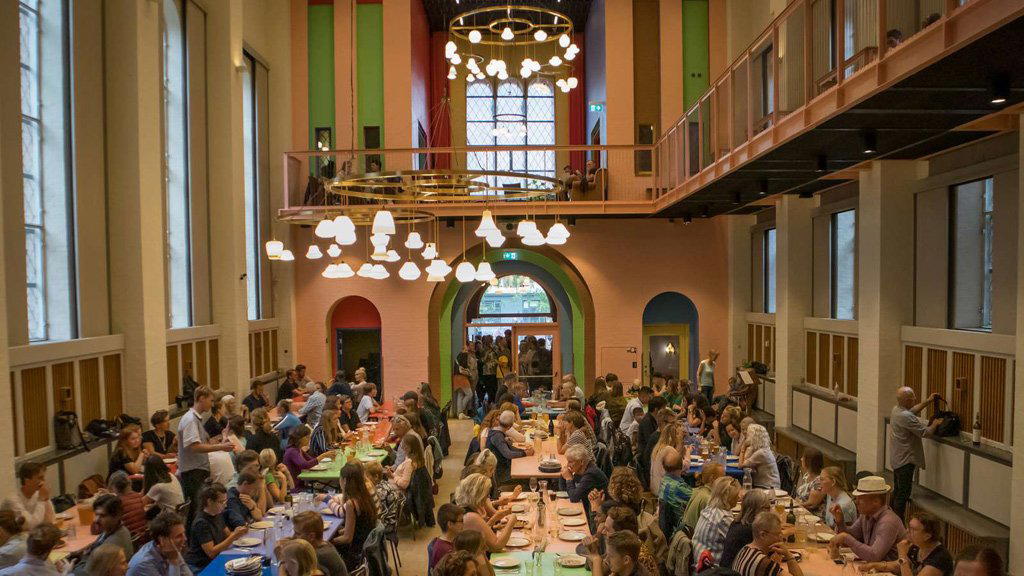
A Church That Stayed Communal
Folkehuset Absalon is a casual communal dining restaurant in Copenhagen, Denmark, at Sønder Blvd. 73, 1720 København, with a price around $10 per person. Copenhagen's dining conversation tends to orbit a tight cluster of tasting-menu institutions: Geranium, Noma, Alchemist, and their New Nordic successors. That conversation is real, but it accounts for a narrow slice of how the city actually eats. Folkehuset Absalon, at Sønder Boulevard 73 in Vesterbro, represents something the Michelin circuit does not: a building designed for congregation rather than curation, where the architecture does the work that a tasting menu would do elsewhere.
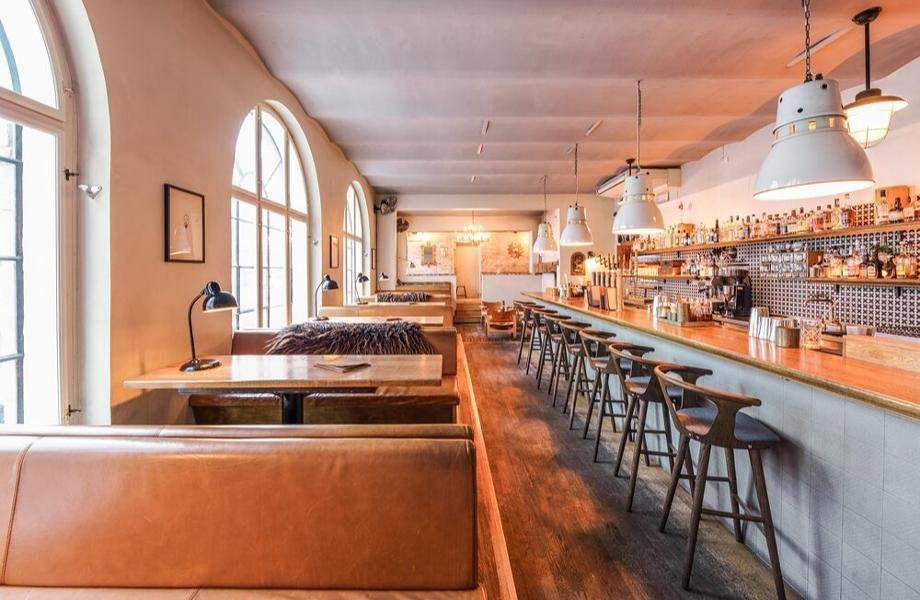
The building is a former church, and it reads as one the moment you step through the entrance. The nave is tall, the light comes from high windows, and the floor plan resists the kind of intimate corner-table logic that defines most Copenhagen restaurants in its price range. What fills that space is not a conventional dining room but a series of long communal tables, the kind of seating arrangement that makes solo travellers seat themselves beside strangers and forces a certain social contract on the meal. In a city where the dominant fine-dining format has converged on the counter or the paired-down four-leading, Absalon's physical scale is itself a statement about what food can be for.
Space as the Menu
The building's conversion preserved the proportional drama of the original structure. High vaulted ceilings, exposed brick, and the wide uninterrupted floor of the nave mean that dinner at Absalon is an exercise in understanding how architecture shapes appetite. Long-table formats have a specific social physics: conversation travels sideways as much as across; strangers become table companions; the meal is decentralised. This is the format that Absalon has built its identity around, and it sits in sharp contrast to the choreographed intimacy of Copenhagen's tasting-menu counters.
Across Scandinavia and beyond, the communal-dining format has attracted serious culinary attention. Lazy Bear in San Francisco turned the shared-table supper-club model into a nationally recognised fine-dining proposition. Le Bernardin in New York City represents the opposite pole: white-cloth formality where space is used to create separation and privacy. Absalon belongs to neither camp. Its communal model is rooted in a distinctly Danish tradition, the folkehøjskole concept of learning and eating together, which gives the format a civic rather than merely fashionable rationale.
Vesterbro as Context
The neighbourhood sets the register. Vesterbro shifted from working-class district to one of Copenhagen's most commercially active quarters over the past two decades, and Sønder Boulevard in particular functions as a social spine, with its wide central promenade used for markets, gatherings, and transit. A building on this street that opens its doors to communal meals is participating in a neighbourhood tradition, not departing from it.
That positioning matters when comparing Absalon to the city's other ambitious dining formats. Kadeau and Koan draw guests toward tightly controlled tasting experiences where the kitchen's perspective governs every element of the evening. Absalon inverts that logic: the space governs the experience, and the food, programming, and social mix are all subordinate to the building's communal function. Neither model is superior on its own terms; they answer different questions about what a meal should do.
For visitors moving through Denmark's broader dining geography, the contrast with Absalon's neighbours is instructive. The country's most formally ambitious kitchens sit mostly outside Copenhagen's city core: Jordnær in Gentofte, Frederikshøj in Aarhus, Henne Kirkeby Kro in Henne, Frederiksminde in Præstø, Ti Trin Ned in Fredericia, Dragsholm Slot Gourmet in Hørve, LYST in Vejle, Tri in Agger, Pearl by Paul Proffitt in Kruså, and Syttende in Sønderborg. Absalon occupies a different category entirely, one defined by access, scale, and civic purpose rather than by culinary ambition in the traditional sense.
What to Expect at the Table
The meal format at Absalon is designed around shared serving: dishes arrive for the table rather than plated individually, which reinforces the architectural logic of the long communal bench. This is not a restaurant where you negotiate a private bubble for two hours. The expectation is participation in a shared experience, and that expectation is set before you eat anything, by the room itself.
The programming extends well beyond meals. Absalon functions as a cultural venue throughout the week, with events, workshops, and gatherings that use the same nave where dinner is served. A visitor arriving solely for the food will still be entering a space that is, at other hours, a yoga studio, a debating chamber, or a community meeting room. That multiplicity of use is not a compromise; it is the point. The building's identity depends on it.
Planning a Visit
Absalon sits on Sønder Boulevard in Vesterbro, walkable from the central station and served by several bus lines along the boulevard itself. The venue is open daily, with hours running from 7:30 AM to midnight most days and until 2 AM on Friday and Saturday. The shared-table format means solo diners and groups are accommodated within the same seating, which removes some of the logistical friction that affects smaller Copenhagen restaurants where odd party sizes can complicate bookings.
The Minimal Set
Comparable venues nearby, for context on price, style, and recognition.
| Venue | Cuisine | Price | Notes |
|---|---|---|---|
| Folkehuset AbsalonThis venue — the venue you are viewing | Not listed | $ | Not listed |
| Parterre Christianshavn | Indre By, Danish Café | $$ | Not listed |
| Københavner Cafeen | Indre By, Traditional Danish Smørrebrød | $$ | Not listed |
| Búzio Taberna | Nørrebro, Portuguese Taberna | $$ | Not listed |
| DØP (Den Økologiske Cølsemand) | Indre By, Organic Danish Hot Dogs | $ | Not listed |
| Saji | Not listed | $$ | Indre By, Authentic Indonesian with Danish Influences |
Continue exploring
More in Copenhagen
Restaurants in Copenhagen
Browse all →
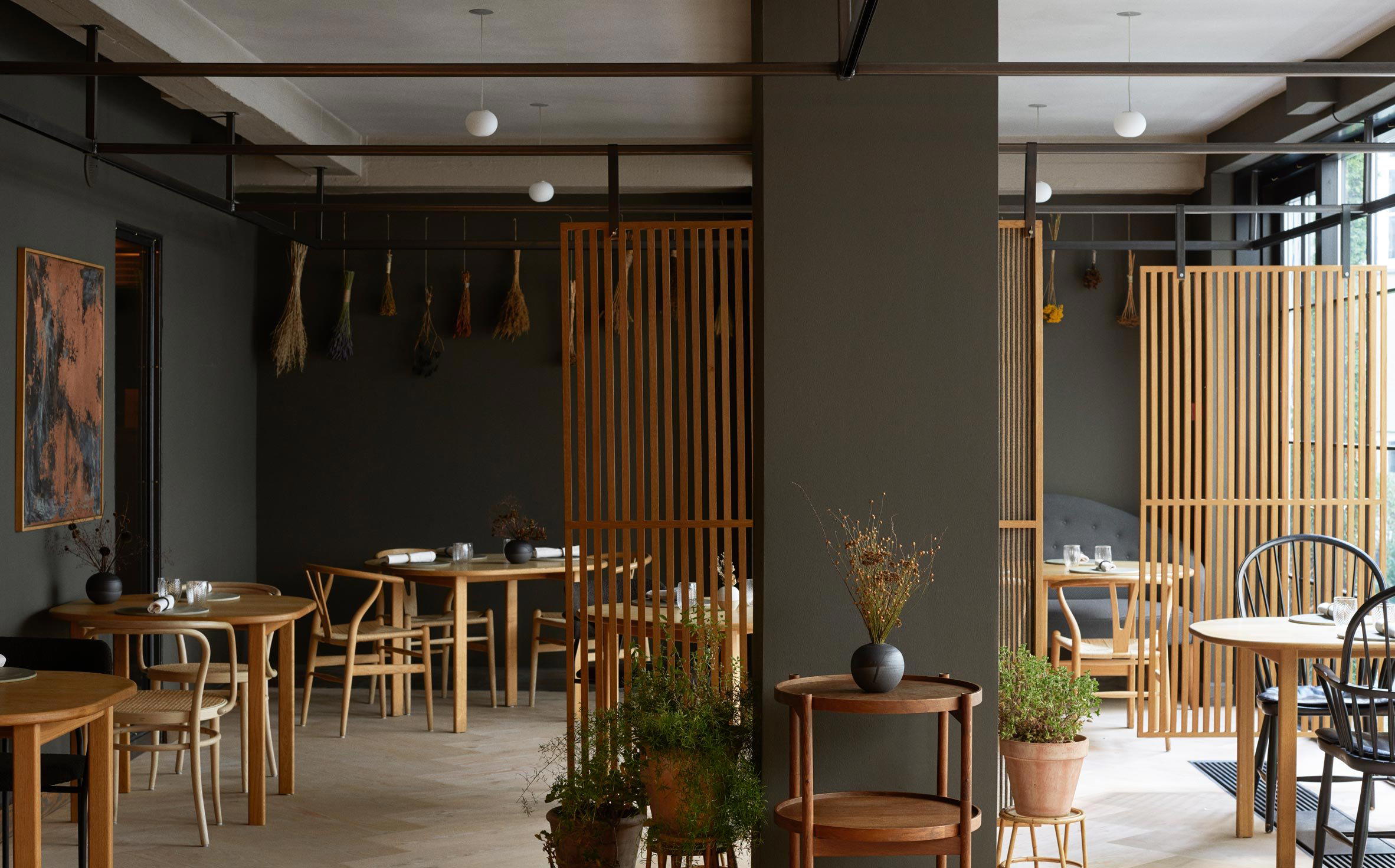
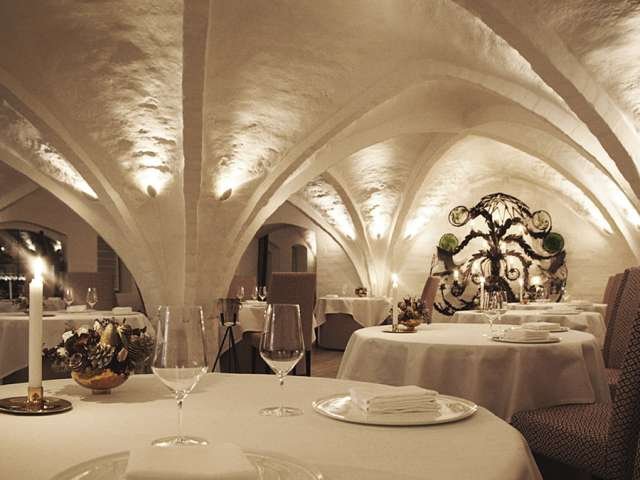
Bars in Copenhagen
Browse all →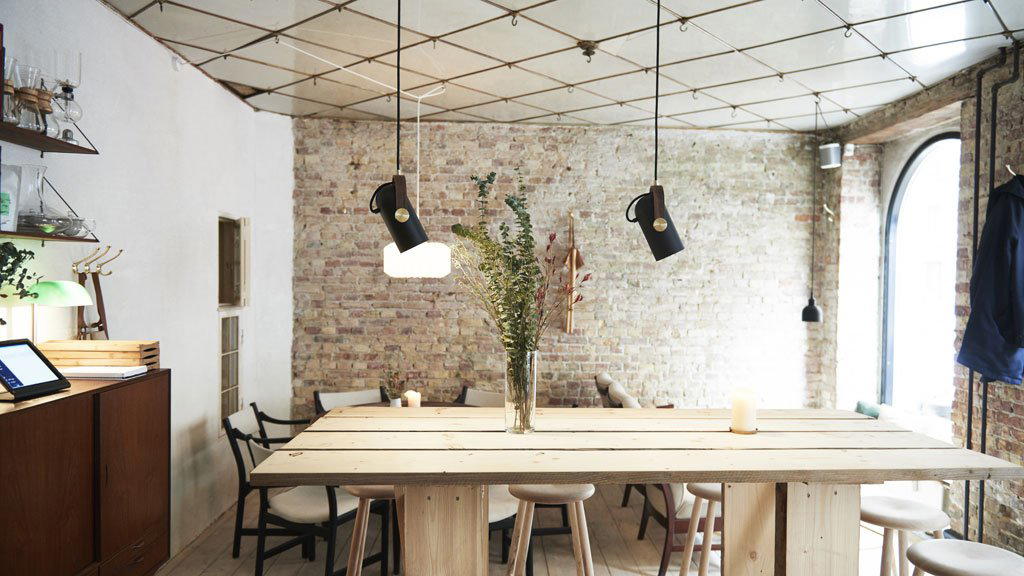
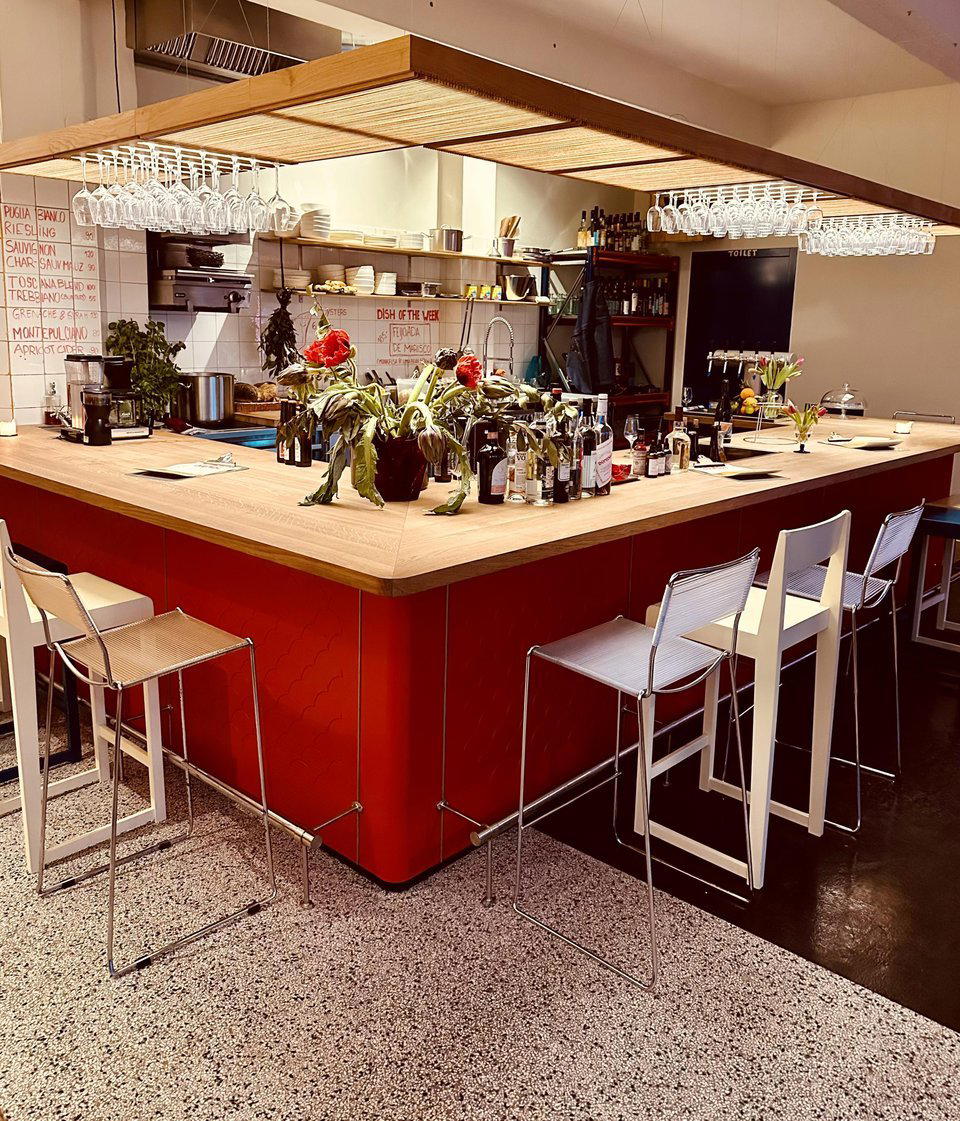

At a Glance
- Lively
- Cozy
- Trendy
- Whimsical
- Bohemian
- Group Dining
- Casual Hangout
- Family
- Solo
- Historic Building
- Design Destination
- Standalone
Current opening hours
- Monday
- 7:30 AM–12 AM
- Tuesday
- 7:30 AM–12 AM
- Wednesday
- 7:30 AM–12 AM
- Thursday
- 7:30 AM–12 AM
- Friday
- 7:30 AM–2 AM
- Saturday
- 7:30 AM–2 AM
- Sunday
- 7:30 AM–12 AM
Hours can change for holidays and private events. Last verified .
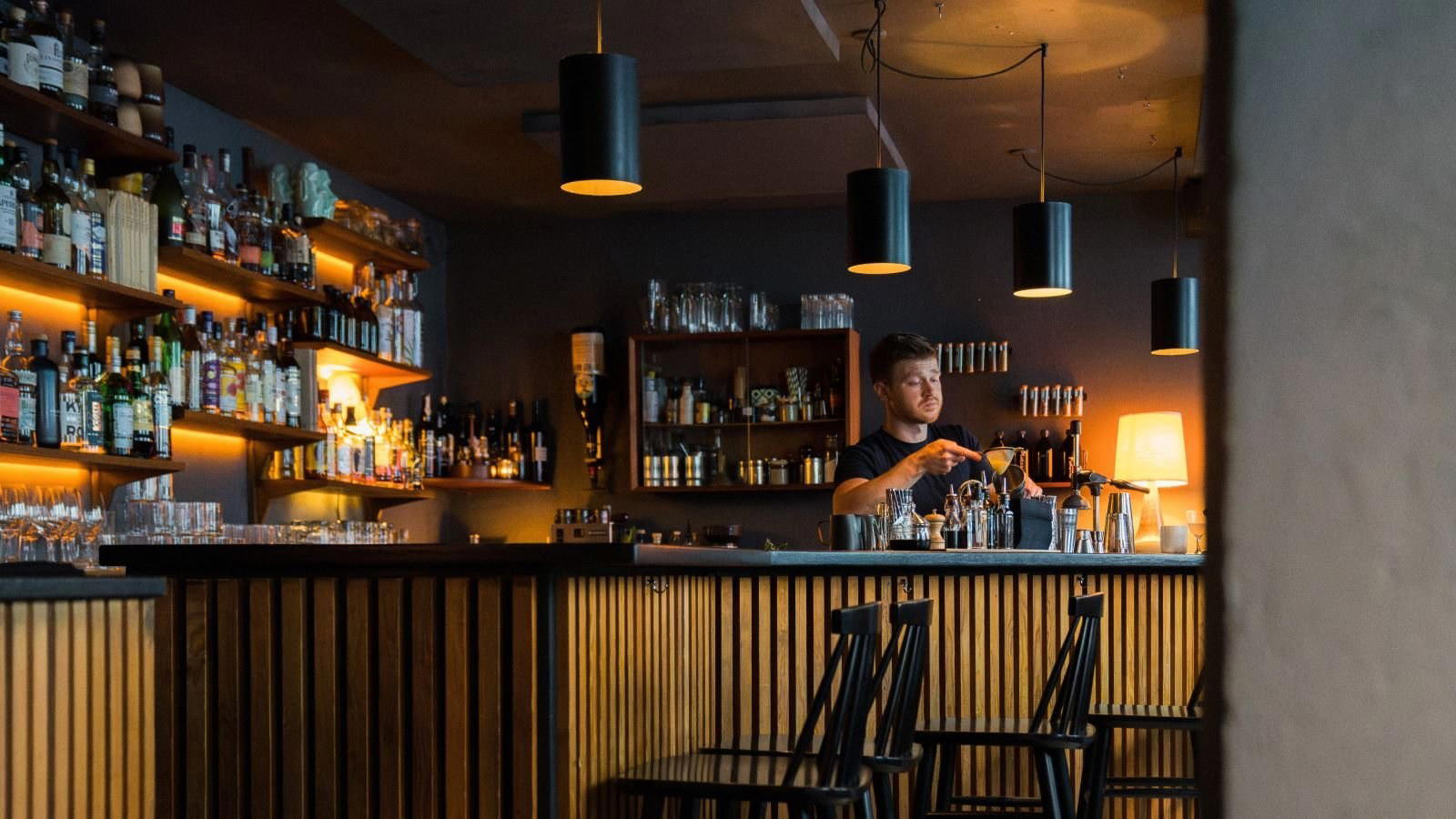
Playfully colorful walls with warm, homely lighting in a converted church space; casual and laid-back with a strong sense of community and informal atmosphere.