
Doshin Tei places Osaka yakiniku in a quieter Kita Ward register: away from station-front spectacle, close to Sakuranomiya, and priced in the serious dinner bracket. Its Tabelog 100 Yakiniku WEST 2025 selection gives it a clear peer signal for diners comparing meat-focused rooms across western Japan.
Pearl is the En Primeur Club membership app — saves, bookings, and concierge access live there. Same editors, same standards.
- Address
- 2 Chome-15-25 Doshin, Kita Ward, Osaka, 530-0035, Japan
- Phone
- +81 6-6358-5991
- Website
- tabelog.com
 Saves & bookings on Pearl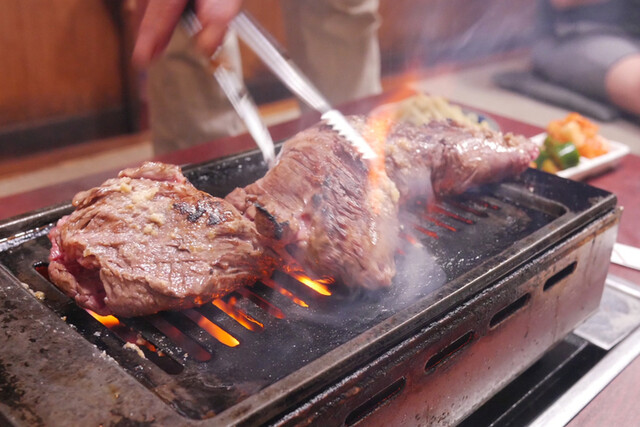
Approaching Doshin Tei in Doshin, the city changes register. Kita Ward’s office towers and station crowds still define the wider map, but this pocket near Sakuranomiya feels residential, less performative, and well suited to yakiniku’s rituals: smoke control, table pace, conversation, and the patient ordering rhythm of grilled-beef dinner over spectacle.
Osaka eating culture is often reduced to takoyaki, okonomiyaki, and counter food, but serious yakiniku follows another grammar. The meal is social without being careless: cuts arrive in sequence, heat becomes the diner’s responsibility, and the room’s value depends on pacing as much as procurement. Doshin Tei fits that category: a neighborhood yakiniku address with recognition beyond its district, selected for Tabelog 100 Yakiniku WEST 2025 and carrying a Tabelog score of 3.77.
Yakiniku in Kita Ward without the station-front theatre
Location matters. Sakuranomiya sits east of the heavier Umeda orbit, changing the meal’s feel. Restaurants near Osaka’s main terminals often process crowds, office dinners, and transit demand; Doshin’s side streets allow slower dinner logic. That does not make the restaurant obscure. It places it in a specific Osaka pattern: serious local dining just outside the zones where visitors expect it.
Yakiniku rewards that setting. Unlike tasting-menu restaurants, where the kitchen dictates nearly every beat, Japanese barbecue depends on shared attention. Better meat rooms are judged on sourcing, cutting, ventilation, sauce discipline, and how a meal moves from lighter orders into richer ones. The format can look simple, but Osaka diners read small signals quickly: whether the grill is cleanly managed, the table feels cramped, or the meal invites another round rather than pushing volume.
Doshin Tei’s Tabelog 100 Yakiniku WEST 2025 selection is useful because yakiniku does not always translate through international award language. Michelin-style fine-dining signals rarely explain a local grill room’s pull. Tabelog’s category lists speak more directly to domestic dining habits, especially where regular users compare regional venues. For travelers, the selection places the restaurant in a credible western Japan yakiniku conversation without recasting it as formal luxury.
Within Osaka, that distinction matters. Dinner at a canto (Italian) or anu, one of the city’s higher-priced Italian rooms, runs on chef-led structure. Doshin Tei sits closer in budget to Kamon, another Osaka venue in the JPY 10,000 to JPY 14,999 dinner bracket, but its appeal is grill-table authorship rather than plated progression. For the city’s range, Our full Osaka restaurants guide is the frame; this is not the same Osaka experienced through bakeries, queues, or convenience-driven snacks.
The meal is social, but the price bracket is serious
Yakiniku is often misread as an easy group default. At this level, it is more precise. The restaurant’s dinner price range signals intent rather than abundance for its own sake. This is not low-cost, high-turnover Japanese barbecue; it is for diners who know Osaka beef dinners can move quickly from everyday comfort to specialist spending.
The neighborhood context helps. Doshin lacks the visual shorthand of Dotonbori or Umeda, so the meal is less about Osaka clichés and more about how locals use the city. A traveler could read it against lighter stops such as .cafe, 52CHO-ME BAKERY, or the mass-market familiarity of 551 Horai (551蓬莱), then see the restaurant as the evening counterweight: less snack culture, more deliberate dinner.
The absence of private rooms also signals the expected mode. This is not a sealed corporate dining box, but closer to the communal yakiniku norm, where the table is private enough for friends while the room remains part of the experience. Non-smoking status is another practical cue for contemporary diners, especially in a cuisine where grill aromas already define the format.
Payment needs planning: cards, electronic money, and QR code payments are not accepted. In Japan, cash-only dining is not automatically informal; it often appears at respected local restaurants with established demand. For visitors, a meal in this bracket should not be approached with a thin wallet or the assumption that tap-to-pay will solve the bill.
How to place it in an Osaka itinerary
The restaurant makes the strongest case for diners seeking one meat-focused dinner rooted in Osaka rather than designed around inbound travel. It is not for a long chef biography, named tasting menu, or polished hotel-adjacent room. Read it as part of the city’s mature middle-to-premium dining layer: recognized, local, and format-driven.
That makes it a useful contrast within an Osaka trip. Pizza specialists such as 99 Pizza Napoletana Gourmet show how far imported formats have developed; Japanese rooms such as Doshincho Washoku Zui occupy another register of local seasonality; casual bakery and café stops fill daytime gaps. Yakiniku remains one of the clearest ways to understand Osaka at night: appetite-led, social, and confident without ceremony.
Travelers comparing Japanese dining across cities should not treat all grill or beef traditions as interchangeable. -Grilled beef Sukiyaki- KAMAKURA TANUKIAN 鎌倉 たぬき庵 in Kamakura points to a different beef grammar, while. 鮪と炭火焼き うお炭 秋葉原店 in Tokyo frames charcoal around another urban rhythm. Elsewhere.know in Kumamoto, (Shoku) Vietnam in Kawasaki, [Curry Senmon Ten] Maruyama Kyoju. in Sapporo, and [ki:] in Kyoto show how regional context changes familiar categories. Beyond Japan, Jōdo Saké Bar in Los Angeles and Onigiri Time in Pasadena offer diaspora reference points, not substitutes for how yakiniku functions in Osaka.
For planning, the wider city guides are more useful than loading one dinner with every expectation. Pair the restaurant with Our full Osaka hotels guide if staying near Kita Ward, use Our full Osaka bars guide for after-dinner pacing, and treat Our full Osaka experiences guide as the broader neighborhood map. Our full Osaka wineries guide is less central to this dinner, but completes the city’s food-and-drink context for longer stays.
The editorial read is clear: the restaurant is for diners who want Osaka yakiniku with a recognized local signal and a neighborhood setting that does not behave like a visitor corridor. The value lies in understanding the format on its own terms. Come for a serious grill-table dinner, not theatre, and the address makes sense.
The Minimal Set
Comparable venues for cuisine and category context.
| Venue | Cuisine | Price | Notes |
|---|---|---|---|
| Doshin TeiThis venue — the venue you are viewing | Not listed | $$$ | Not listed |
| Kuma no Yakitori 106 | Kita, Members-only Yakitori Omakase | $$$ | Not listed |
| Kitashinchi Yamagata Ya | Kita, Japanese Yakiniku | $$$ | Not listed |
| Tonkatsu Koshirou | Chūō, Omakase Tonkatsu Counter | $$$ | Not listed |
| Yakitori Tokei | Not listed | $$$ | Higashiosaka (Yoshita), Premium Yakitori Omakase |
| Goichi Nishitenma ten | Kita, Yakitori Omakase | $$$ | Not listed |
Recognition history
Dated appearances from independent guides and award organizations, with the underlying list record or original source where available.
Tabelog 100 #87 · No. 87
Tabelog · Tabelog 100 - Yakiniku - WEST - 2025
Continue exploring
More in Osaka
Restaurants in Osaka
Browse all →




Bars in Osaka
Browse all →




Hotels in Osaka
Browse all →



Wineries in Osaka
Browse all →
At a Glance
- Lively
- Cozy
- Casual Hangout
- Group Dining
- After Work
- Celebration
- Standalone
Current opening hours
- Monday
- 5:30–9:30 PM
- Tuesday
- Closed
- Wednesday
- 5:30–9:30 PM
- Thursday
- 5:30–9:30 PM
- Friday
- 5:30–9:30 PM
- Saturday
- 5:30–9:30 PM
- Sunday
- 5:30–9:30 PM
Hours can change for holidays and private events. Last verified .
A compact, non‑smoking neighborhood yakiniku spot near Sakuranomiya Station with a cozy, lively atmosphere suited to friends gathering over charcoal‑grilled meat in the evening.