Biryani Centre
Biryani Centre on Burlington Road sits in New Malden, the south-west London suburb with the densest concentration of Korean residents outside Seoul and a growing South Asian dining corridor alongside it. The restaurant specialises in biryani, a format that rewards neighbourhood regulars over destination diners. It occupies a specific niche in London's wider subcontinental dining map, well removed from the Michelin circuit.
Pearl is the En Primeur Club membership app — saves, bookings, and concierge access live there. Same editors, same standards.
- Address
- 94 Burlington Rd, New Malden KT3 4NT, United Kingdom
- Phone
- +44 20 8287 5007
- Website
- thebiryanicentre.co.uk
- Directions
- Get directions
 Saves & bookings on Pearl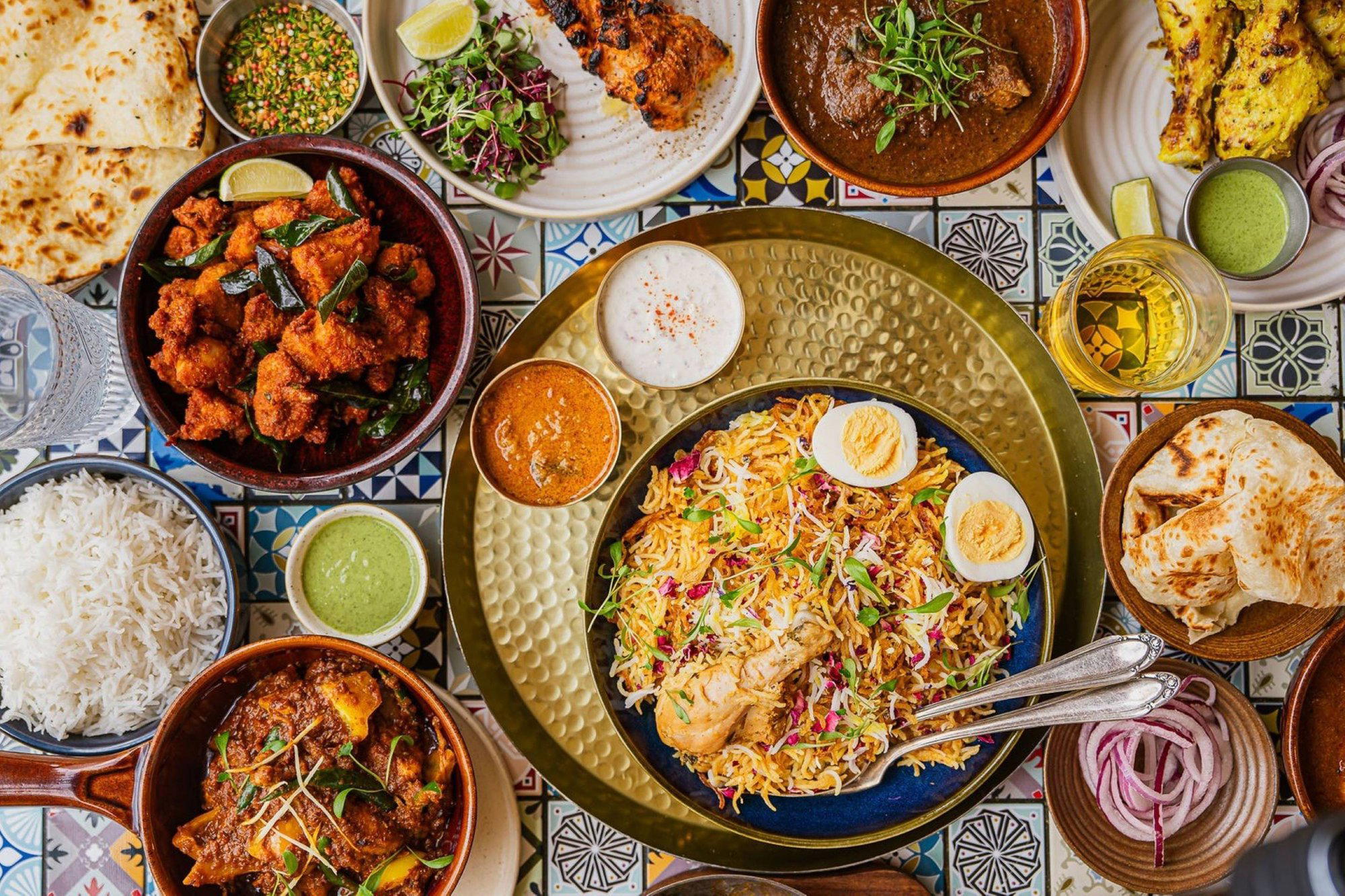
Burlington Road and the Anatomy of a Neighbourhood Rice House
New Malden does not advertise itself. The suburb sits roughly nine miles south-west of central London, reachable by rail from Waterloo in under thirty minutes, and its high street operates at a register that owes nothing to the capital's trend cycles. The dining strip along Burlington Road and its surrounding streets is defined by Korean restaurants, the area holds the largest Korean community in Europe, but South Asian cooking has carved out a parallel presence, and it is into that quieter corridor that Biryani Centre at 94 Burlington Rd, New Malden KT3 4NT, United Kingdom, sits.
The physical context matters here. Restaurants in this part of New Malden are not designed around the theatre of arrival. There are no doormen, no curated playlists audible from the pavement, no architectural gestures borrowed from hotel lobbies. The buildings are low-rise, the shopfronts functional, and the dining rooms inside tend toward utility: fluorescent or warm-white overhead lighting, laminate surfaces, seating arranged for turnover rather than lingering. This is the spatial grammar of a working neighbourhood restaurant, and Biryani Centre operates within it. The proposition is the food, not the container.
That distinction matters for anyone accustomed to the design-led tier of London dining. A seat at Sketch, The Lecture Room and Library or CORE by Clare Smyth comes with an environment that has been art-directed to the level of the plate. The room at Biryani Centre is not that. The architecture here is ambient rather than intentional, which is precisely what defines a category of South Asian restaurant that London does well but rarely discusses in the same breath as its Michelin tier.
Biryani as a Category, Not a Dish
In cities where South Asian cooking is taken seriously on its own terms, biryani occupies a position closer to French cassoulet or Japanese donburi than to a side dish or an afterthought. It is a complete format: rice and protein cooked together or in layers, sealed and steamed, with the spice architecture doing work that reveals itself slowly as the pot is opened. The Hyderabadi dum method, in which marinated meat and parcooked basmati are sealed under dough or a tight lid and finished over low heat, produces a dish where the rice at the bottom caramelises slightly against the vessel while the leading layer stays separate and fragrant. This is not a technique that scales easily or travels well from a central kitchen. It is best served close to where it is made.
That proximity argument is part of what sustains neighbourhood biryani restaurants in London's outer boroughs. Wembley, Tooting, Southall, and pockets of east London have maintained South Asian dining corridors for decades, and the restaurants within them often serve a community that grew up eating the same dish at home. That audience calibrates differently from destination diners at, say, Restaurant Gordon Ramsay or The Ledbury. The expectation is not novelty or technique-on-display; it is consistency, portion integrity, and spice balance that matches a specific regional memory.
New Malden's South Asian presence is smaller and less established than those corridors, but the logic holds. A specialist biryani restaurant in this postcode is serving a local population that knows the dish and will return when it is right.
Where This Sits in London's Wider Dining Map
London's subcontinental restaurant map has never been tidier than it looks from the outside. At the leading, a handful of restaurants, Gymkhana, Jamavar, Benares, operate at fine-dining price points with wine lists and tasting menus. Below them sits a vast mid-market of curry-house formats that largely predates the current enthusiasm for regional Indian specificity. And running alongside both, in suburbs and high streets rather than Mayfair or Covent Garden, is a category of restaurant that specialises in a single dish or a narrow regional cuisine and serves it without the overhead of central London rents.
Biryani Centre belongs to that third tier. It is a different animal from the capital's Michelin-holding rooms. Dinner by Heston Blumenthal and comparable addresses compete on technique, narrative, and spectacle; the restaurant competes on the quality of a single format done at neighbourhood scale. Both models are legitimate. They simply answer different questions.
For readers building a broader picture of where London eats well beyond Zone 1, the outer-borough specialist is an important data point. The capital's most compelling food writing of the past decade has increasingly turned toward Tooting's Sri Lankan restaurants, Walthamstow's Turkish mangal houses, and Southall's Punjabi sweet shops as evidence of a dining culture that is not reducible to its award-holding centre. The restaurant in New Malden is part of that same argument.
If you are building a wider trip around the capital, our London hotels guide, bars guide, and experiences guide cover the broader picture.
For those travelling further afield in search of high-end British cooking, L'Enclume in Cartmel, Moor Hall in Aughton, and The Fat Duck in Bray represent the country-house and destination-restaurant tier that operates at a different scale and price point entirely. Closer to London, Hand and Flowers in Marlow, hide and fox in Saltwood, and Gidleigh Park in Chagford fill the regional fine-dining bracket. And for international points of comparison in the Korean-influenced dining conversation that New Malden itself invites, Atomix in New York City shows what Korean fine dining looks like when it operates at the summit of that city's market.
Planning a Visit
| Venue | Location | Price Tier | Booking | Format |
|---|---|---|---|---|
| The restaurant | New Malden, SW London | Not confirmed | Walk-in likely | Neighbourhood specialist |
| CORE by Clare Smyth | Notting Hill, London | ££££ | Advance booking required | Tasting menu, Michelin 3 Stars |
| The Ledbury | Notting Hill, London | ££££ | Advance booking required | Tasting menu, Michelin 3 Stars |
| Le Bernardin | Midtown, New York City | ££££ | Advance booking required | Tasting menu, Michelin 3 Stars |
New Malden is served by National Rail from London Waterloo (New Malden station). Journey time from central London is approximately 25 to 30 minutes. Burlington Road is a short walk from the station. The restaurant is open daily from 12 to 10 PM, and reservations are recommended.
For those combining a visit with wider exploration of south-west London's Korean dining corridor, several well-regarded Korean barbecue and Korean-Chinese restaurants operate within a short walk of Burlington Road, making the area a natural base for an afternoon or evening centred on the neighbourhood's full range.
The Minimal Set
Comparable venues nearby, for context on price, style, and recognition.
| Venue | Cuisine | Price | Notes |
|---|---|---|---|
| Biryani CentreThis venue — the venue you are viewing | Not listed | $$ | Not listed |
| Red Koyla | Not listed | $$ | Teddington, Authentic North Indian Cuisine |
| Swagat | Richmond, Traditional Indian Curry House | $$ | Not listed |
| Pure Indian Cooking | Hurlingham, Modern Indian | $$ | Not listed |
| The India - Monument | Not listed | $$ | Monument, Indian with Bangladeshi influences |
| SPARSH | Forest Hill, Indian and Nepalese Cuisine | $$ | Not listed |
Continue exploring
More in London
Restaurants in London
Browse all →
Bars in London
Browse all →
Hotels in London
Browse all →



At a Glance
- Cozy
- Family
- Casual Hangout
- Group Dining
- Standalone
Current opening hours
- Monday
- 12–10 PM
- Tuesday
- 12–10 PM
- Wednesday
- 12–10 PM
- Thursday
- 12–10 PM
- Friday
- 12–10 PM
- Saturday
- 12–10 PM
- Sunday
- 12–10 PM
Hours can change for holidays and private events. Last verified .
Bright, welcoming, and clean with a cozy home-like atmosphere.