Dirty Pierre's
Dirty Pierre's occupies a quiet corner of Forest Hills, Queens, where the restaurant culture runs several degrees cooler than Manhattan but no less serious. The address at 13 Station Square places it in a neighbourhood defined by pre-war architecture and a commuter rhythm that shapes when and how locals eat. For New York City's outer-borough dining circuit, it represents a different kind of ambition.
Pearl is the En Primeur Club membership app — saves, bookings, and concierge access live there. Same editors, same standards.
- Address
- 13 Station Square, Forest Hills, NY 11375
- Phone
- +1 718 830 9698
- Website
- dirtypierres.com
- Directions
- Get directions
 Saves & bookings on Pearl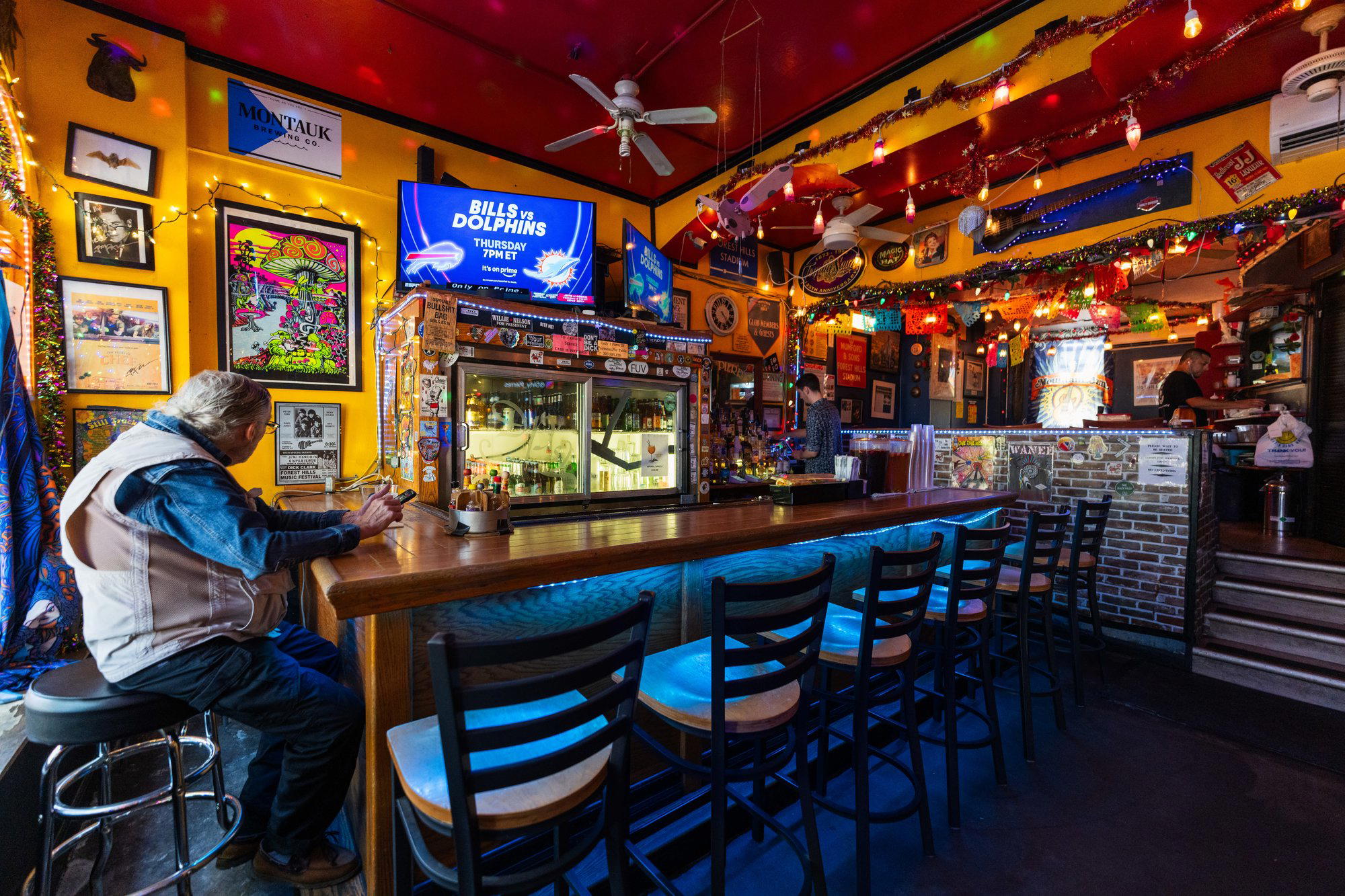
Forest Hills and the Outer-Borough Dining Equation
Station Square in Forest Hills is one of those New York addresses that functions as a minor landmark without advertising itself. The Tudor-revival streetscape, built around the Long Island Rail Road stop, gives the neighbourhood a density unusual for Queens: pedestrian, residential, and operating on a schedule that belongs more to the pre-war city than to contemporary Manhattan. Restaurants that open here are making a statement about audience, price positioning, and the kind of repeat custom that sustains a neighbourhood room rather than a destination one.
Dirty Pierre's sits within that context. The name itself signals something: a deliberate informality that, in a city where fine-dining signage trends toward the oblique or the eponymous, reads as a choice rather than an accident. Names like that tend to belong to places with a specific personality, somewhere the menu and the room are in conversation with each other about what kind of evening this is supposed to be.
What the Menu Structure Tells You
The editorial angle on any neighbourhood restaurant worth attention is rarely the individual dish. It is the architecture of the menu, what it includes, what it refuses, and how those choices map onto the room and the price point. In outer-borough New York, particularly coherent restaurants tend to resist the pressure to perform at a Manhattan register. The reference points shift: less competition with Le Bernardin or Masa, more alignment with the idea that a neighbourhood restaurant owes its primary loyalty to people who will return on a Tuesday.
That logic produces menus with a different internal rhythm. Where a tasting-menu counter like Atomix or Per Se is structured around a single, sequenced experience, neighbourhood rooms typically build around flexibility: sections that allow a solo diner at the bar, a couple sharing two courses, or a table of four ordering across the full range. The menu, in other words, should be readable as a social contract between the kitchen and the room it serves.
Dirty Pierre's sits within that context as an American gastropub at a casual, walk-in-friendly address in Forest Hills. The Forest Hills address, the name's register, and the station-square location all point toward a room that is neither chasing tasting-menu prestige nor operating as a pure casual. That middle register is, in fact, where New York's most durable neighbourhood restaurants have always lived. It is the tier that sustained the classic West Village bistro for decades, that now underpins stronger examples from Astoria and Jackson Heights, and that the outer boroughs continue to produce with more consistency than Manhattan's rent-pressured corridors.
Forest Hills in the Wider New York Dining Map
New York's serious dining conversation has, for the past decade, been geographically broader than its press coverage suggests. The Michelin-starred rooms that anchor the city's international reputation, from Eleven Madison Park to Le Bernardin, cluster in Manhattan. But the energy that actually defines how New Yorkers eat day to day is distributed across all five boroughs, and Queens in particular has accumulated a depth of international cooking that no single neighbourhood captures fully.
Forest Hills is not Jackson Heights, and it does not compete on the same axis of culinary diversity. Its character is more specifically residential, more commuter-inflected. The dining that works here tends to be consistent and personal rather than destination-driven. That creates a different kind of editorial interest: not the question of which chef trained where, but how a room builds a relationship with a postcode over months and years.
For readers mapping New York beyond the standard circuits, the outer boroughs represent a counterpoint to the high-investment destination dining represented by Blue Hill at Stone Barns in Tarrytown or the ambitious tasting formats at Smyth in Chicago. The comparison set for a Forest Hills room is closer in spirit to what Frasca Food and Wine does in Boulder: serious without ceremony, local without being parochial.
The Neighbourhood Restaurant as a Category
Across American cities, the neighbourhood restaurant has gone through a recognisable cycle in the past decade. The category expanded under the pressure of the farm-to-table movement, then contracted as rents and labour costs forced a reckoning. What survived, from Lazy Bear in San Francisco to Emeril's in New Orleans to Providence in Los Angeles, tends to be rooms with a clear identity and a repeatable offer. The ones that failed were often trying to be too many things at once.
The outer boroughs of New York have been, in some ways, insulated from the worst of that pressure. Lower foot-traffic expectations and a more stable residential base create conditions where a restaurant can build slowly. The dining culture that results is less spectacular than what a destination address in Manhattan produces, and more durable because of it. The Inn at Little Washington and Addison in San Diego represent one end of the ambition spectrum; a well-run neighbourhood room in Forest Hills represents the other, and both are legitimate critical subjects.
That durability is the real editorial story for any restaurant operating at the Station Square address. The room has to earn its place in a neighbourhood that will still be there when the trend cycle turns.
Nearby-ish Comparables
Comparable venues nearby, for context on price, style, and recognition.
| Venue | Cuisine | Price | Notes |
|---|---|---|---|
| Dirty Pierre'sThis venue — the venue you are viewing | American Gastropub | $$ | Not listed |
| Fanny | Classic American Deli | $$ | East Williamsburg |
| Ainsworth Midtown | Modern American Gastropub | $$ | Midtown South-Flatiron-Union Square |
| Russ & Daughters | Classic New York Jewish Appetizing | $$ | Lower East Side |
| Little Beet | Vegetable-Forward American Bowls | $$ | Midtown-Times Square |
| FARM TO BURGER | Farm-to-Table American Burgers | $$ | Hell's Kitchen |
Continue exploring
More in New York City
Restaurants in New York City
Browse all →
Bars in New York City
Browse all →
Hotels in New York City
Browse all →





At a Glance
- Lively
- Cozy
- Trendy
- Casual Hangout
- After Work
- Late Night
- Open Kitchen
- Craft Cocktails
Current opening hours
- Monday
- 4–11:30 PM
- Tuesday
- 4–11:30 PM
- Wednesday
- 4–11:30 PM
- Thursday
- 4–11:30 PM
- Friday
- 4–11:30 PM
- Saturday
- 12–11:30 PM
- Sunday
- 12–11 PM
Hours can change for holidays and private events. Last verified .
Dark, dingy, and cozy with a fun, eclectic dive bar atmosphere where guests draw on tables with crayons.