Among Dakar's dibiteries, Le Mboté 1 on Rue 6 represents the city's most direct expression of charcoal-grilled meat culture: no reservation system, no printed menu, no intermediary between the grill and the plate. The format is communal, the cooking is fast, and the address has built a neighbourhood reputation on consistency rather than spectacle. For visitors wanting Dakar as locals eat it, this is where that argument starts.
Pearl is the En Primeur Club membership app — saves, bookings, and concierge access live there. Same editors, same standards.
- Address
- Rue 6, Dakar 12500, Senegal
- Phone
- +221 33 842 42 11
- Directions
- Get directions
 Saves & bookings on Pearl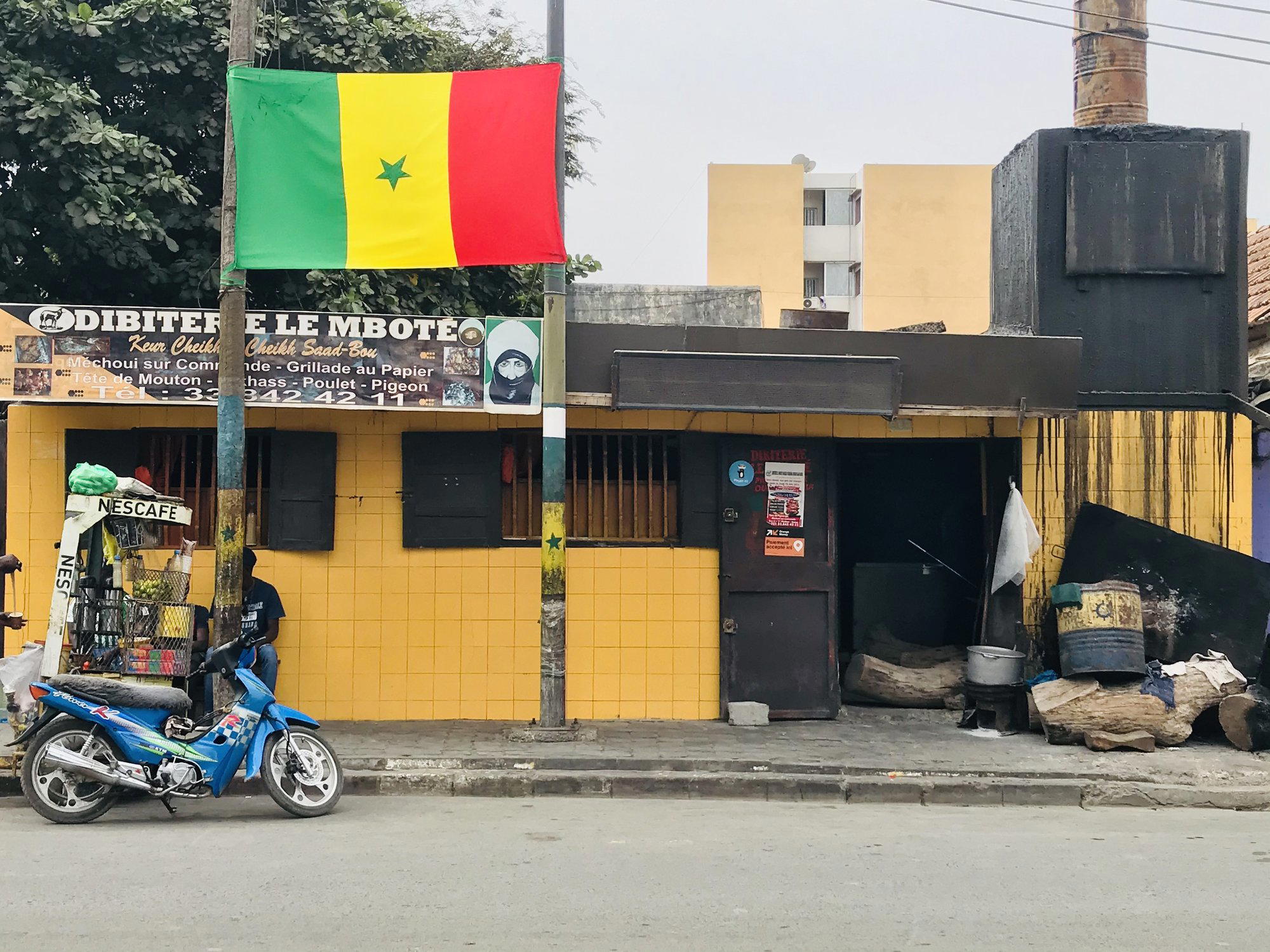
Rue 6 and the Grammar of the Dakar Dibiterie
There is a particular rhythm to eating at a Dakar dibiterie that no sit-down restaurant can replicate. Smoke rises before you see the grill. The chopping board — wooden, scarred, authoritative — is the theatre. Meat arrives in portions hacked to order, wrapped or plated with minimal ceremony, and eaten quickly while the charcoal is still doing its work. Dibiterie Le Mboté 1, addressed at Rue 6 in Dakar's 12500 postal district, operates squarely inside this tradition. The street itself sets the frame: a working Dakar address, not a tourist-facing strip, which is precisely the point.
The dibiterie as a format deserves some explanation for visitors encountering it for the first time. Derived from dibi, the Wolof word for grilled meat, these informal grills occupy a foundational position in Senegalese food culture comparable to the braai in southern Africa or the asador in Argentina, communal, fire-centred, and defined by technique rather than décor. Lamb is the dominant protein, though goat and beef appear depending on the house and the day. Seasoning is typically sparse: salt, pepper, sometimes a mustard-based sauce on the side. The quality argument lives entirely in the cut, the fire management, and the timing. Compared to the more formal sit-down Senegalese dining available at places like Casa Teranga or the neighbourhood-rooted cooking at Chez Kiki, the dibiterie strips the experience to its functional core.
What the Neighbourhood Context Tells You
Locating a dibiterie matters more than it might seem. Dakar's food geography is specific: the Plateau district concentrates the city's older-money and expatriate dining, while addresses further inland tend to serve a working, residential clientele with sharper price sensitivity and higher expectations for daily-quality cooking. A dibiterie on Rue 6 is not making a tourism play. It is functioning as a neighbourhood anchor, which typically means its regulars are repeat visitors with strong opinions and limited patience for inconsistency.
This neighbourhood positioning separates Le Mboté 1 from the more visible grills that cluster near markets or major transit corridors. The format is designed for proximity and frequency: people come back because it is close, because it is fast, and because the standard holds. That pattern of repeat local use is a more reliable quality signal than a single visit by an outside reviewer. For travellers, it also means the experience is unrehearsed, what you encounter is what the neighbourhood encounters daily.
Dakar's restaurant scene has diversified considerably over the past decade, with European formats, pizza operations, and seafood specialists like Huitres De Sokone expanding the city's dining range. Garden-setting restaurants such as Le jardin de l'Amitié offer a different register entirely. The dibiterie sits outside all of this evolution, deliberately. It has not absorbed fusion influence or updated its format to court new audiences. That conservatism is the credential.
The Mechanics of Eating Here
Practically speaking, dibiteries in Dakar operate on a walk-in, point-and-pay basis. There are no reservations, no tasting formats, and no printed menus in the conventional sense. You approach, you indicate your preference by weight or portion, and you wait while the cut is prepared. Timing varies by crowd density and the pace of the fire. Midday tends to be the busiest window, when office workers and tradespeople from the surrounding streets converge. Later afternoon offers a slightly quieter approach. For visitors planning a route through the city's eating, Le Mboté 1 works as a standalone stop rather than a pre-booked anchor. Keep that flexibility in the itinerary.
Senegalese dibiterie culture is also worth contextualizing against the broader West African grill tradition. What Dakar does with lamb, Abidjan does differently with brochettes; what you find here has a distinct coastal Senegalese character shaped by the country's predominantly Muslim dietary culture, with pork absent and lamb dominant. The cooking method prioritizes direct, high-heat charcoal contact, the kind of char that produces a specific Maillard crust that slower grilling cannot replicate. This is not a technique that translates easily to restaurant kitchens with regulated heat, which is part of why the street format retains authority.
Placing Le Mboté 1 in Senegal's Wider Food Story
Senegalese cuisine as a whole remains significantly underrepresented on the international fine-dining circuit, despite the depth of its culinary tradition. Across the country, from La Louise in Saint Louis to La Kassa in Ziguinchor, the cooking reflects West Africa's most sophisticated palate: complex spice layering in thiéboudienne, the restraint of yassa, the deep umami of fermented netetu. The dibiterie tradition sits at the opposite end of that complexity spectrum, minimal, thermal, direct, and both ends are essential to understanding what Senegalese food actually is.
Visitors who have spent time at high-technique tables in other cities, from Le Bernardin in New York to HAJIME in Osaka, sometimes arrive in Dakar expecting a formal fine-dining anchor. That instinct is understandable but misaligned with where the city's real culinary authority lies. Senegal's food culture is one where the most technically demanding cooking often happens without a starred kitchen in sight. The dibiterie is Exhibit A.
For a fuller picture of the city's eating options across formats and price points, the EP Club Dakar restaurants guide maps the scene in detail. Those planning a wider Senegalese journey might also consider coastal options like La Taverne Du Pêcheur in Communaute Rurale De Ngueniene, which sits at a completely different point on the format spectrum.
Planning Your Visit
Dibiterie Le Mboté 1 is located at Rue 6, Dakar 12500, Senegal. No website or advance booking is available, which is consistent with the format. Contact details are not publicly listed. Arriving on foot during non-peak hours (mid-morning or mid-afternoon) is likely to produce the most comfortable experience, particularly for visitors unfamiliar with the ordering process. Payment is typically cash-based at Dakar dibiteries; carrying small denominations of West African CFA francs is advisable. The address is a working street location rather than a dedicated dining district, so approach it as you would any embedded neighbourhood spot: with a modest time window and an uncomplicated appetite.
At a Glance
- Lively
- Rustic
- Casual Hangout
- Late Night
- Open Kitchen
Current opening hours
- Monday
- 10 AM–5 AM
- Tuesday
- 10 AM–5 AM
- Wednesday
- 10 AM–5 AM
- Thursday
- 10 AM–5 AM
- Friday
- 10 AM–5 AM
- Saturday
- 10 AM–5 AM
- Sunday
- 10 AM–5 AM
Hours can change for holidays and private events. Last verified .
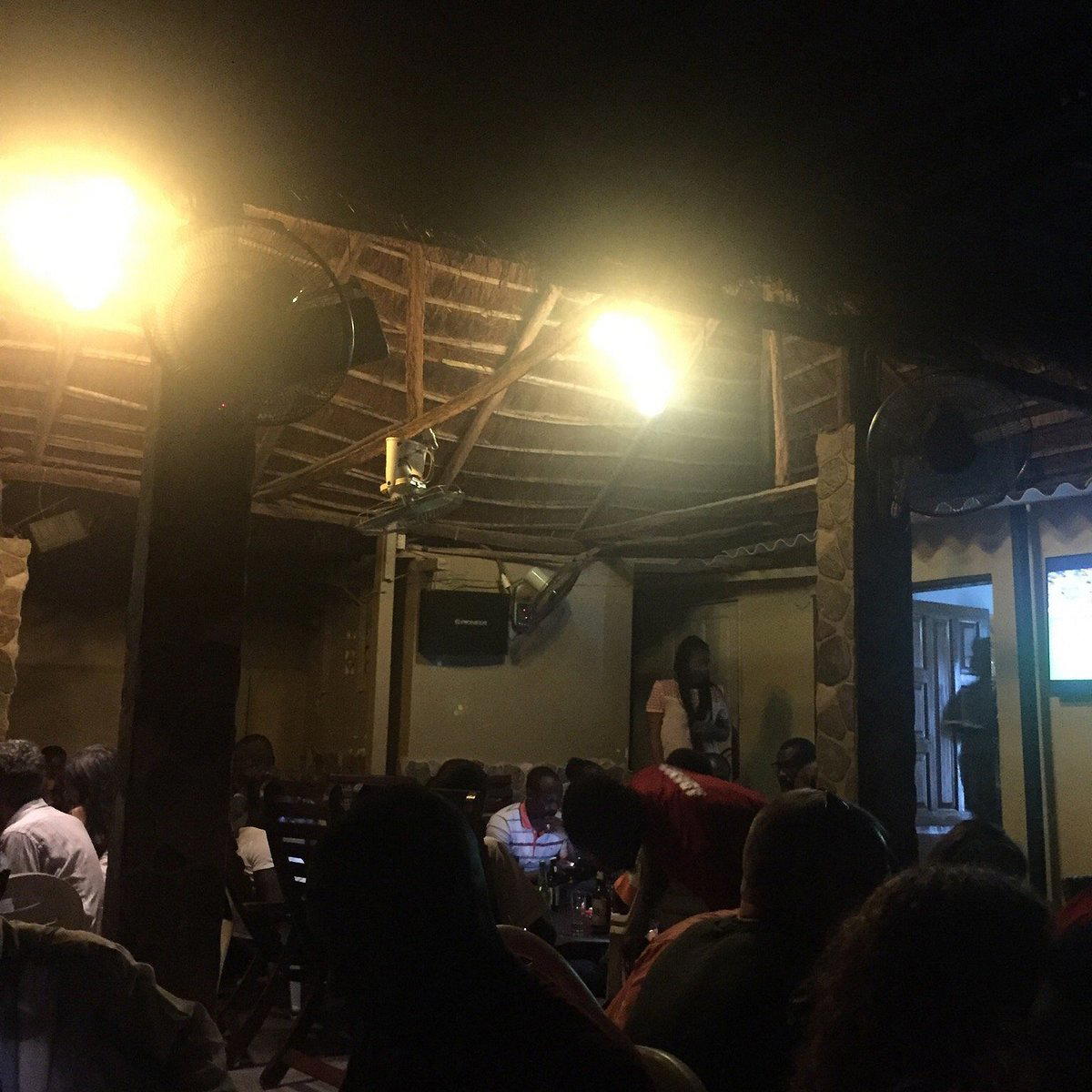
Warm and authentic local atmosphere with the heat and smoke from the blazing open roasting fire.
Know Before You Go
- Getting there
- Rue 6, Dakar 12500, Senegal