La Taverne Du Pêcheur
La Taverne Du Pêcheur sits in the Communaute Rurale de Ngueniene, a stretch of coastal Senegal where the Atlantic informs nearly every plate. The name signals the premise: fish, sourced close, prepared with the directness that defines this part of the Petite Côte. For travelers moving through a region still largely off the international dining circuit, it represents a point of local orientation worth understanding.
Pearl is the En Primeur Club membership app — saves, bookings, and concierge access live there. Same editors, same standards.
- Address
- Communaute Rurale De Ngueniene, Senegal
- Directions
- Get directions
 Saves & bookings on Pearl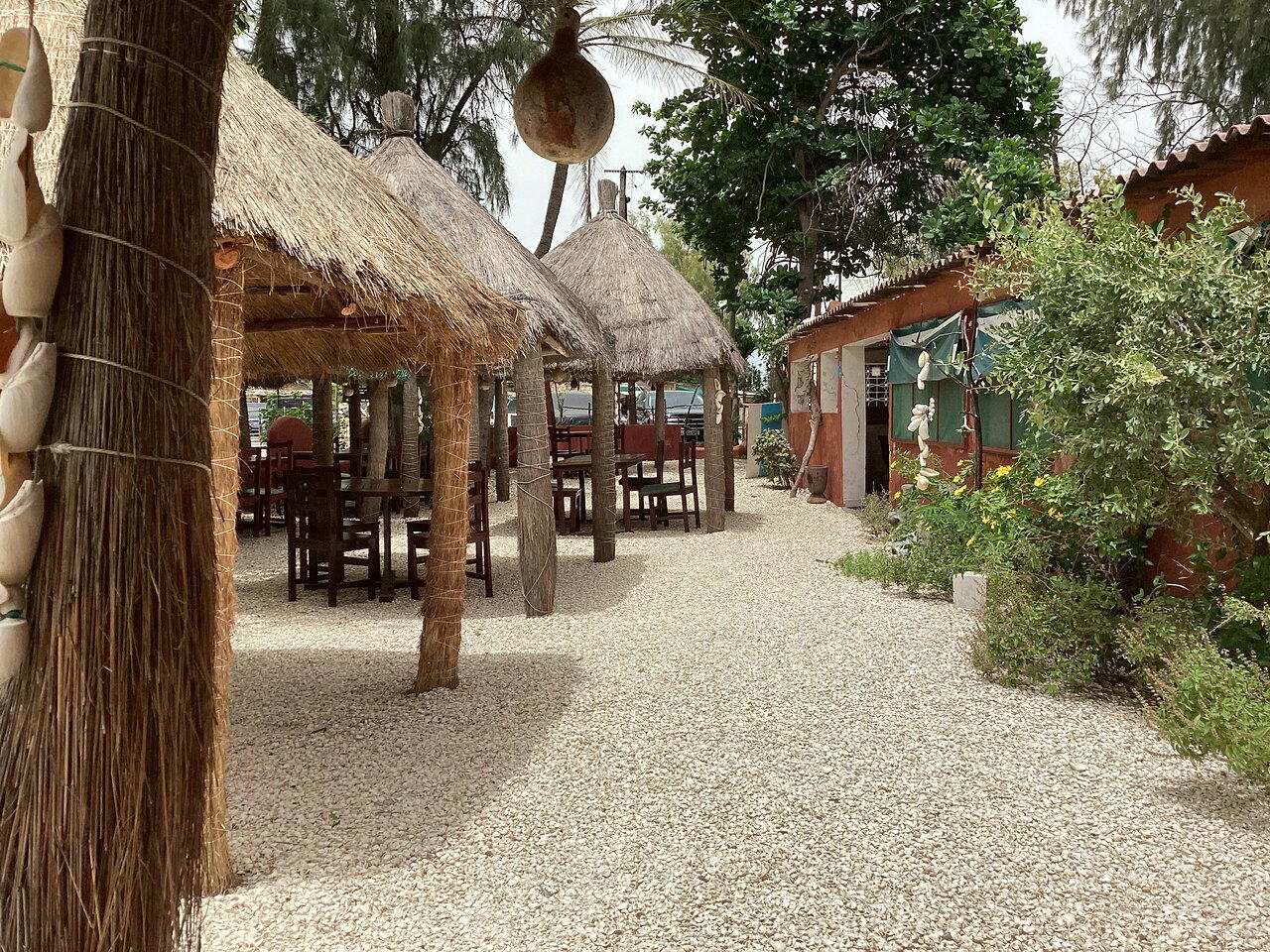
Where the Petite Côte Sets the Table
Senegal's Petite Côte runs south from Dakar through a series of fishing communities that have, for generations, defined the country's relationship with the sea. The Communaute Rurale de Ngueniene sits within this corridor, far enough from the capital to operate on its own rhythms but close enough to draw visitors moving between Dakar and the more southerly reaches of the country. In this context, a restaurant called La Taverne Du Pêcheur, the fisherman's tavern, is not a marketing flourish. It is a statement of supply chain. The name tells you where the food comes from before you read a single word of the menu.
This part of the Petite Côte is not the Senegalese dining scene that international food media tends to cover. Dakar dominates that conversation, with restaurants like Le jardin de l'Amitié in Dakar representing the more formal, urban expression of Senegalese hospitality. What Ngueniene and its surroundings offer is something structurally different: proximity to the source, a working fishing economy still operating at human scale, and a dining culture shaped by catch availability rather than fixed menus designed months in advance.
The Logic of the Catch
Understanding what a fisherman's tavern means in this specific geography matters. The Atlantic waters off the Petite Côte are among the most productive in West Africa, sustained by the Canary Current upwelling that draws cold, nutrient-rich water toward the surface. The result is an ecosystem that supports barracuda, thiof (white grouper), red snapper, capitaine, and an abundance of shellfish including the oysters for which nearby Sokone has long been known. Huitres de Sokone, the oyster operation that has made this stretch of coastline recognizable to regional food travelers, sits within the same ecological zone that would supply any serious kitchen in the area.
For a venue with a name as direct as La Taverne Du Pêcheur, the implied premise is that the distance between ocean and plate is short. That is not a romantic notion in this region; it is a logistical reality. The fishing communities along the Petite Côte operate daily markets and landing points that have fed local restaurants and households for decades. The question for any restaurant here is not whether to use local fish, but how to handle it. Senegalese technique, applied to this quality of raw material, produces the thiéboudienne, yassa poisson, and grilled preparations that define the country's coastal cooking at its most direct.
Restaurants further along the West African spectrum, such as La Kassa in Ziguinchor, demonstrate how southern Senegalese cooking can absorb Casamance influences and arrive at something more complex. Ngueniene is not that. This is Petite Côte cooking, with the Atlantic as the primary reference point and simplicity as the dominant mode.
Situating the Venue in Its Region
The Communaute Rurale de Ngueniene does not have the dining infrastructure of a city like Saint-Louis, where La Louise, Restaurant Traiteur in Saint Louis occupies a more defined position within a recognizable hospitality economy. Ngueniene operates differently: lower visitor density, fewer competing establishments, and a local clientele that sets the baseline for what a restaurant needs to deliver. In that environment, a venue that leans into its identity as a fisherman's table is working with the grain of the place rather than against it.
For international travelers accustomed to benchmarking dining experiences against destinations like Le Bernardin in New York City or the seafood ambition of Aponiente in El Puerto de Santa María, the frame of reference needs to shift. La Taverne Du Pêcheur is not operating in a Michelin-tracked market, and evaluating it against that ladder misreads what it is.
Travelers moving through the Petite Côte on their way south, or staying in one of the area's smaller lodges, will find the venue functions as a point of local orientation. In a region with limited dining signposting, that role matters. Our full Communaute Rurale de Ngueniene restaurants guide maps the wider picture for those planning time in the area.
Planning a Visit
Specific operational details for La Taverne Du Pêcheur, including hours, booking procedures, and pricing, are not publicly confirmed through verifiable sources at the time of writing. This is not unusual for small independent restaurants in rural Senegal, where operations are often informal and contact is leading made through local accommodation providers or on arrival. Travelers should plan accordingly: treat it as a venue to confirm locally rather than one to book through a global reservation platform. Those approaching from Dakar should allow for the drive south along the RN1, which connects to the Petite Côte corridor, and factor in that rural Senegalese dining operates on a flexible timeline that rewards patience over precision scheduling.
For context on how other serious kitchens handle sourcing-led dining at the opposite end of the formality spectrum, Arpège in Paris and Atelier Crenn in San Francisco both demonstrate how ingredient provenance becomes the organizing principle of a restaurant's identity, even when the format and price point differ by an order of magnitude from what you will find in Ngueniene.
Fast Comparison
Comparable venues nearby, for context on price, style, and recognition.
| Venue | Cuisine | Price | Notes |
|---|---|---|---|
| La Taverne Du PêcheurThis venue — the venue you are viewing | african | Not listed | Not listed |
| Dibiterie Le Mboté 1 | Senegalese Grilled Meats (Dibi) | $$ | Médina |
| La Louise, Restaurant Traiteur | Senegalese African Cuisine | $$ | Saint-Louis |
| Le jardin de l'Amitié | Authentic Senegalese | $$ | Fann-Point E-Amitié |
| Huitres De Sokone | Fresh Senegalese Seafood & Oysters | $$ | Les Almadies |
| Seoul | Senegalese Grill | $$ | Mermoz Sacre-coeur |
Continue exploring