La Kassa
La Kassa sits in Ziguinchor, the southern Senegalese city that serves as the gateway to Casamance — a region where palm oil, fresh river fish, and cashew groves define what ends up on the plate. Dining here means engaging with ingredients that travel a short distance from source to table, in a city where Casamance culinary traditions remain largely intact and largely local.
Pearl is the En Primeur Club membership app — saves, bookings, and concierge access live there. Same editors, same standards.
- Address
- Ziguinchor, Senegal
- Directions
- Get directions
 Saves & bookings on Pearl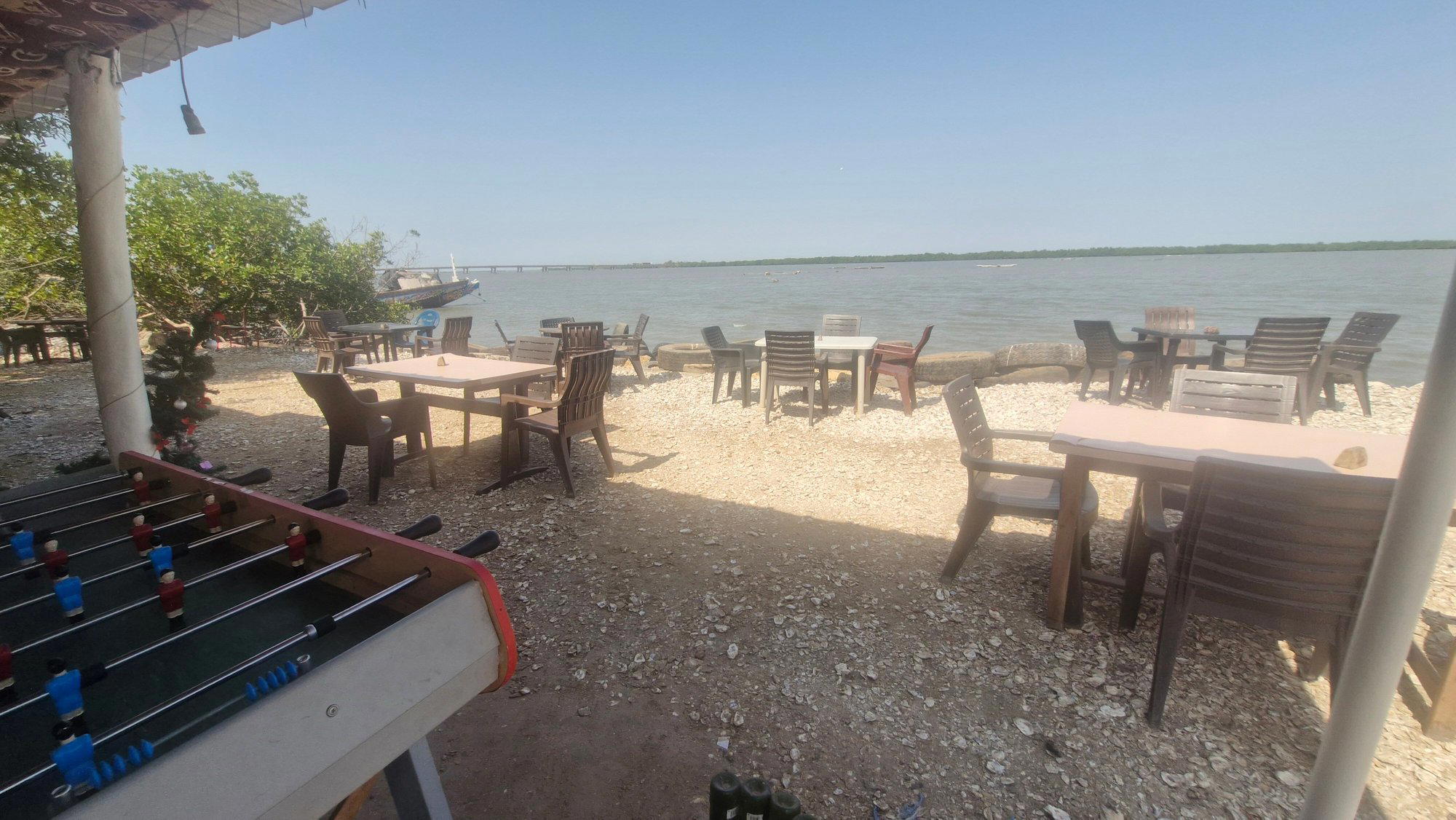
Where the Casamance Plate Begins
Ziguinchor occupies a particular position in Senegalese food culture that Dakar, for all its restaurants, cannot replicate. The city sits along the Casamance River in a region that produces its own palm oil, grows rice in flooded paddies, harvests oysters from mangrove channels, and fishes species that rarely travel north. The cooking that emerges from this geography is recognisably Senegalese but inflected by local Diola and Mandinka traditions, heavier on palm wine and smoked fish, lighter on the tomato-heavy thieboudienne framework that dominates the capital. For visitors arriving from Dakar or from abroad, La Kassa offers an entry point into that regional distinction. See our full Ziguinchor restaurants guide for how the city's dining scene is structured across neighbourhoods and price tiers.
The Ingredient Logic of the Casamance
The sourcing argument for cooking in Ziguinchor is direct in ways that restaurants in high-profile cities spend considerable effort manufacturing. Casamance is one of Senegal's most biodiverse regions, with a wet season that runs longer than the north and soil conditions that support crops unavailable elsewhere in the country. Palm oil pressed locally carries a different flavour profile than refined imports. Freshwater fish from the Casamance River, particularly capitaine and tilapia, arrive without the cold-chain distance that degrades texture. Oysters cultivated in the surrounding mangroves have a salinity and mineral character tied directly to the estuarine environment.
This proximity between production and plate is the structural condition that defines what eating in Ziguinchor means. It is not a curated sourcing programme of the kind that three-Michelin-star kitchens at places like Arpège in Paris or Aponiente in El Puerto de Santa María construct with deliberate effort. In Casamance, short supply chains are simply the default — the region's relative isolation from national distribution networks means local produce is what is available, and kitchens work accordingly.
Reading the Room in Ziguinchor
Ziguinchor's restaurant scene operates across a narrow range of formats. There is no equivalent here to the grand-hotel dining or the high-concept tasting-menu tier that defines premium dining in Dakar. What the city has instead is a set of neighbourhood restaurants, family-run canteens, and modest dining rooms where the cooking is direct and the room unfussy. La Kassa sits within this framework, in a city where the physical environment of a restaurant tends toward the practical rather than the theatrical — ceiling fans, open-air seating or semi-open structures, and a pace of service that reflects the slower rhythm of Casamance more broadly.
Approaching a restaurant like La Kassa, visitors accustomed to the polished interiors of places like Atomix in New York City or Amber in Hong Kong will find a different set of priorities operating. The room signals competence and hospitality rather than design ambition, which in Ziguinchor's context is the correct register. The value is in what is on the plate and where it came from, not in the architecture around it.
Casamance in Comparison
Senegal's restaurant geography is worth understanding before arriving in Ziguinchor. Dakar holds the country's most developed dining scene, with venues like Le jardin de l'Amitié operating at a level of finish that reflects the capital's international population and tourism infrastructure. Saint-Louis, the former colonial capital in the north, has its own distinct food culture, with La Louise, Restaurant Traiteur representing the kind of Franco-Senegalese hybrid that the north's history produces. The coastal communities between those poles, places like La Taverne Du Pêcheur in Communauté Rurale de Nguéniene, lean on Atlantic seafood in ways that differ again from Casamance's river and estuary focus.
Ziguinchor's position at the southern end of this geography means its food culture has developed with less external influence and more regional specificity. That insularity, historically a consequence of the region's difficult relationship with the Senegalese state and its physical separation from the north, has preserved culinary traditions that are increasingly difficult to find elsewhere.
What to Order and How to Plan
In the absence of a published menu or confirmed signature dishes, the reliable approach at Casamance restaurants is to follow what is freshest that day, which kitchen staff will generally communicate directly. River fish preparations, dishes built around locally pressed palm oil, and rice cooked in fish stock or palm nut broth represent the core Casamance repertoire. These are not fusion interpretations or updated classics of the kind that Atelier Crenn in San Francisco or Alinea in Chicago bring to regional cooking traditions. They are the traditions themselves, cooked close to their source.
Ziguinchor is a city that rewards patience in logistics. The most reliable way to reach it from Dakar is by the Aline Sitoé Diatta ferry, a crossing that takes approximately eighteen hours and runs several times weekly, or by the short domestic flight that reduces travel time considerably. Ground conditions across the Casamance region can be affected by seasonal rains between June and September, which is worth factoring into visit timing. The dry season, running roughly November through April, offers more predictable access and is when the region receives the majority of its visitors.
The Broader Case for Eating in Ziguinchor
The global conversation about locally sourced, regionally specific cooking has produced a significant infrastructure of documentation: award programmes, press attention, and premium pricing at restaurants from Lazy Bear in San Francisco to Alain Ducasse at Louis XV in Monte Carlo. What rarely enters that conversation is the category of place where regional specificity is not a competitive differentiator or a marketing position, but simply the condition of operating in a particular geography. Ziguinchor is one of those places, and La Kassa operates inside that logic.
For a reader considering where to eat in Casamance, the question is less about which restaurant has the strongest credentials in a conventional awards sense, no venue in the region currently holds Michelin recognition or a significant position in international ranking systems of the kind that place Alléno Paris au Pavillon Ledoyen or Arzak in San Sebastián in a globally legible tier. The more productive question is which restaurants are genuinely embedded in local sourcing and Casamance cooking tradition. By those criteria, La Kassa is worth the attention of anyone eating their way through this region.
Side-by-Side Snapshot
| Venue | Cuisine |
|---|---|
| La KassaThis venue — the venue you are viewing | This venue |
At a Glance
- Lively
- Casual Hangout
Nice and atmospheric with Senegalese and West African oldies music, though interior is a bit dated.