
Michelin Bib Gourmand
Our verdict
A Michelin Bib Gourmand-recognised French restaurant in Setagaya's Kitazawa neighbourhood, DIALOGUE sits at the accessible end of Tokyo's French dining tier without compromising the range or craft of its menu. Lunches run prix fixe; dinners open into à la carte, with a broad selection designed to provoke conversation and shared decision-making between guests.

Pearl is the En Primeur Club membership app, where members save venues, book tables and use the concierge.
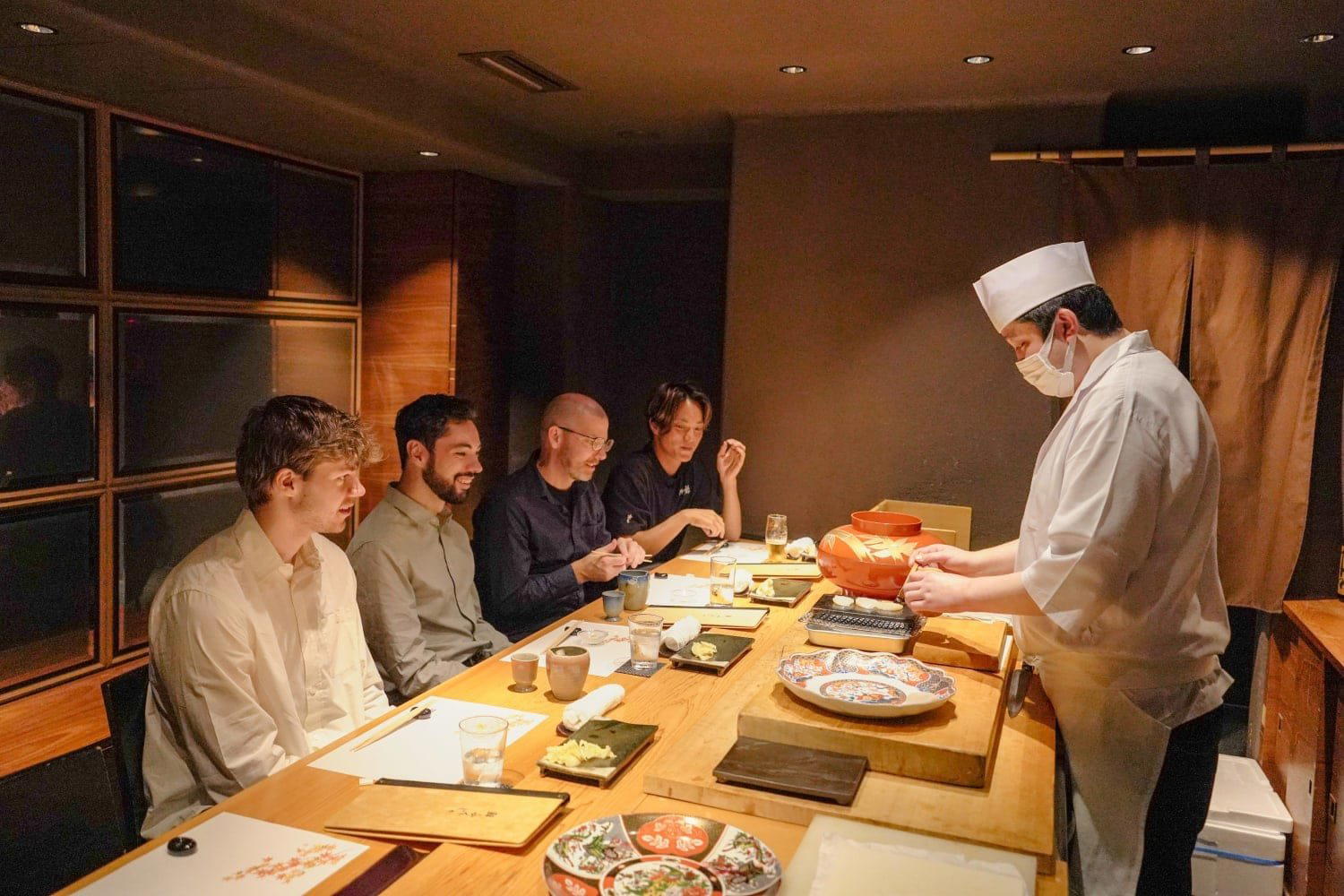
A Residential Address in a City of Destination Dining
Tokyo's French restaurant circuit is heavily weighted toward Minato, Shinjuku, and the central business corridors, where three-star addresses like L'Effervescence, Sézanne, and ESqUISSE occupy premium real estate and price accordingly. DIALOGUE takes the opposite position: a ground-floor room on a residential street in Kitazawa, Setagaya, where the surrounding blocks are home to independent coffee shops, secondhand bookstores, and the kind of slow-morning foot traffic that has nothing to do with the Michelin circuit. The choice to open here, rather than in a district defined by destination dining, is itself a statement about what kind of regulars the kitchen wants to attract.
That positioning matters when you read DIALOGUE against the broader Tokyo French tier. Florilège and Château Restaurant Joël Robuchon represent the more formalised end of French cooking in Tokyo, where the room, the service ritual, and the price point all signal occasion dining. DIALOGUE, with its ¥¥ pricing and Bib Gourmand recognition from the 2024 Michelin Guide, sits in a different register entirely: serious cooking in a context designed to feel local rather than ceremonial.
The Format: Lunch Fixed, Dinner Open
The split between a prix fixe lunch and an à la carte dinner isn't incidental. It reflects two distinct relationships with the same menu. At lunch, the kitchen sets the terms and the pacing: a contained sequence that suits the neighbourhood workers and residents who make up the daytime crowd. At dinner, the à la carte format opens the negotiation between table and kitchen, between what one person wants and what the group might share, between the familiar dish and the unfamiliar one that a companion orders and turns out to be the more interesting choice.
This structural difference shapes the room's energy more than any single dish. The deliberate breadth of the à la carte list is part of the concept: DIALOGUE's menu is designed to generate conversation, not to resolve it. In a city where many high-end French restaurants have consolidated around tight tasting menus, the willingness to offer genuine choice at dinner is a quiet counter-argument about what French dining can be in Tokyo.
French Standards, Taken Seriously
The menu anchors itself in what the kitchen describes as much-loved French standards. This is a specific curatorial choice in the current Tokyo French context, where restaurants like Florilège have moved toward a hybrid identity that folds Japanese produce and local sensibility into a French framework. DIALOGUE makes no such pivot. The appeal here is in the execution of the familiar: dishes that a well-travelled diner already has a reference point for, rendered with the care and precision that earns Michelin recognition at the Bib level.
The Bib Gourmand designation is worth pausing on. In Michelin's taxonomy, it marks cooking that achieves quality and originality at a price that doesn't require an expense account. In Tokyo's French tier, where the ¥¥¥¥ addresses command the editorial attention, the ¥¥ Bib Gourmand restaurants often represent the more interesting value proposition: technical skill applied to accessible formats, without the overhead that inflates a tasting menu at a starred address.
The Sommelier Dimension: Wine as Conversation Partner
Editorial angle that distinguishes DIALOGUE from a direct neighbourhood bistro is the relationship between kitchen and cellar. The chef and sommelier have worked together since their apprenticeship, a professional pairing long enough that the wine programme isn't operating separately from the food but in continuous dialogue with it. In a restaurant explicitly named for exchange and interaction, that pairing is structural rather than decorative.
French wine programming at this price tier in Tokyo tends to go one of two ways: either a compact, accessible list that keeps costs down and turnover high, or a more considered selection selected by a sommelier with genuine expertise. The background here suggests the latter. A sommelier who has been in conversation with the same kitchen for years develops a fluency with the menu that a hired-in wine director rarely achieves. The result, in practice, is pairing suggestions that reflect genuine understanding of what's on the plate rather than a default rotation of crowd-pleasing producers.
For diners who engage with the wine side of the meal, the à la carte dinner format at DIALOGUE creates a particular opportunity. Unlike a set tasting menu where pairings are predetermined, an open à la carte list means the sommelier is responding to actual choices, in real time. That's a different kind of service, and one where the collaborative history between the two leads at DIALOGUE is most likely to show.
Japanese French restaurants with serious sommelier programmes occupy an interesting niche in the broader Asia-Pacific French dining conversation. Compare the approach at Les Amis in Singapore, where the cellar has long been a primary editorial distinction, or at Hotel de Ville Crissier in Crissier, where the wine programme operates at the level of the kitchen. DIALOGUE doesn't claim that tier, but the same logic applies at a smaller scale: the sommelier is as much a reason to visit as the menu.
Where DIALOGUE Sits in a Wider Japanese Context
Tokyo's French scene is only one part of Japan's broader engagement with the cuisine. HAJIME in Osaka and Gion Sasaki in Kyoto represent the more formal, multi-starred end of Japanese French and French-influenced cooking. akordu in Nara, Goh in Fukuoka, 1000 in Yokohama, and 6 in Okinawa each represent the way French techniques and sensibilities have dispersed across Japanese cities in distinct local forms. DIALOGUE's contribution to this map is specific: it demonstrates that serious French cooking, anchored in classical standards and run by a chef-sommelier partnership with real history, can operate sustainably at accessible price points outside the conventional dining districts.
For visitors planning a Tokyo itinerary across multiple meals, DIALOGUE fills a slot that the ¥¥¥¥ addresses don't. See our full Tokyo restaurants guide for the broader picture, alongside our Tokyo hotels guide, bars guide, wineries guide, and experiences guide.
Know Before You Go
| Detail | Information |
|---|---|
| Location | 3 Chome-23-21 Kitazawa, Setagaya City, Tokyo, ground floor, residential street |
| Cuisine | French (classical standards) |
| Price Range | ¥¥ |
| Lunch Format | Prix fixe |
| Dinner Format | À la carte |
| Recognition | Michelin Bib Gourmand (2024) |
| Chef | Dave Beran |
Frequently asked questions
at DIALOGUE?
The à la carte dinner format is where the restaurant's identity is clearest. The menu is built around classical French standards, and the breadth of choice is deliberate: the kitchen and sommelier have designed it to encourage the kind of table conversation where one person orders differently from another and both end up tasting more. If you're visiting with a group, order widely rather than playing it safe with a single course each. The sommelier pairing is worth engaging with directly, particularly at dinner, where the open format allows for real-time suggestions rather than a fixed sequence. The Michelin Bib Gourmand recognition in 2024 anchors the cooking in the classical French canon, so dishes rooted in that tradition are the ones most likely to reflect what the kitchen does at its finest.
The Short List
| Venue | Cuisine | Price | Awards | Notes |
|---|---|---|---|---|
| DIALOGUEThis venue (the venue you are viewing) | French Bistro | $50–100 | Michelin Bib Gourmand | Not listed |
| Harutaka | Edo-Style Omakase Sushi | $200–300 | 3 Michelin Stars · World's 50 Best #76 | Sushi |
| RyuGin | Modern Kaiseki | $500+ | 3 Michelin Stars · World's 50 Best #41 | Kaiseki, Japanese |
| L'Effervescence | Modern French with Japanese Influences | $200–300 | 3 Michelin Stars · World's 50 Best #69 | French |
| HOMMAGE | Modern French with Japanese Influences | $150–200 | 2 Michelin Stars · World's 50 Best #78 | Innovtive French, French |
| MAZ | Innovative Peruvian-Japanese Fusion | $150–200 | 2 Michelin Stars · World's 50 Best #28 | Innovative |
Recognition history
Dated appearances from independent guides and award organizations, with the underlying list record or original source where available.
Michelin Bib Gourmand
Michelin
Full recognition history (2 entries)
Michelin Bib Gourmand
Michelin
Continue exploring
More in Tokyo
Restaurants in Tokyo
All restaurants in Tokyo →


Bars in Tokyo
All bars in Tokyo →





Details
- Cozy
- Elegant
- Intimate
- Modern
- Date Night
- Family
- Sake Program
- Craft Cocktails
- A La Carte
- Prix Fixe
Current opening hours
- Monday
- 12–3 PM, 6–11 PM
- Tuesday
- Closed
- Wednesday
- 12–3 PM, 6–11 PM
- Thursday
- 12–3 PM, 6–11 PM
- Friday
- 12–3 PM, 6–11 PM
- Saturday
- 12–3 PM, 6–11 PM
- Sunday
- 12–3 PM, 6–11 PM
Hours can change for holidays and private events. Hours as of .
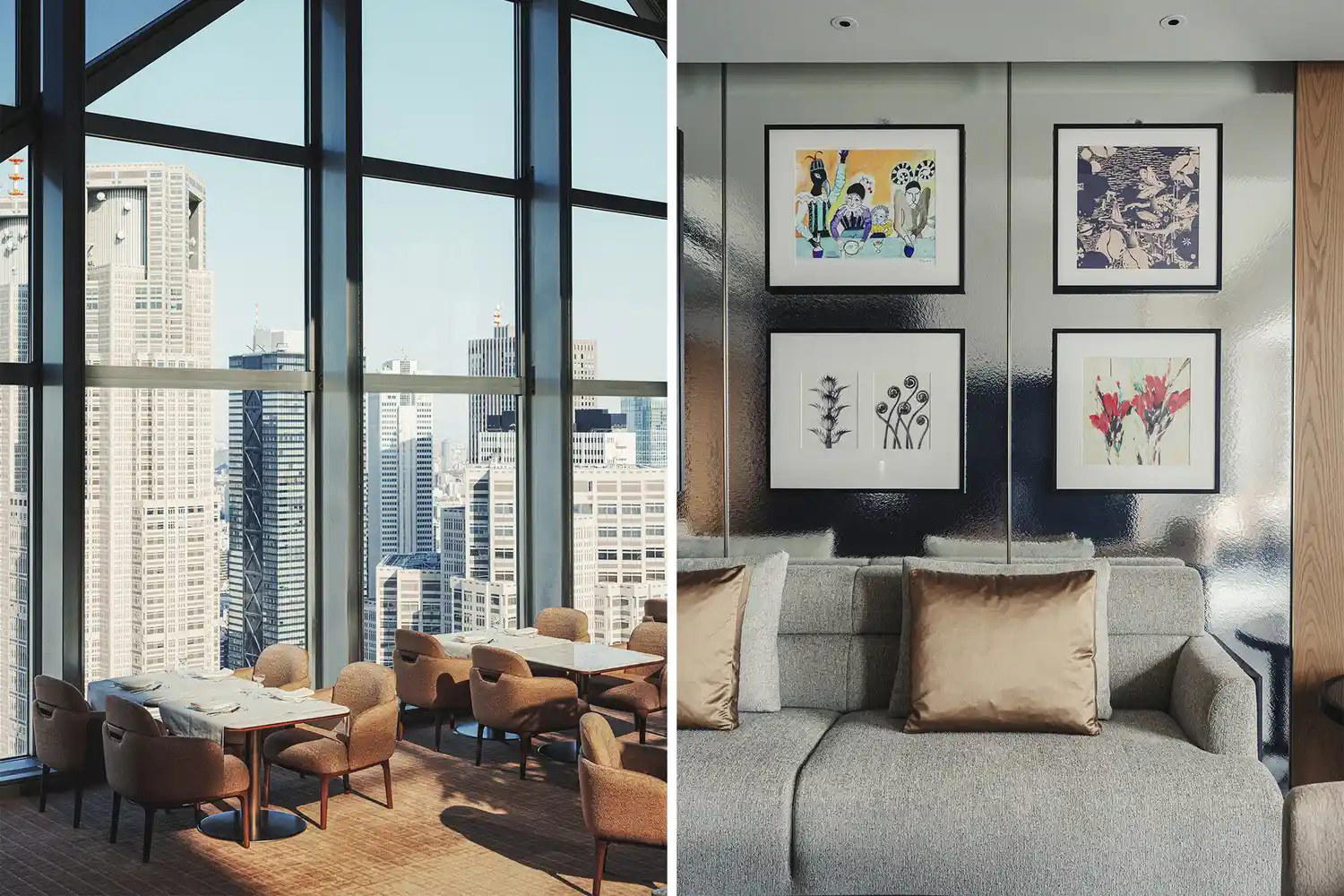
Stylish, relaxing space with sofa seating in a quiet hideout location fostering intimate conversations.