Derby Dallas
Derby Dallas, located at 9100 John W. Carpenter Freeway, sits within a Dallas dining scene that increasingly rewards kitchens applying rigorous global technique to local Texas ingredients. The address places it on the city's western edge, outside the dense Uptown and Oak Cliff corridors where most attention pools. For a city still defining its fine dining identity, that positioning is itself a statement worth investigating.
Pearl is the En Primeur Club membership app — saves, bookings, and concierge access live there. Same editors, same standards.
- Address
- 9100 John W. Carpenter Fwy, Dallas, TX 75247
- Phone
- +14697809222
- Website
- derbyrestaurants.com
- Directions
- Get directions
 Saves & bookings on Pearl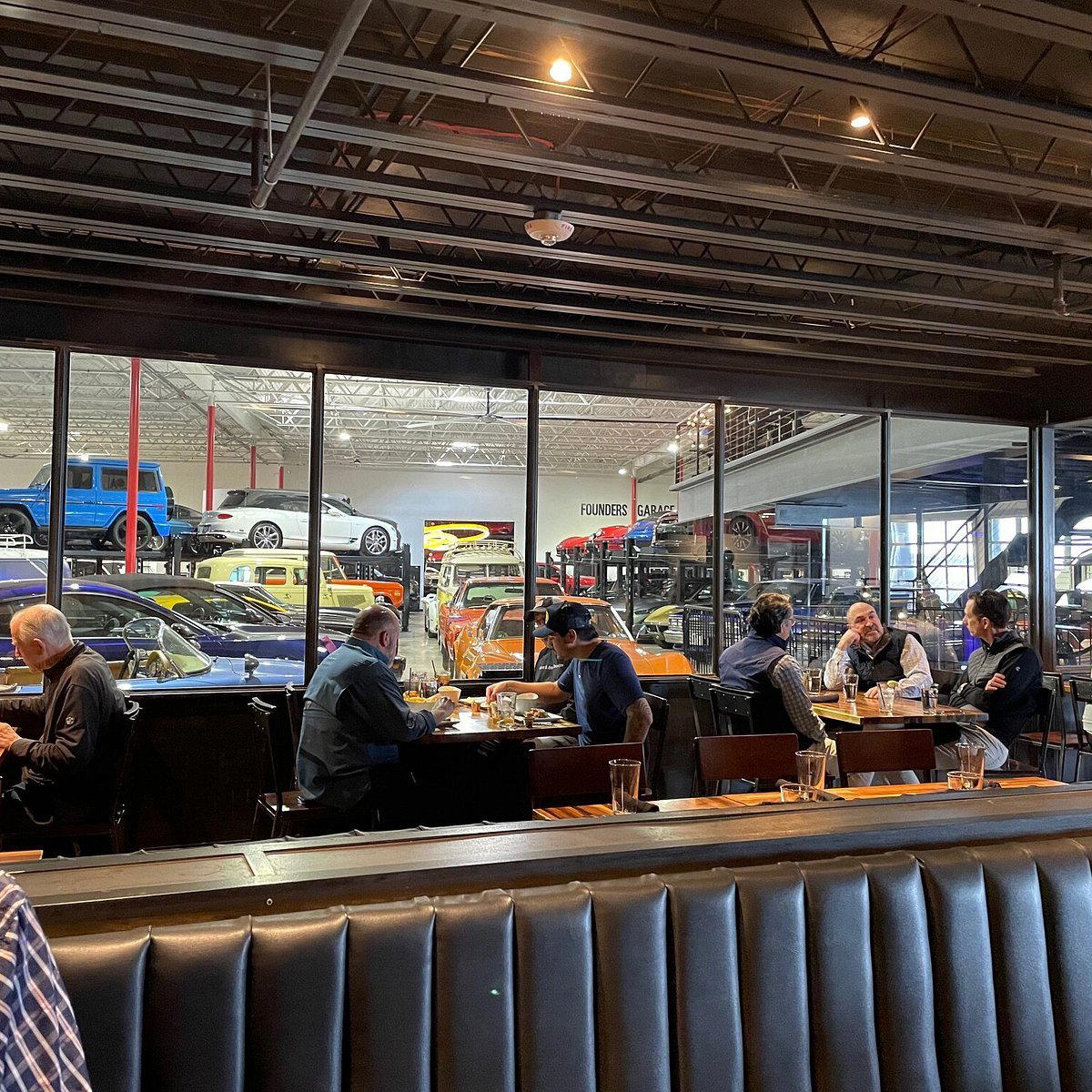
Where Dallas's Western Fringe Meets Technical Ambition
The stretch of John W. Carpenter Freeway running through Dallas's industrial northwest is not the city's obvious fine dining address. Uptown's grid of polished restaurants, Oak Cliff's creative independents, and the Design District's scenester-friendly openings absorb most editorial attention. A kitchen choosing this corridor is, by default, making a different kind of argument: that the food is reason enough to cross the city, without the ambient advantage of a buzzy neighbourhood to soften the pitch. That argument is harder to sustain, and more credible when it lands.
Derby Dallas, at 9100 John W. Carpenter Freeway, occupies precisely that position. The surrounding area is more logistics and light industry than culinary destination, which means the dining room has to carry the full weight of the experience without location doing any of the work. In Dallas, where restaurant geography increasingly shapes first impressions, that is a deliberate trade-off.
The Editorial Frame: Global Technique Meets Texas Provenance
Dallas kitchens have spent the past decade navigating a productive tension: Texas produces extraordinary primary ingredients, from Gulf Coast seafood to Hill Country lamb to locally grown heritage grains, while the most technically precise cooking methods have historically been imported from French, Japanese, and Nordic traditions. The restaurants that resolve this tension most convincingly tend to become reference points. Smyth in Chicago does something adjacent with Midwestern produce and precise fermentation; Single Thread Farm in Healdsburg has made the local-ingredient, global-technique synthesis a full operating philosophy. The question for any Dallas kitchen operating in this register is whether the technique serves the ingredient or overwhelms it.
At the tier where kitchens apply genuinely demanding preparation methods to regional produce, the competitive context extends well beyond Dallas city limits. Blue Hill at Stone Barns in Tarrytown set a benchmark for ingredient provenance as the primary editorial argument. Addison in San Diego applies classical French rigour to California product. In Texas, the equivalent conversation is younger and less settled, which creates genuine opportunity for kitchens willing to commit.
The Dallas Fine Dining Context
Dallas rewards comparison with its own restaurant tiers before reaching for national peers. At the $$$$ bracket, Tatsu Dallas applies Japanese precision to a controlled omakase format, while Fearing's at the Ritz-Carlton has held a Southwestern-American position for years, with the credibility that comes from sustained consistency rather than novelty. Mamani operates at a different price point with Latin-inflected cooking that draws from the city's demographic breadth. The $$$ tier includes Lucia, whose Italian framework and local sourcing ethos has become a reference point for understated seriousness in Dallas dining.
What these restaurants share, across different cuisine types and price bands, is a willingness to commit to a specific point of view rather than offering a broad menu that hedges against every preference. The restaurants that have accumulated the most durable reputations in Dallas tend to be the ones with the narrowest, most disciplined focus. 3Eleven Kitchen and Cocktails represents a different format within the city, while 360 Brunch House shows how distinct daypart specialisation can anchor a separate identity. 12 Cuts Brazilian Steakhouse demonstrates that format clarity, in this case churrasco tradition applied consistently, builds its own loyal following independent of trend cycles.
Technique, Provenance, and the Stakes of the Argument
The kitchens that have made the local-ingredient, global-technique synthesis work at the highest level share a few structural features. They commit to sourcing relationships that run deep enough to shape the menu rather than just supply it. They apply methods that add genuine value to the ingredient rather than performing complexity for its own sake. And they present the result in a format that makes the provenance legible to the diner, so the argument lands rather than disappearing into the plate.
Le Bernardin in New York City built its identity around seafood handled with the minimum intervention required to express the product. Providence in Los Angeles applies a similar logic to Pacific seafood with a different aesthetic register. The French Laundry in Napa has long operated at the intersection of classical French technique and California product, making the case that rigour and regionality are not competing values. Atomix in New York City does something analogous with Korean culinary tradition and contemporary precision, and Atelier Moessmer Norbert Niederkofler in Brunico has pushed the local-ingredient mandate further than almost any kitchen in Europe. These are different expressions of the same underlying argument.
In Dallas, the conversation is still forming. That makes individual kitchens choosing to operate in this register more consequential, because there are fewer established reference points to absorb or contextualise them. A kitchen that commits credibly to Texas provenance and global technique is not just opening a restaurant; it is helping define what serious Dallas dining looks like in this decade.
Lazy Bear in San Francisco and Emeril's in New Orleans both demonstrate that strong regional identity and technical ambition reinforce rather than limit each other over the long term. The Inn at Little Washington in Washington has sustained that synthesis across decades. The question is whether Dallas's emerging kitchens will build equivalent durability.
What to Know Before You Go
Know Before You Go
- Address: 9100 John W. Carpenter Freeway, Dallas, TX 75247
- Getting There: The Carpenter Freeway address is car-dependent; rideshare is the most practical option from central Dallas neighbourhoods including Uptown and the Design District.
- Hours: Verify current service hours directly with the restaurant, as these are subject to change.
- Dress Code: Confirm dress expectations when booking; the neighbourhood context suggests the dining room sets its own register independent of location cues.
Continue exploring
More in Dallas
Restaurants in Dallas
Browse all →
Bars in Dallas
Browse all →
Hotels in Dallas
Browse all →
Wineries in Dallas
Browse all →
At a Glance
- Trendy
- Modern
- Lively
- Casual Hangout
- Brunch
- Open Kitchen
- Craft Cocktails
- Street Scene
Current opening hours
- Monday
- Closed
- Tuesday
- 11 AM–9 PM
- Wednesday
- 11 AM–9 PM
- Thursday
- 11 AM–9 PM
- Friday
- 11 AM–9 PM
- Saturday
- 10 AM–3 PM, 4–9 PM
- Sunday
- 10 AM–3 PM
Hours can change for holidays and private events. Last verified .
Modern, distinctive atmosphere with views of luxury cars and motorcycles, featuring indoor dining and an outdoor patio.
Know Before You Go
- Getting there
- 9100 John W. Carpenter Fwy, Dallas, TX 75247