Hotel Crescent Court


Michelin Selected · Virtuoso Luxury Hotel Partner
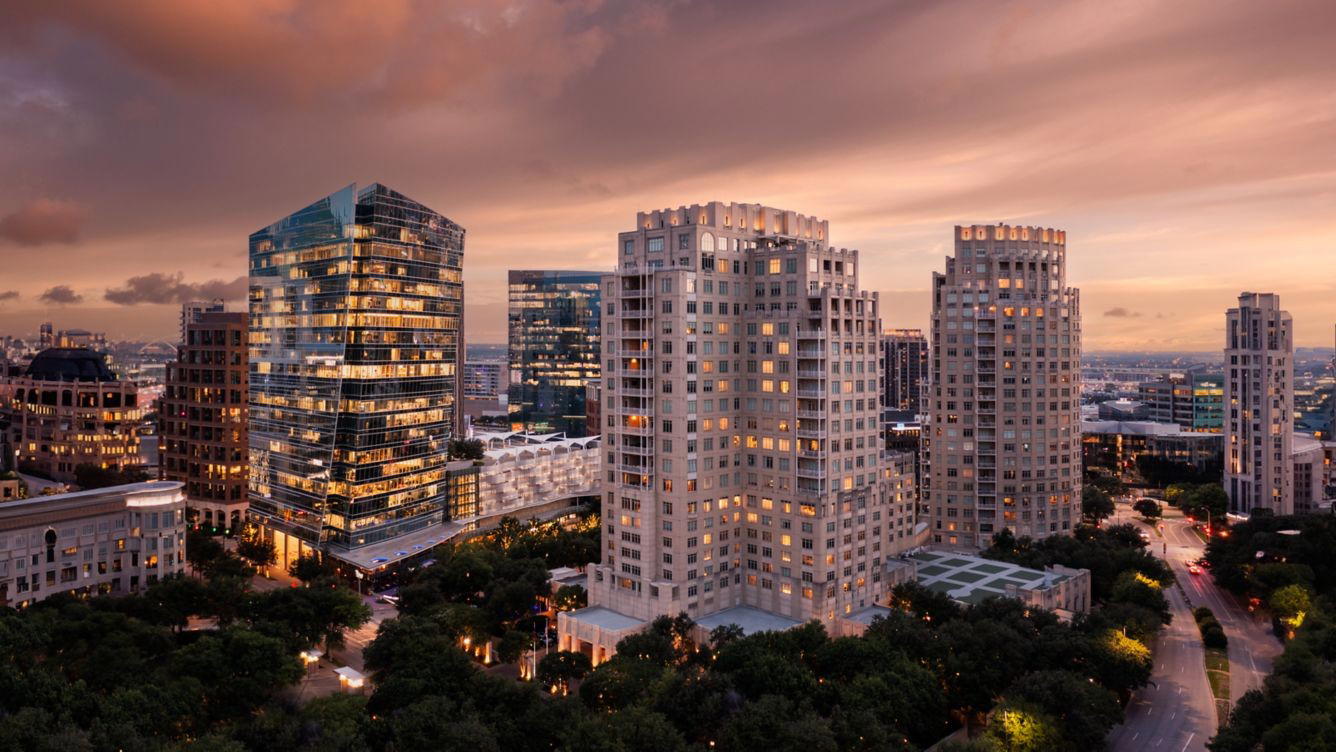
Hotel Crescent Court has anchored Dallas's Uptown district for more than three decades, its limestone facade and cast aluminum trellises setting a tone of European formality at Texas scale. A $33 million renovation brought the guestrooms, spa, and public spaces back to their original ambition. Among Dallas luxury hotels, it remains one of the few that shaped the neighbourhood it now sits within.

Pearl is the En Primeur Club membership app, where members save venues, book tables and use the concierge.
Where Uptown Dallas Took Its Current Shape
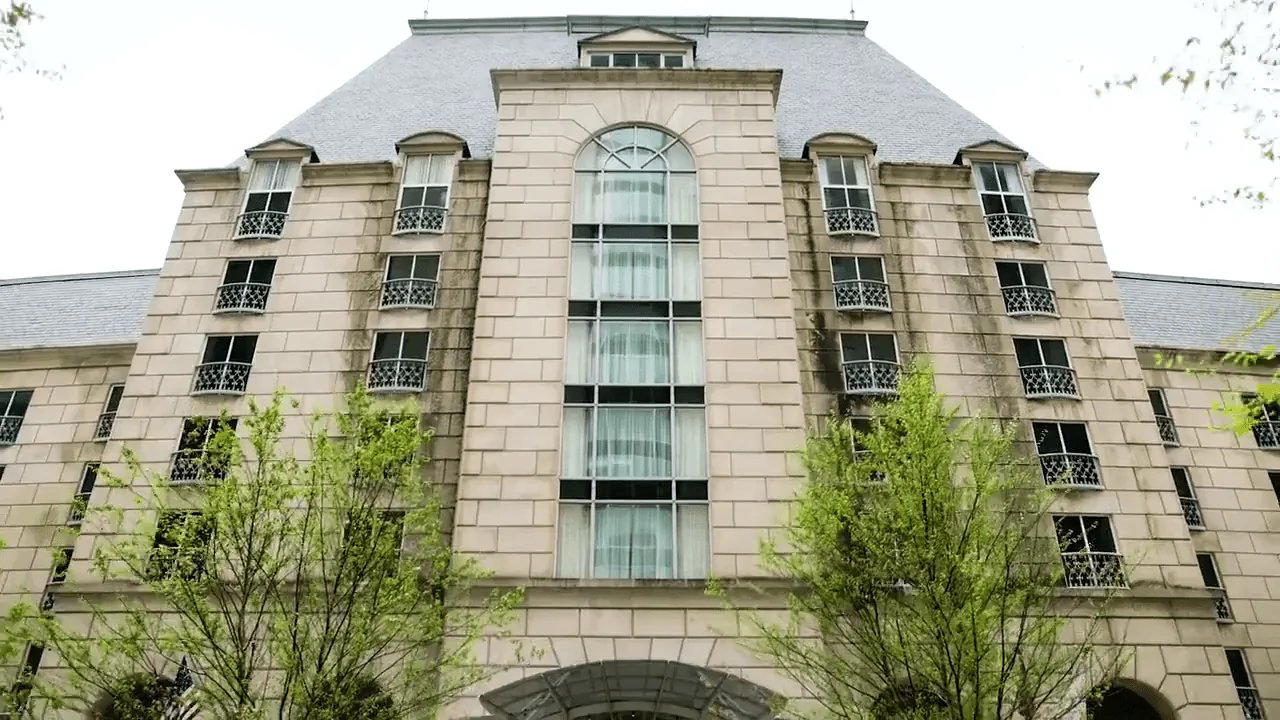
The Uptown district that travelers arrive into today, walkable, dense with restaurants, connected to downtown by the McKinney Avenue streetcar, owes a measurable portion of its character to the construction of Hotel Crescent Court at 400 Crescent Court in the 1980s. The project was consequential enough in scale that excavation for its five-story underground parking structure reportedly produced what was believed to be the largest hole ever dug for a construction project of its kind. That statistic tells you something about the ambition behind the building before a single guest checked in. Among Dallas luxury properties, Rosewood Mansion on Turtle Creek carries deeper residential intimacy, while Hotel Swexan and Hotel Zaza Dallas represent more recent design-forward entries. Crescent Court sits in a different tier: the established institution that predates most of its competition and physically helped create the conditions for it.
The Building as Argument
Arriving at Hotel Crescent Court, the limestone exterior registers immediately as something that required serious resources to execute. The hotel reportedly broke a world record in the volume of limestone used in its construction and is believed to hold the world's largest assemblage of cast aluminum, visible in the ornate trellises and exterior detailing that frame the approach. Ten types of marble sourced from Italy and Spain cover the floors and counters inside; slate from Wales tiles the roof. These are not decorative choices made at the margins, they are load-bearing decisions that communicate a specific argument about what a luxury hotel in Dallas should feel like. The overall footprint exceeded the Empire State Building in size, a comparison that speaks less to height than to the sheer volume of material and space the project consumed.
For travelers calibrating where Crescent Court sits against peer properties nationally, it belongs in a conversation with hotels that traded in grand civic gestures rather than boutique restraint. Properties like The Fifth Avenue Hotel in New York City or Raffles Boston occupy a similar register: European-inflected luxury at a scale that reads as institutional confidence rather than residential warmth. Hotel Bel-Air in Los Angeles and Amangiri in Canyon Point are points of contrast, smaller, environment-specific properties where the architecture recedes rather than asserts. Crescent Court asserts.
After the Renovation
A $33 million renovation program addressed guestrooms, the spa, fitness facilities, and public spaces throughout the property. That figure, applied across a hotel of this footprint, suggests a scope of work that went beyond surface refreshment, structural and systems upgrades typically account for a significant share of renovation budgets at properties of this age and size. The result, according to over three decades of coverage by travel publications and industry organizations, restored the hotel to the standard it was designed to operate at. For more than 30 years, travel magazines and hospitality organizations have placed Hotel Crescent Court among the country's leading luxury hotels. That consistency of recognition across a long time horizon is its own form of credential: properties that hold standing across multiple cycles of travel media tend to maintain genuine operational quality rather than coasting on a single strong year.
Travelers who prioritize spa access as a primary criterion will find Crescent Court's facility relevant to their decision. The spa has been a consistent element of the property's positioning and was included in the renovation scope, which matters for guests who have experienced spa facilities at comparable properties like Canyon Ranch Tucson or Four Seasons at The Surf Club in Surfside and are setting expectations accordingly.
The Address and What It Provides
The Uptown location at 400 Crescent Court places guests in one of Dallas's most walkable concentrations of restaurants and retail, a meaningful distinction in a city where most luxury properties require a car to reach dining options. The hotel operates as an anchor at the northern edge of the district, with the Dallas Arts District accessible to the south and the network of Uptown streets immediately surrounding the property. For guests attending events at the Winspear Opera House or the Nasher Sculpture Center, the location removes the logistical friction that accompanies downtown-adjacent stays at properties like the JW Marriott Dallas Arts District or Fairmont Dallas, which sit deeper within downtown's grid. The HALL Arts Hotel Dallas competes directly for Arts District proximity; Crescent Court's draw is different, it is the neighborhood, rather than adjacent to it.
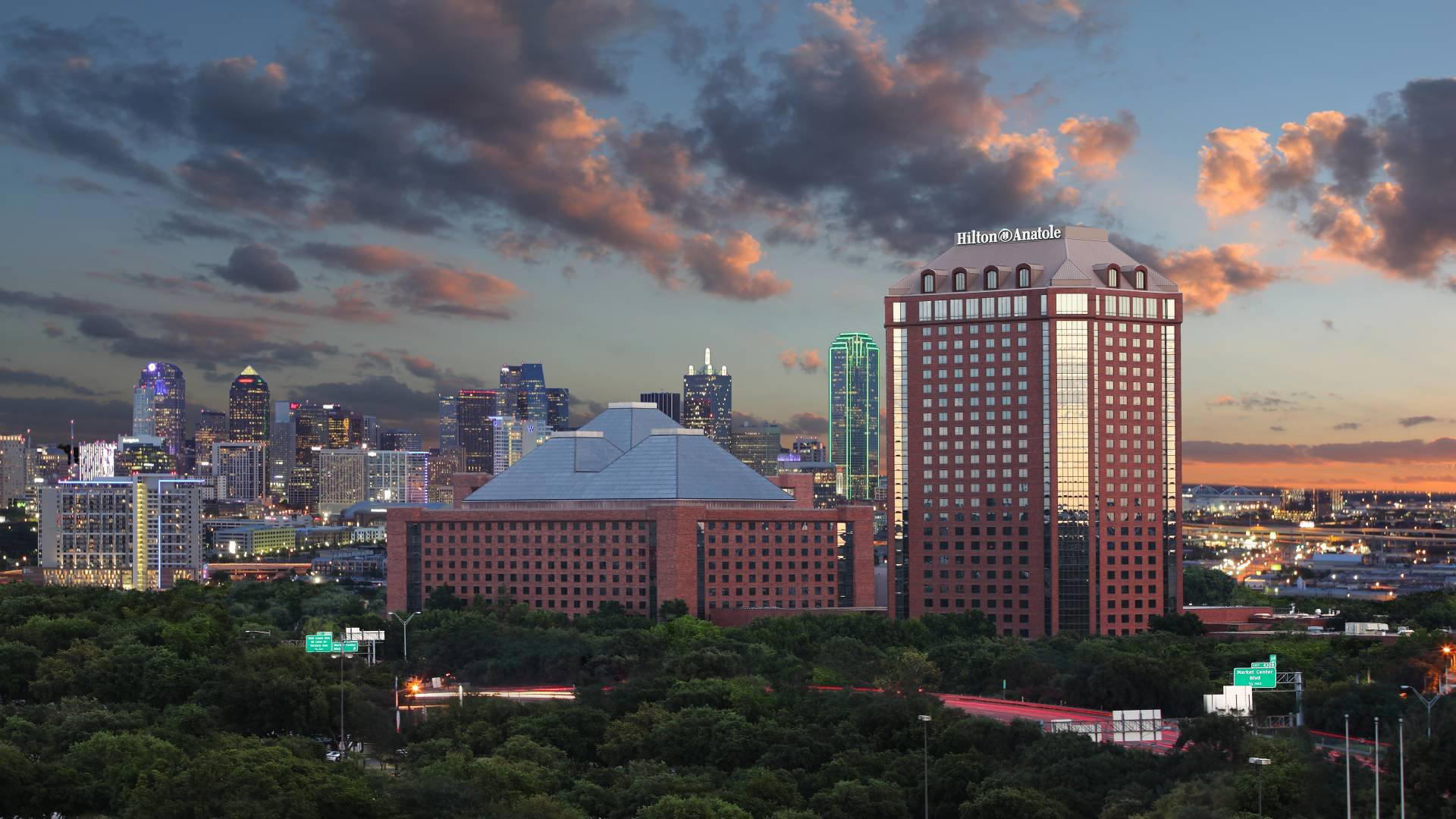
For travelers building a fuller picture of what Dallas offers at this level, our full Dallas restaurants guide maps the dining options within reach of the Uptown address. Casa Duro and Hilton Anatole represent different ends of the Dallas hotel spectrum and are worth considering depending on priorities around scale, location, and format.
Planning Your Stay
A Tight Comparison
Comparable venues nearby, for context on price, style, and recognition.
| Venue | Price | Awards | Notes |
|---|---|---|---|
| Hotel Crescent CourtThis venue (the venue you are viewing) | $300–500 | Michelin Selected · Virtuoso Luxury Hotel Partner | Not listed |
| The Adolphus, Autograph Collection | $300–500 | Michelin Selected · Star Wine List | Downtown, Historic luxury hotel blending 1912 Beaux-Arts architecture with contemporary amenities and refined service standards. |
| The Ritz-Carlton Dallas, Las Colinas | $300–500 | 1 Michelin Key · La Liste Top Hotels | Las Colinas, Luxury resort blending modern elegance with Texas countryside soul |
| The Joule | Not listed | Michelin Selected · La Liste Top Hotels | Downtown, Neo-gothic landmark revitalized as luxury boutique hotel |
| HALL Arts Hotel Dallas, Curio Collection by Hilton | Not listed | Forbes Recommended | Arts District, Luxury boutique hotel celebrating creativity in the Dallas Arts District |
| Hilton Anatole | Not listed | Not listed | Dallas Market Center, Large-scale convention resort with extensive amenities |
Recognition history
Dated appearances from independent guides and award organizations, with the underlying list record or original source where available.
Michelin Selected
Michelin
Virtuoso Luxury Hotel Partner
Virtuoso
Continue exploring
More in Dallas
Hotels in Dallas
All hotels in Dallas →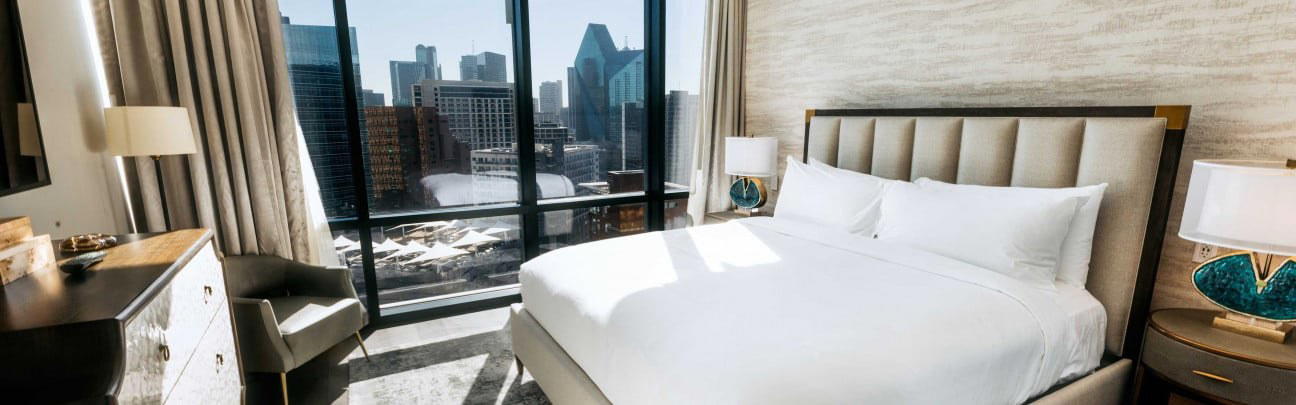

Details
- Elegant
- Sophisticated
- Classic
- Ornate
- Romantic Getaway
- Business Trip
- Anniversary
- Rooftop Pool
- Historic Building
- Pool
- Spa
- Fitness Center
- Room Service
- Concierge
- Valet Parking
- Wi Fi
- Sauna
- Business Center
- Skyline
- Garden
- Wheelchair Accessible
- Step Free Entrance
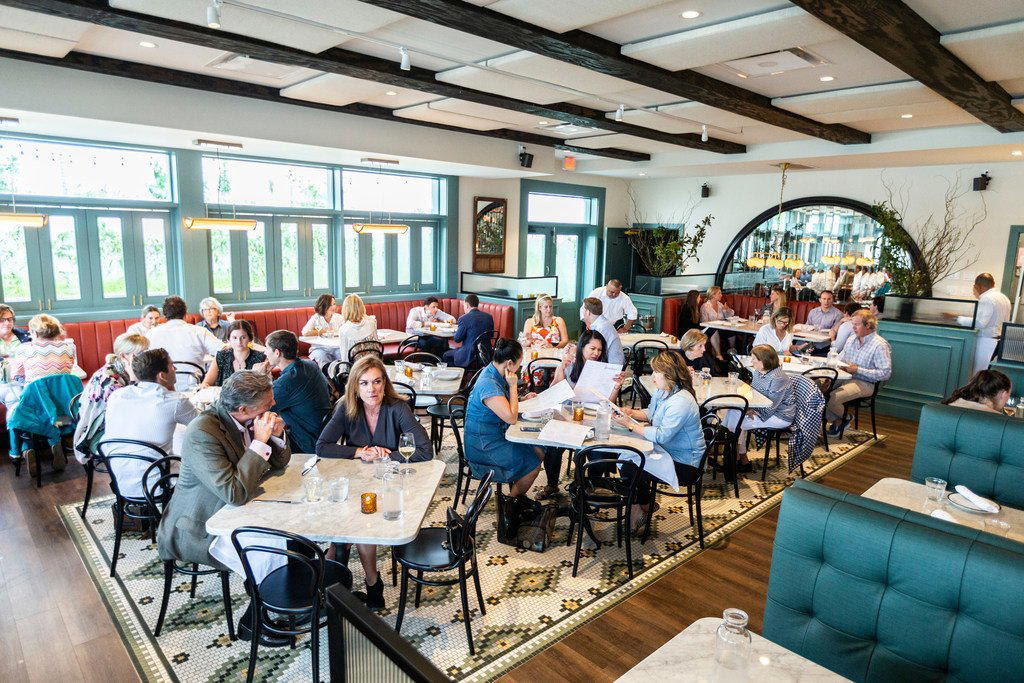
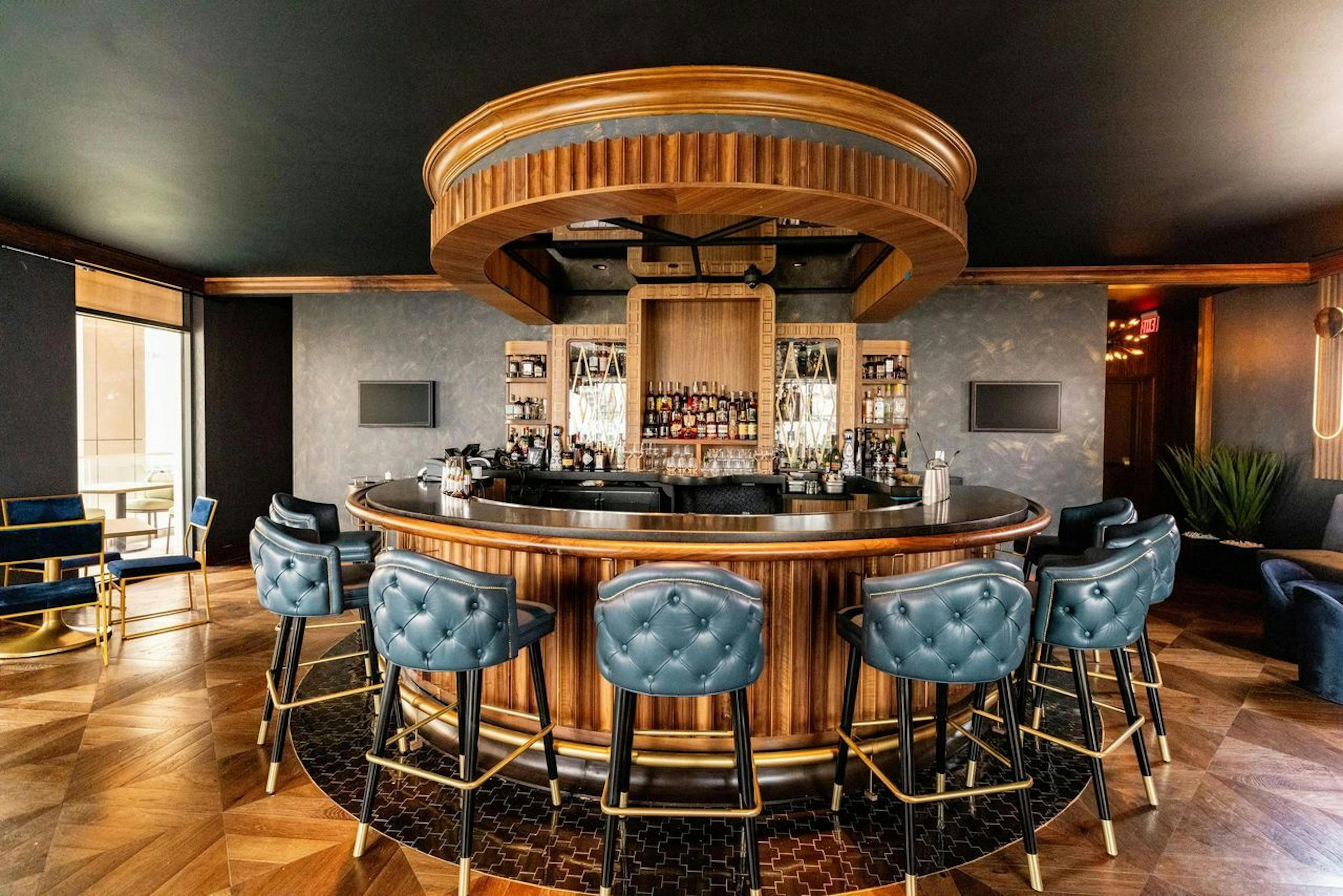
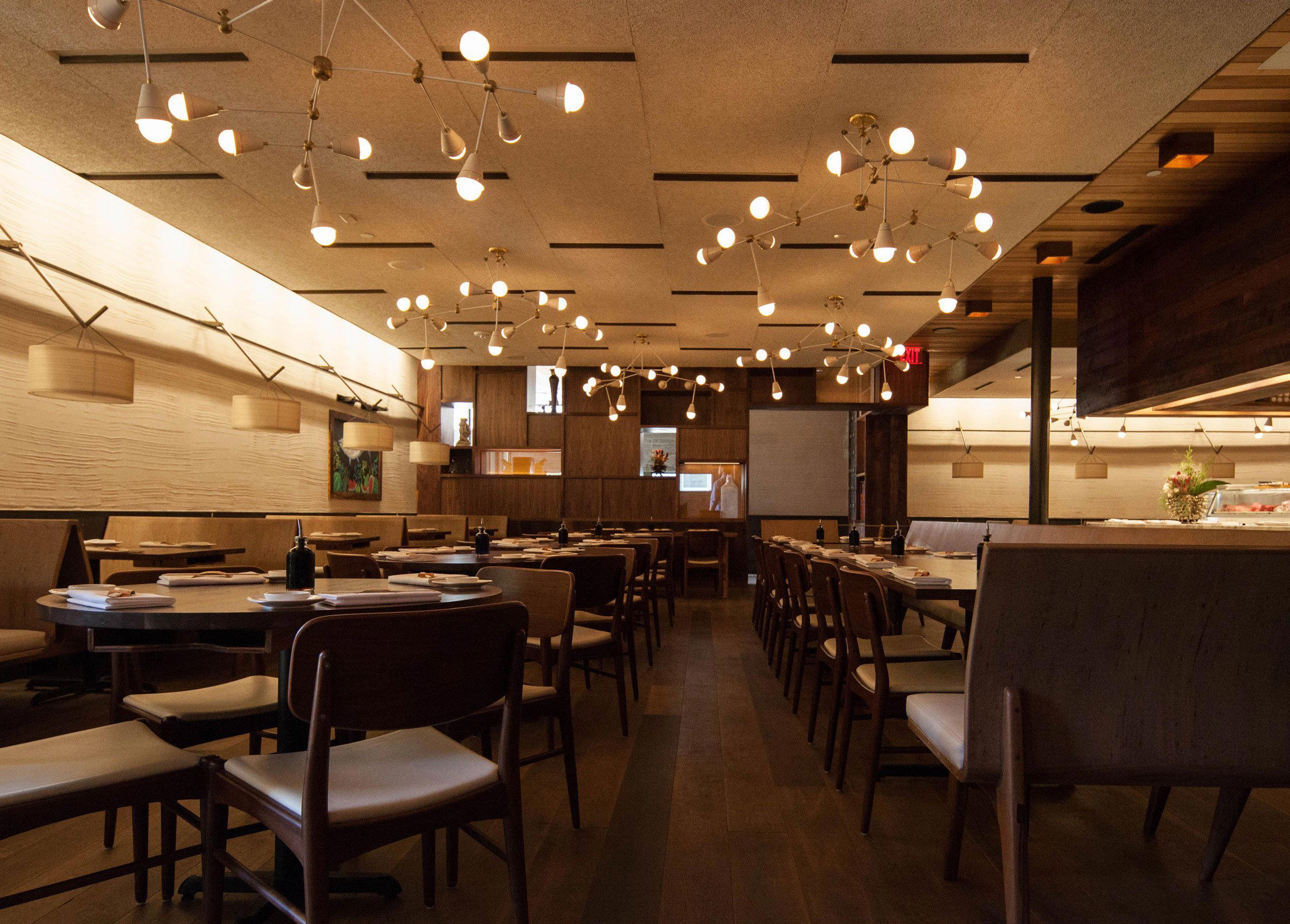
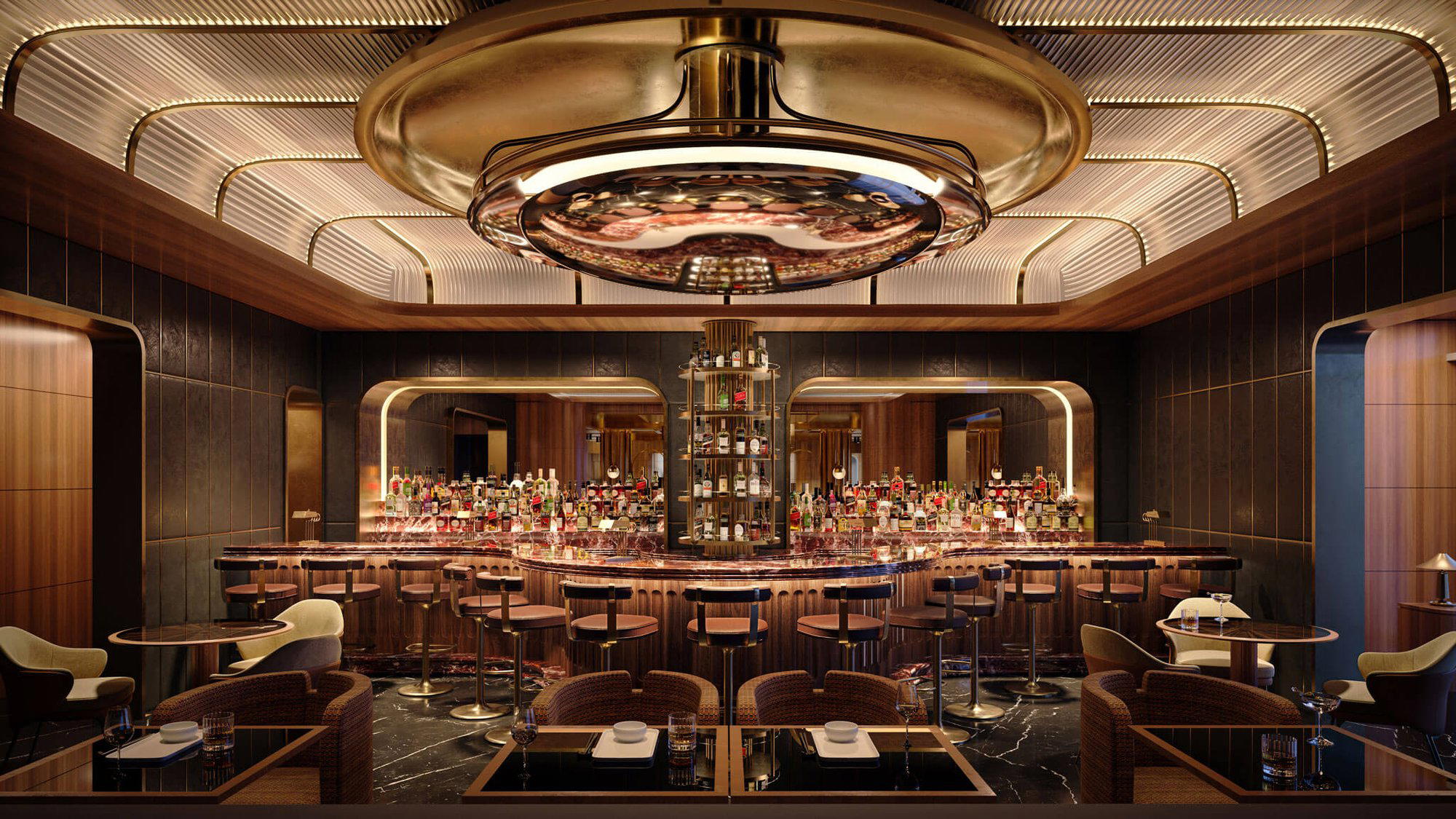
Warm home-away-from-home with amber and golden tones, modern art, spacious residential-style rooms, and soothing contemporary palette of blush, cream, and gray.