ASSET
ASSET belongs to the Columbus Avenue dining corridor on the Upper West Side, where neighborhood restaurants compete less on spectacle than on usefulness: pre-theater timing, weeknight flexibility, and a room that can hold both local regulars and destination diners. Its value is contextual, sitting among Italian, sushi, French, and Mexican options that define the area’s broad, practical restaurant culture.
Pearl is the En Primeur Club membership app — saves, bookings, and concierge access live there. Same editors, same standards.
- Address
- 329 Columbus Ave, New York, NY 10023
- Phone
- +12125171987
- Website
- assetrestaurant.com
- Directions
- Get directions
 Saves & bookings on Pearl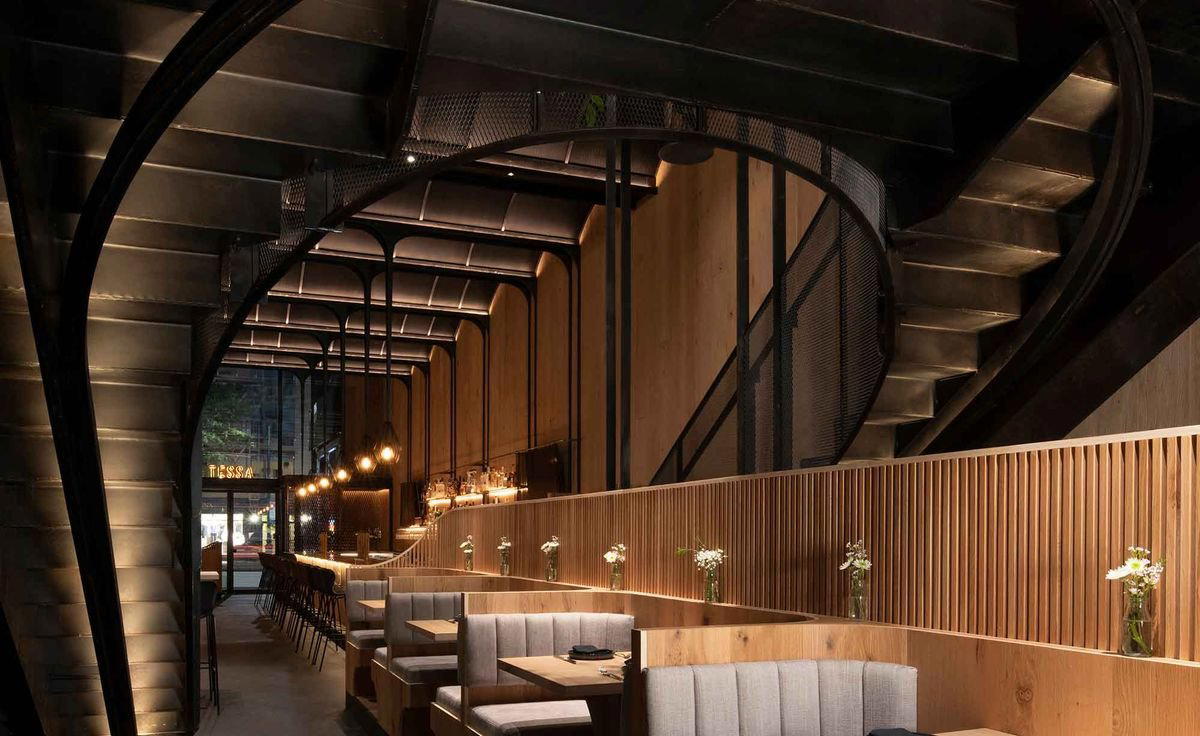
Columbus Avenue changes character block by block in the West 70s and 80s: brownstone quiet, museum traffic, school-night dinners, and the steady pull of Lincoln Center all sit within a short walk of one another. ASSET belongs to that Upper West Side rhythm. The room matters here because the neighborhood asks restaurants to work across several occasions at once, early drinks, family dinners, late-week groups, and the kind of table that does not require downtown theatrics to justify leaving the apartment.
The Upper West Side has never been a single-cuisine district. Its restaurant culture is built from proximity and repeat use: Italian rooms that handle multigenerational dinners, sushi counters for regulars, French-leaning dining rooms for planned nights out, and casual formats that absorb the neighborhood’s weeknight demand. In that context, ASSET reads less as a destination detached from its setting and more as part of a local dining grid where location, pacing, and room tone carry as much weight as a specific culinary label.
Columbus Avenue rewards restaurants that can handle more than one kind of night
New York dining often gets flattened into downtown openings and reservation drama, but the Upper West Side operates by different rules. A restaurant here has to serve the people who live nearby and still make sense for diners crossing town before or after cultural plans. That dual audience explains the area’s mix: Pappardella answers the neighborhood’s long-running appetite for Italian comfort; Gari Columbus brings the sushi-counter tradition into a residential corridor; Sempre Oggi positions Italian dining at a higher-spend tier; Essential by Christophe carries French and French contemporary cues for a more deliberate evening; Covacha adds Mexican cooking to the local spread.
ASSET’s position is strongest when read against that set. The question is not whether the restaurant outshouts downtown dining rooms, but whether it gives the Upper West Side another useful register: polished enough for a planned dinner, accessible enough for a weekday, and located where Columbus Avenue already trains diners to move between casual and composed formats. That is a meaningful place in New York, where neighborhood restaurants often survive by becoming part of personal routines rather than chasing a single burst of attention.
For readers mapping the broader city, the contrast is useful. Lower Manhattan and Brooklyn often reward specialization, tiny counters, narrow menus, and concept-led rooms. The Upper West Side places more value on elasticity. The nearby competitive set shows that clearly: French contemporary, Mexican, Italian, and sushi can sit within the same dining orbit because the neighborhood’s demand is occasion-based rather than trend-based. ASSET fits that pattern, which makes its Columbus Avenue address part of the experience rather than a footnote.
The neighborhood frame matters more than a label
Because no public cuisine category or chef-led narrative defines the restaurant in the available details, the sharper editorial read is place. Columbus Avenue restaurants are judged by how they manage tempo: early-evening flow, post-work arrivals, pre-performance compression, and weekend tables that may include children, grandparents, or visitors staying nearby. A restaurant that works in this corridor has to avoid feeling either too casual for a planned night or too formal for repeat local use.
That balance is why comparisons in this part of Manhattan are often more useful than rankings. Essential by Christophe and Sempre Oggi suggest the area can support higher-spend dining, while Covacha and Pappardella show the continuing strength of approachable neighborhood formats. Gari Columbus, by contrast, anchors the Japanese side of the local conversation. ASSET sits among these choices as part of a district where diners decide by mood, timing, and table type before they decide by cuisine taxonomy.
This is also where the Upper West Side separates itself from Midtown hotel dining or downtown scene restaurants. The audience is mixed but not anonymous. Locals notice whether a place works on a Monday as well as a Friday; visitors notice whether it gives them a credible Manhattan dinner without turning the evening into a logistics project. That combination is harder to execute than it sounds. In residential Manhattan, usefulness is not a modest virtue. It is the measure that determines whether a restaurant becomes part of the neighborhood’s weekly vocabulary.
How to place it in a New York dining plan
ASSET works well for diners already oriented around the Upper West Side: a museum day, a Lincoln Center-adjacent evening, a hotel stay above Midtown, or a local dinner that needs a grown-up room without the rigidity of a tasting-menu format. For a wider scan of the city’s restaurant range, start with Our full New York City restaurants guide; travelers building a full itinerary can pair it with Our full New York City hotels guide, Our full New York City bars guide, Our full New York City wineries guide, and Our full New York City experiences guide.
EP Club’s restaurant map also shows how different American cities solve neighborhood dining in different ways. New York regulars comparing formats may look at & Sons Ham Bar, 'inoteca, 1 or 8 (Sushi - Japanese), 12 Chairs (Israeli), and 15 East (Sushi - Japanese). Beyond the city, the same question of place versus format runs through Jōdo Saké Bar in Los Angeles, Onigiri Time in Pasadena, ¿Por Qué No? in Portland, 'Ai Love Nalo in Waimanalo Beach, 'āina in San Francisco, 'Ama 'Ama in Kapolei, -Grilled beef Sukiyaki- KAMAKURA TANUKIAN 鎌倉 たぬき庵 in Kamakura, and ¡Salud! in Los Angeles.
The editorial takeaway is practical: ASSET is better understood as an Upper West Side address than as a trophy booking. That is not a lesser category in New York. In a city crowded with concept dining, a restaurant that fits the lived cadence of its block earns attention for a different reason: it helps define how a neighborhood actually eats.
The Short List
Nearby venues at a similar price tier for orientation.
| Venue | Cuisine | Price | Notes |
|---|---|---|---|
| ASSETThis venue — the venue you are viewing | Not listed | $$$ | Not listed |
| Natsumi Tapas | Gramercy, Japanese-Italian Fusion Tapas | $$$ | Not listed |
| Franchia | Not listed | $$$ | Midtown-Times Square, Pan-Asian Vegan Fusion |
| BSTRO 38 | Not listed | $$$ | Midtown-Times Square, Global Fusion Bistro |
| Sen Sakana | Not listed | $$$$ | Midtown-Times Square, Kosher Nikkei (Japanese-Peruvian Fusion) |
| Penthouse808 | Not listed | $$$ | Queensbridge-Ravenswood-Dutch Kills, Pacific Rim Asian Fusion |
Continue exploring
More in New York City
Restaurants in New York City
Browse all →
Bars in New York City
Browse all →
Hotels in New York City
Browse all →







At a Glance
- Trendy
- Energetic
- Modern
- Industrial
- Sophisticated
- Date Night
- After Work
- Group Dining
- Celebration
- Brunch
- Special Occasion
- Private Dining
- Design Destination
- Standalone
- Craft Cocktails
- Extensive Wine List
- Street Scene
Current opening hours
- Monday
- 4–10 PM
- Tuesday
- 4–10 PM
- Wednesday
- 4–10 PM
- Thursday
- 4–10 PM
- Friday
- 4–11 PM
- Saturday
- 4–11 PM
- Sunday
- 4–10 PM
Hours can change for holidays and private events. Last verified .
Polished yet welcoming, with a sexy industrial design of light oak, metal, and soft upholstery, dim bar-style lighting, and a bustling, lively energy typical of a popular neighborhood hotspot.