M. Wells
Our verdict
M. Wells occupies a converted space in Long Island City, Queens, operating at the edge of what New York's outer-borough dining scene has quietly built over the past decade. The kitchen draws on North American diner tradition filtered through a French-Canadian sensibility, producing a format that sits outside the Michelin-chasing Manhattan mainstream. For readers who track where serious cooking moves when it leaves the centre, this address warrants attention.

The menu
What to order
- Caviar Sandwich
- Tourtière
- Le Burger Des Rêves
Crossing the Bridge: What Long Island City Says About New York Dining
The East River crossing from Midtown to Long Island City is short enough that most visitors never make it. That gap in attention has allowed a particular kind of restaurant to develop in Queens without the overhead, the press cycle, or the format pressure that shapes dining decisions in Manhattan. M. Wells, at 50-04 Vernon Blvd, sits inside that dynamic. The neighbourhood around Vernon Boulevard has absorbed a range of serious food operations precisely because it offers what the island opposite cannot: space, lower cost of occupancy, and an audience that arrives with intention rather than convenience.
This matters as editorial context because the outer boroughs have functioned, across multiple cycles of New York dining history, as the place where format experimentation happens before it either scales into Manhattan or stays put and deepens. The question with any outer-borough address is whether the trip is incidental to the dining or central to it. At M. Wells, the location is not a liability to be explained away. It is part of the proposition.
The Cultural Roots of the Format: North American Diner Meets French-Canadian Sensibility
To understand what M. Wells is doing, it helps to understand what the North American diner represents as a culinary form. The diner is not merely a cheap-food delivery mechanism. It is one of the few genuinely democratic eating formats the continent produced: a place where short-order technique, volume cooking, and ingredient generosity converge in a space that imposes no social hierarchy on the guest. The French-Canadian tradition adds a specific inflection to this. Quebec's food culture has long maintained a higher tolerance for offal, for pork fat, for dishes that European fine dining would classify as peasant food and treat with condescension, but which French-Canadian cooks have always treated with the same seriousness they bring to anything else.
M. Wells works in that overlap. The kitchen is not engaged in ironic diner nostalgia, nor in the kind of comfort-food positioning that turns familiar dishes into expensive facsimiles of themselves. The reference point is a genuine tradition with technical depth, and the cooking reflects that. Across the United States, a handful of kitchens are operating in comparable territory: Lazy Bear in San Francisco applies a similar seriousness to American culinary vernacular, while Smyth in Chicago works with a different regional inheritance but the same refusal to treat fine-dining structure as the only legitimate frame. M. Wells sits in that cohort of places that have found formal rigour inside informal culinary traditions.
Where M. Wells Sits in the New York Scene
New York's restaurant hierarchy at the leading end remains heavily concentrated in Manhattan. Le Bernardin and Per Se anchor the French fine-dining tier. Masa sets the ceiling for Japanese omakase pricing. Eleven Madison Park and Atomix represent the progressive end of their respective categories. These are restaurants whose competitive set is global and whose pricing reflects that orientation.
M. Wells operates in a different register. It does not position against the tasting-menu circuit. The comparison to The French Laundry or The Inn at Little Washington is instructive in contrast: those addresses pursue classical European structure applied to American contexts. M. Wells works the other direction, taking a vernacular North American form and applying technical seriousness to it from the inside.
For readers building a broader picture of where serious American cooking is happening, our full New York City restaurants guide maps these distinctions across neighbourhoods and price tiers.
The Physical Space and What It Signals
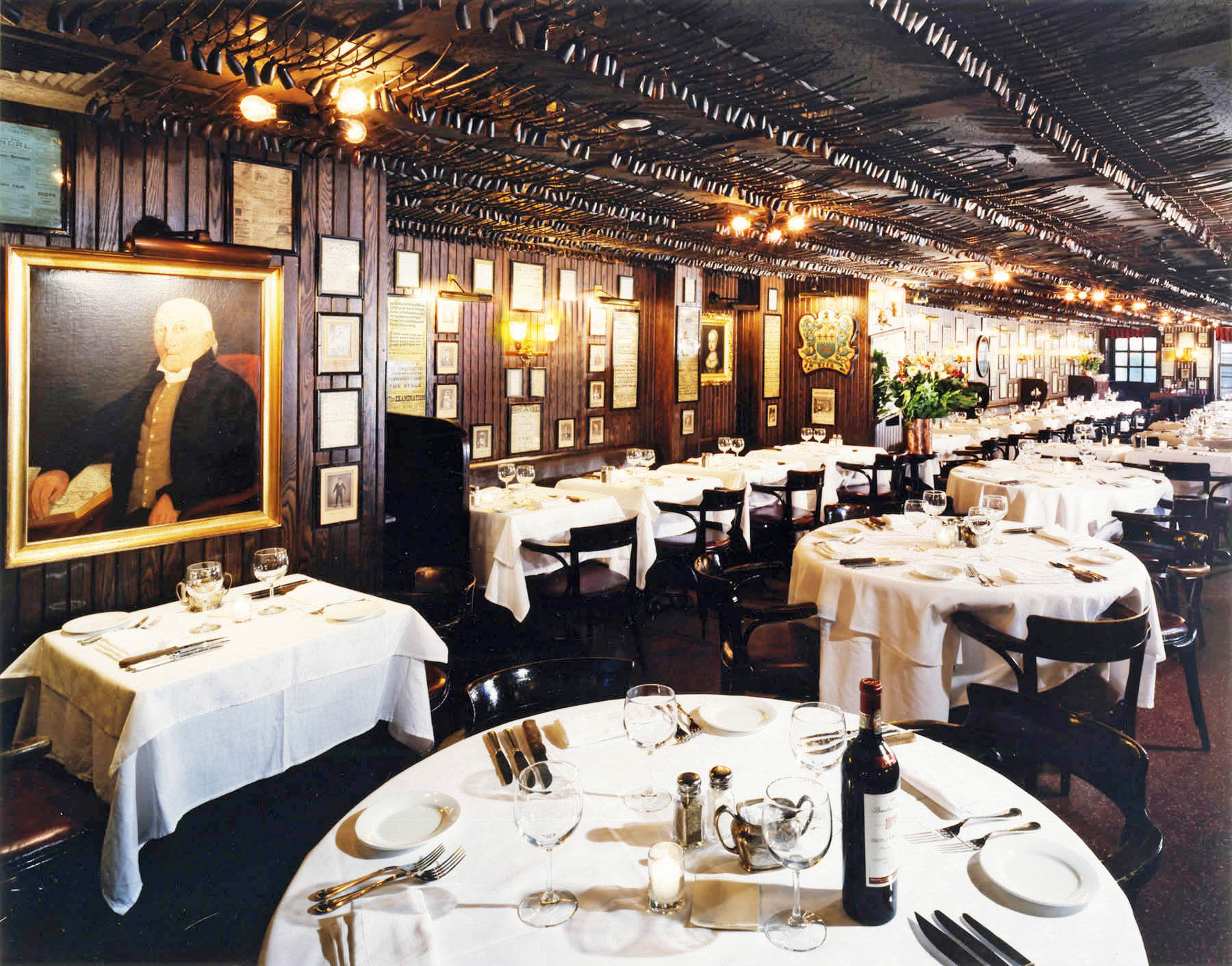
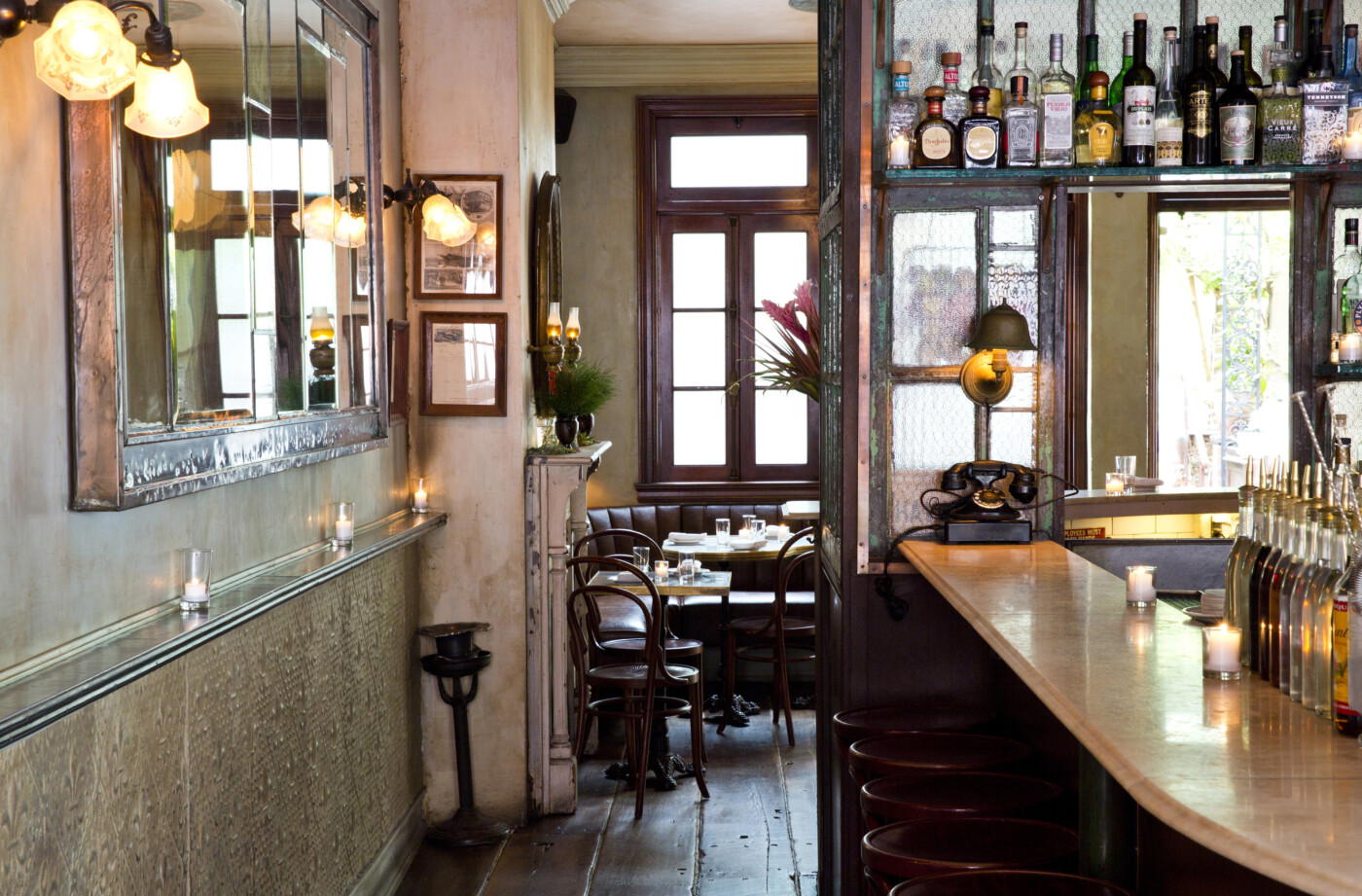
The converted format of the M. Wells space in Long Island City is itself a signal. Restaurant conversions in outer-borough New York tend to carry more character than purpose-built Manhattan dining rooms, because the buildings were not designed to host restaurants and the operators have to solve for that. What results, when it works, is a room that feels earned rather than designed: one where the physical environment reflects accumulated decision-making rather than a pre-opening fit-out budget. The Vernon Boulevard address has that quality. The space does not perform intimacy or drama in the way that a high-concept Manhattan room might. It simply holds the food and the guest without spectacle.
This is a meaningful distinction because the room and the cooking share the same logic. Both are working with materials that have deep cultural roots, neither overexplaining nor underdelivering. For guests accustomed to the production values of the Manhattan fine-dining circuit, this can read as restraint. It is more accurately described as discipline in a different idiom.
Planning Your Visit
Frequently asked questions
What do people recommend at M. Wells?
M. Wells has built its following on dishes that draw from French-Canadian diner traditions: preparations involving pork, offal, and rich braised formats that the kitchen treats with the same technical care a formal French kitchen would apply to classical proteins. Guests consistently point to the cooking's cultural specificity as its distinguishing quality, rather than any single dish operating as a signature. The cuisine sits closer to [Blue Hill at Stone Barns](https://www.enprimeurclub.com/restaurants/blue-hill-at-stone-barns-tarrytown-restaurant) in its relationship to a specific North American food tradition than to the Manhattan tasting-menu circuit anchored by venues like [Le Bernardin](https://www.enprimeurclub.com/restaurants/le-bernardin) or [Atomix](https://www.enprimeurclub.com/restaurants/atomix).
Should I book M. Wells in advance?
For outer-borough New York restaurants with a strong editorial reputation and limited seating, advance booking is consistently the correct approach. The Queens dining scene does not carry the same walk-in culture as neighbourhood spots in Manhattan's more saturated dining corridors. If you are visiting New York specifically to eat at a list of addresses across both boroughs, build your schedule around confirmed reservations. The 7 train access from Midtown makes the logistics manageable even within a tight itinerary.
What has M. Wells built its reputation on?
M. Wells occupies a specific position in the New York dining conversation: a kitchen that applies genuine technical ambition to a North American vernacular tradition rather than to European fine-dining conventions. Its reputation rests on cultural specificity and cooking discipline rather than on awards accumulation or chef-celebrity positioning. In a city where the upper tier of restaurant recognition is dominated by French and Japanese formats, M. Wells represents a different argument about what serious cooking can look like.
How does M. Wells compare to other serious outer-borough New York restaurants?
Long Island City has a thinner fine-dining infrastructure than Brooklyn's more developed restaurant corridors, which means M. Its closest comparisons are thematic rather than geographic: kitchens like [Smyth in Chicago](https://www.enprimeurclub.com/restaurants/smyth) or [Lazy Bear in San Francisco](https://www.enprimeurclub.com/restaurants/lazy-bear) that have found a way to work with North American culinary vernacular at a level of seriousness that challenges the assumption that formal cooking requires European reference points. For readers building a multi-city itinerary around this category of restaurant, M. Wells is the New York entry in that conversation.
Category Peers
| Venue | Cuisine | Price | Awards | Notes |
|---|---|---|---|---|
| M. WellsThis venue (the venue you are viewing) | Quebecois Steakhouse | Not listed | Not listed | Not listed |
| Le Bernardin | French Seafood Fine Dining | $300–500 | 3 Michelin Stars · World's 50 Best #13 | French, Seafood |
| Atomix | Modern Korean Tasting Menu | $300–500 | 2 Michelin Stars · World's 50 Best #7 | Modern Korean, Korean |
| Per Se | French Fine Dining Tasting Menu | $300–500 | 3 Michelin Stars · World's 50 Best #40 | French, Contemporary |
| Masa | Traditional Japanese Omakase | $500+ | 2 Michelin Stars · World's 50 Best #27 | Sushi, Japanese |
| Eleven Madison Park | Contemporary Plant-Based Fine Dining | $300–500 | 3 Michelin Stars · World's 50 Best #4 | French, Vegan |
Continue exploring
More in New York City
Restaurants in New York City
All restaurants in New York City →
Bars in New York City
All bars in New York City →





Details
- Rustic
- Trendy
- Industrial
- Date Night
- Special Occasion
- Open Kitchen
- Craft Cocktails
- A La Carte
- Vegetarian Friendly
rustic industrial space with a gonzo, memorable culinary atmosphere from guest reviews.