Our verdict
California Pizza Kitchen at LaZona Kawasaki occupies the fourth floor of one of Kanagawa's largest commercial complexes, bringing the American chain's signature wood-fired style to a city more associated with yakitori counters and ramen. For shoppers and families in Saiwai Ward, it functions as a reliable casual anchor in a dining floor designed around accessibility rather than ambition.

Pearl is the En Primeur Club membership app, where members save venues, book tables and use the concierge.
The menu
What to order
- Original BBQ Chicken Pizza
- Creamy Garlic Chicken Fettuccine
- Wild Mushroom Pizza
American casual dining inside Japan's retail machine
The fourth floor of LaZona Kawasaki Plaza is not where you go looking for quiet. One of the Kanto region's higher-traffic shopping destinations, the complex draws a consistent flow of families, commuters, and weekend shoppers who need feeding between stores. The dining floor operates on that logic: accessible, familiar, volume-oriented. California Pizza Kitchen sits within that environment, a branch of the American chain that built its reputation through the 1980s and 1990s on a simple proposition, take the pizza format and rethink its toppings through a California produce sensibility, then deliver it at a price point that works in a mall context.
That proposition has survived several decades of restaurant trend cycles, and it is worth examining why. In Japan, where pizza culture runs in two parallel tracks, the hyper-local Japanese interpretation with corn and mayonnaise, and the Neapolitan-influenced craft style that has grown steadily in cities like Tokyo and Osaka, California Pizza Kitchen occupies a third position. It imports an American casual-dining grammar that reads as internationally familiar without demanding the same level of product knowledge or occasion formality that a craft pizza counter might. For a retail complex in Kawasaki's Saiwai Ward, that is a functional position rather than an ambitious one, and the venue fills it accordingly.
The sourcing logic behind California-style pizza
The editorial angle that California Pizza Kitchen has always leveraged, and the one that still distinguishes it from a generic pizza chain, is its historical association with produce-forward cooking. The California culinary movement of the late 1970s and 1980s, associated broadly with figures like Alice Waters and the Chez Panisse ethos, placed fresh, seasonal, and regionally sourced ingredients at the center of American cooking at a moment when the country's mainstream restaurant culture was still largely ingredient-agnostic. California Pizza Kitchen translated a version of that sensibility into a scalable format: toppings drawn from a wider ingredient vocabulary than the Italian-American canon, often featuring vegetables, grilled proteins, and combinations that a traditional pizzeria would not recognize.
In a Japanese context, that sourcing logic intersects interestingly with local expectations. Japanese dining culture applies a high baseline standard to ingredient freshness across the price spectrum, from convenience store onigiri to high-end kaiseki. A brand positioning itself on ingredient variety and produce quality is operating in a market where those signals are read carefully. How that plays out at a specific mall-based branch, and how the supply chain for a multinational chain compares to what local Kawasaki restaurants source, is a practical question the format does not fully resolve. But the brand's design intention, pizza as a vehicle for produce-forward combinations, remains legible in its menu structure even in this location.
Kawasaki's dining context: where CPK fits
Kawasaki's restaurant scene is substantive but receives less editorial attention than its Yokohama and Tokyo neighbours. The city has a strong tradition of working-district dining, with grilled meat counters, ramen shops, and izakayas clustered around its main commercial corridors. For a sense of that denser, neighbourhood-rooted end of Kawasaki dining, Gatagataya and Sawaishi represent the kind of locally anchored experiences that the LaZona dining floor does not attempt to replicate. Similarly, 炭火焼肉ホルモンさわいし offers the charcoal-grilled precision that Kawasaki does particularly well.
California Pizza Kitchen occupies a different function in that ecology. It is a retail-complex restaurant serving a mixed demographic of families and couples who are already in the building and want a reliable, internationally branded option. That is a legitimate use case, and one that the shopping complex format was designed to accommodate. The practical reality is that LaZona Kawasaki's dining floor competes on convenience and breadth rather than on specialisation. Booking is generally not required for a weekday visit, though weekend family traffic at a complex of this scale can produce wait times during peak lunch and dinner periods.
For those who want to benchmark Kawasaki dining against the wider Kanagawa and Kanto region, the full Kawasaki restaurants guide maps the range from casual to more considered options. And for readers using a Kawasaki visit as a base for broader Japan dining, the contrast with what is happening at the craft and fine-dining end of nearby cities is instructive: Harutaka in Tokyo and HAJIME in Osaka operate in a category several tiers removed, while Gion Sasaki in Kyoto and akordu in Nara illustrate how regional Japanese dining can apply deep sourcing intelligence at a very different scale of ambition.
Planning a visit: what to know
Weekend visits to any LaZona Kawasaki dining outlet can run busy during midday and early evening, particularly during school holidays and sale periods when the complex draws higher footfall. Arriving before noon or after the main dinner rush tends to reduce wait times at counter-service or host-led casual formats. For families with young children, the mall environment offers the practical advantages of elevator access, nearby facilities, and a format that handles mixed-age groups without formality.
Frequently asked questions
Where exactly is カリフォルニア・ピザ・キッチン ラゾーナ川崎店?
カリフォルニア・ピザ・キッチン ラゾーナ川崎店 is located at Japan, 〒212-8576 Kanagawa, Kawasaki, Saiwai Ward, Horikawacho, 72−1 ラゾーナ川崎プラザ 4階, Kawasaki.
Where exactly is California Pizza Kitchen located within LaZona Kawasaki Plaza?
The restaurant is on the fourth floor of LaZona Kawasaki Plaza, address registered to Horikawacho, Saiwai Ward, Kawasaki, Kanagawa 212-8576. LaZona Kawasaki Plaza is directly connected to Kawasaki Station, making it accessible via JR and Keikyu lines without exiting to street level.
What dish is カリフォルニア・ピザ・キッチン ラゾーナ川崎店 famous for?
California Pizza Kitchen built its identity around non-traditional pizza combinations, think barbecue chicken, Thai-inspired toppings, and vegetable-forward preparations that diverged from the standard red-sauce model when the chain launched in the 1980s. The Kawasaki location on the fourth floor of LaZona Kawasaki Plaza carries that same California-origin menu logic.
Should I book カリフォルニア・ピザ・キッチン ラゾーナ川崎店 in advance?
LaZona Kawasaki Plaza is one of the Kanto region's higher-traffic retail destinations, meaning peak weekend hours on the fourth floor dining level can see significant wait times. Arriving during off-peak hours, weekday lunches or early weekday evenings, is a practical way to avoid queuing.
What is カリフォルニア・ピザ・キッチン ラゾーナ川崎店 known for?
The brand is known for positioning pizza as a vehicle for global flavours rather than a strictly Italian-American format, and that editorial identity has kept it distinct from generic pizza chains across its Japanese locations. The Kawasaki branch sits within the LaZona Kawasaki Plaza complex in Saiwai Ward, placing it inside a major commercial hub a short distance from Kawasaki Station. It functions as a recognisable casual American dining option within Kawasaki's broader restaurant scene, which draws less editorial focus than neighbouring Yokohama and Tokyo.
At-a-Glance Comparison
Comparable venues nearby, for context on price, style, and recognition.
| Venue | Cuisine | Price | Awards | Notes |
|---|---|---|---|---|
| カリフォルニア・ピザ・キッチン ラゾーナ川崎店This venue (the venue you are viewing) | California-Style Pizza | $20–30 | Not listed | Not listed |
| Kayu Nabou | Traditional Cantonese congee & dim sum | $20–30 | Tabelog 100 #66 | Musashi-Kosugi |
| Matsu no Ki | Traditional Sichuan Chinese with signature tantanmen | $20–30 | Tabelog 100 #70 | Kawasaki Ward |
| Kuzumochi Honpo Sumiyoshi | Traditional Japanese Wagashi & Kuzumochi Café | $1–10 | Tabelog 100 #77 | Kawasaki-ku |
| Buta Boshi | Ramen & Tsukemen Shop | $10–20 | Tabelog 100 #76 | Nakahara-ku (Motosumiyoshi Area) |
| Ramen Jiro Keikyu kawasaki ten | Jiro-style Ramen Shop | $10–20 | Tabelog 100 #36 | Kawasaki Ward, Kawasaki City |
Continue exploring
More in Kawasaki
Restaurants in Kawasaki
All restaurants in Kawasaki →

Bars in Kawasaki
Browse all →

Details
- Modern
- Lively
- Cozy
- Family
- Group Dining
- Casual Hangout
- Open Kitchen
- A La Carte
- Vegetarian Friendly
Current opening hours
- Monday
- 11 AM–10 PM
- Tuesday
- 11 AM–10 PM
- Wednesday
- 11 AM–10 PM
- Thursday
- 11 AM–10 PM
- Friday
- 11 AM–10 PM
- Saturday
- 11 AM–10 PM
- Sunday
- 11 AM–10 PM
Hours can change for holidays and private events. Hours as of .
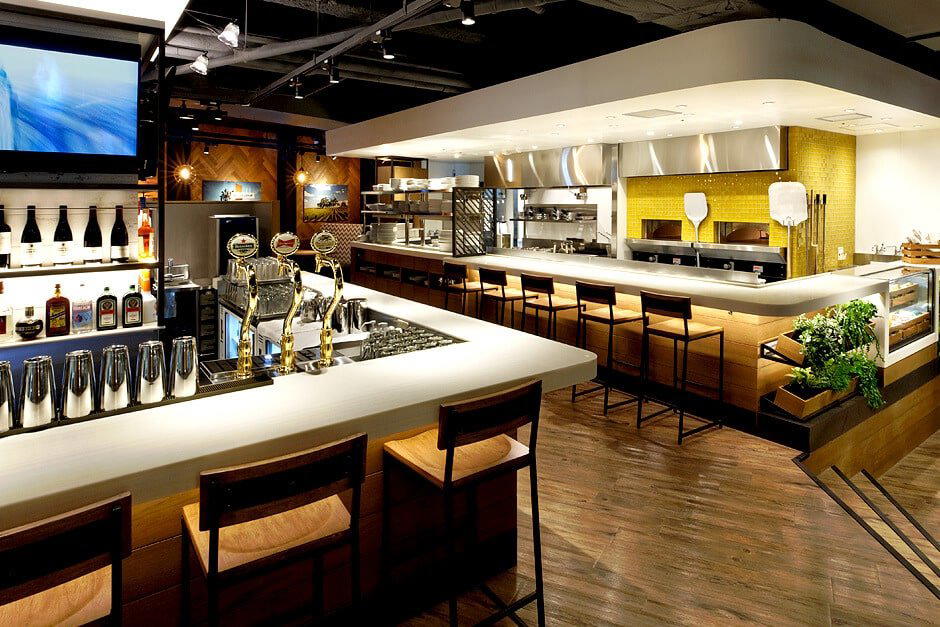
Wooden warmth with an open, spacious interior evoking California casual dining.