
Tabelog 100 #76
Our verdict
Buta Boshi belongs to Kawasaki’s serious everyday ramen circuit: counter seating, no reservations, cash-only payment, and a price band that keeps the meal in the JPY 1,000–1,999 range. Its repeated Tabelog 100 ramen selections from 2017 through 2025 place it in a recognized Kanagawa category rather than a casual station-area recommendation.

Pearl is the En Primeur Club membership app, where members save venues, book tables and use the concierge.
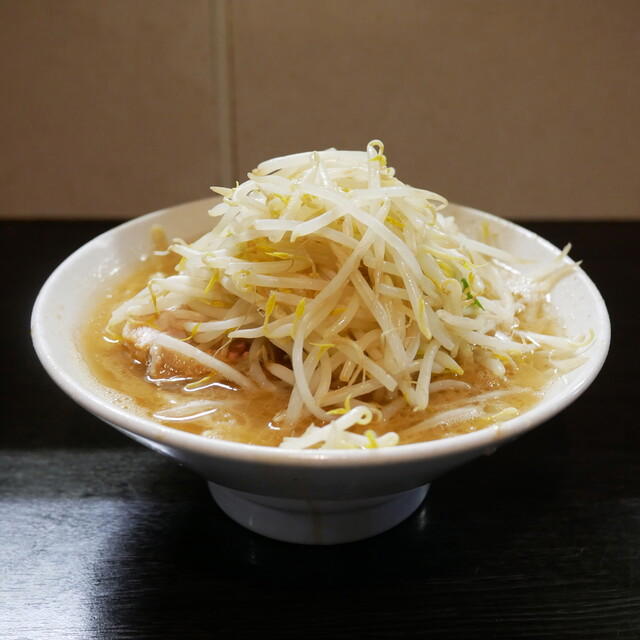
The menu
What to order
- Ramen
- Tsukemen (dipping noodles)
- Abura-soba / Maze-soba
Approach ramen in Kawasaki as a ritual before treating it as a meal. The room is tight, the counter is the point, and the pace is governed by the bowl rather than by leisurely table service. Buta Boshi fits that grammar: fourteen counter seats, a no-reservation format, and a menu category that runs through ramen, tsukemen, abura-soba, and maze-soba. This is not the Yokohama hotel-dining version of Kanagawa eating; it is the suburban rail-line version, where value, queue discipline, and a concentrated kitchen rhythm matter more than décor.
Kawasaki sits between Tokyo and Yokohama, and its eating culture often gets flattened into commuter convenience. That misses the point. Around Motosumiyoshi and Musashi-Kosugi, strong casual restaurants operate in a competitive zone where office workers, families, students, and solo diners share the same counter economics. A bowl in the JPY 1,000–1,999 bracket has to justify itself quickly. In that bracket, recognition carries weight because the category is crowded and repeat custom is unforgiving.
Counter ramen as a disciplined meal, not a slow restaurant sitting
The ramen counter has its own etiquette. Order, sit, eat with attention, and free the seat. That does not make the experience rushed; it makes it focused. A counter-only shop compresses the distance between kitchen and diner, so timing becomes part of the meal: noodles are served for immediate eating, dipping noodles and mixed noodles ask for a different pace, and lingering works against the format. Buta Boshi’s listing across ramen, tsukemen, abura-soba, and maze-soba places it inside the broader modern ramen grammar rather than a single-style nostalgia shop.
That range matters in Kanagawa. The prefecture’s ramen identity is not one narrow school; it includes Yokohama’s heavy, pork-forward lineage, Tokyo-adjacent clear-broth influence, dipping-noodle culture, and the soupless formats that suit a younger, repeat-visit crowd. A shop that is recognized in the ramen category while also covering tsukemen and maze-soba belongs to the contemporary side of that conversation. The meal is less about a long tasting arc than about choosing a format and respecting its tempo.
The public signals are unusually concrete for a casual ramen counter. Buta Boshi was selected for Tabelog Ramen EAST 100 in 2017, 2018, 2019, 2020, 2021, 2022, and 2023, then for Tabelog Ramen KANAGAWA 100 in 2024 and 2025. Its Tabelog score is 3.75. Those are not luxury-restaurant markers, but in Japanese ramen culture they mean something practical: enough regular approval, category relevance, and consistency to survive repeated comparison in a field where diners actively rank bowls against nearby alternatives.
Why the Motosumiyoshi setting changes the stakes
Motosumiyoshi is not a destination dining district in the Ginza sense, and that is exactly why the bar is high. Ramen here competes with a dense everyday circuit, not with special-occasion tasting menus. In Kawasaki, Ramen Marusen and Hikage sit in the same broad JPY 1,000–1,999 ramen price band, while Kayu Nabou and Malini South Indian & Fusion push into a slightly higher casual range at dinner. The comparison shows how compressed the local decision is: diners are not choosing between cheap and expensive so much as between formats, appetite, and how much structure they want from the meal.
The no-reservation model reinforces that local logic. A counter shop in this category asks for flexibility rather than advance planning, and the absence of private rooms or private use keeps the experience democratic. Solo diners and families are both named use cases, which is a useful signal in Japan: the room may be compact, but the category is not coded only for ramen obsessives eating alone. Take-out is listed as a service, though the core appeal remains the counter meal, where noodle timing and kitchen cadence are part of the point.
There is also a biographical fact worth noting because it explains continuity rather than personality. The restaurant opened on April 4, 2015, and later moved from Rokkakubashi in Yokohama to its current Kawasaki address. That migration keeps it within Kanagawa’s ramen orbit while shifting the audience from a Yokohama neighborhood context to the Tokyu-line commuter belt. For readers mapping the wider city, the move is more useful than any chef mythology: it places the shop in the region’s everyday ramen network.
How to read it against Kawasaki's broader eating map
Buta Boshi is a strong example of why Kawasaki dining should not be judged only through Tokyo spillover. The city rewards narrower missions: a counter ramen bowl here, a bakery stop there, a small international restaurant elsewhere., and Chinese Santuru. The pattern is local depth rather than a single grand dining strip.
Travel planning around Kawasaki also benefits from separating category research. Use Our full Kawasaki hotels guide for the overnight base, Our full Kawasaki bars guide for drinking plans, Our full Kawasaki wineries guide for wine-led listings, and Our full Kawasaki experiences guide for non-restaurant programming. Readers extending the Japan itinerary can compare the casual-specialist lens with -Grilled beef Sukiyaki- KAMAKURA TANUKIAN 鎌倉 たぬき庵 in Kamakura. 鮪と炭火焼き うお炭 秋葉原店 in Tokyo.cafe in Osaka.know in Kumamoto, [Curry Senmon Ten] Maruyama Kyoju. in Sapporo, and [ki:] in Kyoto. Across the Pacific, Jōdo Saké Bar in Los Angeles and Onigiri Time in Pasadena show how Japanese casual formats translate abroad, though Kawasaki’s counter ramen culture remains more tightly bound to station life and repeat local use.
The editorial case is simple: this is a recognized ramen counter in a serious Kanagawa ramen field, with pricing and format aligned to everyday use rather than special-occasion dining. Go for the ritual as much as the bowl: choose the noodle format, follow the counter pace, and treat the short sitting as the structure that makes the meal work.
Frequently asked questions
Where do I go for Buta Boshi?
Buta Boshi is located in Kawasaki.
What does dinner at Buta Boshi typically cost?
Pricing at Buta Boshi is listed as JPY 1,000 - JPY 1,999 JPY 1,000 - JPY 1,999.
What's the best way to book Buta Boshi?
Buta Boshi does not take reservations, so there is no booking channel to use. The practical approach is to plan a walk-in visit to the 14-seat counter in Kawasaki, with the Tabelog 100 selection in Kanagawa (2025) as the clearest trust signal.
What is Buta Boshi known for?
Buta Boshi is primarily known for its core concept and execution in Kawasaki.
Where It Fits
Nearby venues at a similar price tier for orientation.
| Venue | Cuisine | Price | Awards | Notes |
|---|---|---|---|---|
| Buta BoshiThis venue (the venue you are viewing) | Ramen & Tsukemen Shop | $10–20 | Tabelog 100 #76 | Not listed |
| Ramen Marusen | Traditional Ramen Shop | $10–20 | Tabelog 100 #27 | Musashi-Kosugi |
| Pastry shop Tamagawa (Oiwake Bun) | Japanese Confectionery | Not listed | Tabelog 100 #15 | Kawasaki Ward |
| Ramen Jiro Ikuta ekimae ten | Jiro-style Ramen Shop | $10–20 | Tabelog 100 #59 | Tama-ku |
| Niboshi Ramen Tanaka Niboru | Niboshi-focused ramen & tsukemen | $10–20 | Tabelog 100 #81 | Takatsu Ward |
| noodles kitchen GUNNERS | Ramen shop (clam-broth focus) | $1–10 | Tabelog 100 #26 | Nakahara-ku (Musashi-Kosugi Area) |
Recognition history
Dated appearances from independent guides and award organizations, with the underlying list record or original source where available.
Tabelog 100 #76 · No. 76
Tabelog · Tabelog 100 - Ramen - KANAGAWA - 2025
Continue exploring
More in Kawasaki
Restaurants in Kawasaki
All restaurants in Kawasaki →



Bars in Kawasaki
Browse all →







Details
- Lively
- Energetic
- Solo
- Family
- Casual Hangout
- Late Night
- After Work
- Chefs Counter
- Standalone
- A La Carte
- Counter Dining
A compact, counter-only ramen shop with a casual, bustling atmosphere; guests sit shoulder-to-shoulder at the 14-seat counter, with simple interiors and the focus firmly on the powerful bowls of ramen rather than décor.