Deba Taberna Japonesa
Our verdict
Deba Taberna Japonesa brings a Japanese taberna format to the Barcelona suburb of Sant Quirze del Vallès, operating at the quieter edge of the city's expanding Japanese dining conversation. The address on Carrer del Nord places it well outside the central circuits, making it a deliberate destination rather than a passing choice. For those tracking how Japanese culinary traditions are embedding themselves in Catalonia, it offers a local-scale counterpoint to the big-ticket rooms downtown.

Pearl is the En Primeur Club membership app — saves, bookings, and concierge access live there. Same editors, same standards.
- Address
- Deba Taberna Japonesa, Carrer del Nord, 2, 08192 Sant Quirze del Vallès, Barcelona, Spain
- Phone
- +34658818654
- Hours
- Mon ClosedTue–Thu 1:30–4 PM, 8:30–11 PMFri–Sat 1:30–4 PM, 8:30 PM–12 AMSun Closed
- Website
- debatabernajaponesa.com
- Directions
- Get directions
- Booking
- Book on CoverManager
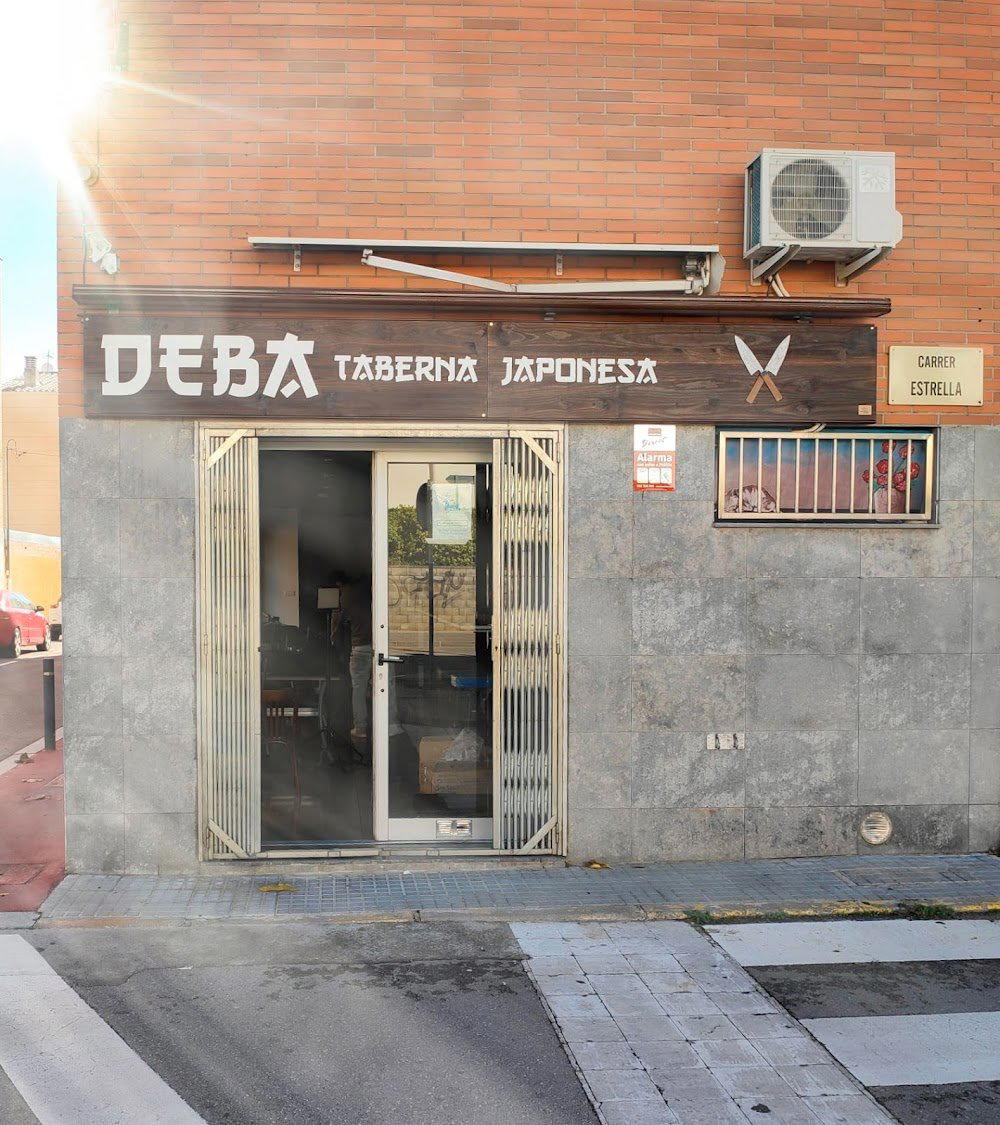
Where Catalan Streets Meet Japanese Kitchen Logic
The neighbourhood taberna is one of Spain's most democratic dining formats: a room you walk into without ceremony, where the cooking is specific and the atmosphere unpretentious. When that format is applied to Japanese culinary traditions, the result is something that sits outside the usual reference points. Deba Taberna Japonesa, on Carrer del Nord in Sant Quirze del Vallès, operates in exactly that space. The address puts it in the Barcelona commuter belt rather than the city's tourist grid, and that distance from the Eixample or El Born circuits is not incidental. It shapes who comes, how often, and what the kitchen has reason to cook.
Spain's Japanese dining scene has historically concentrated in Madrid and Barcelona proper, with the upper tier occupied by omakase counters and tasting-menu formats aimed at expense-account visitors. See, for comparison, how Barcelona's Cocina Hermanos Torres or the multi-Michelin ambitions of El Celler de Can Roca in Girona structure their propositions around destination diners. A taberna-format Japanese room in a residential suburb answers a different question entirely: not what the serious diner flies in for, but what the local neighbourhood sustains week after week.
The Ingredient Logic Behind a Japanese Taberna in Catalonia
The intersection of Japanese cooking philosophy and Catalan ingredient culture is more coherent than it first appears. Catalonia has one of Spain's most developed networks of small-scale producers: fish landed at Barceloneta and Vilanova, market vegetables from the Llobregat delta, charcuterie traditions rooted in inland towns. Japanese culinary technique, particularly in its taberna-adjacent registers, places sourcing at the centre of the proposition. The quality of a piece of fish or a seasonal vegetable is not a backdrop to the dish; it is the dish. That alignment between Japanese ingredient reverence and Catalan producer culture gives suburban Japanese restaurants a platform that can be genuinely substantive, not merely imitative.
This is the same logic that has allowed Japanese-influenced restaurants in other European cities to develop loyal, repeat-visit audiences even without the address, the Michelin hardware, or the Instagram exposure of their downtown counterparts. The model works when the sourcing is honest and the cooking respects what arrives. Spain's multi-Michelin names, from Quique Dacosta in Dénia to Aponiente in El Puerto de Santa María, have built entire identities on proximity to primary producers. A taberna version of that commitment operates at a different price point and scale but draws from the same principle.
Reading the Room: Format, Atmosphere, and Who This Is For
The taberna format matters as a signal. It implies counter or table service without a tasting-menu obligation, a list of dishes ordered individually or in rounds, and a price point that makes repeat visits possible for a local audience. Across Spain, the taberna and its variants have proven more durable than the tasting-menu format for neighbourhood dining because they distribute the decision across the table rather than centralising it in a pre-set progression. For a Japanese kitchen, that format encourages a broader repertoire: small plates, composed dishes, and perhaps raw preparations that can each be evaluated on their own terms.
Sant Quirze del Vallès is a commuter town northwest of Barcelona with a residential character that is not primarily oriented around destination dining. A Japanese restaurant choosing that address is making a bet on local loyalty rather than tourist flow. That is a different kind of proof of concept than opening in El Poble Sec or Gràcia, where foot traffic and neighbourhood culinary density carry a room through its early months. For anyone tracking Spain's Japanese dining geography beyond the obvious urban nodes, a room like Deba represents the format at its most locally embedded. For context on what full-scale Spanish creative ambition looks like, consult our coverage of Arzak in San Sebastián, Azurmendi in Larrabetzu, or Martin Berasategui in Lasarte-Oria. Deba is operating in a different register, but a register with its own internal discipline.
Planning Your Visit
Frequently asked questions
Is Deba Taberna Japonesa child-friendly?
The taberna format, ordering individual dishes rather than committing to a tasting menu, generally suits families with children better than formal counter dining. Sant Quirze del Vallès is a residential town, which tends to produce rooms tolerant of mixed-age groups.
Is Deba Taberna Japonesa better for a quiet night or a lively one?
A neighbourhood taberna in a Catalan town like Sant Quirze del Vallès is built for the former. The format, a local room serving individually ordered dishes, signals an unhurried pace rather than a high-energy bar scene. It sits at Carrer del Nord, 2, away from central Barcelona's volume, which sets the register before you arrive.
How does Deba Taberna Japonesa differ from Japanese restaurants in central Barcelona?
The Sant Quirze del Vallès location at Carrer del Nord, 2, places Deba outside Barcelona's dense concentration of Japanese restaurants in neighbourhoods like Eixample or El Poble Sec. The taberna format and Catalan ingredient focus distinguish it from the sushi counters and ramen specialists that dominate the city's Japanese dining offer. Reaching it requires the FGC line from Plaça Catalunya, which filters the crowd toward locals and deliberate visitors rather than passing trade.
What's the signature dish at Deba Taberna Japonesa?
The venue's premise, Japanese kitchen logic applied to Catalan ingredients in a taberna setting, suggests the cooking draws on both traditions rather than replicating a single Japanese canon. Checking the venue directly or visiting their social channels before arrival is the most reliable route to current menu information.
How do I find Deba Taberna Japonesa?
Deba Taberna Japonesa is located at Deba Taberna Japonesa, Carrer del Nord, 2, 08192 Sant Quirze del Vallès, Barcelona, Spain, El Poble Sec.
What's the best way to book Deba Taberna Japonesa?
For a taberna-format room in a smaller Catalan town, walking in or contacting the venue through social media are practical starting points. The address is Carrer del Nord, 2, Sant Quirze del Vallès, accessible from Barcelona via the FGC rail line.
What is Deba Taberna Japonesa known for?
Deba Taberna Japonesa positions itself at the intersection of Japanese cooking philosophy and Catalan ingredient culture, delivered through the accessible taberna format rather than a formal omakase or tasting-menu structure. Located in Sant Quirze del Vallès, reachable from Barcelona by FGC rail, it represents a less common approach in the Spanish dining scene: Japanese culinary logic applied without ceremony in a neighbourhood room.
Quick Comparison
Comparable venues nearby, for context on price, style, and recognition.
| Venue | Cuisine | Price | Notes |
|---|---|---|---|
| Deba Taberna JaponesaThis venue — the venue you are viewing | Traditional Japanese Taverna | Not listed | Not listed |
| La COCO | Japanese-Mediterranean Fusion | $20–30 | la Vila de Gracia |
| Grasshopper Ramen Bar | Traditional Japanese Ramen | $20–30 | Sant Pere, Santa Caterina i la Ribera |
| Ikibana | Japanese-Brazilian Fusion | Not listed | Sant Antoni |
| Atipical | Creative Mediterranean neighborhood gastronomy with natural wine | $30–50 | Poblenou |
| SantaGula | Seasonal Catalan Bistro with International Touches | $30–50 | la Vila de Gracia |
Continue exploring
More in El Poble Sec
Restaurants in El Poble Sec
Browse all →
Bars in El Poble Sec
Browse all →
Hotels in El Poble Sec
Browse all →

Details
- Cozy
- Casual Hangout
- Sake Program
- Small Plates
Current opening hours
- Monday
- Closed
- Tuesday
- 1:30–4 PM, 8:30–11 PM
- Wednesday
- 1:30–4 PM, 8:30–11 PM
- Thursday
- 1:30–4 PM, 8:30–11 PM
- Friday
- 1:30–4 PM, 8:30 PM–12 AM
- Saturday
- 1:30–4 PM, 8:30 PM–12 AM
- Sunday
- Closed
Hours can change for holidays and private events. Last verified .