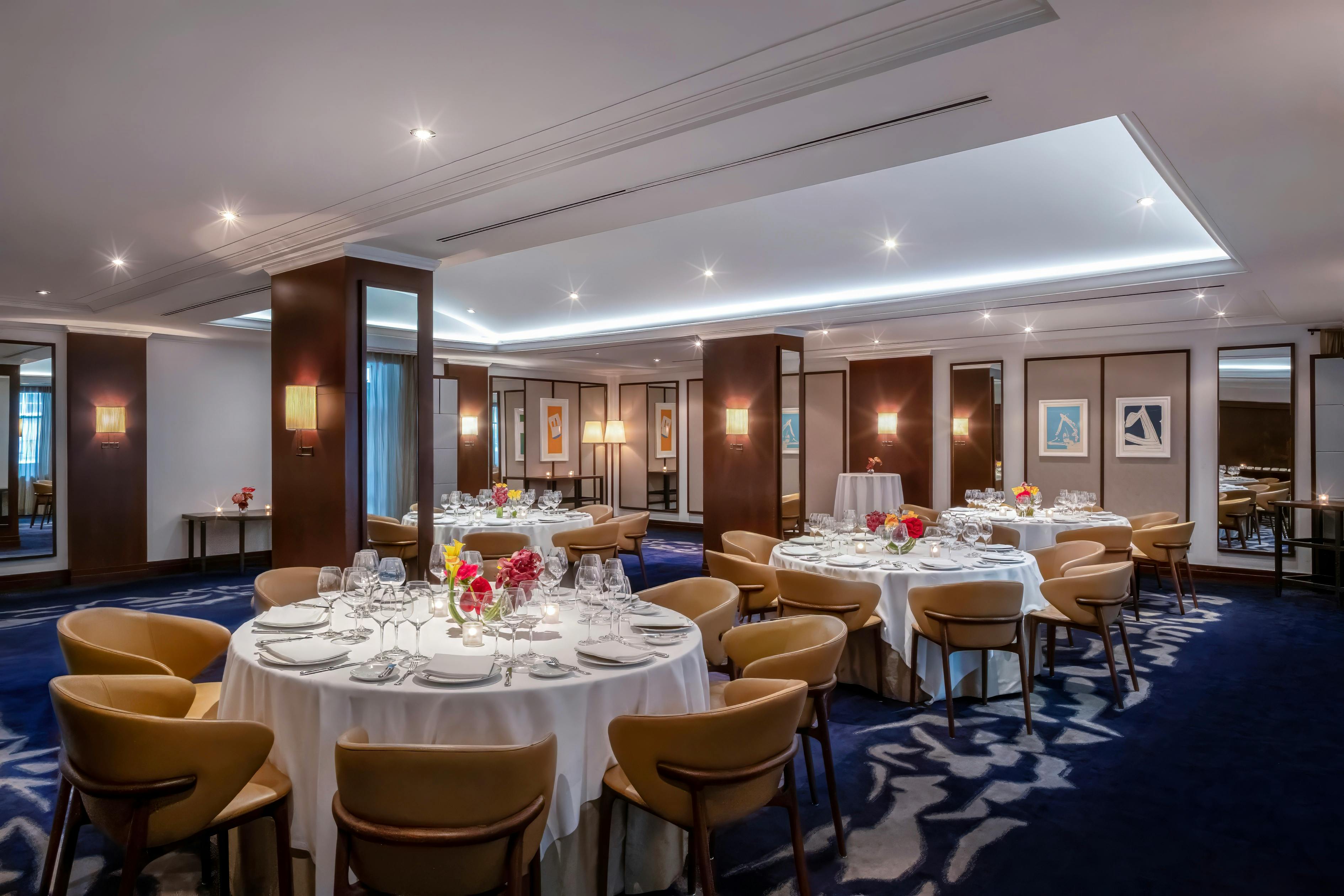
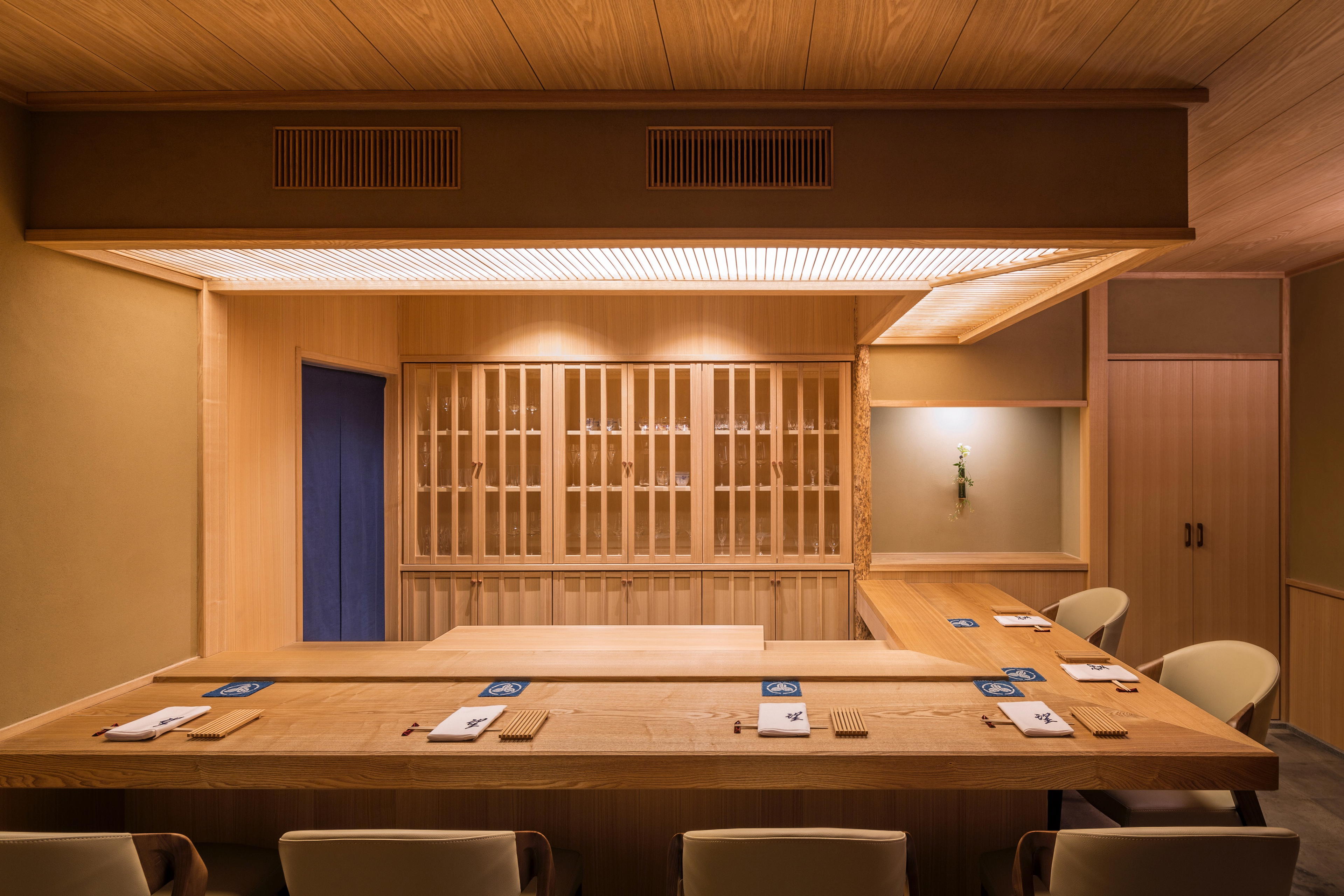
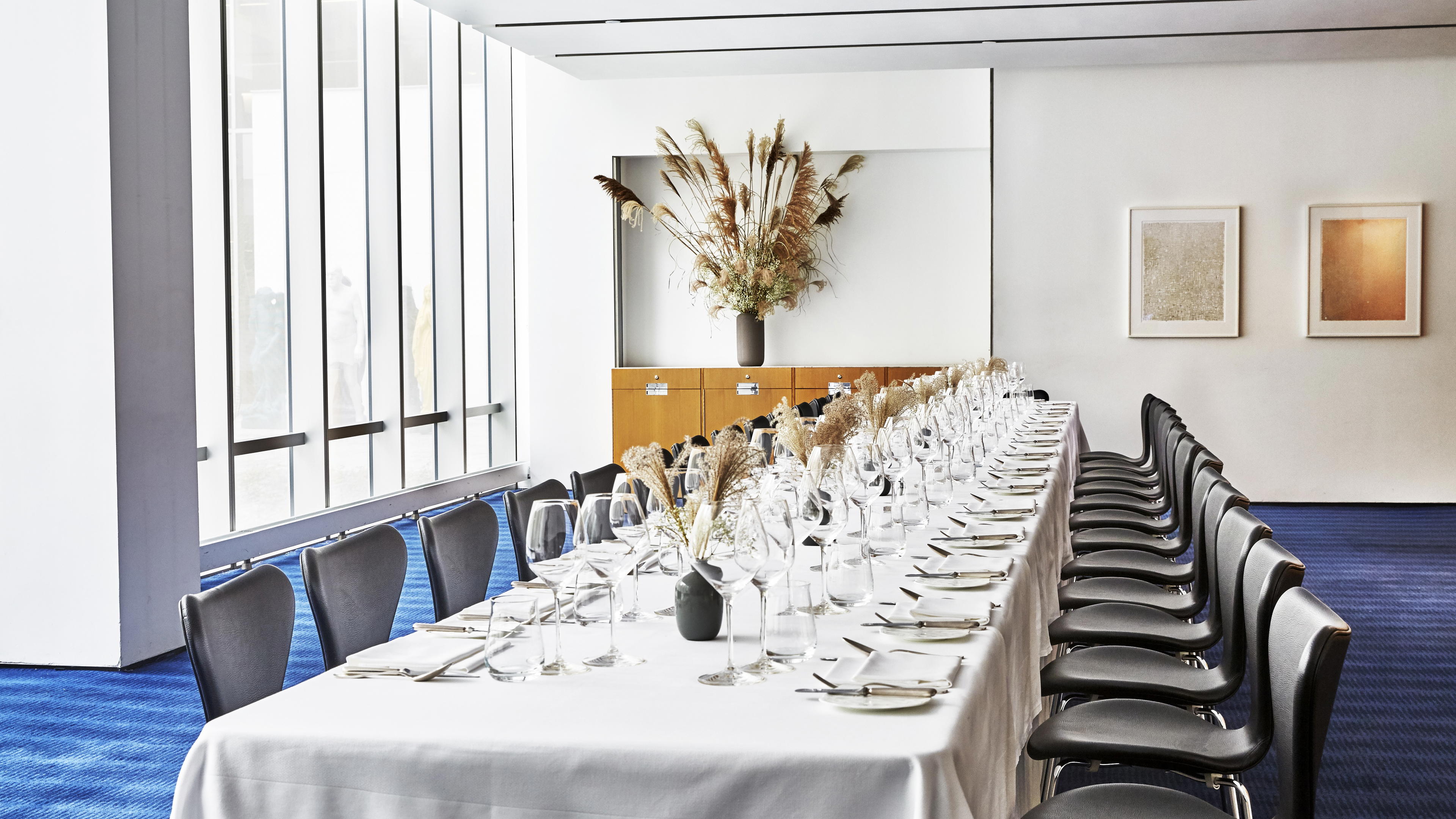
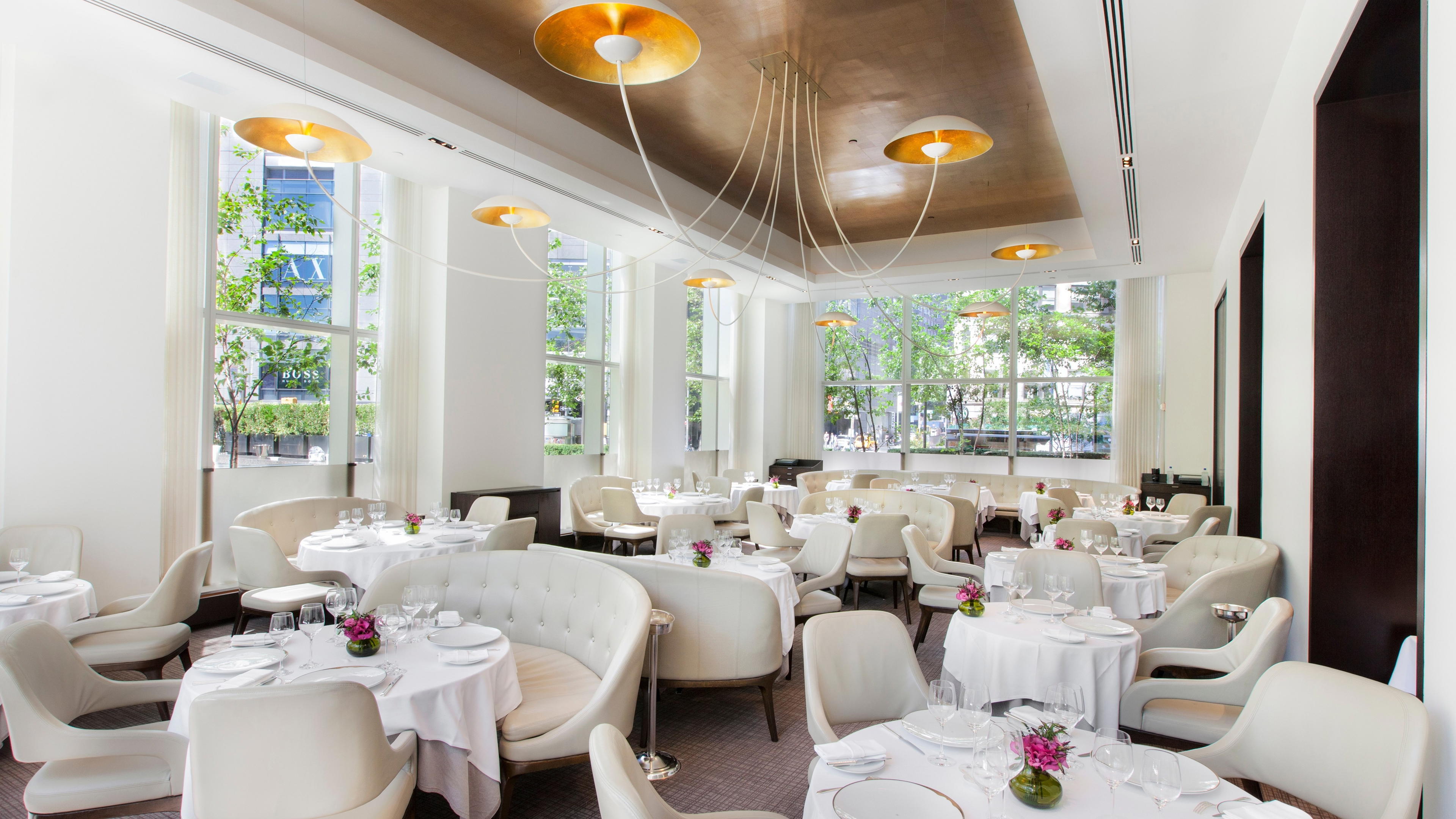
Dear Margo
Our verdict
Dear Margo brings Eastern Mediterranean and Greek cooking, with Levantine accents, to New York City's increasingly competitive modern Mediterranean scene. The restaurant draws a crowd that comes with purpose, whether marking an anniversary or engineering a long-overdue dinner worth remembering. It occupies a specific tier in the city's dining conversation: particular enough to signal effort, grounded enough in shared tradition to feel genuinely hospitable.

Pearl is the En Primeur Club membership app, where members save venues, book tables and use the concierge.

The Eastern Mediterranean Moment in New York
Greek and Levantine cooking have spent the better part of a decade moving from peripheral ethnic category to serious fine-dining territory in American cities. New York has been at the centre of that shift. What started as a handful of mezze-and-charcoal spots has sorted itself into a more stratified scene: fast-casual shawarma operations at one end, and at the other, restaurants treating Eastern Mediterranean cuisine with the same sourcing discipline and menu architecture that French kitchens once owned by default. Dear Margo occupies that upper tier, where olive oil provenance, wood-fire technique, and the structural logic of mezze-then-main are taken as seriously as in any European reference point.
The comparison set here is not Le Bernardin or Masa, though those rooms define what ceiling pricing and format discipline look like in New York. Dear Margo competes in a different conversation, one where the cuisine itself is the credential rather than a decades-long institutional reputation. That is both an opportunity and a pressure: the room has to make the case for Eastern Mediterranean cooking on its own terms, without the shorthand of a three-Michelin-star legacy or a lineage stretching back to a founding era.
Occasion Dining and What the Format Demands
Restaurants that attract milestone meals share a common set of structural features. The pacing allows conversation. The menu offers enough decision-making to feel considered without tipping into anxiety. There is a natural progression, from smaller shareable plates through to something more substantial, that maps onto the social rhythm of a celebration. Eastern Mediterranean formats are particularly well-suited to this, because the mezze tradition builds in exactly that kind of sequencing: early-arriving dips, grilled vegetables, and spreads give a table something to work through together before the more individually composed courses arrive.
Dear Margo works within that logic. The Greek and Levantine reference points are not set dressing; they are structural. A table marking an anniversary or a significant birthday is not looking for a rigid tasting menu where each course arrives in isolation. They want to eat well and talk, and the shareable-then-individual format that Eastern Mediterranean kitchens default to serves that better than most European tasting-menu formats. Compare this to the experience at Eleven Madison Park or Per Se, where the highly choreographed tasting sequence puts the kitchen's narrative above the table's own. Dear Margo's format inverts that priority, which is precisely why it attracts the kind of dinner that needs to feel like the guests are in control of the evening.
That said, occasion dining at this level still requires technical precision. Sharing plates that arrive lukewarm, or a wine list that stops at entry-level Greek bottlings, would undercut the celebratory intent. The Eastern Mediterranean wine category has matured considerably in the last decade, with serious Assyrtiko-based whites from Santorini, structured reds from Nemea, and increasingly credible Lebanese producers giving sommeliers real tools to work with. A room positioning itself as destination-worthy for milestone meals needs to treat the beverage program with the same seriousness as the kitchen.
Where Dear Margo Sits in New York's Current Scene
New York's premium dining tier has consolidated around a handful of established European-lineage restaurants and a growing cohort of kitchens that work outside that tradition. Atomix made the case for Korean fine dining at the highest level. The question for Eastern Mediterranean cooking is whether it can command similar critical and commercial respect, and Dear Margo is one of the addresses making that argument. For readers building a longer picture of the city's dining geography, our full New York City restaurants guide maps the broader terrain.
Outside New York, the occasion-dining format has been handled with particular seriousness at places like Blue Hill at Stone Barns in Tarrytown, where the agricultural context becomes its own kind of celebration, or Single Thread Farm in Healdsburg, where the kaiseki-influenced progression is designed almost entirely around the milestone-meal experience. In the South, Emeril's in New Orleans has long anchored the celebration-dinner category for a different regional cuisine. What those rooms share with Dear Margo is a commitment to format as hospitality: the meal is structured to serve the occasion, not the other way around. You can see this dynamic play out at comparable addresses nationally, from Lazy Bear in San Francisco to Smyth in Chicago, Providence in Los Angeles, Addison in San Diego, Frasca Food & Wine in Boulder, and The Inn at Little Washington. Internationally, the precision of destination-dining formats at places like Atelier Moessmer Norbert Niederkofler in Brunico or Dal Pescatore in Runate illustrates how deeply the occasion-dining category has been shaped by European craft traditions, against which Dear Margo's Mediterranean lineage offers a direct and credible counterpoint. The French Laundry in Napa remains the American benchmark for that kind of structured, event-grade dining.
Planning Your Visit
Eastern Mediterranean restaurants at this tier tend to perform leading when the table is not rushed. Booking for a weekday evening, particularly mid-week, generally allows a more considered pace than a Saturday service packed with back-to-back seatings. Seasonal timing matters too: autumn and early winter are the period when Greek and Levantine menus lean into preserved citrus, pomegranate, and slow-cooked lamb preparations that suit celebratory occasions particularly well. Summer services, by contrast, tend to favour raw preparations, grilled fish, and lighter vegetable-forward mezze that work better in the heat.
How Dear Margo Compares on Practical Logistics
| Venue | Cuisine | Price Tier | Format |
|---|---|---|---|
| Dear Margo | Eastern Mediterranean / Greek (Levantine) | Not published | Mezze-led sharing |
| Le Bernardin | French, Seafood | $$$$ | Prix fixe / à la carte |
| Atomix | Modern Korean | $$$$ | Tasting menu counter |
| Per Se | French, Contemporary | $$$$ | Fixed tasting menu |
| Eleven Madison Park | French, Vegan | $$$$ | Fixed tasting menu |
Frequently asked questions
What should I expect cuisine-wise at Dear Margo?
Is Dear Margo suitable for a special occasion dinner in New York City?
Dear Margo's Eastern Mediterranean and Greek-Levantine format aligns well with occasion dining: the cuisine is specific enough to feel considered as a choice, and New York City's premium dining tier increasingly includes kitchens working in this regional tradition rather than defaulting to European fine-dining conventions. The restaurant sits in a moment when Greek and Levantine cooking have moved from ethnic-category dining into serious culinary territory, which gives a meal here a degree of cultural currency alongside the food itself. Confirm current hours and reservation availability directly before planning around a fixed date.
What do regulars order at Dear Margo?
Dear Margo's kitchen works within an Eastern Mediterranean and Greek framework with Levantine influences, so the strongest ordering strategy is to lean into that regional throughline rather than treating the menu as broadly international. Shared plates structured around that tradition tend to reward tables willing to order across categories.
What's the best way to book Dear Margo?
Eastern Mediterranean restaurants at Dear Margo's tier in New York City tend to fill weekend slots first, particularly for parties of two looking at prime evening hours. Mid-week bookings, especially Tuesday through Thursday, typically offer more flexibility and a less compressed pace in service. Confirmed booking channels aren't listed in current documentation, so checking directly through the restaurant's own platforms is the safest starting point.
What's the standout thing about Dear Margo?
Dear Margo occupies a specific and still-contested position in New York dining: Greek and Levantine cooking treated with the structural seriousness of fine dining rather than the informality those cuisines typically receive in the American market. That positioning matters because it puts the restaurant in conversation with a small cohort of kitchens nationally that are renegotiating what Eastern Mediterranean food looks like at the premium tier. The cuisine itself, not the room or the novelty, is the organizing principle.
Peers in This Market
Comparable venues nearby, for context on price, style, and recognition.
| Venue | Cuisine | Price | Notes |
|---|---|---|---|
| Dear MargoThis venue (the venue you are viewing) | Eastern Mediterranean | Not listed | Not listed |
| The Smile | Mediterranean-Inspired Cafe | Not listed | Greenwich Village |
| Jack's Wife Freda | Mediterranean-Inspired All-Day Café | $20–30 | West Village |
| 58-22 Myrtle Ave | Balkan & Mediterranean Specialty Market | $10–20 | Ridgewood |
| Fava Restaurant | Mediterranean Fusion (Greek, Italian, Spanish) | $20–30 | Westerleigh-Castleton Corners |
| Crisp | Mediterranean Falafel | $10–20 | Midtown-Times Square |