De Wan occupies a quiet address on Sint-Salvatorstraat in central Ghent, a city that has quietly built one of Belgium's most interesting mid-scale dining scenes over the past decade. With sparse public records and a low external profile, the restaurant sits in the city's less-documented tier — the kind of address that travels by word of mouth rather than press release.
Pearl is the En Primeur Club membership app — saves, bookings, and concierge access live there. Same editors, same standards.
- Address
- Sint-Salvatorstraat 1, 9000 Gent, Belgium
- Phone
- +3293243177
- Website
- wanandonly.gent
- Directions
- Get directions
 Saves & bookings on Pearl
A City That Earns Attention Before Its Restaurants Do
Ghent has a particular relationship with its dining culture that distinguishes it from Antwerp's fashion-forward confidence or Brussels' institutional weight. The city's restaurant scene has grown less by grand gestures than by accumulation: small addresses on cobbled side streets, operators who opened without fanfare, and a local clientele sharp enough to keep mediocrity from surviving long. Sint-Salvatorstraat, where De Wan sits at number one, belongs to that fabric — a short street close to the old city centre where the infrastructure of daily Ghent life and the newer restaurant trade overlap without friction.
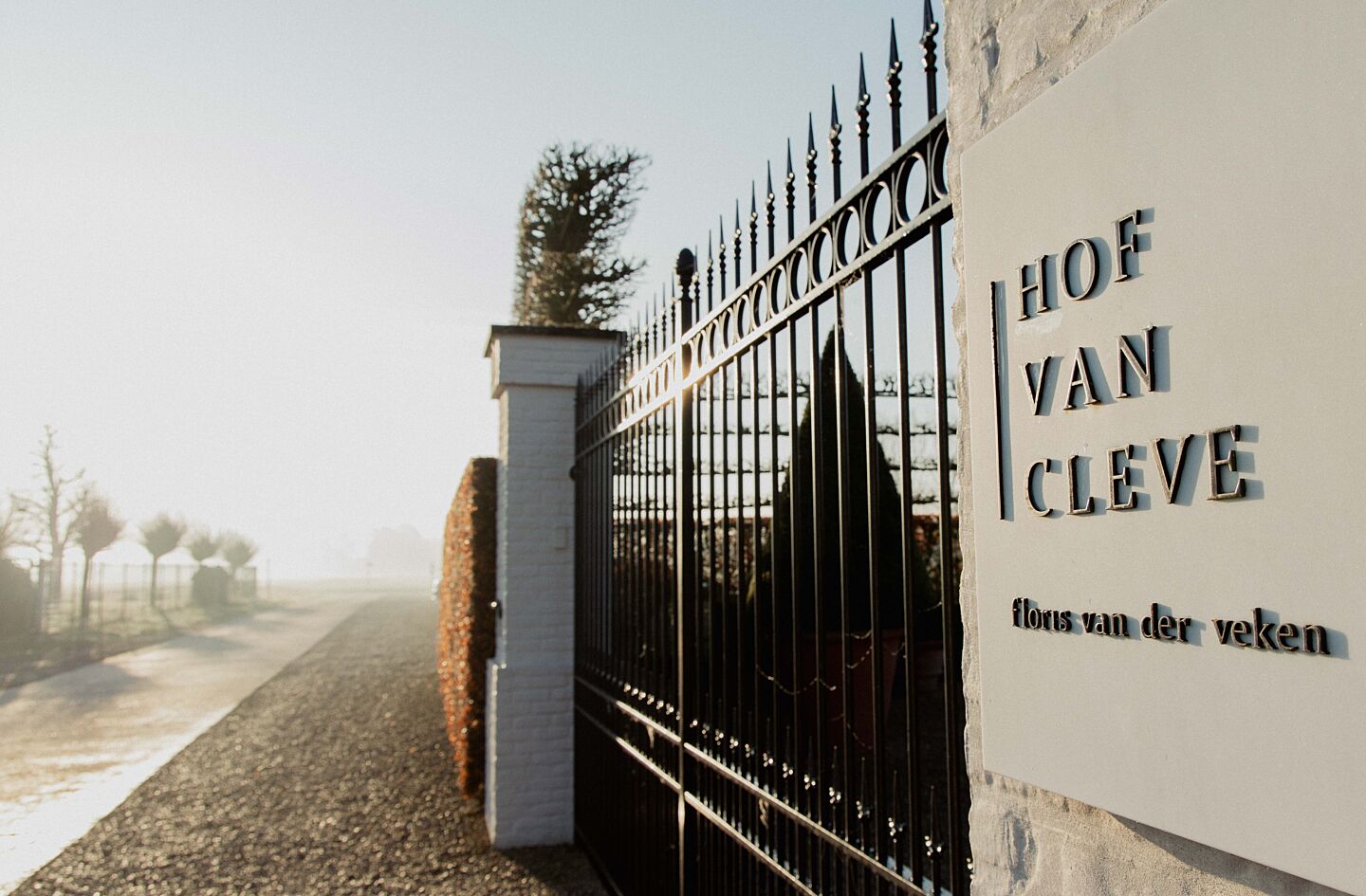
That address alone places De Wan in a neighbourhood context worth understanding. The streets around Sint-Salvatorskerk draw a mix of residents, tourists moving between the Graslei and the Korenmarkt, and a dining public that has grown increasingly informed over the past ten to fifteen years. Belgium's broader fine-dining momentum, visible at places like Hof van Cleve - Floris Van Der Veken in Kruishoutem and Boury in Roeselare, has filtered down into mid-tier cities as diners travel more deliberately and expect more from neighbourhood-level addresses.
The Evolution of a Low-Profile Address
De Wan represents a category of restaurant that Belgian cities produce with some regularity: the address that changes shape quietly, without public announcement, over a period of years. In Ghent specifically, the past decade has seen a wave of such reinventions. Operators who began with one format — bistro, brasserie, contemporary European, have shifted direction in response to changing local demand, post-pandemic cost structures, and the growing sophistication of a dining public that now benchmarks local restaurants against what they have eaten in Amsterdam, Copenhagen, or Lyon.
The low volume of publicly available data on De Wan is itself a data point. In a city where restaurants like Vrijmoed in Gent have built clear external profiles through awards and editorial coverage, and where addresses such as Arbane and Astro Boy have accumulated distinct identities, a restaurant that circulates primarily by local word of mouth occupies a specific position. It is not necessarily less accomplished, it may simply be at a point in its own evolution where the outward signals have not yet caught up with what is happening inside.
Ghent's current dining moment, compared to where the city sat a decade ago, is worth marking. The city now has a peer group that includes technically demanding addresses like BABÚ and concept-led restaurants such as BIJ DEN WIJZEN EN DEN ZOT BVBA, alongside long-running neighbourhood institutions. De Wan sits somewhere in that spectrum, its position shaped as much by what it has chosen not to do, high-visibility press outreach, aggressive social presence, as by what it serves.
Where De Wan Fits in the Belgian Restaurant Arc
Belgium has an unusual restaurant culture at the upper-middle tier. The country produces a disproportionate number of Michelin-recognised addresses relative to its population, and the influence of that recognition filters outward into the aspirations of smaller, unlisted restaurants. Addresses like Zilte in Antwerp and Willem Hiele in Oudenburg set a technical register that other operators within driving range are aware of, even if they are not competing for the same clientele.
For a Ghent restaurant operating without published awards, the relevant comparisons are not the starred addresses but the mid-tier peer group: restaurants in cities like Roeselare, Izegem, and Lommel that serve serious food without the ceremony or price point of destination dining. La Durée in Izegem and Cuchara in Lommel represent the kind of regional seriousness that Belgian mid-tier dining can achieve when it is operating with intention rather than ambition for external validation.
Internationally, the comparison set shifts entirely. Restaurants operating at the level of Le Bernardin in New York City or Lazy Bear in San Francisco represent a different tier of formal commitment and public documentation. The Belgian mid-market, by contrast, trades on intimacy, value relative to comparable European cities, and a kitchen culture that takes product quality seriously without requiring the trappings of fine dining.
Visiting De Wan: What to Know Before You Go
Sint-Salvatorstraat 1 sits within easy walking distance of Ghent's principal sights, and the address is accessible from the central train station in under fifteen minutes on foot. For visitors building a Ghent itinerary around food, the street's location means De Wan can anchor a day that moves between the city's older restaurant zone near the Patershol and the newer cluster around the Nieuwe Veldstraat axis. Readers planning a broader Belgium dining trip should also consider the Bozar Restaurant in Brussels, Ralf Berendsen in Neerharen, and d'Eugénie à Emilie in Baudour as part of the wider regional picture.
Because De Wan's booking method, hours, and contact details are not publicly confirmed in current databases, the most reliable approach is to arrive with flexibility, either by visiting in person during standard Ghent service hours (typically lunch and dinner, Tuesday through Saturday for mid-market city addresses) or by checking current contact details through the city's restaurant aggregators. Ghent's dining rhythm favours mid-week visits for first-timers, when reservations at less-publicised addresses are more readily available than on Friday or Saturday evenings. For a broader view of what the city offers across price points and formats, the EP Club full Ghent restaurants guide covers the range in more detail.
Restaurants like Beiruti in the same city give a sense of how Ghent's independent operators have moved toward more defined culinary identities in recent years. De Wan's position, central address, limited public documentation, local circulation, suggests an operator more focused on the room in front of them than the audience beyond it. In a dining culture increasingly mediated by aggregated scores and algorithmic visibility, that posture carries its own meaning.

At a Glance
- Cozy
- Classic
- Casual Hangout
- Date Night
- Historic Building
- Natural Wine
- Beer Program
- Local Sourcing
- Organic
Current opening hours
- Monday
- Closed
- Tuesday
- Closed
- Wednesday
- 12–1:30 PM, 5–11:30 PM
- Thursday
- 12–1:30 PM, 5–11:30 PM
- Friday
- 12–1:30 PM, 5–11:30 PM
- Saturday
- 5–11:30 PM
- Sunday
- Closed
Hours can change for holidays and private events. Last verified .
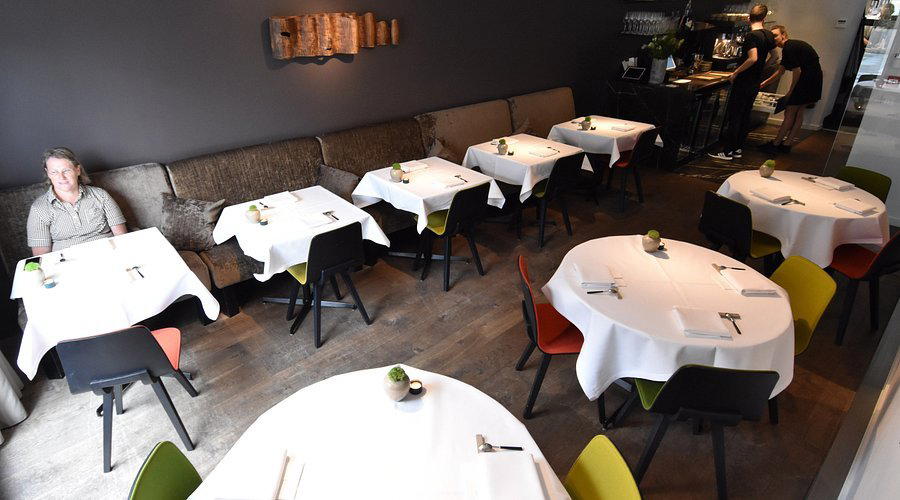
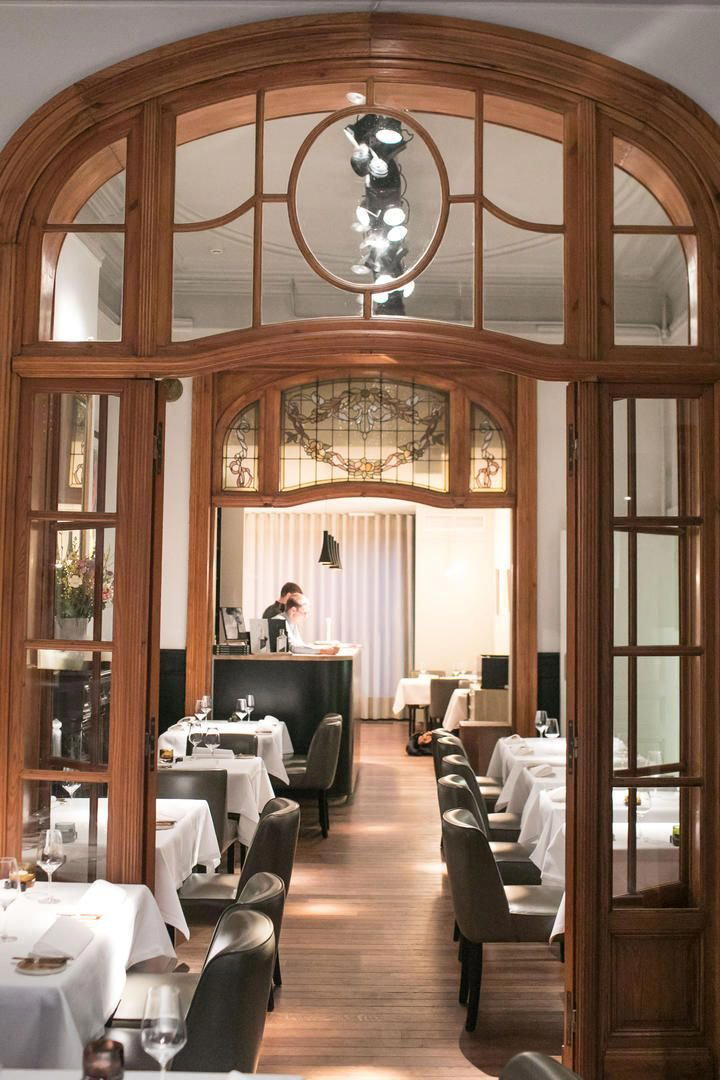
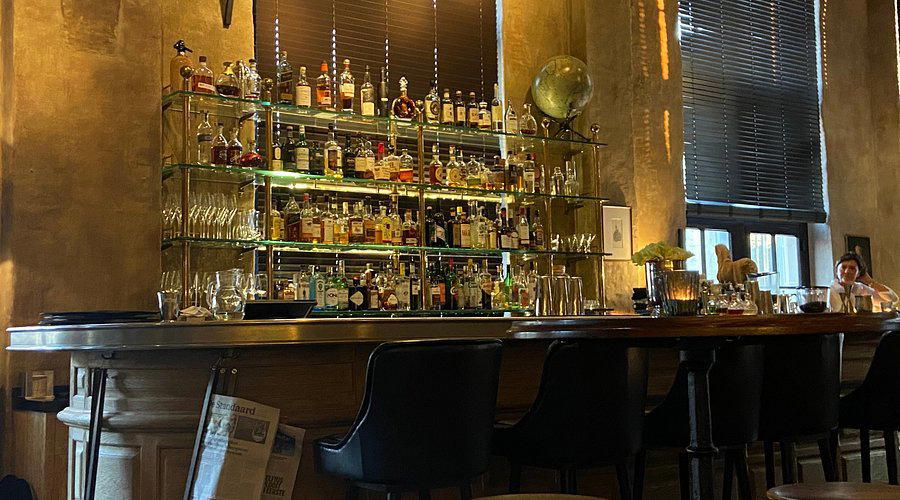
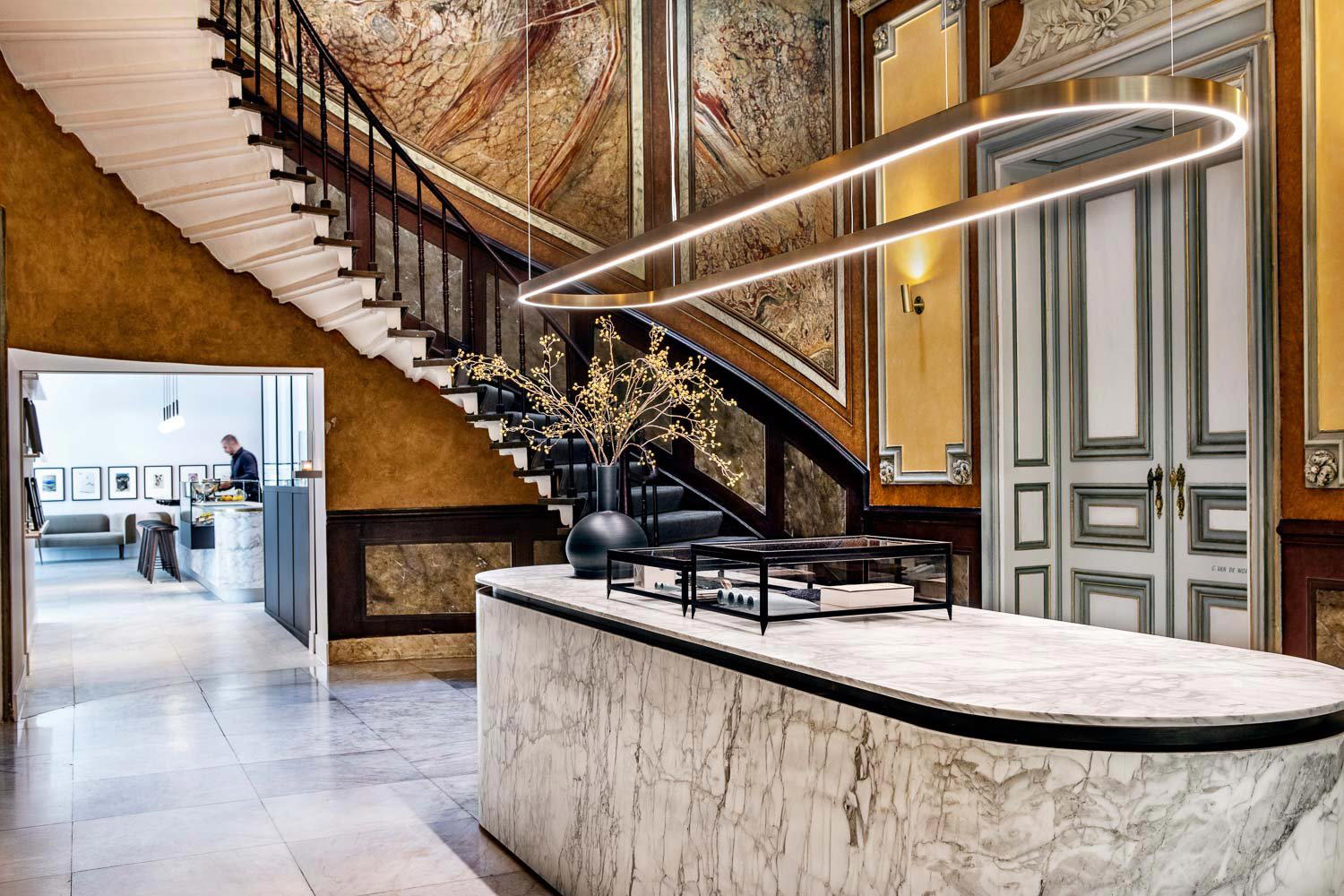
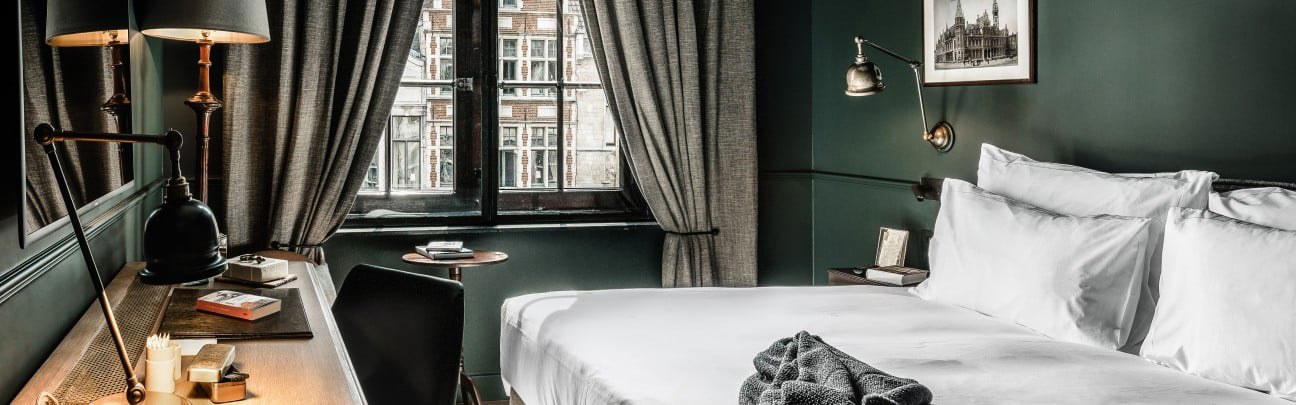
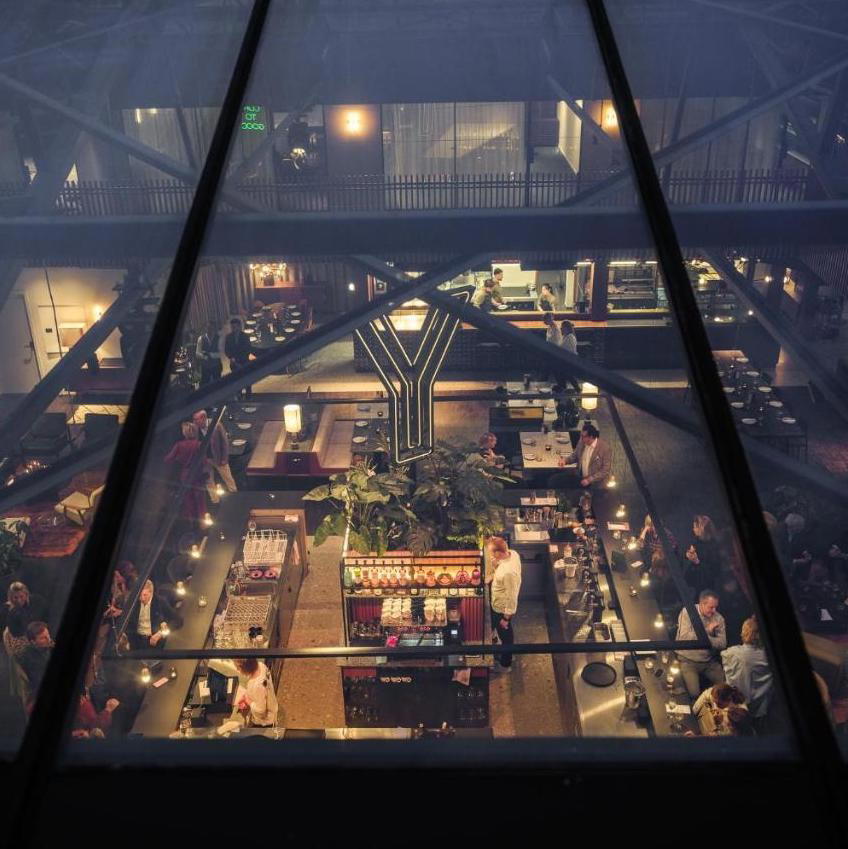
Original charm with ornate bar and wood-paneled ceilings, cozy and charming atmosphere.
Know Before You Go
- Getting there
- Sint-Salvatorstraat 1, 9000 Gent, Belgium