
We're Smart World 2 Radishes
Our verdict
De Smaak in Izegem brings the creative vegetable kitchen into a West Flemish setting, with chef Wouter Creytens, a veteran of Frank Fol's vegetable-forward philosophy, combining seasonal produce with fish and meat in preparations that treat vegetables as the structural centre of the plate. Dishes such as pak choi with couscous, soy and shiitake or carrot with sucrine and aged cheese signal a kitchen working well beyond standard Belgian bistro territory.

Pearl is the En Primeur Club membership app, where members save venues, book tables and use the concierge.
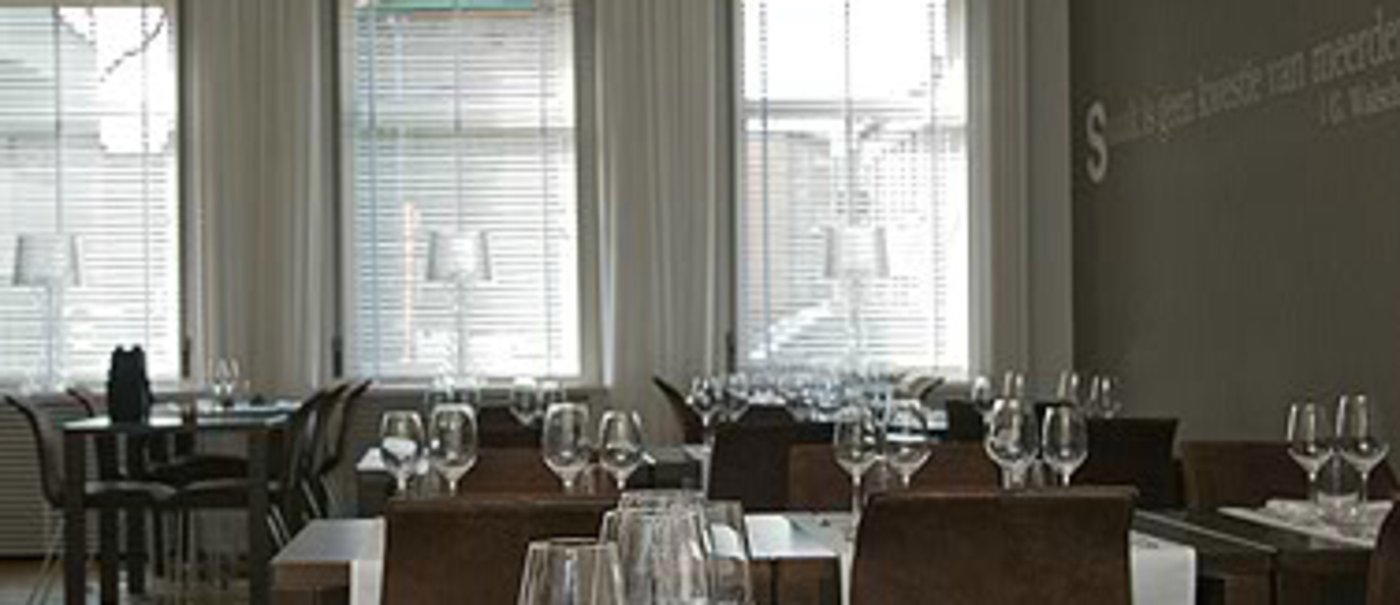
The Vegetable Kitchen in West Flanders
Belgium's most talked-about restaurant cooking has long clustered around Bruges, Ghent and Antwerp, with the West Flemish interior receiving far less editorial attention despite a density of serious tables that would surprise most visitors. Izegem sits in that underappreciated tier: a mid-sized industrial town between Roeselare and Kortrijk where a handful of restaurants have quietly built cooking programs that stand alongside peers in larger cities. De Smaak, on Gentsestraat, belongs to that tier, operating from a philosophy rooted in the creative vegetable kitchen, a tradition in Belgian fine dining that treats produce not as garnish but as the structural and often starring element of the plate.
That tradition has a specific lineage in Belgium. Frank Fol, sometimes called the "vegetable chef," spent decades arguing that vegetables deserved the same technical attention and menu prominence that French classical cooking reserved for proteins. His influence spread through the kitchens of cooks who worked under him, and De Smaak's Wouter Creytens counts himself among that lineage. That credential matters not as biography but as a marker of which culinary conversation the kitchen is participating in, one that connects Izegem to a broader Belgian movement that has drawn attention from Brussels to the coast.
Where the Produce Leads
The vegetable-forward kitchen is frequently misread as a concession to dietary trends. At its more considered practitioners, it is the opposite: a harder discipline, because vegetables tolerate neither poor sourcing nor imprecise technique the way a well-marbled cut of meat can. When a plate centres pak choi with couscous, soy and shiitake as a pure vegetarian preparation, or pairs the same pak choi with bok choy, shiitake and tomato alongside skrei, the Norwegian winter cod that arrives on Belgian tables between January and April, the sourcing decisions become immediately legible. Skrei has a short, weather-dependent season, and pairing it with pak choi signals a kitchen tracking the calendar rather than a fixed menu.
Boury in Roeselare, roughly ten kilometres to the north, has built one of Belgium's most discussed menus around market-driven produce. Willem Hiele in Oudenburg has taken a more radical terroir position, concentrating almost entirely on ingredients from a tight geographical radius. De Smaak sits between those poles: the approach is produce-led without becoming doctrinaire, and the menu moves between vegetarian preparations and fish- or meat-anchored dishes in a way that gives the table flexibility.
Reading the Menu Structure
The logic of De Smaak's menu becomes clearer when you notice that the same vegetable preparation can appear in two configurations: once as a self-contained vegetarian dish, and again as a component in a fish or meat plate. Pak choi with couscous, soy and shiitake, for instance, functions as a complete vegetarian course or as an accompaniment to skrei. Carrot with sucrine, egg and aged cheese works as a standalone vegetarian combination. This dual-track structure is more considered than it appears, it allows the kitchen to source and develop a vegetable preparation in depth, then deploy it across different protein contexts, rather than treating vegetables as ad hoc additions to a meat-centred menu architecture.
The use of aged cheese in the carrot preparation is worth noting in a regional context. West Flanders has a long tradition of farmhouse and aged cheeses, and incorporating them into hot preparations rather than restricting them to cheese courses is consistent with the way ingredient-led kitchens in this part of Belgium have been working for several years. Similar thinking appears in the cooking at Hof van Cleve in Kruishoutem and, at a different price and ambition point, at Castor in Beveren and Cuchara in Lommel.
Broader vegetable-centred approach De Smaak practises has also drawn comparison beyond Belgium. Kitchens such as Le Bernardin in New York City and Emeril's in New Orleans have approached their core protein categories with a similar structural rigour, though from entirely different culinary traditions. The shared thread is technique applied to ingredient rather than technique applied to presentation.
Izegem's Dining Context
Visitors approaching De Smaak should have a working sense of what Izegem's restaurant scene looks like. The city punches above its population in terms of the number of kitchens with genuine ambition. La Durée, operating at the French-Belgian creative tier, and Nast in the modern French register, both command €€€ to €€€€ pricing and represent the upper bracket of the local dining tier. Villared occupies a modern cuisine position at a similar price point. Together, these tables give Izegem a restaurant density that is easier to understand if you consider the town's proximity to the N36 corridor connecting the major West Flemish cities, a route that has historically supported serious, locally-oriented restaurants rather than tourist-facing addresses.
De Smaak sits on Gentsestraat 27, in a part of town that is navigable by car and accessible from the broader Kortrijk-Roeselare axis. Guests arriving from outside the region are well served by checking road access rather than relying on public transport links, which in West Flanders' smaller municipalities can add significant transit time. For a broader overview of what the city has to offer beyond the table, the full Izegem restaurants guide, the Izegem hotels guide, bars guide, wineries guide and experiences guide provide useful context for planning a longer stay.
Coastal Flemish cooking at addresses such as Bartholomeus in Heist and urban fine dining at Zilte in Antwerp represent adjacent reference points for understanding where De Smaak sits on the regional spectrum: less formally structured than the Antwerp flag-carriers, more technically deliberate than a conventional West Flemish brasserie.
Planning Your Visit
Given that this category of address in West Flanders can book up several weeks in advance, particularly for weekend evening slots, early contact directly with the restaurant is advisable. The address at Gentsestraat 27, 8870 Izegem gives a precise starting point for route planning if arriving by car from Ghent, Bruges or the E403.
Frequently asked questions
Is De Smaak child-friendly?
De Smaak's menu structure, built around vegetables prepared in both vegetarian and protein-paired configurations, lends itself to flexibility at the table. The creative, ingredient-focused approach sits closer to a considered restaurant experience than a casual family diner, so children comfortable with adventurous produce-led cooking will find the most to enjoy. check the venue's official channels via the Gentsestraat 27 address to confirm current arrangements before visiting.
How would you describe the vibe at De Smaak?
De Smaak operates in the West Flemish interior of Belgium, a dining scene that tends toward the personal and unpretentious rather than the formal. The kitchen's identity, rooted in Wouter Creytens' time with vegetables specialist Frank Fol, signals a cook-led space where the produce does the talking. Expect focused, attentive service shaped by a clear culinary point of view rather than theatrical ceremony.
Does De Smaak have a Michelin star or similar recognition?
De Smaak has received recognition including: Wouter Creytens is a veteran of Vegetables cook Frank Fol and remains faithful to the creative vegetable kitchen. In his dishes vegetables get an inventive twist in combination with meat, fish or pure vegetarian. For example, he serves paks….
What's the signature dish at De Smaak?
No single dish is fixed as a permanent signature, but the kitchen's approach is well illustrated by the dual-configuration preparations on the menu. Pak choi with couscous, soy and shiitake appears as a self-contained vegetarian course, and the same base reappears alongside skrei, showing how Creytens uses a single vegetable preparation as both the anchor and the variable. That structural logic, inherited from Frank Fol's vegetable-first philosophy, is the real signature of De Smaak's cooking.
Where is De Smaak in Izegem?
De Smaak is located at Gentsestraat 27, 8870 Izegem, Belgium, Izegem.
A Quick Peer Check
Comparable venues nearby, for context on price, style, and recognition.
| Venue | Cuisine | Price | Awards | Notes |
|---|---|---|---|---|
| De SmaakThis venue (the venue you are viewing) | Belgian Bistro | Not listed | We're Smart World 2 Radishes | Not listed |
| Retro | Belgian & French Bistro | $30–50 | Not listed | Izegem |
| Parfait | Artisanal Chocolaterie & Patisserie | Not listed | Not listed | Izegem |
| Villared | Modern Belgian Seasonal Cuisine | Not listed | Michelin Plate | Izegem |
| Maison Noire | Classical French-Belgian with Eastern Touches | Not listed | Not listed | Izegem |
| Nast | Modern French Contemporary | Not listed | Michelin Plate · Star Wine List | Izegem |
Recognition history
Dated appearances from independent guides and award organizations, with the underlying list record or original source where available.
We're Smart World 2 Radishes
We're Smart World
Continue exploring
More in Izegem
Restaurants in Izegem
All restaurants in Izegem →

Bars in Izegem
Browse all →
Hotels in Izegem
Browse all →
Wineries in Izegem
Browse all →
Details
- Elegant
- Cozy
- Date Night
- Business Dinner
- Open Kitchen
- Extensive Wine List
- A La Carte
- Vegetarian Friendly
- Gluten Free Options
Current opening hours
- Monday
- 12–2 PM, 7–9 PM
- Tuesday
- Closed
- Wednesday
- Closed
- Thursday
- 12–2 PM, 7–9 PM
- Friday
- 12–2 PM, 7–9 PM
- Saturday
- 7–9 PM
- Sunday
- 12–2 PM
Hours can change for holidays and private events. Hours as of .
Great ambiance with stylish interior, open kitchen, and warm welcoming atmosphere as per guest reviews.