
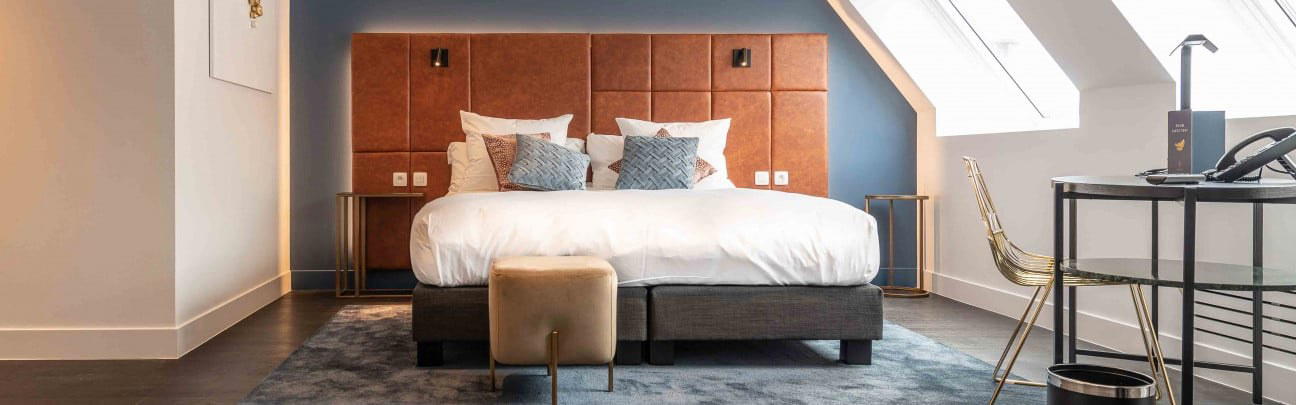
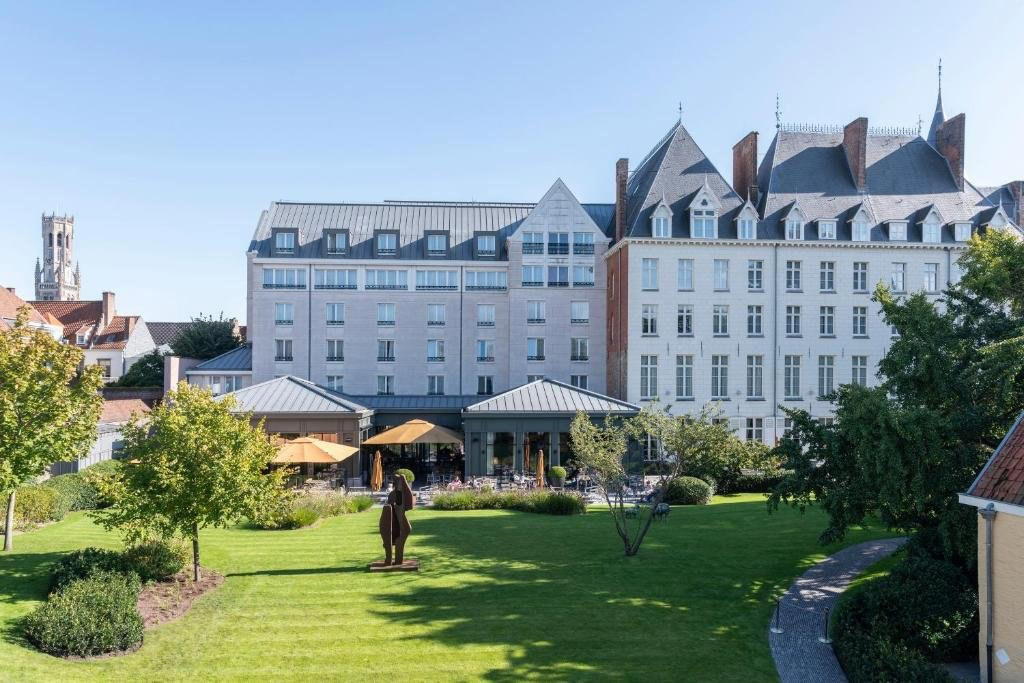
A 12-room boutique hotel occupying a centuries-old manor on the edge of Bruges' Minnewater Park, Boutiquehotel 't Fraeyhuis layers Renaissance architectural detail, exposed beams, grand fireplaces, stone floors, against contemporary design and moody photography. Its garden bar draws a local crowd as much as overnight guests. For travellers who want proximity to Bruges' canal belt without the scale of a large property, this former noble residence is the more considered option.
Pearl is the En Primeur Club membership app — saves, bookings, and concierge access live there. Same editors, same standards.
- Address
- Minnewater 15, 8000 Brugge
- Phone
- +32 50 96 03 01
- Website
- fraeyhuis.be
- Directions
- Get directions
 Saves & bookings on Pearl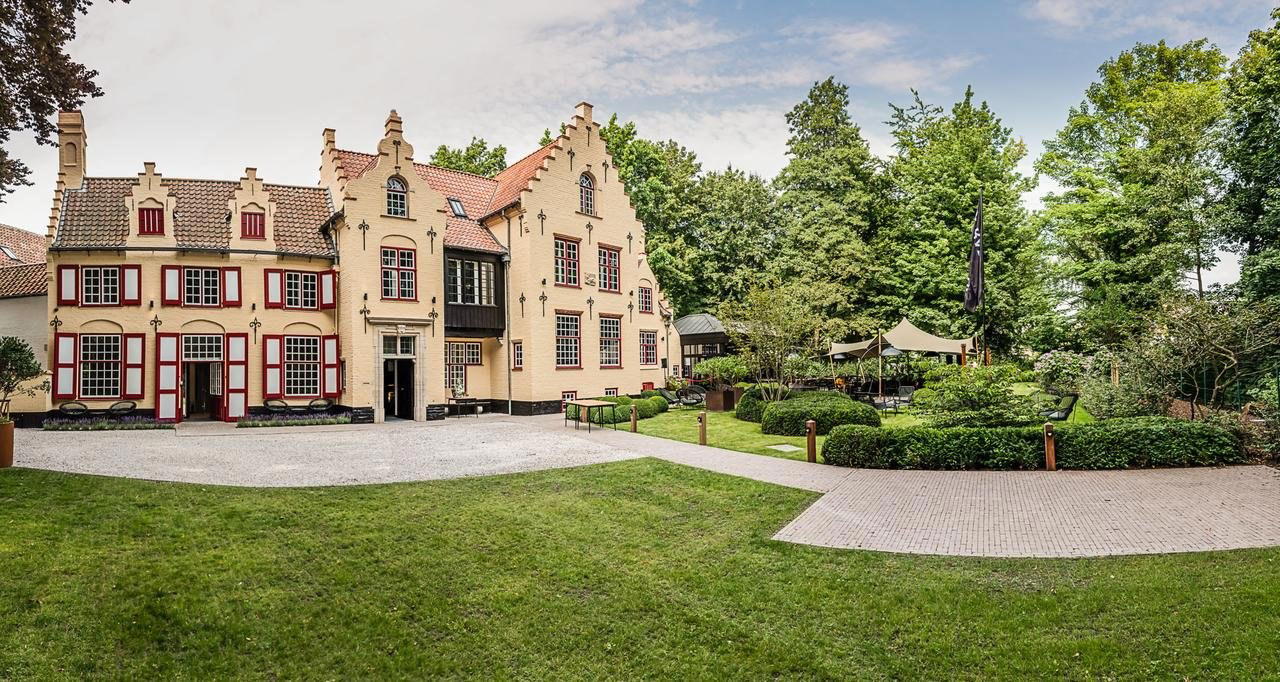
Stone, Timber, and the Weight of Centuries
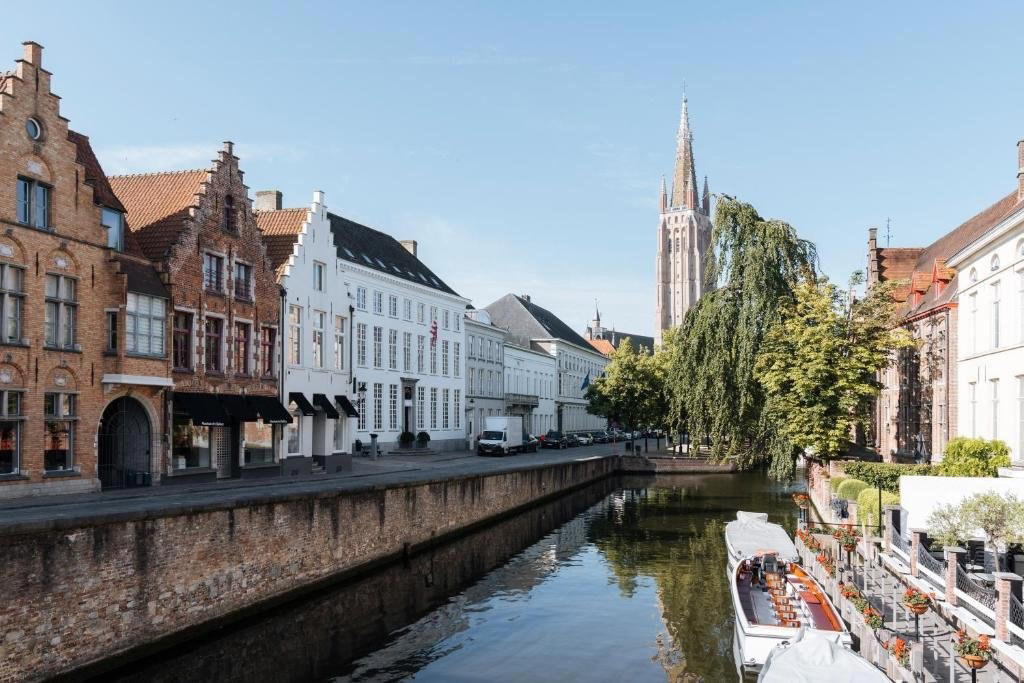
Bruges has a particular problem that most historic cities would envy: almost too much architectural beauty to absorb. The canal-laced centre, its guild houses and medieval belfry, makes the city one of northern Europe's most visited urban landscapes. The accommodation market here has responded in two directions. On one side sit the grand historic hotels with formal lobbies and international footprints, properties like Dukes' Palace Brugge and Hotel Heritage, which carry institutional weight and scale. On the other, a smaller cohort of boutique properties has converted private mansions and canal-side townhouses into intimately scaled alternatives. Boutiquehotel 't Fraeyhuis belongs firmly in the second category, and it occupies one of the more architecturally loaded addresses in that group.
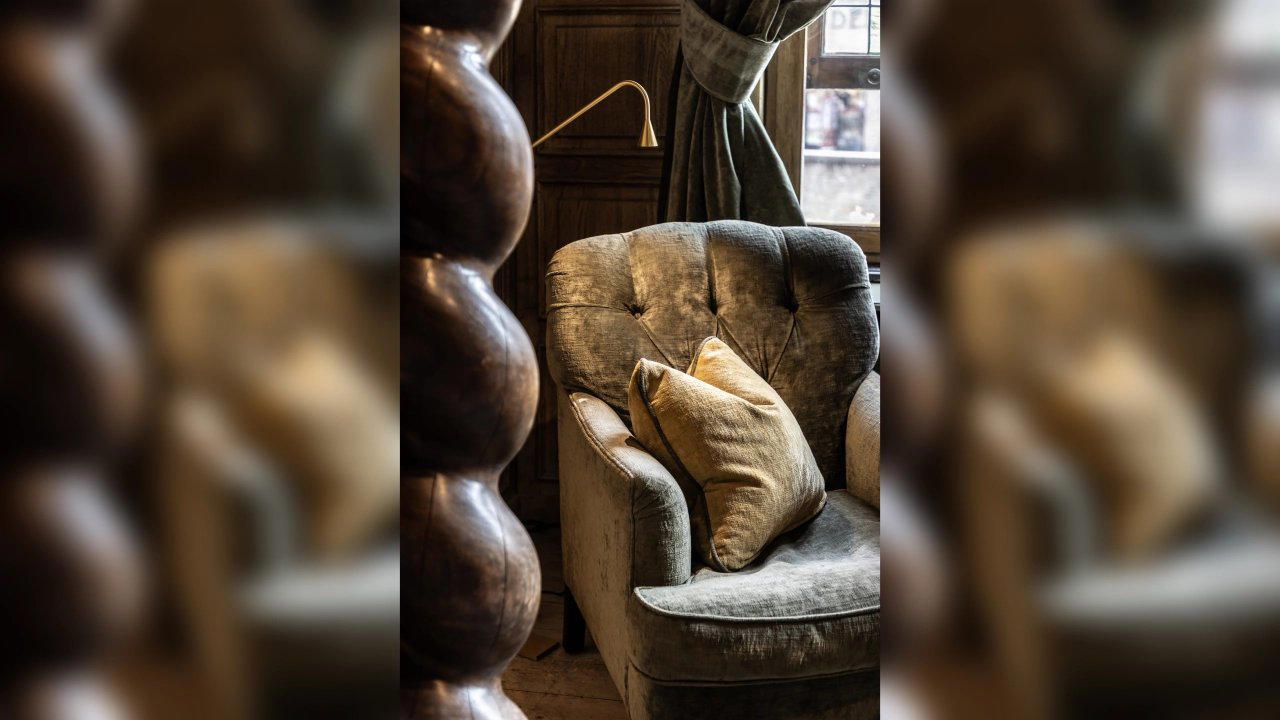
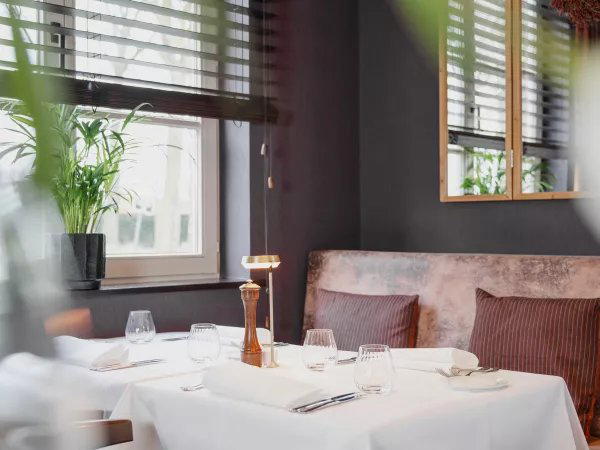
Formerly operating as Hotel Egmond, the property on Minnewater 15 is a centuries-old manor that has been thoroughly reinvented rather than simply restored. The distinction matters. A restoration preserves what was there; this reinvention selects which past to honour and which to displace. Exposed beams and a grand fireplace survive as anchors, grounding the space in its Renaissance origins. Stone floors carry the volume of the rooms without apology. But against those structural bones, the design introduces contemporary materials and a considered photographic programme, moody, large-scale imagery that operates in deliberate tension with the historic shell.
Minnewater and What the Address Actually Means
The hotel's position bordering Minnewater Park is worth unpacking beyond the obvious scenic appeal. Minnewater, the so-called Lake of Love, sits at Bruges' southern edge, where the canal network narrows and the city's medieval fortifications once stood. It is quieter than the Markt-adjacent accommodation cluster, which gives it a different tempo entirely. Guests arriving here are not in the thick of the tourist circuit; they are slightly removed from it, with the park and its waterway immediately accessible on foot. That physical separation from the city's busiest zones is a choice that shapes the entire stay.
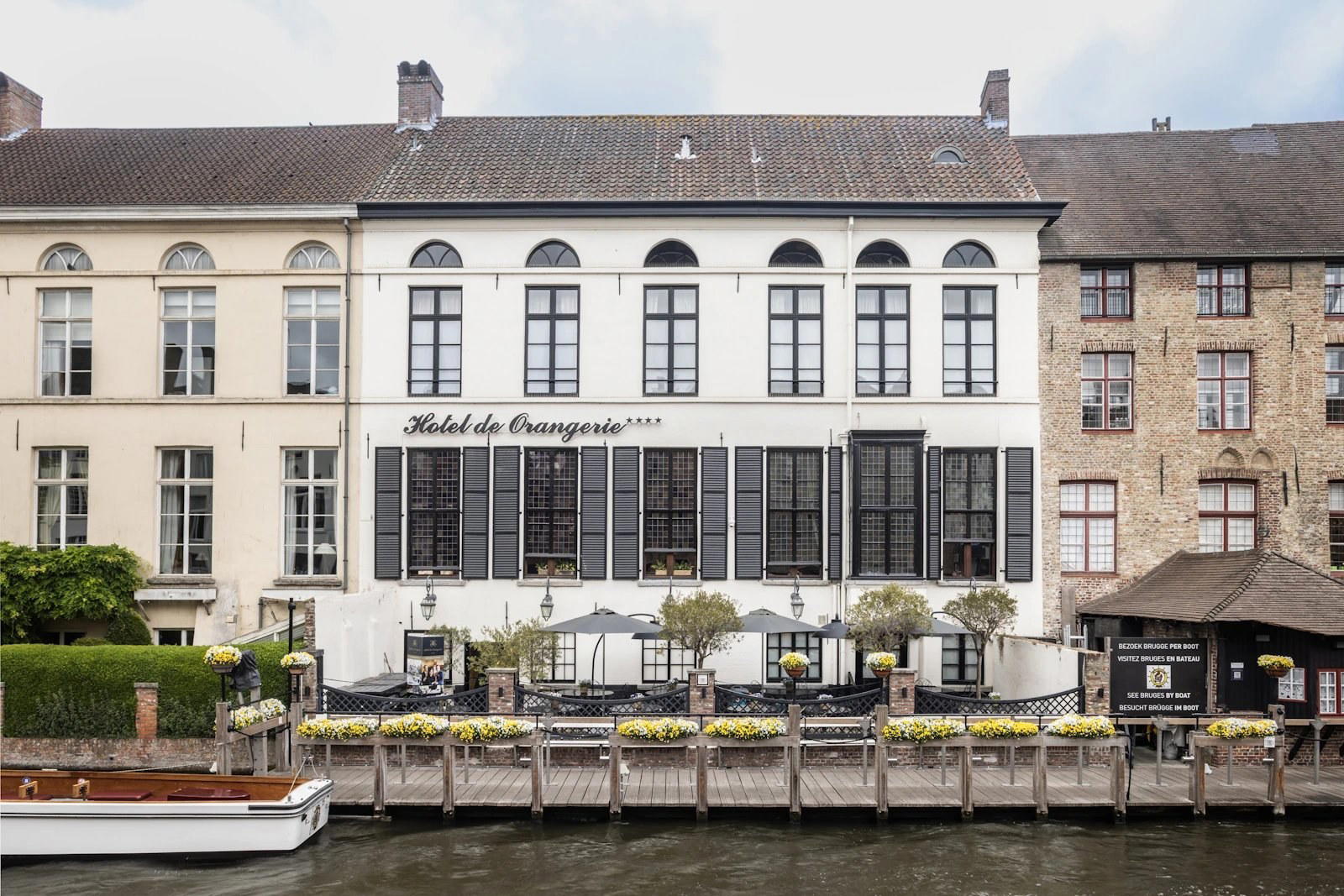
For visitors oriented toward canal walks and the Begijnhof, which sits directly adjacent to Minnewater, the location functions as a base that keeps particularly atmospheric parts of Bruges within a short walk while insulating guests from the concentrated foot traffic of the historic centre. The Hotel De Orangerie and Hotel de Tuilerieën, both well-regarded boutique properties in Bruges, sit closer to the canal belt's centre. 't Fraeyhuis trades that central positioning for a calmer adjacency to the park, which will suit some travellers considerably better than others.
Twelve Rooms, No Two the Same
At 12 individually styled rooms, the property operates at a scale where uniformity is architecturally impossible. The manor's original room distribution, its irregular ceiling heights, exposed structural timbers, and uneven floor plans, forces each space into its own configuration. This is not a selling point manufactured by an interior designer; it is a constraint that boutique hotels in historic buildings either fight or accept. Here, the approach has been to accept it and work with the idiosyncrasy rather than smoothing it into something standardised.
The result is a comparable set that sits closer to The Pand Hotel or Hotel Van Cleef than to larger-format competitors in the city. These are properties where the architecture is the primary design element, and where the 12-to-20-room format creates an operating style closer to a private residence than a conventional hotel. The Notary pursues a comparable intimacy from a different historic building typology. What distinguishes 't Fraeyhuis within this cohort is the specific weight of its manor origins, the scale of its public rooms and the landed quality of its garden.
The Garden Bar as Social Infrastructure
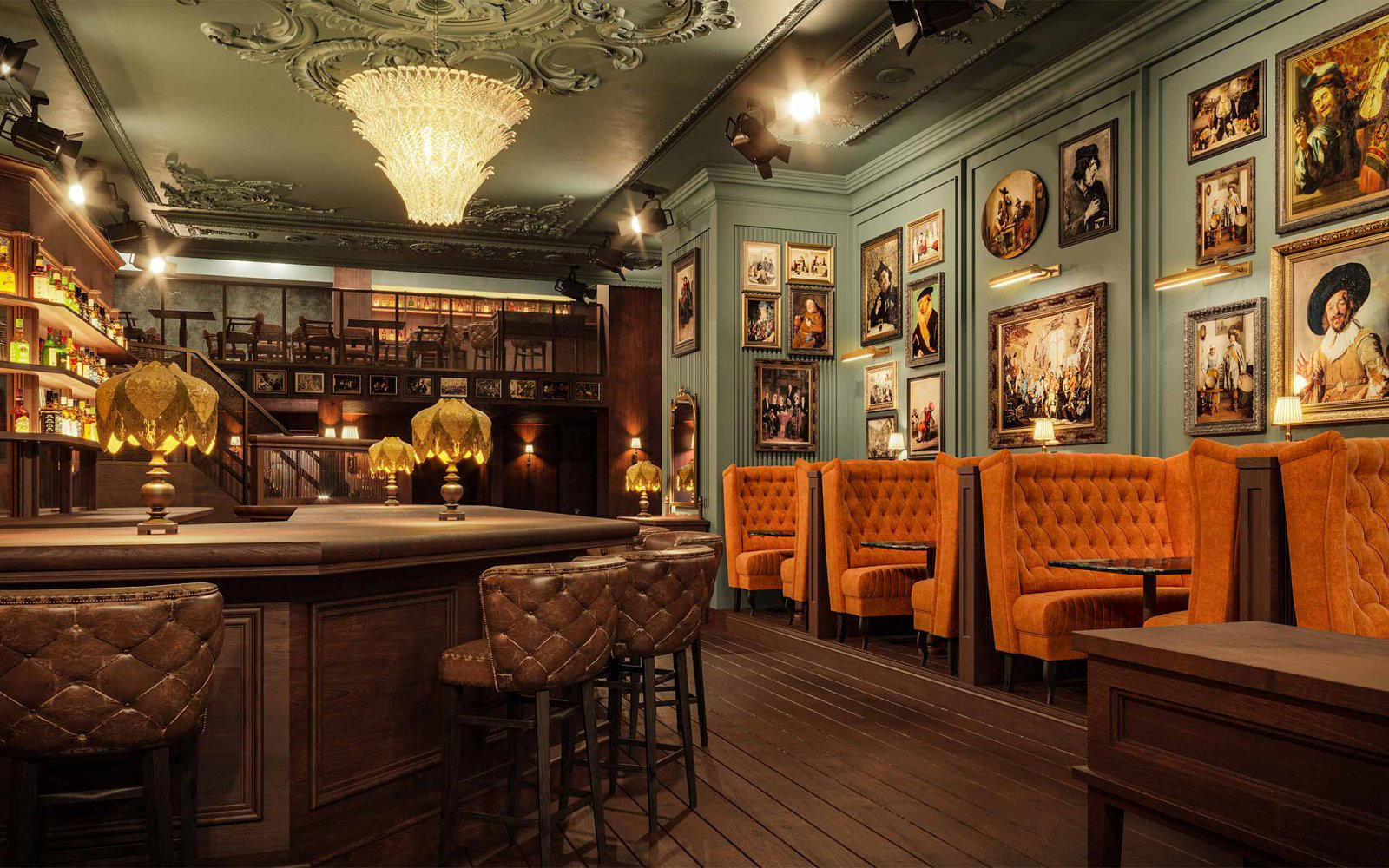
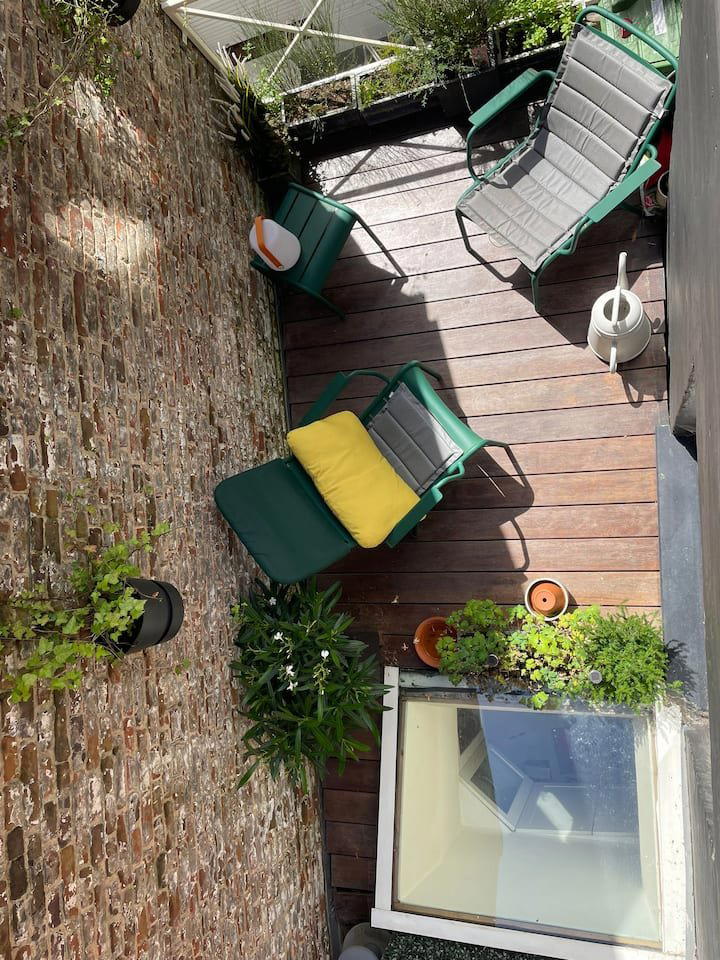
One telling detail about how this property operates is that its garden bar, positioned behind a glass-walled lounge, draws locals as well as overnight guests. In Bruges, where much of the hospitality infrastructure is tourist-facing almost by necessity, a hotel that functions as a genuine neighbourhood gathering point occupies a different social position. That local patronage is not incidental. It signals a bar programme and a physical space that have enough appeal to pull people who have no reason to visit otherwise.
Glass-walled lounge framing the garden creates a transitional space that works in both directions, sheltered enough to use year-round, open enough to the garden to feel connected to the manor's grounds. In a Belgian climate where outdoor space is genuinely seasonal, that architectural solution extends the bar's usability beyond the summer months. Belgium's small-hotel design conversation has produced comparable solutions at properties like B&B; The Verhaegen in Ghent, where historic residential architecture has been adapted into hospitality spaces that retain a domestic logic without feeling like a guest house.
Where This Sits in the Belgian Boutique Picture
Belgium's premium independent hotel sector is geographically dispersed in ways that reward attention. Brussels anchors the formal end, properties like the Corinthia Grand Hotel Astoria Brussels and Le Louise Hotel Brussels occupy a grand-hotel register that Bruges cannot quite replicate at scale. Bruges' boutique hotels instead operate at a smaller, more residential pitch, where historic provenance and architectural character substitute for the facilities arms race of larger city properties. The rural end of the Belgian spectrum, represented by properties like Domaine La Butte aux Bois in Lanaken or Chateau de Vignée in Rochefort, leans into landscape and estate logic. 't Fraeyhuis sits between those poles: urban enough to access Bruges' full cultural offer, residential enough in scale to function as a retreat from it.
For those building a multi-city Belgian itinerary, Hotel Julien in Antwerp offers the closest structural parallel in that city: a small-room-count historic property that has been redesigned rather than merely preserved. The comparison is useful for understanding what this category of hotel delivers and where its limits sit. See our full Bruges restaurants and hotels guide for broader context on where 't Fraeyhuis fits within the city's hospitality offer.
Planning a Stay
The property holds 12 rooms, so availability narrows quickly during Bruges' peak periods: the spring canal season and the pre-Christmas market weeks in late November and December are the two stretches where the gap between enquiry and booking closure is shortest. The Minnewater address (Minnewater 15, 8000 Brugge) places guests at the southern edge of the historic centre, a 10-to-15-minute walk from the Markt.
Comparable Venues
Comparable venues nearby, for context on price, style, and recognition.
| Venue | Cuisine | Price | Awards | Notes |
|---|---|---|---|---|
| Boutiquehotel 't FraeyhuisThis venue — the venue you are viewing | charming boutique in historic setting with modern comforts | $$$ | Michelin 1 Key | Not listed |
| Dukes' Palace Brugge | Historic palace blending 15th-century authenticity with contemporary luxury | $$$$ | Michelin 1 Key | Historic Center |
| Hotel Van Cleef | Contemporary classic boutique hotel with individually decorated rooms and curated public spaces emphasizing art, design, and personal touches. | $$$ | Michelin 1 Key | Bruges City Centre |
| Boutique Hotel Sablon | Contemporary luxury boutique hotel blending historic architecture with modern design in a central yet peaceful location. | $$$ | 4-Star | Historical Center Bruges |
| Hotel De Orangerie | Restored 15th-century monastery blending historic elegance with modern comforts | $$$ | 4-Star | Historic Center |
| Dukes' Academie Brugge | Trendy boutique city hotel with modern comforts in historic Bruges setting | $$$ | 4-Star | Historic Centre of Brugge |
Recognition history
Dated appearances from independent guides and award organizations, with the underlying list record or original source where available.
Michelin 1 Key
Michelin
Continue exploring
More in Bruges
Hotels in Bruges
Browse all →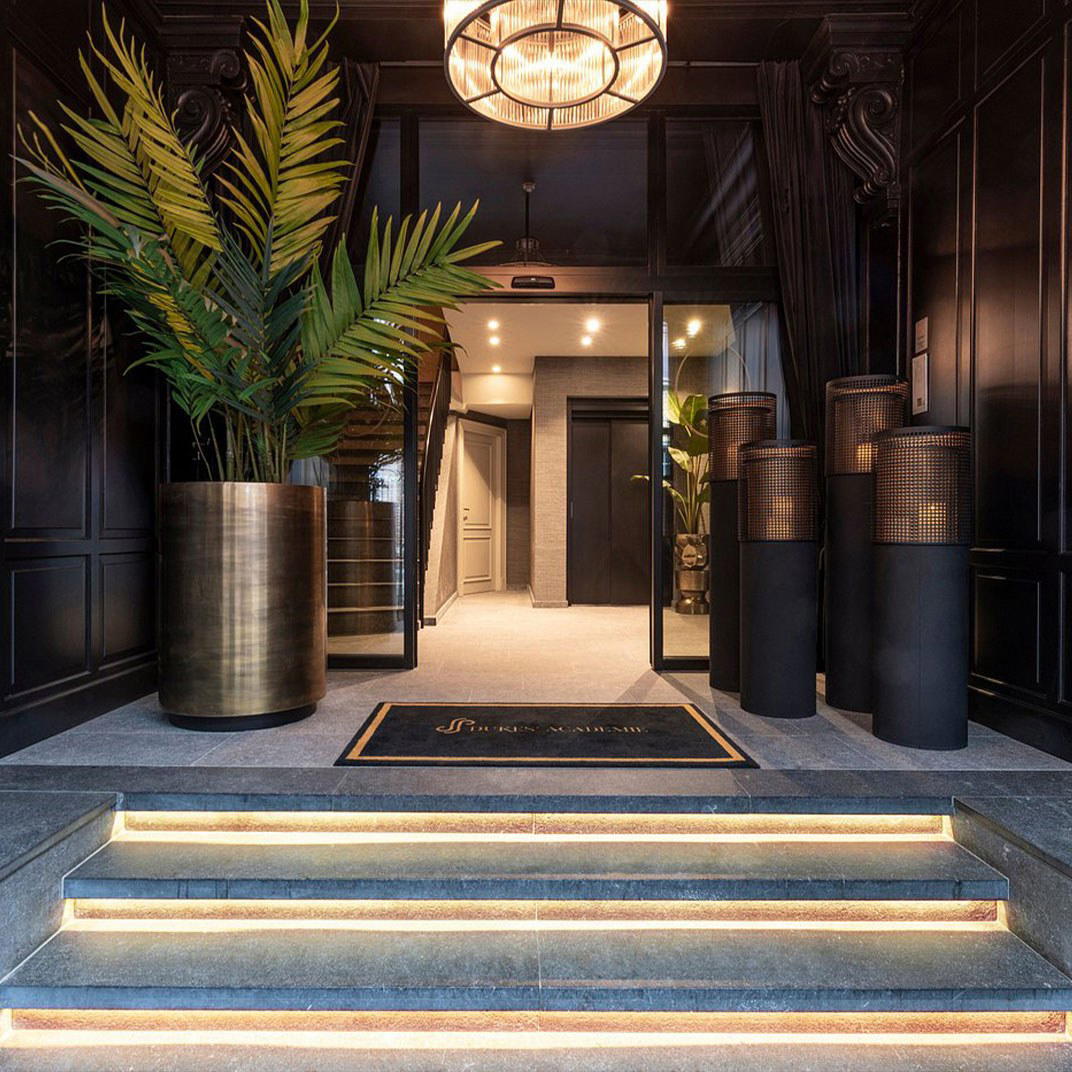
Bars in Bruges
Browse all →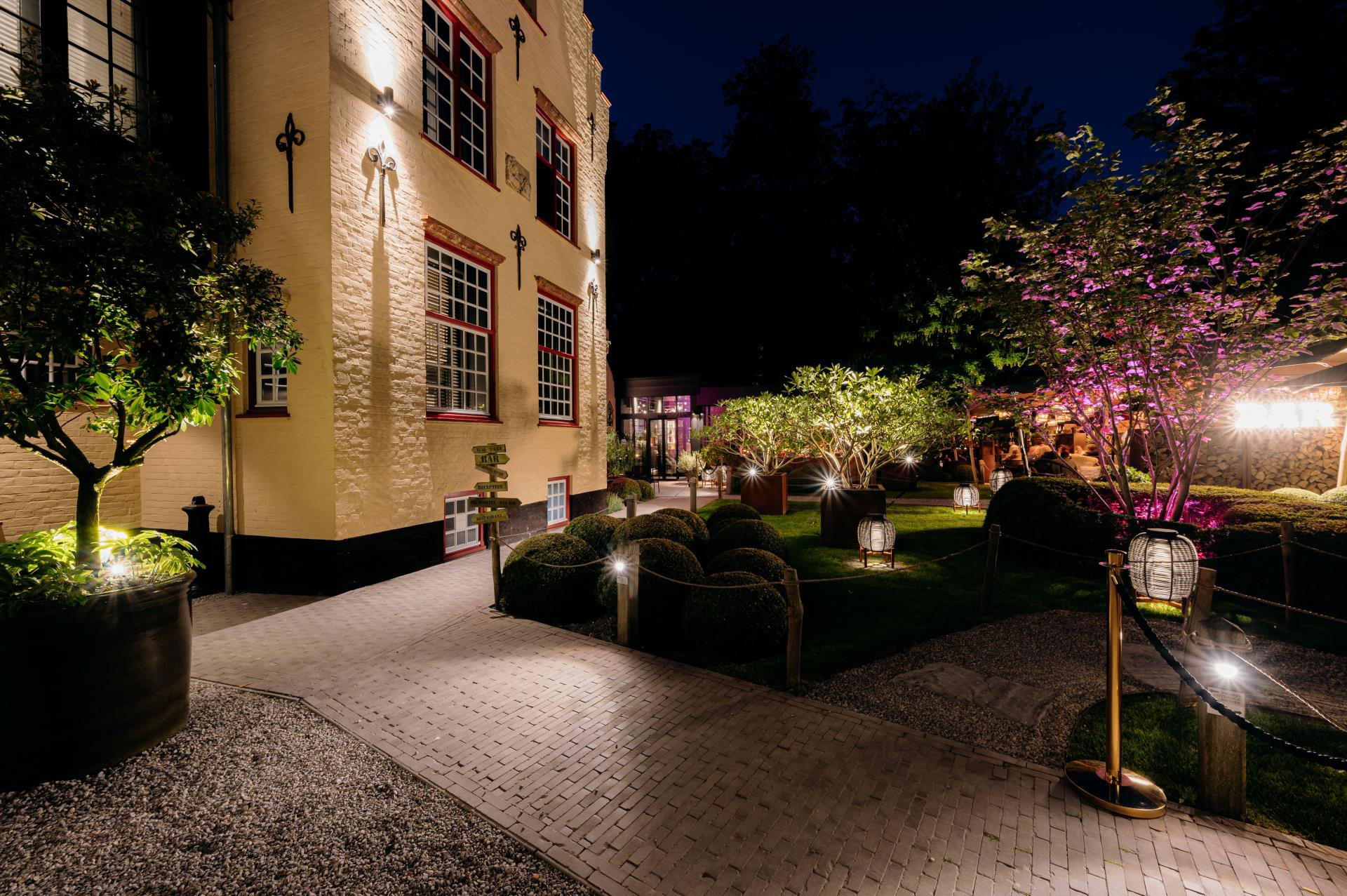
Restaurants in Bruges
Browse all →
Wineries in Bruges
Browse all →
At a Glance
- Romantic
- Quiet
- Elegant
- Cozy
- Intimate
- Sophisticated
- Romantic Getaway
- Honeymoon
- Anniversary
- Weekend Escape
- Garden
- Terrace
- Historic Building
- Wi Fi
- Restaurant
- Bar
- Room Service
- Garden
- Air Conditioning
- Garden
- Wi Fi
- Restaurant
- Bar
- Room Service
- Garden
- Air Conditioning
Peaceful and luxurious oasis with charming lighting in communal areas and garden, featuring an outdoor fireplace for relaxing evenings.