De Jufferen Lunsingh
De Jufferen Lunsingh occupies a quietly distinctive position in Westervelde, a Drenthe village where the Dutch countryside sets the terms for how a kitchen operates. The address alone, Hoofdweg 13, deep in the rural northeast, signals a dining format shaped more by proximity to land and local supply chains than by urban restaurant conventions. For those willing to make the journey, that context is the point.
Pearl is the En Primeur Club membership app — saves, bookings, and concierge access live there. Same editors, same standards.
- Address
- Hoofdweg 13, 9337 PA Westervelde, Netherlands
- Phone
- +31592612618
- Website
- dejufferenlunsingh.nl
- Directions
- Get directions
 Saves & bookings on Pearl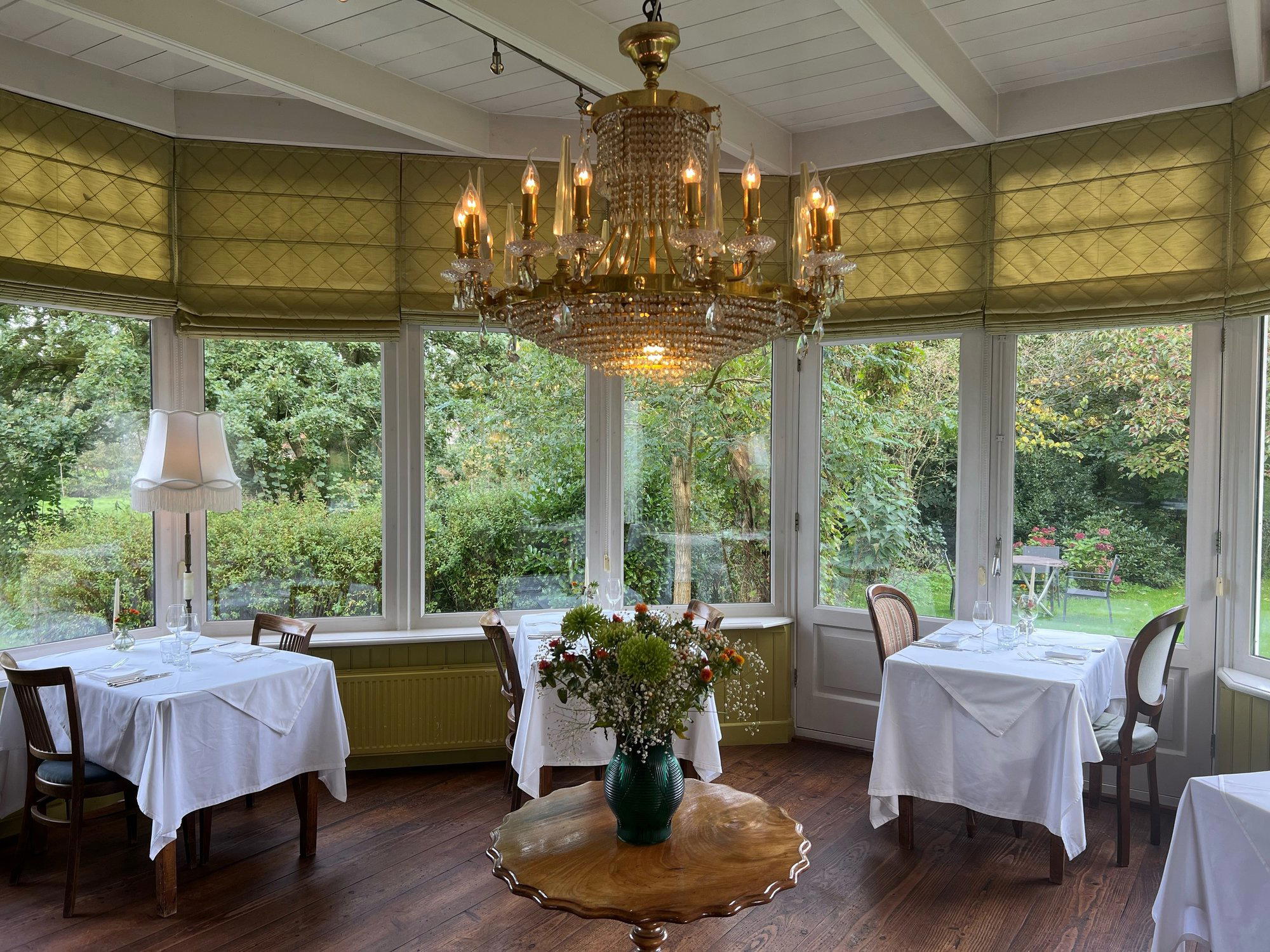
Where Drenthe Sets the Menu
The Dutch northeast operates on different terms than the restaurant-dense corridors of Amsterdam or Rotterdam. In Drenthe, the province that contains Westervelde, the gap between a kitchen and its ingredient sources is measured in fields rather than freight routes. That proximity is not incidental to places like De Jufferen Lunsingh, it is the structural fact around which everything else organizes. Arriving at Hoofdweg 13, on the main road of a village that registers as little more than a handful of farmhouses and tree lines on most maps, makes the relationship between place and plate immediately legible. This is a restaurant shaped by its rural setting; the countryside is the reason it functions the way it does.
A tier of destination restaurants in the country's smaller municipalities has built sustained reputations by treating geographic remove as an asset rather than a liability. De Lindenhof in Giethoorn operates on a comparable logic, as does De Groene Lantaarn in Staphorst, both in villages that demand deliberate travel and reward it with kitchens shaped by local ecology rather than urban supply chains. De Jufferen Lunsingh belongs to that same peer group: establishments where the booking is a commitment to a specific kind of rural hospitality.
The Sourcing Logic of a Drenthe Kitchen
What makes the ingredient-sourcing frame relevant here goes beyond standard farm-to-table language. In a province like Drenthe, short supply chains are a geographic inevitability as much as an editorial choice. The heathland and agricultural plots surrounding Westervelde produce a particular palette of ingredients, root vegetables with extended growing seasons, game from managed estates, dairy from the kind of small-scale producers that have largely disappeared from the Netherlands' more industrialised farming zones. A kitchen operating here, and doing so seriously, draws from that specific regional larder rather than constructing a localness narrative on top of a standard wholesale supply model.
This is the sourcing distinction that separates the serious rural Dutch restaurant from its urban equivalent. Venues like De Nieuwe Winkel in Nijmegen demonstrate what rigorous ingredient provenance looks like when it drives a menu's architecture. Inter Scaldes in Kruiningen uses Zeeland's coastal geography in a comparable way, anchoring its identity in what the immediate region produces rather than constructing an internationally sourced menu that happens to be served in a rural setting. De Jufferen Lunsingh sits within this Dutch tradition of place-led cooking, where the kitchen's geography is the primary editorial constraint.
Westervelde in the Context of Dutch Destination Dining
The Netherlands has produced a disproportionate number of high-performing restaurants in small and medium-sized towns relative to its size. The fine-dining footprint outside Amsterdam and Rotterdam includes kitchens in Heeze, Nuenen, Waalre, and Reijmerstok, a distribution that reflects a dining culture comfortable with driving forty-five minutes for a considered meal. Tribeca in Heeze, De Lindehof in Nuenen, De Treeswijkhoeve in Waalre, and Brut172 in Reijmerstok each demonstrate that the Dutch dining public has a well-developed appetite for restaurants that require a journey. Westervelde, sitting in the rural northeast, is a further expression of that geography: a location where the distance from urban density is part of the draw.
For international visitors, the reference point worth holding is the category of destination restaurants that have built reputations precisely because they are not in cities. Lazy Bear in San Francisco operates on a similar communal-dining logic, using geographic and format specificity to create a sense of occasion that urban venues with larger footprints struggle to replicate. The rural Dutch equivalents achieve the same effect through different means: quieter settings, proximity to agricultural production, and a format that foregrounds the relationship between kitchen and landscape.
How to Approach a Visit
Westervelde sits in the municipality of Noordenveld in Drenthe, roughly forty kilometres from Groningen and accessible by car from that direction in under an hour. Public transport to the village is limited, making a car the practical necessity for most visitors. Those travelling from Amsterdam should anticipate a two-hour drive northeast, which positions a visit to the restaurant as a full-day or overnight proposition rather than a standalone dinner booking. The nearest larger towns, Assen and Groningen, offer accommodation options for those planning to make a regional trip of it, and pairing a visit with the broader Drenthe cultural circuit, including the hunebedden megalith trail and the Drents Museum in Assen, is a reasonable way to structure the trip.
Given the venue's rural setting and the journey required to reach it, advance planning is the practical baseline. Rural Dutch restaurants in this category tend to operate limited service days and booking windows that reward early contact. Visitors considering the restaurant should check current availability directly.
For those building a longer Dutch itinerary that includes both urban and rural dining, the range is wide. De Librije in Zwolle anchors the northeast's fine dining circuit with three Michelin stars, while Ciel Bleu in Amsterdam and FG in Rotterdam represent the urban end of the country's high-end dining range. Aan de Poel in Amstelveen, 't Nonnetje in Harderwijk, and Central Park in Voorburg fill the mid-tier of that circuit. The restaurant at Hoofdweg 13, Westervelde, occupies a different register from all of them: quieter, more geographically specific, and shaped by a province that has not sought restaurant fame but has produced, in patches, serious kitchens that understand their place.
At-a-Glance Comparison
Comparable venues nearby, for context on price, style, and recognition.
| Venue | Cuisine | Price | Notes |
|---|---|---|---|
| De Jufferen LunsinghThis venue — the venue you are viewing | Dutch Seasonal Fine Dining | $$$ | Not listed |
| FortVier | Modern Dutch Seafood | $$$ | Schuytgraaf |
| Rikus | Dutch with Seafood and European Influences | $$ | Eext |
| GOUD | Modern Dutch Fusion | $$$ | Schiemond |
| Christian | Dutch in Historic Windmill | $$$ | near center |
| Oud Zuilen | Dutch Brasserie with Seafood | $$ | Oud Zuilen |
Continue exploring
More in Westervelde
Restaurants in Westervelde
Browse all →
Bars in Westervelde
Browse all →
Hotels in Westervelde
Browse all →
At a Glance
- Cozy
- Rustic
- Elegant
- Intimate
- Scenic
- Date Night
- Special Occasion
- Historic Building
- Garden
- Extensive Wine List
- Local Sourcing
- Organic
- Garden
Cozy and rustic atmosphere in a traditional farmhouse with beautiful countryside views, evening sunlight, and bric-a-brac furniture creating a warm, laid-back charm.