Our verdict
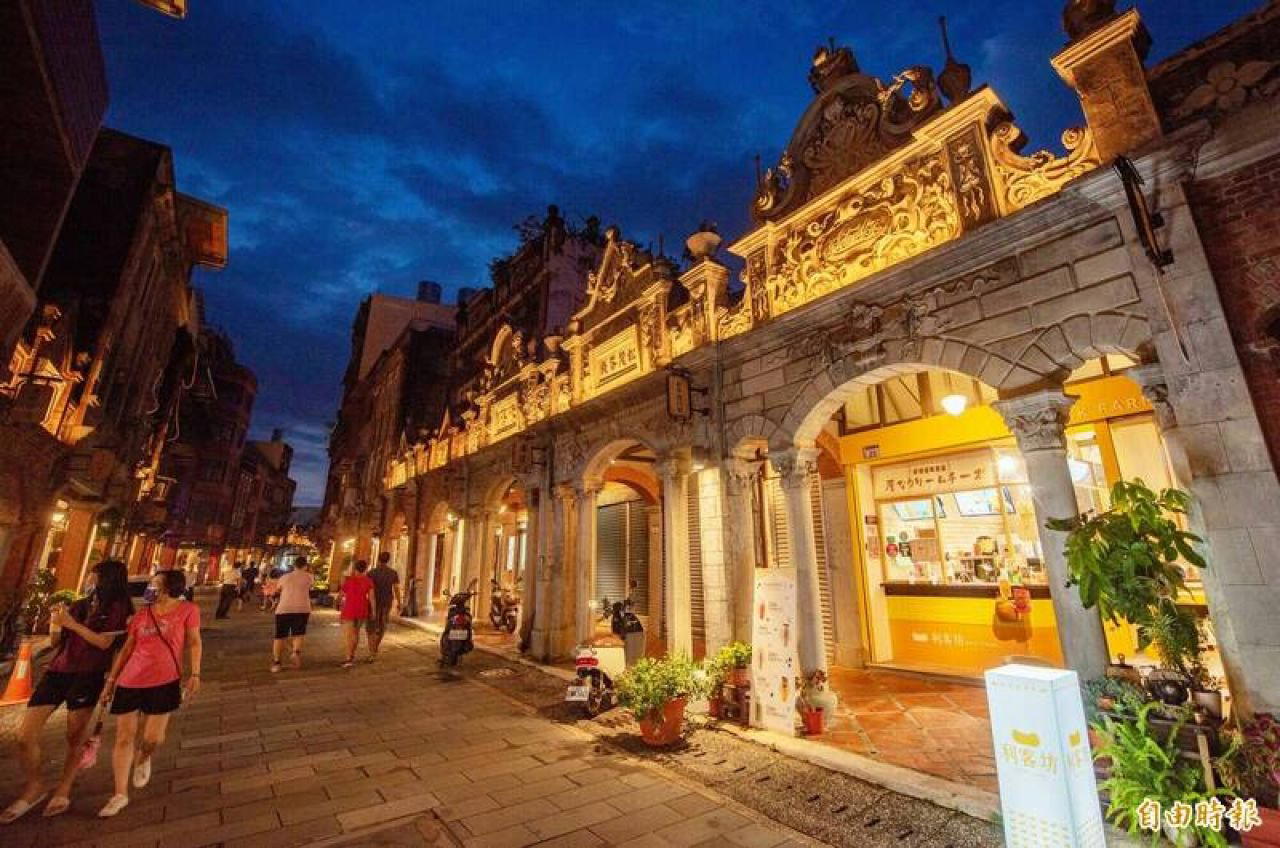
Daxi Old Street (大溪老街) runs along He Ping Road in Taoyuan's Daxi District, where Baroque-influenced shophouse facades frame a dense corridor of preserved food stalls and artisan producers. The street is one of northern Taiwan's most concentrated expressions of Hakka culinary tradition, with dried tofu, rice cakes, and hand-pressed preserved goods made from locally sourced ingredients. Come on a weekend morning for the fullest spread of vendors.

Pearl is the En Primeur Club membership app, where members save venues, book tables and use the concierge.
The menu
What to order
- Dried tofu
- Tofu pudding
- Oil rice
- Peanut candy
Where Hakka Preservation Culture Meets Street-Level Sourcing
He Ping Road in Daxi does not announce itself the way a restaurant district might. The approach is residential and quiet until the Baroque shophouse facades begin stacking up, their ornamental parapets, a legacy of Japanese colonial-era merchants who dressed Fujianese building forms in European decorative grammar, casting rhythmic shadows over a street that has operated as a commercial food corridor for well over a century. The smell arrives before the stalls do: a low, fermented note from drying tofu racks, layered over the sweetness of glutinous rice being steamed in the back rooms of family-run operations whose signage has not changed in decades.
This is not a theme-park recreation of a historic food market. The vendors on Daxi Old Street produce goods for a regional distribution network that extends into Taoyuan's broader Hakka communities, and several producers here supply preserved and dried goods to restaurants across northern Taiwan. The street functions simultaneously as a tourist destination and a working supply chain node, a combination that keeps ingredient quality honest in a way that purely tourist-facing markets rarely sustain.
The Sourcing Logic Behind Daxi's Food Identity
Daxi's position along the Dahan River historically made it a trading hub for camphor, tea, and agricultural goods moving out of the interior toward the coast. That geography shaped a food culture oriented around preservation: how do you extend the shelf life of ingredients moving through a humid river valley? Hakka communities, who settled the Daxi area in significant numbers during the Qing Dynasty, brought with them preservation techniques, including the fermentation and drying methods that now define the street's most recognizable products.
Dried tofu (豆干, dòugān) is the dominant product and the one most closely tied to local sourcing logic. Daxi's version is pressed denser than standard firm tofu, brined, and slow-dried, a process that concentrates protein and extends life without refrigeration. The soybeans used by older family producers in the area have traditionally come from Taiwanese agricultural networks, though sourcing has evolved as domestic soy farming has contracted. The better producers on the street are transparent about this; the ones worth seeking out are the ones with visible drying racks rather than pre-packaged product behind glass.
Beyond tofu, the street produces rice cakes (粿, guǒ) in seasonal variations, mochi-adjacent glutinous preparations, and a range of pickled and preserved vegetables that reflect the Hakka principle of using the whole crop and wasting nothing. These are not artisanal affectations, they are functional food technologies that predate the concept of artisanal food by several centuries. For visitors accustomed to sourcing-led dining at places like JL Studio in Taichung or logy in Taipei, where chef-driven ingredient narratives are central to the experience, Daxi Old Street offers a version of the same logic with the chef removed from the equation entirely. The sourcing story here belongs to the community, not an individual.
How Daxi Fits into Taoyuan's Broader Food Map
Taoyuan as a food destination is underleveraged relative to its geographic position. The city sits between Taipei to the northeast and Hsinchu to the south, both of which draw stronger editorial attention, and its proximity to Taiwan Taoyuan International Airport means most visitors pass through rather than stay. Our full T Ao Yuan restaurants guide maps a food culture that is denser and more regionally specific than the transit-hub reputation suggests.
Daxi itself sits in the eastern part of Taoyuan District, roughly 30 kilometers from the city center, accessible by bus from Taoyuan or by the tourist shuttle services that run from Daxi Bus Station on weekends. The journey through the Dahan River valley gives geographic context to the food: you are moving into historically agricultural terrain, and the preserved goods on He Ping Road make more sense once you have seen the landscape they came from.
The contrast with fine-dining operations elsewhere in Taiwan is worth holding in mind. GEN in Kaohsiung and Amei in Tainan represent the end of a chain that often begins in places like Daxi, where base ingredients are produced by generational knowledge rather than culinary innovation. Akame in Wutai Township operates a comparable dynamic in southern Taiwan's indigenous food culture, where the sourcing community and the dining tradition are inseparable. Daxi Old Street represents the northern Hakka version of that same continuity.
What to Navigate on He Ping Road
The street runs roughly 500 meters along He Ping Road, with the densest concentration of food producers between the Daxi Bridge end and the old market square. Weekend mornings, particularly between 9am and noon, bring the fullest vendor presence and the freshest production runs. Weekday visits are quieter and sometimes offer the chance to watch production in progress, which is the more instructive experience for anyone interested in the techniques rather than just the products.
Pricing across the street is low by any standard of reference. Dried tofu portions, rice preparations, and packaged preserved goods are all priced for a local rather than tourist market, which makes Daxi unusual among Taiwan's preserved historic food streets. For regional context on how food tourism pricing in northern Taiwan compares, Volando Urai Spring Spa and Resort in Wulai District and Bebu in Hsinchu County offer price-tier comparisons at the premium end; Daxi sits at the opposite end of that spectrum. No reservations exist, no dress code applies, and the format is entirely walk-in by definition.
Families with children move through the street comfortably, it is an open-air environment with no vehicular traffic during peak hours, and the product categories (food, craft goods, occasional festival goods) have broad appeal across ages. The combination of low price points, accessible food formats, and outdoor scale makes it one of the more genuinely family-compatible food destinations in the Taoyuan region, without any particular concession to child-focused programming.
For those building a wider northern Taiwan itinerary, Chi Yuan in New Taipei, Dongmen Rice Noodle Soup in Hsinchu City, and Shen Yen in Yilan represent complementary stops that fill out the regional food picture beyond Daxi's preserved goods focus. Further afield, Abura Yakiniku in Taichung City and AKAME in Neipu extend the itinerary south for travelers moving down the island.
Frequently asked questions
Can I bring kids to Daxi Old Street?
He Ping Road is an open-air street with no entry requirements, making it accessible for families with children. Food stalls sell hand-held snacks that work well for younger visitors. The 500-metre stretch between Daxi Bridge and the old market area is flat and walkable, though weekend crowds can be dense enough to require close supervision of small children.
Where is Daxi Old Street (大溪老街 Daxi Old Street) in T Ao Yuan?
Daxi Old Street (大溪老街 Daxi Old Street) is located at 大溪鎮和平路, T’ao-yüan, 桃園縣 330, T Ao Yuan.
Do they take walk-ins at Daxi Old Street (大溪老街 Daxi Old Street)?
Reservations are recommended for Daxi Old Street (大溪老街 Daxi Old Street) in T Ao Yuan. Confirm current policy via the venue's official channels.
What's the vibe at Daxi Old Street?
The street operates as a working commercial strip rather than a curated tourist precinct. Baroque shophouse facades line He Ping Road, but the foot traffic is a mix of local residents running daily errands and visitors from Taipei and Taoyuan. Peak weekend afternoons draw substantial crowds; weekday mornings are considerably quieter and better suited to examining individual producers at length.
A Quick Peer Check
| Venue | Cuisine | Price | Awards | Notes |
|---|---|---|---|---|
| Daxi Old Street (大溪老街 Daxi Old Street)This venue (the venue you are viewing) | Taiwanese Street Food | $10–20 | Not listed | Not listed |
| JL Studio | Modern Singaporean Cuisine | $100–150 | 3 Michelin Stars · World's 50 Best #50 | Modern Singaporean, Singaporean |
| logy | Modern Japanese-Taiwanese Fusion Omakase | $100–150 | 2 Michelin Stars · World's 50 Best #22 | Modern European, Asian Contemporary |
| Le Palais | Fine Dining Cantonese | $150–200 | 3 Michelin Stars · La Liste Top Restaurants | Cantonese |
| Taïrroir | Taiwanese-French Fusion Fine Dining | $150–200 | 3 Michelin Stars · La Liste Top Restaurants | Taiwanese/French, Taiwanese contemporary |
| Mudan Tempura | Michelin-Starred Tempura | Not listed | 2 Michelin Stars · La Liste Top Restaurants | Tempura |
Continue exploring
More in Taoyuan
Restaurants in Taoyuan
All restaurants in Taoyuan →
Bars in Taoyuan
Browse all →
Hotels in Taoyuan
Browse all →

Wineries in Taoyuan
Browse all →
Details
- Rustic
- Well Known
- Lively
- Classic
- Casual Hangout
- Family
- Historic Building
- Street Scene
- A La Carte
Bustling historic street with nostalgic old Taiwan atmosphere, crowded food stalls, and lively weekend crowds.