
Nagoya’s curry udon culture sits closer to everyday craft than ceremony, and Curry Udon Shachinoya is a compact Kurokawa reference point for that style. Its Tabelog 100 Udon EAST selections in 2020, 2022, and 2024 place it in a serious noodle conversation, while the room and format keep the experience grounded in local routine rather than destination dining theatre.
Pearl is the En Primeur Club membership app — saves, bookings, and concierge access live there. Same editors, same standards.
- Address
- 2 Chome-14-1 Tabata, Kita Ward, Nagoya, Aichi 462-0843, Japan
- Phone
- +81 52-915-8156
- Website
- tabelog.com
 Saves & bookings on Pearl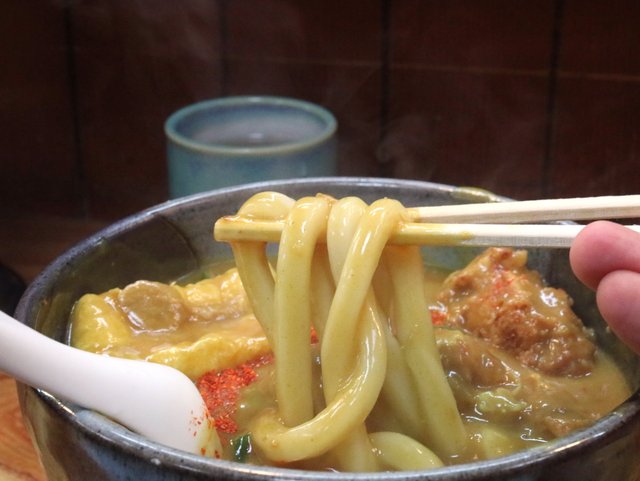
The approach to Kurokawa’s noodle shops is not Ginza theatre or Kyoto hush. It is station-side Nagoya: compact storefronts, quick decisions, regulars who know the rhythm, and bowls built for lunch breaks as much as for food pilgrims. Curry udon belongs naturally in that setting. It is filling, local in temperament, and resistant to the kind of over-explanation that turns comfort food into performance.
Curry Udon Shachinoya fits that Kita Ward register. The room is small, with 15 seats and counter seating, which gives the meal a compressed, practical tempo. This is not a place where the experience needs a long preamble. The point is Nagoya’s appetite for thick wheat noodles and curry broth as a complete meal, served in a format that rewards solo diners, families, and small groups who understand that a short menu category can carry serious depth.
Kurokawa's case for curry udon as Nagoya food culture
Nagoya has a distinct relationship with hearty, sauce-driven food: miso katsu, ankake spaghetti, tebasaki, kishimen, and curry udon all sit in a city vocabulary that values texture and concentration. Curry udon, in particular, is a useful lens on the city because it refuses the split between snack and meal. The broth has to cling, the noodles have to hold their chew, and the seasoning has to read as more than generic curry powder. In a city better known abroad for hitsumabushi and miso, this is a quieter but telling strand of local eating.
The Tabelog 100 Udon EAST selections in 2020, 2022, and 2024 give Curry Udon Shachinoya a trust signal beyond neighbourhood habit. Tabelog’s Hyakumeiten lists matter in Japan because they pull attention toward category specialists, not only luxury rooms. For udon, that means small shops can be judged within the discipline of wheat noodles rather than against multi-course restaurants. A curry udon specialist in Kita Ward being named in that frame says more about Nagoya’s noodle culture than another polished central-district address would.
Within Nagoya’s casual restaurant bracket, the comparison is instructive. Kurokawa Yuuan Tei and Mitsumura sit in a slightly higher casual spend range, while Tsukesoba Jinguji and China Sichuan Kinsui En occupy nearby everyday categories with similarly accessible pricing. The point is not that these restaurants do the same thing; they show how Nagoya’s serious dining often happens without formal dining cues. Technique and loyalty are spread across tempura, noodles, Sichuan cooking, and curry udon rather than concentrated only in tasting-menu rooms.
A small-room format that suits the dish
Curry udon benefits from a room that moves with purpose. The dish loses its force when treated like a leisurely banquet course; it works when the bowl arrives as the center of the meal and the room understands turnover without making the guest feel processed. A 15-seat counter-led setting gives that kind of food the right scale. It also explains why this address reads as a neighbourhood restaurant first and a mapped food stop second.
The categories attached to the shop, curry udon, udon, and ramen, are telling. Nagoya noodle culture is not always tidy about genre boundaries, and many casual restaurants trade in overlapping cravings: wheat noodles, broth, spice, and quick satisfaction. That flexibility is part of the appeal. A visitor expecting the ritual austerity of a high-end soba counter may misread the room. A visitor looking for the city’s working grammar of noodles will understand it faster.
There is also a useful distinction between reputation and luxury here. A Tabelog score of 3.49, repeated Hyakumeiten selection, no private rooms, and a compact counter format point toward a restaurant whose credibility comes from category performance rather than amenities. That matters in Nagoya, where the better casual addresses often ask less of the guest and more of the kitchen. The experience is closer to calibrated routine than spectacle.
Travellers building a fuller itinerary can also scan Our full Nagoya hotels guide, Our full Nagoya bars guide, Our full Nagoya wineries guide, and Our full Nagoya experiences guide for the surrounding trip architecture.
Where it sits in a Japan-wide casual dining map
Japan’s serious casual restaurants often share a few traits: narrow focus, modest footprint, and a reputation built through repeat local use before wider recognition arrives. That pattern links noodle shops, curry counters, onigiri specialists, and small izakaya-style kitchens across the country. It is also why a Nagoya curry udon address can belong in the same editorial conversation as [Curry Senmon Ten] Maruyama Kyoju. in Sapporo, Onigiri Time in Pasadena, or Jōdo Saké Bar in Los Angeles: each shows how a focused Japanese format travels, contracts, or intensifies depending on place.
Within EP Club’s wider restaurant index, the value of such addresses is contrast. Pages such as 1022, 451, Aaron, Alan. and All Day Dining Montmartre sit in different dining registers, but the useful reader question is the same: what does the room reveal about how a city eats when nobody is trying to impress an outsider?
That same question applies across Japan’s regional and urban casual rooms, from -Grilled beef Sukiyaki- KAMAKURA TANUKIAN 鎌倉 たぬき庵 in Kamakura to. 鮪と炭火焼き うお炭 秋葉原店 in Tokyo.cafe in Osaka.know in Kumamoto, and (Shoku) Vietnam in Kawasaki. Curry Udon Shachinoya belongs in that map because it makes a specific local staple legible without turning it into a museum piece.
The editorial takeaway is simple: this is a Nagoya noodle stop for travellers who care about category specialists more than ceremony. The awards history gives it external validation; the Kurokawa setting gives it local scale; the compact counter format keeps the meal in the everyday world where curry udon makes the strongest sense.
The Minimal Set
Comparable venues to place this listing in its category.
| Venue | Cuisine | Price | Notes |
|---|---|---|---|
| Curry Udon ShachinoyaThis venue — the venue you are viewing | Not listed | $$ | Not listed |
| Yakiniku Horumon Gensho | Kita, Traditional Wagyu Offal Yakiniku | $$ | Not listed |
| Aaron | Naka, Japanese Coffee Shop | $$ | Not listed |
| Gyoza to Sparkling Bubbles | Not listed | $$ | Naka, Creative Gyoza and Sparkling Drinks |
| Kiwami | Nakamura, Standing Edomae Sushi Bar | $$ | Not listed |
| New Old Style Niku Soba Keisuke Dainagoya birudingu ten | Nakamura, Japanese Ramen | $$ | Not listed |
Recognition history
Dated appearances from independent guides and award organizations, with the underlying list record or original source where available.
Tabelog 100 #2 · No. 2
Tabelog · Tabelog 100 - Udon - EAST - 2024
Continue exploring
More in Nagoya
Restaurants in Nagoya
Browse all →

At a Glance
- Classic
- Cozy
- Well Known
- Solo
- Family
- Casual Hangout
- After Work
- Group Dining
- Standalone
- Street Scene
Current opening hours
- Monday
- 11 AM–2 PM, 5:30–9 PM
- Tuesday
- 11 AM–2 PM, 5:30–9 PM
- Wednesday
- 11 AM–2 PM, 5:30–9 PM
- Thursday
- Closed
- Friday
- 11 AM–2 PM, 5:30–9 PM
- Saturday
- 11 AM–2 PM, 5:30–9 PM
- Sunday
- 11 AM–2 PM, 6–9 PM
Hours can change for holidays and private events. Last verified .