Cotto
Our verdict
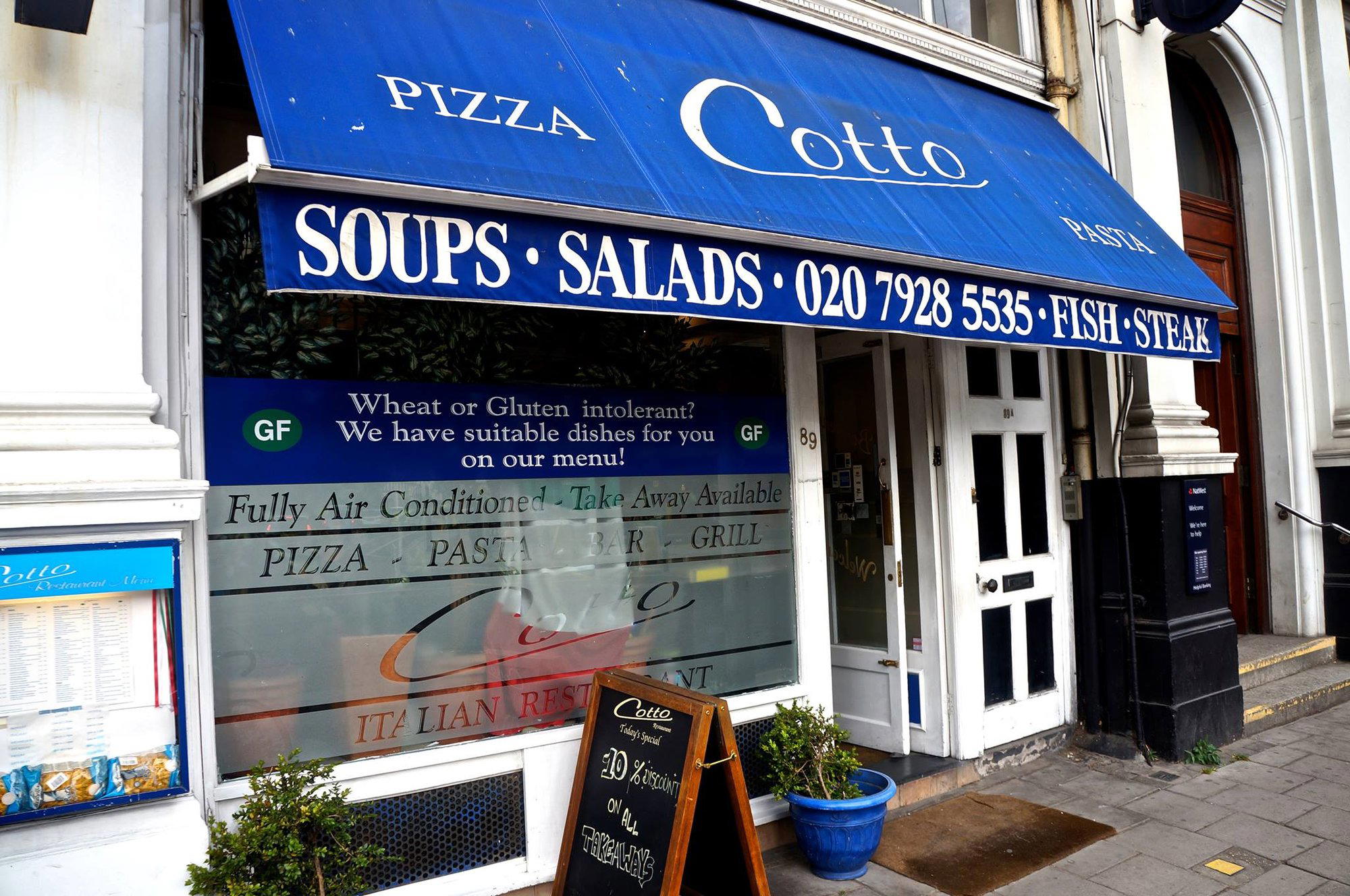
Cotto occupies a quietly considered position on Westminster Bridge Road in SE1, sitting at a remove from the more trafficked dining corridors of the South Bank. The address places it alongside London's broader shift toward neighbourhood-anchored fine dining, where the room and the progression of a meal carry more weight than postcode prestige. A deliberate choice for those who prefer substance over spectacle.

Pearl is the En Primeur Club membership app, where members save venues, book tables and use the concierge.
The menu
What to order
- Spaghetti Carbonara
- Quattro Stagioni Pizza
- Gnocchi Sorrentina
Where SE1 Meets the Slower Pace of Considered Dining
Westminster Bridge Road occupies an interesting position in London's dining geography. It runs between two of the capital's most visited landmarks, yet the stretch itself has never attracted the restaurant density of Borough Market to the east or the South Bank's cultural corridor along the river. That relative quiet is precisely what makes the address at 89 Westminster Bridge Road worth attention. Venues that establish themselves here tend to do so without the footfall safety net that props up busier postcodes, which means the offer has to stand on its own. Cotto is that kind of venue.
The broader SE1 dining scene has matured considerably over the past decade. What was once a neighbourhood defined by pre-theatre convenience and tourist-facing menus has developed a more layered character, with smaller, more intentional operations sitting alongside the large-format crowd-pleasers. Cotto belongs to the former category, positioned at a distance from the visual noise of the riverfront and the volume of Waterloo's commuter trade.
The Architecture of a Meal
In contemporary British fine dining, the tasting menu format has become the dominant grammar for restaurants operating at this level of ambition. The model is now well established across the country, from L'Enclume in Cartmel and Moor Hall in Aughton to London addresses like CORE by Clare Smyth and The Ledbury. What distinguishes the better operators within that format is the internal logic of the progression: how each course sets up the next, how texture and weight shift through the meal, and whether the sequence reads as a coherent arc rather than a list of dishes.
Restaurants that handle this well understand that the early courses carry a specific burden. They establish register, signal intent, and calibrate the diner's expectations for what follows. A meal that opens too heavily forecloses options later; one that opens too cautiously can feel listless before it finds its footing. The middle courses are where technique tends to show most clearly, and the final savoury course often carries the most weight in terms of memory. Dessert, in the better kitchens, earns its place as resolution rather than obligation.
This structural thinking has become increasingly important as London's fine dining tier has grown more competitive. The capital now hosts multiple restaurants at the level of Restaurant Gordon Ramsay, Sketch, The Lecture Room and Library, and Dinner by Heston Blumenthal, each with a distinct identity and a clear positioning within the market. Venues operating slightly below that top tier face a more demanding brief: they need to justify the investment of time and money without the insulation that major awards or decades of reputation provide.
SE1 in the Context of London's Fine Dining Geography
London's premium dining has historically concentrated in a handful of postcodes: Mayfair, Chelsea, Knightsbridge, and parts of the City. The dispersal of serious restaurant-going into areas like SE1, N1, and E1 represents a broader shift in how the capital's food culture has evolved, one that mirrors patterns visible in cities like New York and San Francisco, where venues such as Le Bernardin and Lazy Bear have demonstrated that address is no longer the primary signal of quality.
For diners, this dispersal creates both opportunity and navigational complexity. A restaurant in SE1 that operates at fine dining ambition without the cover of a Michelin star or a high-profile name attached to the kitchen asks more of its audience. It requires a different kind of trust, one built through word of mouth, repeat visits, and the slow accumulation of reputation. That is a harder path than the one available to establishments with immediate institutional recognition, but it often produces a more grounded, less performative dining experience.
The comparison extends to the broader UK fine dining scene. Houses like Gidleigh Park in Chagford, Waterside Inn in Bray, Midsummer House in Cambridge, and Restaurant Andrew Fairlie in Auchterarder have built reputations over decades, often in settings that required diners to travel specifically for the meal. London venues at Cotto's level operate differently: they compete for a diner's attention on any given evening, against a city-wide roster that includes Hand and Flowers in Marlow, Opheem in Birmingham, Ynyshir Hall in Machynlleth, hide and fox in Saltwood, and a hundred other options within the M25 alone.
What the Address Tells You
The choice to operate from Westminster Bridge Road rather than from a more commercially obvious location is itself a form of editorial statement. Restaurants that set up in quieter postcodes tend to attract a more deliberate diner: someone who has sought the place out, who arrives with genuine intent, and who is less likely to have stumbled in on the basis of footfall. That audience dynamic changes the room. It tends to produce a quieter, more focused atmosphere than venues that rely heavily on walk-in trade or tourist adjacency.
For context on what London's fine dining tier currently looks like across neighbourhoods, our full London restaurants guide maps the city's key dining corridors and helps situate individual venues within their competitive peer sets.
Planning Your Visit
The practical specifics for Cotto, including current opening hours, reservations policy, and pricing, are best confirmed directly with the venue, as these details can shift with short notice. The address is 89 Westminster Bridge Road, London SE1 7HR, accessible from Waterloo and Lambeth North stations. Dress: Smart casual is appropriate for a room operating at this level of intention, though the venue's own guidance should take precedence. Budget: Timing: For a tasting menu format, allow a full evening rather than a fixed window.
Frequently asked questions
What's Cotto's location?
Cotto is located at 89 Westminster Bridge Rd, London SE1 7HR, United Kingdom, London.
How does Cotto's location in SE1 compare to other London fine dining destinations?
Cotto operates from 89 Westminster Bridge Road, SE1, a stretch of London that sits between Waterloo and Lambeth rather than in the Mayfair or Chelsea corridors where premium dining has historically concentrated.
What do people recommend at Cotto?
Cotto's menu specifics change and are best confirmed directly with the venue at 89 Westminster Bridge Road. The restaurant operates within the tasting menu format that defines contemporary British fine dining at this level of ambition, so the full sequence is typically the intended experience rather than individual dishes ordered à la carte.
Do they take walk-ins at Cotto?
Cotto sits on Westminster Bridge Road in SE1, and at the level of considered dining the address signals, walk-in availability tends to be limited. Contacting the venue directly before arriving is the reliable approach, as reservation policy can shift with seasonal demand.
What is Cotto known for?
Cotto is known for operating a serious fine dining format from an address, 89 Westminster Bridge Road, SE1, that sits outside London's historically dominant dining postcodes of Mayfair and Knightsbridge. That positioning is itself part of the identity: a destination restaurant that doesn't rely on a prestige postcode to anchor its reputation.
Do they accommodate allergies at Cotto?
Allergy and dietary accommodation policies are best confirmed directly with Cotto at their Westminster Bridge Road address before booking. Restaurants operating at this format level in London typically build dietary requirements into the pre-visit booking process, so raising any needs at the reservation stage is the standard practice.
Is Cotto worth the price?
Current pricing is best verified directly with Cotto, as tasting menu costs at this level in London shift with season and format. What the SE1 address on Westminster Bridge Road does suggest is a restaurant that earns its place on destination rather than location prestige, which tends to reflect in the ratio of price to intent on the plate.
Side-by-Side Snapshot
Comparable venues nearby, for context on price, style, and recognition.
| Venue | Cuisine | Price | Notes |
|---|---|---|---|
| CottoThis venue (the venue you are viewing) | Authentic Neapolitan Italian | $20–30 | Not listed |
| Bonnane Restaurant | Authentic Italian Pizza & Pasta | $20–30 | Silvertown |
| Prosecco Caffè | Traditional Italian Cicchetti & Prosecco | $30–50 | Soho |
| Sacro Cuore Pizza | Authentic Neapolitan Pizza | $20–30 | Kensal Rise |
| Fatto a Mano Covent Garden | Authentic Neapolitan Pizza | $20–30 | Covent Garden |
| Archer Street | Regional Italian Trattoria | $30–50 | Soho |