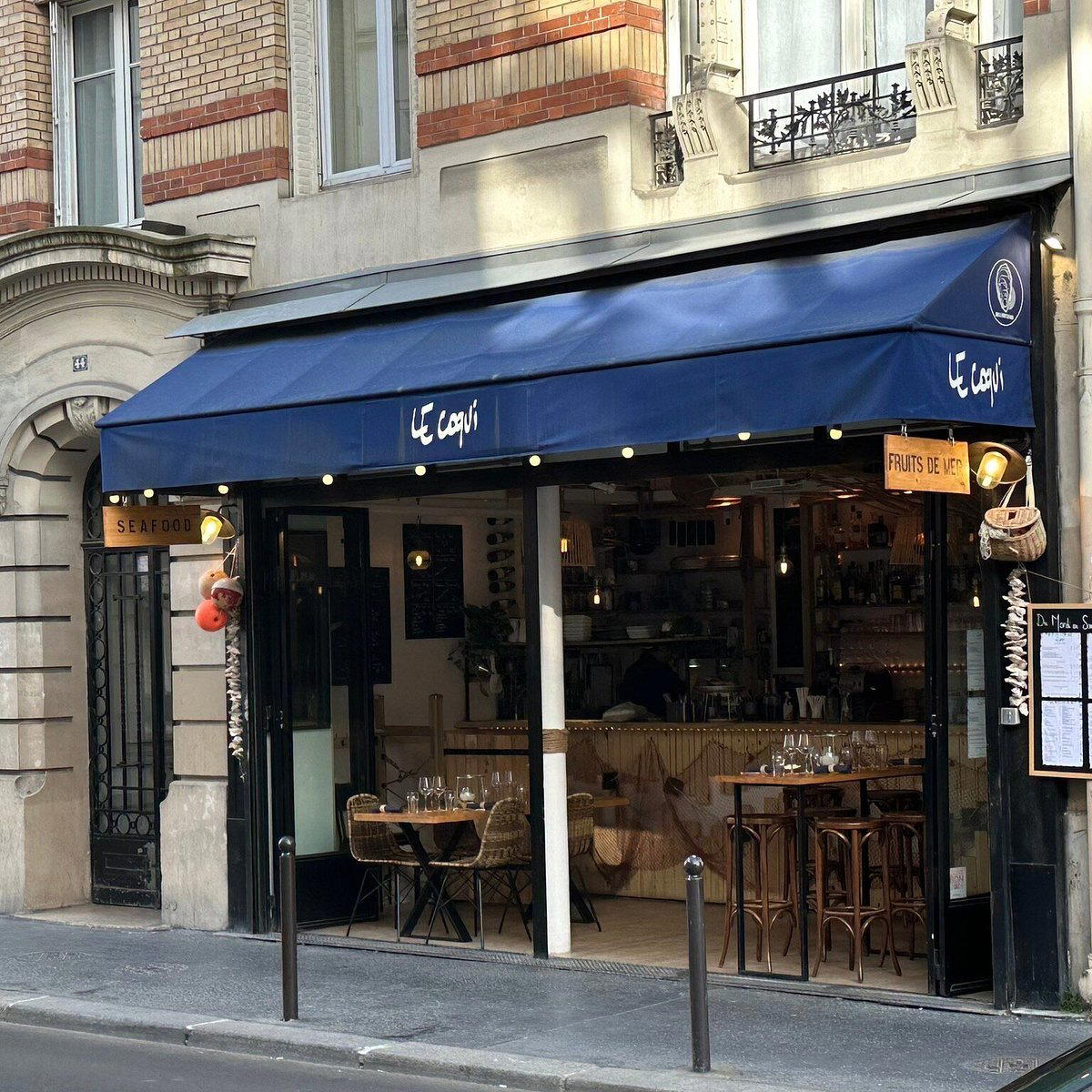
Coqui Paris occupies a quietly significant address at 44 Rue de Charenton in the 12th arrondissement, a neighbourhood that has drawn independent operators away from Paris's more saturated dining corridors. The restaurant sits at the edge of a wider conversation about where serious dining is migrating in the French capital, and what the physical and spatial choices of a room say before a single plate arrives.
 Discover on Pearl
Pearl is the En Primeur Club membership app — saves, bookings, and concierge access live there. Same editors, same standards.
- Address
- 44 Rue de Charenton, 75012 Paris, France
- Phone
- +33979189043
- Website
- lecoqui.fr
The 12th Arrondissement and the Drift of Serious Dining
Coqui Paris is a French Seafood Bar in Paris's 12th arrondissement, with a Google rating of 5.0 from 369 reviews and an average price of about $40 per person. Paris has never been a city where the leading tables cluster in obvious places. The 1st and 8th arrondissements hold their grand institutions, L'Ambroisie anchoring Place des Vosges, Le Cinq at the Four Seasons George V commanding the 8th with the full weight of a palace hotel behind it, but the city's more restless dining energy has been moving east and south for well over a decade. The 11th, the 10th, and increasingly the 12th have absorbed a generation of operators who want space, lower rents, and a clientele less interested in spectacle than in what arrives on the plate. Rue de Charenton, where Coqui Paris holds its address at number 44, sits inside that eastward shift.
This is not the Paris of marble lobbies and white-gloved captains. The 12th is a working arrondissement, anchored by the Gare de Lyon and the Bois de Vincennes, with a street-level character shaped by the Marché d'Aligre, one of the city's few genuinely neighbourhood-scaled markets, and a growing density of operators who treat the area's ordinariness as an asset rather than a liability. For a restaurant, the address is a signal in itself: you are not here because the room looked good in a press photograph. You are here because someone told you to come.
Space as Editorial Statement
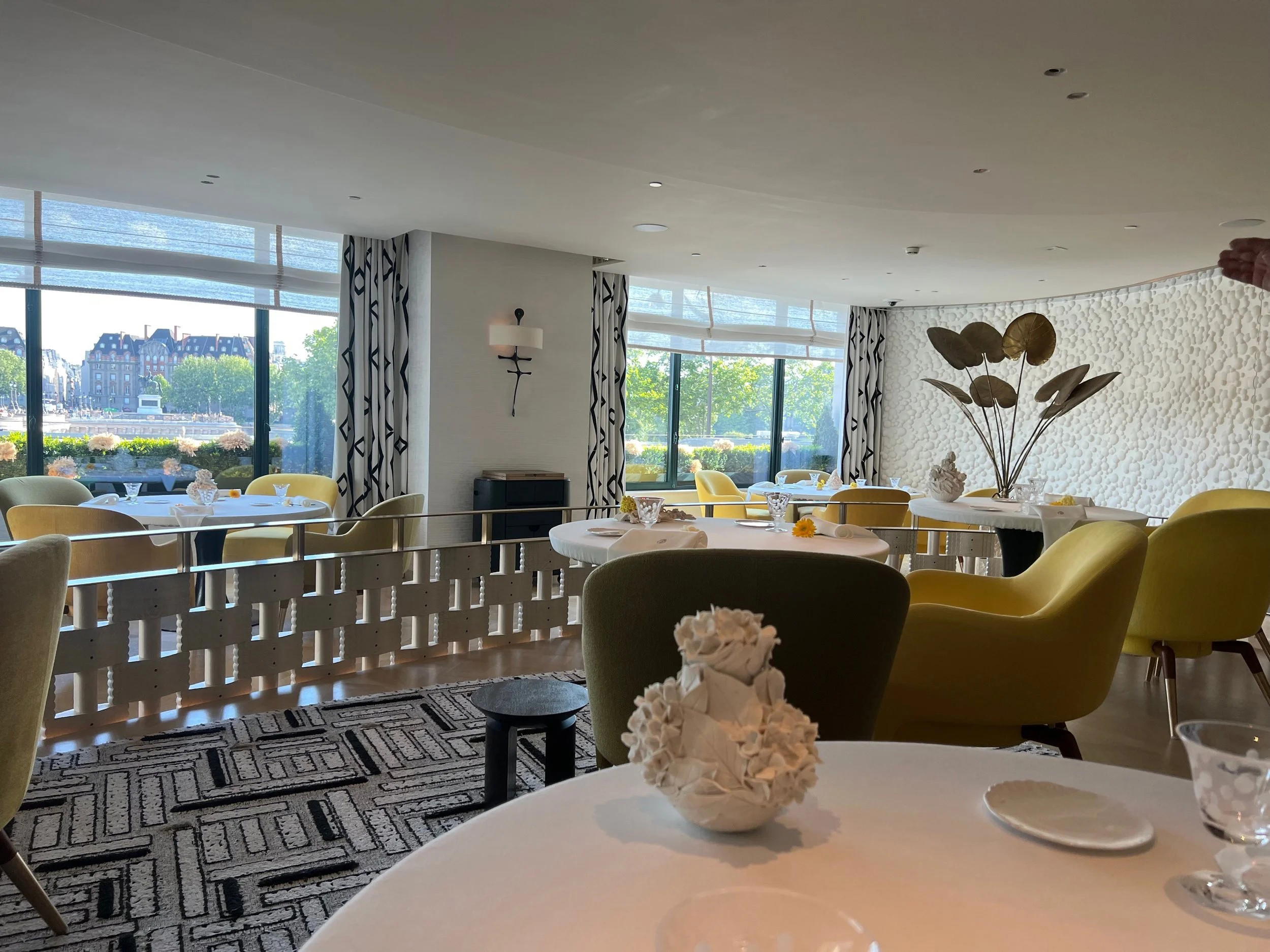
In Paris's current dining conversation, the physical container of a restaurant carries more argumentative weight than it did twenty years ago. The generation of rooms designed around grandeur, high ceilings, formal table spacing, the architecture of authority, coexists now with a different set of spaces that argue for a different relationship between diner and kitchen. The broader move has been toward rooms that compress distance: tighter seating, open counters, materials that absorb rather than reflect light. Kei, in the 1st, and Alléno Paris au Pavillon Ledoyen in the 8th both occupy historic or architecturally distinguished spaces, where the room itself sets a particular register of expectation before a menu is opened. A restaurant operating in the 12th at a street-front address on Rue de Charenton is working with a fundamentally different spatial vocabulary.
The design choices available to a room in this neighbourhood, and what an operator does with them, tend to reveal more about intent than a flagship address would. When a restaurant is not trading on the prestige of its surroundings, the interior has to do more work: the way light moves through a dining room, how closely tables are placed, whether the kitchen is visible or closed, what materials absorb or amplify noise. These are not aesthetic decisions in isolation; they are decisions about what kind of conversation is possible between a room and its occupants. In this sense, the 12th arrondissement context sharpens the editorial question that any restaurant's physical space poses.
Where Coqui Paris Sits in the Paris comparable set
Paris's restaurant categories have never been more fragmented. At one end, the multi-starred grands temples, Arpège in the 7th, L'Ambroisie in the 4th, operate at price points and formality levels that place them in direct competition with the city's palace hotel dining rooms rather than with each other's neighbourhoods. At the other end, the natural wine bar and bistrot format has become so widely replicated that differentiation within that tier now depends almost entirely on sourcing specificity and kitchen precision rather than concept.
The middle tier, restaurants that operate with genuine culinary seriousness but outside the starred firmament, in neighbourhoods where rents permit a different financial model, is where the most interesting positioning questions arise. France's wider dining geography shows this clearly: Flocons de Sel in Megève, Bras in Laguiole, and Auberge de l'Ill in Illhaeusern each demonstrate how address and spatial context shape what a restaurant can reasonably claim. In Paris specifically, a 12th arrondissement location positions a restaurant within a comparable set that values specificity of execution over breadth of reputation, closer in spirit to the address choices of younger independent operators than to the established corridors of fine dining.
Comparisons to France's provincial institutions are instructive in another way: places like Auberge du Vieux Puits in Fontjoncouse, Georges Blanc in Vonnas, or Les Prés d'Eugénie in Eugénie-les-Bains have built identity around place as much as plate. The equivalent in a dense urban setting is neighbourhood identity, a proposition that the 12th, with its market culture and relative anonymity to tourists, is increasingly able to support.
The Broader Context of Paris in 2024
Paris's dining scene in the current period is navigating a specific tension: the city's reputation as the reference point for French haute cuisine, sustained by institutions like Paul Bocuse's Auberge du Pont de Collonges, Troisgros, and internationally by rooms like Le Bernardin in New York and Mirazur in Menton, coexists with a domestic dining public that has largely moved on from formality as a value in itself. The rooms drawing the most sustained critical attention in Paris right now tend to be those that resolve this tension through spatial intelligence: designing for a particular kind of intimacy while maintaining enough technical seriousness to hold the attention of an audience that has dined everywhere.
A restaurant on Rue de Charenton in the 12th operates inside this broader shift. The address is a choice, and in Paris, address-as-choice carries meaning.
Planning Your Visit
Coqui Paris is at 44 Rue de Charenton in the 12th arrondissement, reachable by Metro from Gare de Lyon (lines 1, 14, RER A, RER D) or Ledru-Rollin on line 8, which deposits visitors in the heart of the neighbourhood near the Marché d'Aligre. Coqui Paris is at 44 Rue de Charenton in the 12th arrondissement, and reservations are recommended. It is open Tuesday through Saturday from 7 to 10 PM. The 12th arrondissement rewards an afternoon approach: the market and surrounding streets justify the journey on their own terms, making a meal here a natural anchor for a neighbourhood rather than a destination in isolation.
How It Stacks Up
Comparable venues nearby, for context on price, style, and recognition.
| Venue | Cuisine | Price | Awards | Notes |
|---|---|---|---|---|
| Coqui ParisThis venue — the venue you are viewing | French Seafood Bar | $$ | , | |
| Huîtres et Saumons de Passy | French Seafood | $$$ | , | Passy |
| Pêche | Seafood Bistro | $$$ | , | Batignolles |
| Season Marais | Modern Healthy French Café | $$ | , | Le Marais |
| Miznon Canal | Israeli Street Food | $$ | , | 10th Arr. - Entrepôt |
| Fragola Marais | Authentic Italian Pizza and Pasta | $$ | , | Marais |
Continue exploring
More in Paris
Restaurants in Paris
Browse all →
Bars in Paris
Browse all →
Hotels in Paris
Browse all →

At a Glance
- Cozy
- Trendy
- Casual Hangout
- Date Night
- Open Kitchen
- Local Sourcing
Casual beach hut atmosphere evoking the seaside with fresh maritime flavors.