Our verdict
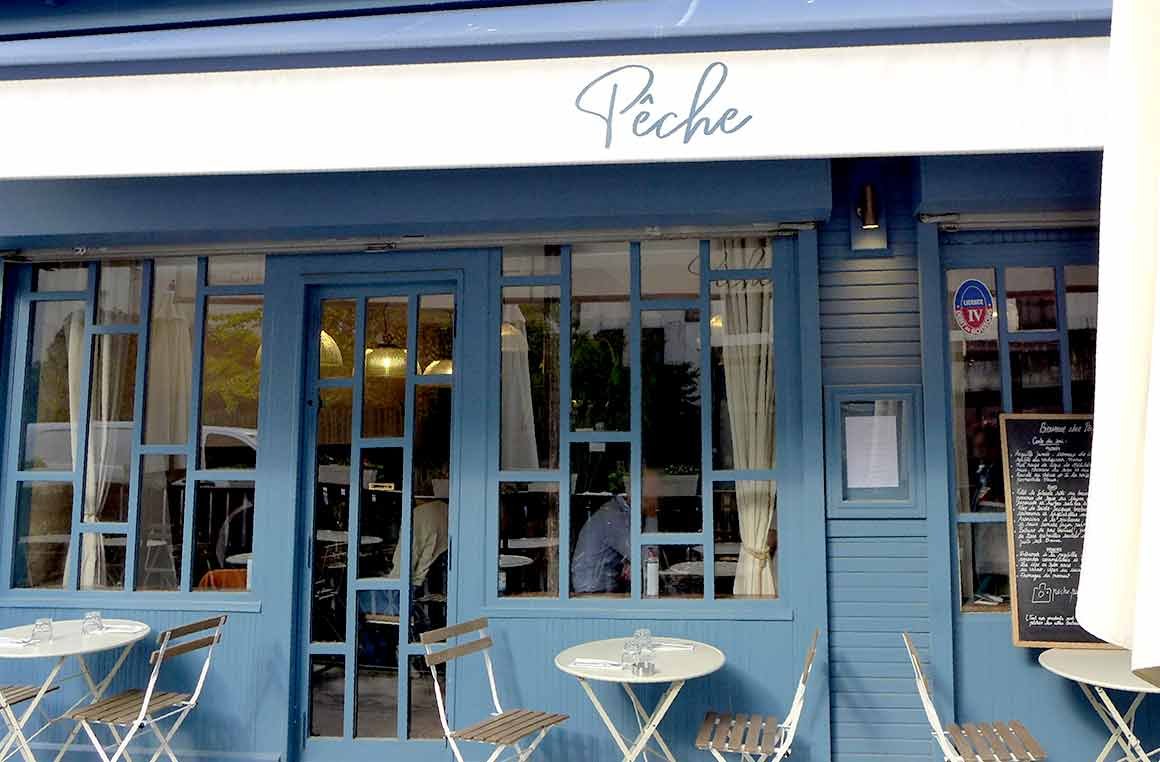
Pêche occupies a quiet stretch of Rue Cardinet in the 17th arrondissement, operating at a remove from the tourist circuits that animate central Paris. The address places it squarely in a neighbourhood where the dining conversation is conducted largely among residents, which tends to focus a kitchen's priorities considerably. For visitors willing to look beyond the well-mapped arrondissements, it represents a more grounded entry point into the city's broader dining scene.

Pearl is the En Primeur Club membership app — saves, bookings, and concierge access live there. Same editors, same standards.
- Address
- 127 Rue Cardinet, 75017 Paris, France
- Phone
- +33142278393
- Hours
- Mon–Fri 12–2:30 PM, 7–10:30 PMSat–Sun Closed
- Website
- restaurantpeche.fr
- Directions
- Get directions
- Booking
- Book on the venue's website
The 17th Arrondissement and the Restaurants That Don't Need to Perform
Paris's dining reputation is routinely carried by a handful of arrondissements: the 8th with its grand hotel dining rooms, the 6th and its brasserie lineage, the 11th and its natural wine bars. The 17th, bordered by the Batignolles neighbourhood and the residential sprawl towards the Périphérique, sits at a different register. Rue Cardinet, where Pêche is addressed at number 127, runs through a part of the city where restaurants answer primarily to local regulars rather than to guidebook itineraries. That dynamic shapes kitchens in a specific way: the theatrics of the destination restaurant, the menu-as-manifesto that characterises places like Arpège or Alléno Paris au Pavillon Ledoyen, tends to give way to cooking that is accountable on a weekly basis to the same faces.
That accountability has its own discipline. Neighbourhood restaurants in this part of Paris don't benefit from the reputational runway that a three-Michelin-star address in the 8th carries. The margin for inconsistency is narrower, and the menu has to earn its keep not through ambition signalling but through reliable execution. Where places like Le Cinq at the Four Seasons George V or L'Ambroisie operate within a framework of formal grandeur, the 17th's more restrained addresses build their argument on repetition and consistency.
Menu Architecture as Argument
In Paris's mid-tier dining scene, the structure of a menu is rarely accidental. How a kitchen organises its offer — the ratio of starters to mains, the presence or absence of a tasting format, whether the carte changes with the market or locks in signatures across months — communicates something precise about the restaurant's self-understanding. A restaurant that names itself after a fish (pêche means both 'fishing' and 'peach' in French, a deliberate ambiguity) is already making a quiet claim about its orientation: something between the harvest and the catch, seasonality implied in the name itself.
This kind of naming convention has precedent in French restaurant culture. It signals a kitchen that wants to be read as ingredient-driven without explicitly saying so, and it sets an expectation that the menu will move with the seasons rather than calcify around a permanent identity. The contrast with a more formally structured address, the fixed grand menu of Kei, or the tasting architecture at the three-Michelin-star level, is significant. A neighbourhood restaurant operating under this kind of seasonal logic is effectively asking the diner to trust the kitchen's current judgement rather than arrive with a specific dish in mind.
That is a different kind of menu architecture than the one that defines France's most decorated addresses. At Mirazur in Menton, the structure is built around the restaurant's own garden and a lunar calendar. At Bras in Laguiole, the menu is inseparable from the Aubrac plateau's specific flora. These are menus with declared intellectual frameworks. The neighbourhood bistro operates on a quieter version of the same principle: the market dictates, the kitchen responds, and the menu is the record of that transaction.
Paris's Broader Bistro Continuum
France's dining conversation is often dominated by its most decorated kitchens: the multigenerational prestige of Paul Bocuse's Auberge du Pont de Collonges, the Alsatian institution of Auberge de l'Ill, or the southern ambition of AM par Alexandre Mazzia in Marseille. These are restaurants operating at a specific altitude. But the French dining ecosystem depends equally on a much larger population of neighbourhood addresses that don't compete in that bracket and don't need to. The bistro and the neighbourhood restaurant remain the format through which most Parisians actually eat, and that format has its own rigour.
The 17th arrondissement sits within this continuum. It is not the destination for visitors arriving specifically to eat at a three-star counter, in the way that the 8th or the 6th might be. But for those who have already mapped the upper tier, who have booked their table at a formal Paris address or plan to explore the wider French scene through places like Flocons de Sel in Megève or Assiette Champenoise in Reims, a neighbourhood restaurant in the 17th offers a different but legitimate lens on how Paris actually eats.
The comparison extends internationally. The leading neighbourhood bistros in Paris operate on a similar logic to the leading neighbourhood restaurants anywhere: accountability to a regular clientele, seasonal responsiveness, and a menu structure that reflects the kitchen's genuine capabilities rather than aspirational positioning. Le Bernardin in New York and Atomix represent the upper altitude of their respective cities' dining ecosystems; the neighbourhood restaurant is what sustains the ecosystem below that level.
Practical Planning
Rue Cardinet in the 17th is accessible from the Cardinet or Pont Cardinet stations on the Transilien L line, or from the Wagram metro stop on line 3, a short walk west. The address sits away from the main tourist circuits, which has practical implications for booking: neighbourhood restaurants of this type tend to fill through local regulars and word-of-mouth rather than through international reservation platforms, and tables are often available with shorter lead times than comparable addresses in more visited arrondissements. Visiting mid-week rather than weekend evenings tends to give access to a more relaxed service pace. For broader context on how Pêche fits within the Paris dining scene, see our full Paris restaurants guide.
| Venue | Arrondissement | Booking Lead Time | Price Tier | Format |
|---|---|---|---|---|
| Pêche | 17th | Short (neighbourhood) | Not confirmed | Neighbourhood bistro |
| Kei | 1st | Weeks in advance | €€€€ | Contemporary French tasting |
| L'Ambroisie | 4th | Months in advance | €€€€ | Classic French grand format |
| Le Cinq | 8th | Weeks in advance | €€€€ | Hotel grand dining |
Frequently asked questions
What's Pêche's location?
Pêche is located at 127 Rue Cardinet, 75017 Paris, France, Paris.
Is Pêche a good choice for a weeknight dinner near Wagram or Cardinet stations?
Pêche sits at 127 Rue Cardinet, within walking distance of both the Cardinet Transilien stop and the Wagram metro on line 3, making it one of the more accessible bistro options in the northern 17th without committing to a cab. The surrounding streets are residential and quiet on weeknights, which suits a kitchen whose approach appears to favour a local, repeat clientele over destination traffic. For anyone based in the 8th or 17th, it's a logical neighbourhood option.
What do regulars order at Pêche?
Pêche draws a neighbourhood crowd from the 17th arrondissement, which tends to reward kitchens that keep a short, rotating menu rather than a sprawling one. Regulars typically anchor their meal around whichever fish or vegetable dish reflects the season — the name itself signals where the kitchen's priorities lie. Specific dishes aren't publicly confirmed, so checking in with the restaurant directly before visiting is the practical move.
What's the best way to book Pêche?
Pêche is located at 127 Rue Cardinet in the 17th arrondissement, a residential pocket where well-regarded bistros fill up well before the week is out. Without a live booking system or published phone number in circulation, the most reliable approach is to visit in person or check for a reservation link via a Paris-specific platform such as TheFork. Arriving early in the week for a weekend table is standard practice in this part of the city.
What do critics highlight about Pêche?
The 17th arrondissement doesn't generate the same press volume as the 6th or the 8th, which means restaurants like Pêche on Rue Cardinet tend to earn their reputations through word of mouth rather than award cycles. That absence isn't a verdict — it reflects the low-profile character of the neighbourhood's dining scene, where consistency over performance is the operative logic.
Can Pêche handle vegetarian requests?
Parisian bistros in the 17th have become considerably more accommodating on vegetarian options over the past decade, moving well past the era of token salads. Most kitchens in this tier will adapt if given notice.
Side-by-Side Snapshot
Comparable venues nearby, for context on price, style, and recognition.
| Venue | Cuisine | Price | Awards | Notes |
|---|---|---|---|---|
| PêcheThis venue — the venue you are viewing | Seafood Bistro | $30–50 | Not listed | Not listed |
| Istr | Modern Seafood & Oyster Bar | Not listed | Michelin Plate | Marais (3rd Arrondissement) |
| Le Bistro Marbeuf | Traditional French Bistro with Lyonnaise Specialties | $30–50 | Not listed | 8th Arr. - Élysée |
| La Belle Maison | Classic French Bistro | $50–100 | Not listed | Montmartre |
| L'Absinthe | Modern French Bistro | Not listed | Not listed | 1st Arrondissement |
| Sister Midnight | Cocktail Bar | $10–20 | Not listed | Pigalle |