


1 Michelin Star · Star Wine List · We're Smart World 2 Radishes
Our verdict
Canadian warmth meets Parisian sophistication at Comice Paris, where chef Noam Gedalof's seasonal tasting menu showcases modern French cuisine in an intimate blue-walled dining room, while Etheliya Hananova's front-of-house expertise delivers hospitality that transforms fine dining into genuine connection.

Pearl is the En Primeur Club membership app, where members save venues, book tables and use the concierge.
The menu
What to order
- Butter-poached French lobster risotto
- Chocolate soufflé
- Scallop carpaccio
- Veal loin with sweetbreads
A Quieter Corner of the 16th
Avenue de Versailles runs along the Seine's right bank in the 16th arrondissement, a stretch of wide pavements and Haussmann facades that most visitors pass through rather than stop in. A few steps from the Pont de Grenelle, the bridge that frames the smaller Statue of Liberty replica the city keeps here as a kind of private joke, Comice occupies a neighbourhood that asks nothing of you. There is no tourist circuit to join, no grand place to photograph. That distance from the more trafficked arrondissements is part of what defines the restaurant's register: quiet confidence, residential calm, a dining room that feels like it belongs to the street rather than performing for it.
Product as the Central Argument
A generation of Parisian restaurants has organised itself around two competing instincts: technique as spectacle, or ingredient as argument. Comice belongs firmly to the second school. The kitchen's logic places the raw material first and builds around it, which means the menu reads as a series of precise pairings rather than constructed dishes in the modernist sense. Lobster arrives with peas and vichyssoise, cream and chives, a combination that trusts the shellfish to carry the conversation. Fish of the day is set against artichokes, chard and beans. Cauliflower appears in the Grenoble manner, with stewed morels, potato gnocchi and a vin jaune sauce. These are not minimalist gestures; they are composed plates where the vegetable is a genuine structural element, not a garnish.
That approach to vegetables is worth marking as an editorial point. Across the tier of Michelin-starred modern cuisine in Paris, protein has historically dominated the plate's hierarchy. What Comice does, integrating seasonal vegetables as load-bearing components rather than supporting characters, reflects a broader shift in how one-star kitchens have been rethinking sourcing and waste. When the product is central, the incentive to use the whole ingredient increases. Pea shoots, chard stems, cauliflower leaves: these things earn their place on a plate built around what the vegetable is, not what it can be made to look like.
California, Quebec, and the Palate That Results
Modern French cooking at the one-star level is often shaped by the circuits chefs and sommeliers travel before they settle. The couple behind Comice accumulated working experience in California, Quebec, New York and Paris, and that itinerary carries culinary weight. California's farm-to-table directness, Quebec's hyper-seasonal rigour, New York's cross-cultural ingredient fluency, these are real influences on how a kitchen thinks about provenance and what counts as a beautiful product. The result at Comice is a sensibility that is French in its technique and structure but North American in its openness to letting the ingredient speak plainly, without the classical French instinct to transform it into something else entirely.
Among the one-star restaurants in Paris that work in a modern cuisine register, this kind of transatlantic formation is relatively common, kitchens like Accents Table Bourse and Anona draw on similarly international trajectories. What makes Comice's version notable is that the travel experience manifests primarily through sourcing instinct rather than fusion technique. The cuisine reads as Paris, not as Paris filtered through elsewhere.
The Sommelier as Co-Author
Few things shape a restaurant's identity as decisively as who controls the wine list and how they approach it. At Comice, the sommelier is also the co-owner, which means the list and the kitchen are in structural alignment rather than parallel conversations. In the better Parisian one-star rooms, the wine program operates as a genuine second voice in the meal, not a retail catalogue attached to the end of a menu. That integration matters when the kitchen is working with the kind of ingredient-led cooking Comice practises: a vin jaune sauce implies a specific conversation about Jura, which implies a cellar that takes those references seriously.
For context within the €€€€ tier of Parisian modern cuisine, this kind of owner-sommelier model is rarer than it appears. Restaurants at the level of 114, Faubourg or Amâlia typically separate those roles. The dual ownership at Comice means the wine program carries genuine editorial authority rather than institutional neutrality.
One Star, Earned Quickly
Michelin awarded Comice its first star relatively soon after opening, a signal that carries specific meaning in Paris. The city's Michelin inspectors are not sentimental about new addresses, and the 16th arrondissement does not carry the inherent visibility of the 1st, the 8th or Saint-Germain. An early star in a residential quarter, maintained through 2024 and 2025, suggests consistent execution rather than an opening-night peak. That retention is the more telling data point: Michelin stars in Paris are recalled when kitchens lose focus, and Comice has held its position across multiple inspection cycles.
Within the broader French fine dining circuit, where restaurants like Bras in Laguiole, Flocons de Sel in Megève, and Auberge de l'Ill in Illhaeusern represent long-established regional anchors, Comice occupies a different position: younger, urban, built on a personal project rather than inherited legacy. The peer comparison within Paris sits closer to Auberge de Montfleury than to the multi-star institutional rooms. Internationally, the model of a small owner-operated modern cuisine room earning a star early tracks against addresses like Frantzén in Stockholm at its earlier career stage, intimate, chef-driven, with the kitchen and front-of-house in the same hands.
The Sustainability Frame
Comice does not market itself around environmental credentials in the way that some contemporary kitchens have turned sustainability into a brand identity. What the menu reveals, however, is a structural commitment to whole-ingredient thinking. A kitchen that builds serious plates around cauliflower, chard, artichoke, morels and peas, and treats those vegetables as co-leads alongside lobster and fish, is a kitchen that has resolved its sourcing hierarchy in a particular direction. The logic is partly aesthetic, partly ethical, and entirely practical: when you source carefully and charge for the ingredient's quality, waste becomes expensive. The vin jaune gnocchi and the Grenoble cauliflower are not sustainability gestures. They are the result of a kitchen that knows what ingredients cost and uses them accordingly.
That approach places Comice in a cohort of Parisian one-star rooms where the sustainability story is embedded in the cooking rather than announced above the door. The comparison is instructive: restaurants operating at the level of Mirazur in Menton or Troisgros in Ouches have made ecological sourcing part of their public identity. Comice practises a quieter version of the same instinct, one that shows up in the construction of the menu rather than in the language around it.
Planning Your Visit
Comice sits at 31 Avenue de Versailles, in the 16th arrondissement. The Pont de Grenelle and the Bir-Hakeim area provide the nearest orientation points. The restaurant operates in the €€€€ price range, placing it at the top of the one-star bracket in Paris and in the same tier as rooms like Kei or Plénitude, though the format and atmosphere are substantially more intimate. Chef Christian Steska leads the kitchen.
| Venue | Price Tier | Stars | Location | Format |
|---|---|---|---|---|
| Comice | €€€€ | Michelin 1 Star | 16th arr. | Intimate, owner-operated |
| Accents Table Bourse | €€€ | Michelin 1 Star | 2nd arr. | Small, international |
| 114, Faubourg | €€€€ | Michelin 1 Star | 8th arr. | Hotel dining |
| Paul Bocuse | €€€€ | Michelin 3 Stars | Near Lyon | Institution |
| FZN by Björn Frantzén | €€€€ | Michelin starred | Dubai | Modern, international |
For broader context on where Comice sits within the city's dining options, see our full Paris restaurants guide. For accommodation near the 16th arrondissement and across the city, our full Paris hotels guide covers the relevant options. For drinking well before or after, our full Paris bars guide and our full Paris wineries guide offer curated picks. Cultural programming around the visit is covered in our full Paris experiences guide.
Frequently asked questions
Is Comice good for families?
At €€€€ pricing in central Paris, Comice is calibrated for adult dining occasions. The ingredient-focused tasting format and one-star setting make it a poor fit for children, and the room's residential 16th-arrondissement tone reinforces that.
What should I expect atmosphere-wise at Comice?
The 16th arrondissement's residential character on Avenue de Versailles sets a quieter register than Paris's more scene-driven starred rooms. This is a space built around the food and the wine list, not a destination for spectacle or social theatre.
Has Comice won any awards?
Comice has received recognition including: A few steps from the Pont de Grenelle, Comice is a restaurant (Paris 16th arrondissement) created by the couple Etheliya and Noam. With their experience, the restaurant got a Michelin star after only...; Here you will find the man in the ki….
What do regulars order at Comice?
The kitchen's documented preparations point clearly to what the room does best: lobster with peas and vichyssoise, fish of the day with artichokes and chard, and cauliflower in the Grenoble manner with stewed morels and potato gnocchi in a vin jaune sauce. Vegetables are treated as central to each plate, not as afterthoughts alongside the protein.
In Context: Similar Options
| Venue | Cuisine | Price | Awards | Notes |
|---|---|---|---|---|
| ComiceThis venue (the venue you are viewing) | Contemporary French Fine Dining | $100–150 | 1 Michelin Star · Star Wine List | Not listed |
| Alléno Paris au Pavillon Ledoyen | Modern French Fine Dining | $150–200 | 3 Michelin Stars · World's 50 Best #79 | Creative |
| Kei | Modern French with Japanese Influences | $300–500 | 3 Michelin Stars · World's 50 Best #93 | Contemporary French, Modern Cuisine |
| L'Ambroisie | Classic French Haute Cuisine | $300–500 | 2 Michelin Stars · World's 50 Best #23 | French, Classic Cuisine |
| Le Cinq - Four Seasons Hôtel George V | Modern French Fine Dining | $300–500 | 3 Michelin Stars · World's 50 Best #24 | French, Modern Cuisine |
| Plénitude | Modern French Sauce-Led Fine Dining | $300–500 | 3 Michelin Stars · World's 50 Best #14 | Contemporary French |
Recognition history
Dated appearances from independent guides and award organizations, with the underlying list record or original source where available.
Michelin 1 Star
Michelin
Star Wine List
Star Wine List
We're Smart World 2 Radishes
We're Smart World
Full recognition history (5 entries)
Michelin 1 Star
Michelin
Michelin 1 Star
Michelin
Continue exploring
More in Paris
Restaurants in Paris
All restaurants in Paris →
Bars in Paris
All bars in Paris →
Comice
The wine
- Wine program
- Deep wine list
- Extensive wine list
- Sommelier-led
- Natural wine
Details
- Elegant
- Intimate
- Sophisticated
- Modern
- Special Occasion
- Date Night
- Celebration
- Standalone
- Design Destination
- Extensive Wine List
- Natural Wine
- Sommelier Led
- Local Sourcing
- Prix Fixe
- Tasting Menu
- Natural Wine
- Grower Producer Wines
- Vegetarian Friendly
- Allergy Accommodating
- Pescatarian Friendly
Current opening hours
- Monday
- 6:30–10:30 PM
- Tuesday
- 6:30–10:30 PM
- Wednesday
- 6:30–10:30 PM
- Thursday
- 6:30–10:30 PM
- Friday
- 6:30–10:30 PM
- Saturday
- 6:30–10:30 PM
- Sunday
- Closed
Hours can change for holidays and private events. Hours as of .
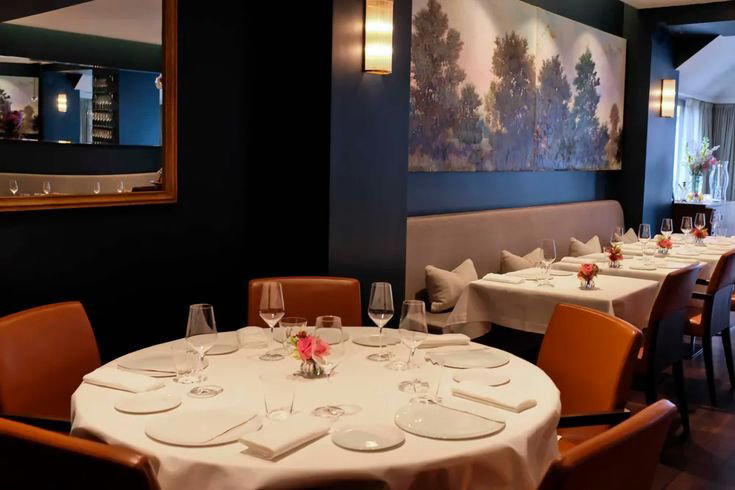
Natty modern interior with vivid blue walls hung with paintings by contemporary artists; cozy, inviting, and relaxed despite fine-dining credentials.