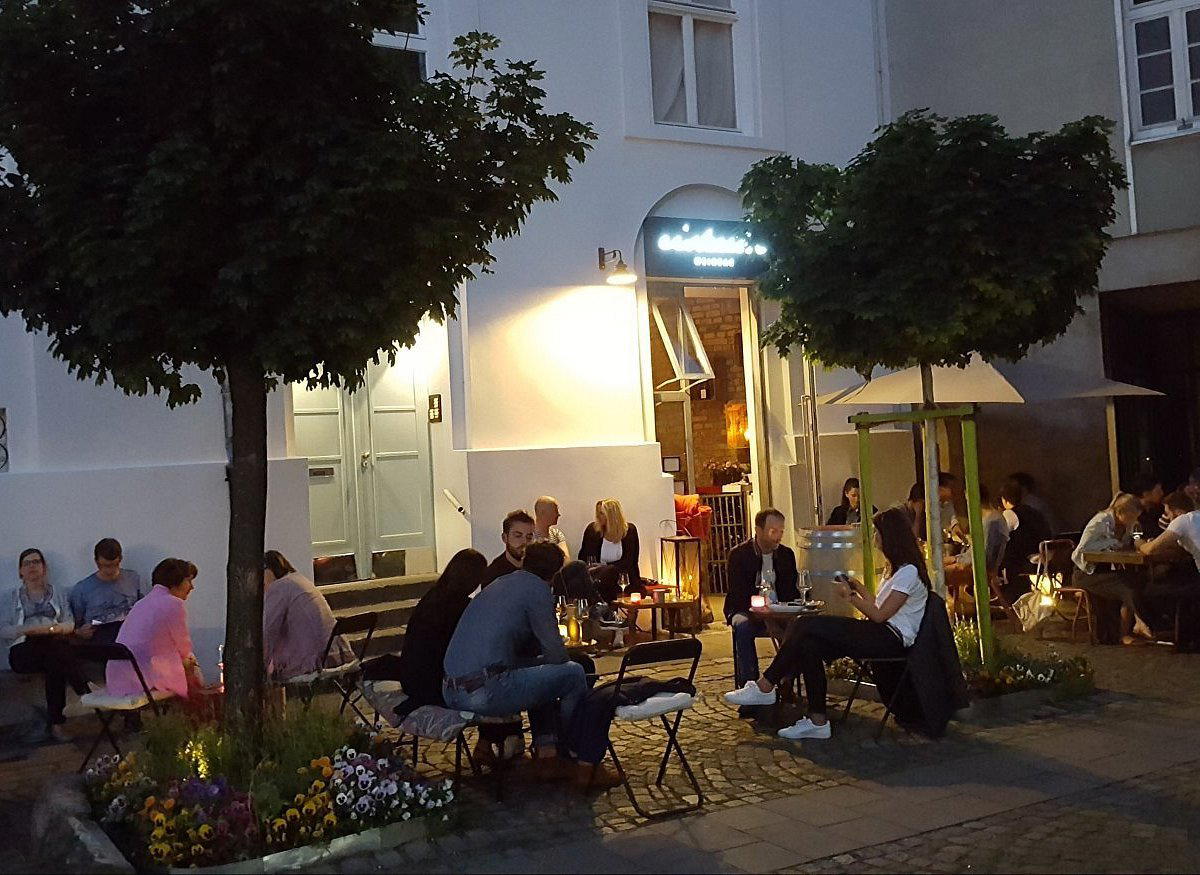
On Burgstraße in Hattingen's well-preserved old town, Comedor Restaurante y Tapas occupies a spot where Spanish-influenced small-plate cooking meets a North Rhine-Westphalian dining scene more accustomed to Westphalian classics. The format suits the neighbourhood: convivial, ingredient-led, and structured around sharing rather than ceremony. For a city of Hattingen's scale, that positioning is relatively uncommon.
Pearl is the En Primeur Club membership app — saves, bookings, and concierge access live there. Same editors, same standards.
- Address
- Burgstraße 2, 45527 Hattingen, Germany
- Phone
- +4923243441797
- Website
- comed-or-hattingen.de
- Directions
- Get directions
 Saves & bookings on Pearl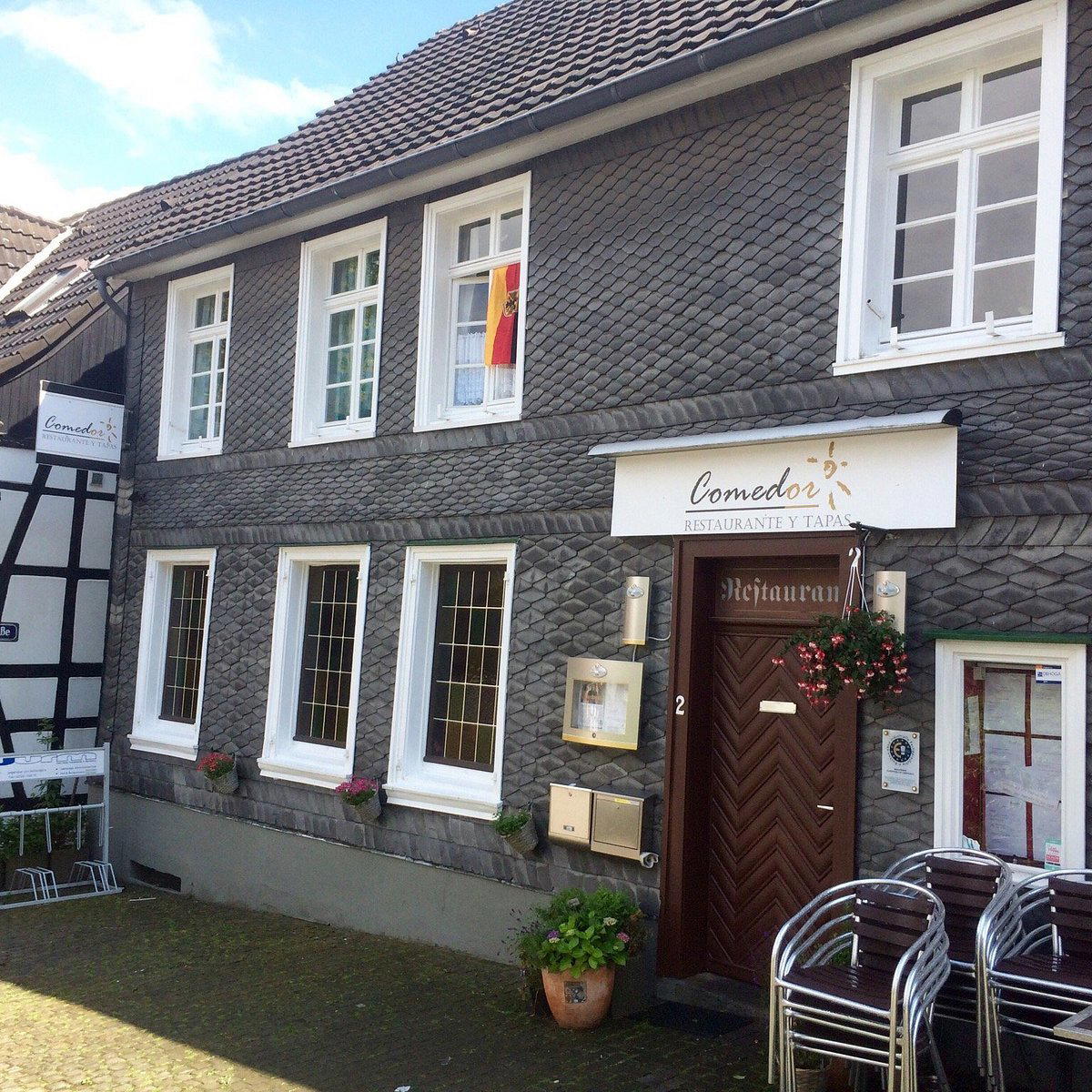
Where Hattingen's Old Town Meets the Spanish Table
Burgstraße runs through the heart of Hattingen's Altstadt, a district of half-timbered facades and cobbled lanes that has survived industrialisation largely intact. Most of the dining on this stretch tilts toward regional German cooking: hearty plates, long menus, and a preference for portion weight over ingredient precision. Comedor Restaurante y Tapas occupies a different register. The name itself signals intent, comedor is Spanish simply for dining room, and the format it represents, small plates structured around sharing, sits some distance from what the surrounding streets typically offer.
That contrast matters for the visitor trying to read Hattingen's dining scene. The city has enough independent operators to reward attention. Comedor's address on Burgstraße 2 places it in the pedestrian core, which means foot traffic from the old town's steady tourism, but also the pressure of competing against casual operators running on volume. Tapas formats, when done with sourcing discipline, require a different kind of kitchen economy: more SKUs, shorter shelf lives, tighter mise en place. The format is a choice that implies a certain operational seriousness.
The Sourcing Logic Behind Small-Plate Cooking
Spanish tapas culture, at its most considered, is an argument about ingredients. The small plate format was never primarily about portion size; it was about showcasing a single product, a cured leg, a particular olive variety, a regional cheese, with minimal intervention. When that tradition travels, as it has done across Europe over the past two decades, particularly coherent versions hold to that sourcing logic: the plate is the frame, the ingredient is the subject.
In a city like Hattingen, the sourcing question becomes interesting. The Ruhr region has a working food supply network built around German agricultural production, and there is genuine local produce worth using: Rhine Valley vegetables, Westphalian pork and charcuterie, regional dairy. A kitchen running a tapas format in this context has a choice between importing Iberian product lines to maintain authenticity by origin, or finding a productive tension between Spanish format and regional sourcing. Either approach can work; what matters is that the kitchen makes the choice deliberately and executes it with consistency. Menus that blur between both without conviction tend to lose clarity.
This sourcing tension is visible across Germany's Spanish-influenced restaurants. In cities with larger dining scenes, Munich, Hamburg, Berlin, the market supports dedicated Iberian importers supplying product with genuine traceability. In smaller cities, the kitchen's relationships with local producers often become the more credible story. For visitors approaching Comedor with that frame, the clearest sourcing identity will usually be especially revealing.
Hattingen in Context: A Dining Scene Worth Mapping
Hattingen sits in the Ennepe-Ruhr-Kreis, roughly equidistant between Essen and Wuppertal, and its dining scene reflects the broader Ruhr pattern: a solid mid-market, a handful of serious independents, and little in the upper tier that the region's larger cities have developed. Diergardts Kühler Grund and Fachwerk represent the city's more established dining options, both leaning into regional and classic cuisine. Comedor operates in a different lane, format-led, informal in structure, and more focused on the rhythm of multiple small courses than on the traditional German progression of starter, main, and dessert.
For a broader sense of Germany's restaurant culture, the reference points are well outside Hattingen. Starred kitchens like Schwarzwaldstube in Baiersbronn, Aqua in Wolfsburg, and Vendôme in Bergisch Gladbach define one end of the spectrum; creative-format operators like CODA Dessert Dining in Berlin define another. Comedor's appeal is categorically different from any of those, it is a neighbourhood operation in a mid-sized city, and that is the right lens through which to assess it. Comparing it to JAN in Munich or Restaurant Haerlin in Hamburg would be a category error. The more useful comparison is with other ingredient-led tapas operators in comparable German cities.
Further afield, the tapas format has been taken to a disciplined expression in cities with deep Spanish dining culture. Internationally, kitchens like Le Bernardin in New York City and Lazy Bear in San Francisco illustrate what it looks like when a kitchen builds an entire identity around format discipline and sourcing rigour, even if their cuisine is categorically different. The principle, that format is a commitment, not just a menu structure, translates across contexts.
Planning a Visit: Practical Notes
Comedor sits at Burgstraße 2 in Hattingen's Altstadt, easily reached on foot from the Hattingen Mitte tram stops served by lines connecting to Essen and Sprockhövel. The old town is compact, and the address places the restaurant within a short walk of the market square. For visitors coming from Düsseldorf or Essen by car, the old town has parking on its periphery, though the central lanes are pedestrianised. Because current hours, booking policy, and pricing are not published through available channels, contacting the venue directly before visiting is the sensible approach, particularly for groups or weekend evenings when smaller independent operators in this format tend to fill quickly. Hattingen's old town also rewards a longer stay: the half-timbered architecture of the Altstadt is among the better-preserved in the Ruhr region, and combining lunch or dinner at Comedor with time in the surrounding streets makes for a coherent afternoon or evening.
For those building a broader Ruhr dining itinerary, the EP Club full Hattingen restaurants guide maps the city's options across styles and price points. Further afield, Bagatelle in Trier, Schanz in Piesport, Waldhotel Sonnora in Dreis, Victor's Fine Dining by Christian Bau in Perl, ES:SENZ in Grassau, L.A. Jordan in Deidesheim, and GästeHaus Klaus Erfort in Saarbrücken represent the wider register of serious German dining for those whose itinerary extends beyond the Ruhr.
How It Stacks Up
Comparable venues nearby, for context on price, style, and recognition.
| Venue | Cuisine | Price | Awards | Notes |
|---|---|---|---|---|
| Comedor Restaurante y TapasThis venue — the venue you are viewing | Spanish Tapas | $$ | Not listed | Not listed |
| Fachwerk | Westphalian with Mediterranean & Eastern Influences | $$$ | Michelin Plate | Untermarkt, Old Town |
| Diergardts Kühler Grund | Seasonal German Gasthaus Cuisine | $$$$ | Michelin Plate | Welper, Hattingen |
| Restaurant Casa Iberica | Spanish & Portuguese Tapas | $$ | Not listed | Dortmund |
| Tio Pepe | Authentic Spanish Tapas | $$ | Not listed | Rüttenscheider Straße |
| Chuzo | Spanish Tapas | $$ | Not listed | Kreuzviertel |
Continue exploring
More in Hattingen
Restaurants in Hattingen
Browse all →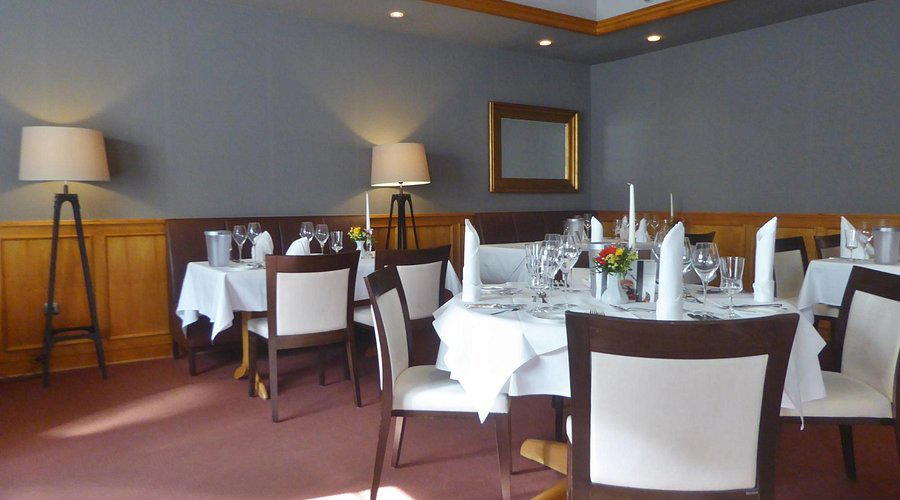
Bars in Hattingen
Browse all →
Hotels in Hattingen
Browse all →

Wineries in Hattingen
Browse all →
At a Glance
- Cozy
- Classic
- Date Night
- Casual Hangout
- Historic Building
- Extensive Wine List
Current opening hours
- Monday
- Closed
- Tuesday
- Closed
- Wednesday
- Closed
- Thursday
- 5:30–10 PM
- Friday
- 5–10:30 PM
- Saturday
- 5–10:30 PM
- Sunday
- 5–9:30 PM
Hours can change for holidays and private events. Last verified .
Lovely atmosphere with old town flair in a Spanish ambience.