Coal Office
Coal Office occupies a converted industrial space in King's Cross, where Middle Eastern-inflected cooking meets a considered front-of-house operation that rewards curious diners. The restaurant sits within the broader King's Cross regeneration corridor, making it a useful marker for understanding how London's dining geography has shifted northward in the past decade. It draws a mixed crowd of design-district workers, hotel guests, and dedicated repeat visitors.
 Discover on Pearl
Pearl is the En Primeur Club membership app — saves, bookings, and concierge access live there. Same editors, same standards.
- Address
- 2 Bagley Walk, London N1C 4PQ, United Kingdom
- Phone
- +442038486086
- Website
- coaloffice.com
King's Cross and the Northward Pull of London Dining
A decade ago, the area around Granary Square and Bagley Walk was derelict infrastructure. Today, the King's Cross regeneration zone has become one of the more interesting fault lines in London dining: close enough to Islington money and Camden footfall to sustain serious restaurants, but carrying none of the postcode prestige of Mayfair or Chelsea. That context matters when assessing Coal Office, which sits at 2 Bagley Walk and draws from a neighbourhood that rewards restaurants willing to build their own identity rather than inherit one from a gilded address.
London's top-tier restaurant tier has long been anchored in the West End, with venues like CORE by Clare Smyth, Restaurant Gordon Ramsay, Sketch, The Lecture Room and Library, The Ledbury, and Dinner by Heston Blumenthal operating from established fine-dining corridors. Coal Office represents a different model: a destination restaurant that has had to generate its own gravity in a zone still finding its culinary identity.
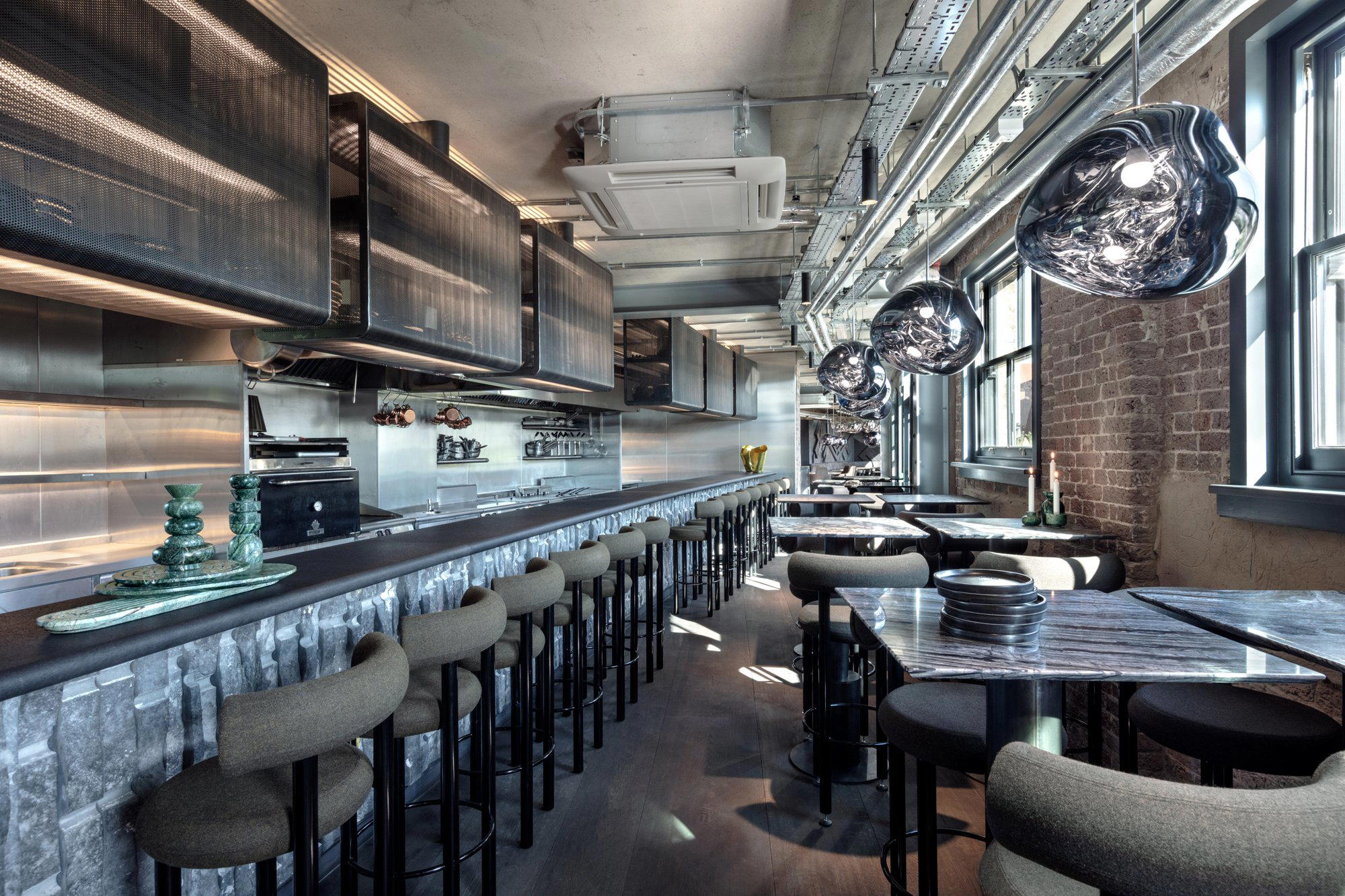
The Physical Environment
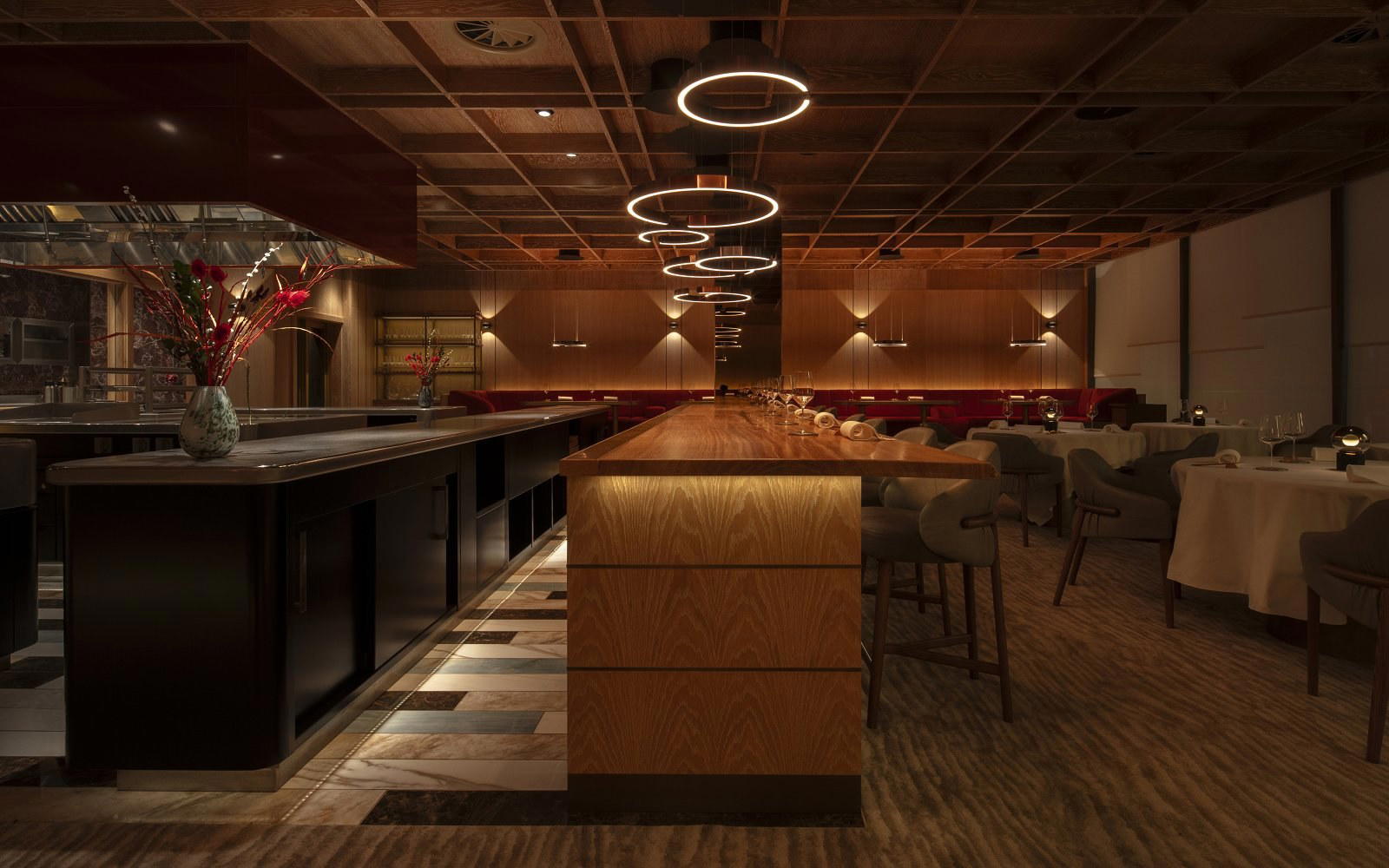
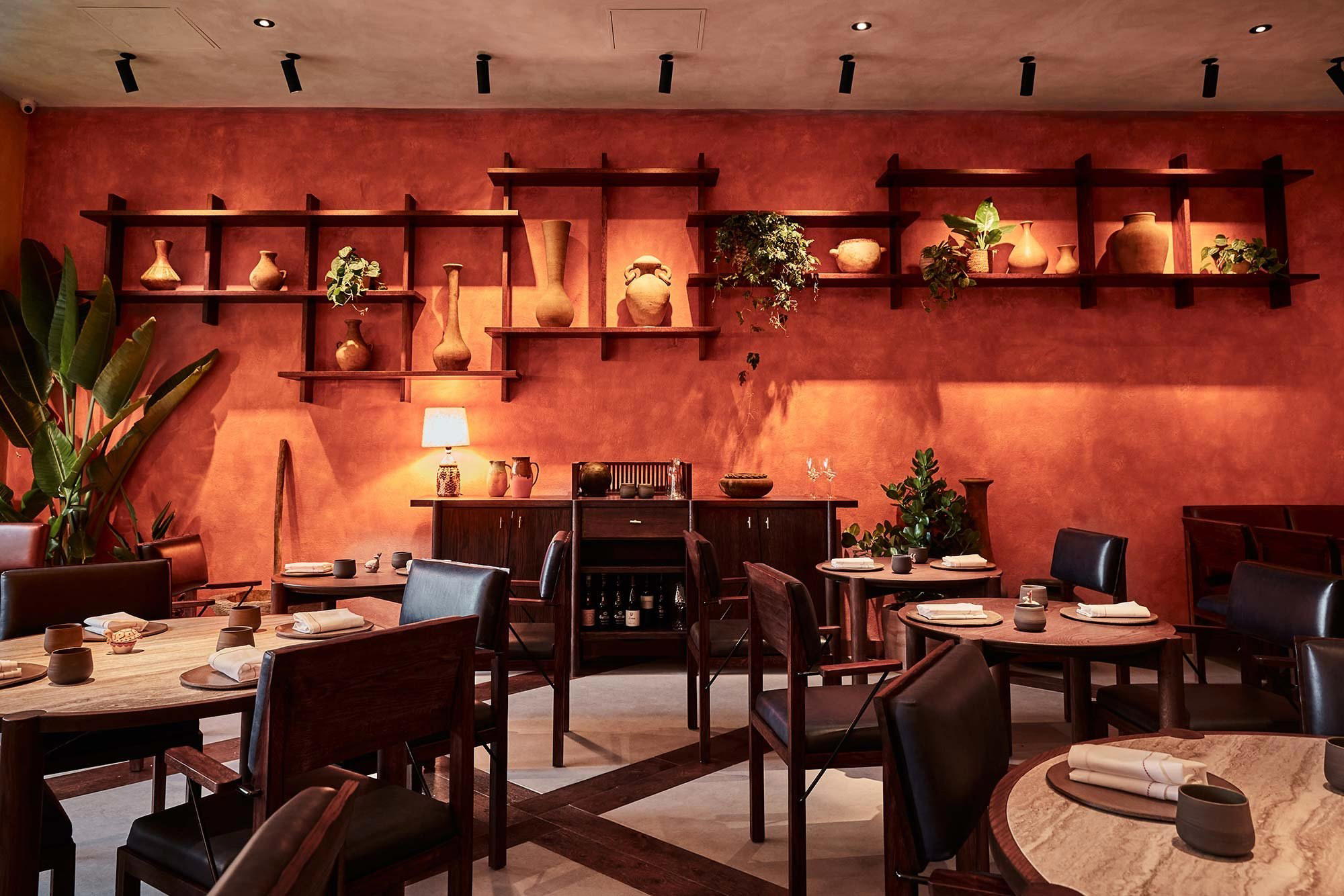
The building announces its industrial past immediately. The original coal-handling infrastructure of the Victorian-era King's Cross depot has been retained and repurposed rather than plastered over, which gives the space a material honesty that newer purpose-built restaurant rooms often lack. Exposed metal, raw concrete, and high ceilings create a volume that reads as generous rather than cavernous, and the design work throughout carries a coherence that suggests a single authorial vision rather than the patchwork of a phased fit-out. Approaching from Bagley Walk, the venue's position within the broader Coal Drops Yard development places it in a retail and hospitality cluster that has deliberately positioned itself as design-forward, which sets expectations before the door opens.
The Team Dynamic at the Table
In the current London dining climate, the relationship between kitchen, floor, and cellar is increasingly the differentiator between restaurants of similar technical ambition. At the high-volume end, front-of-house can default to script-driven service that processes covers efficiently but leaves little room for the kind of conversation that makes a meal feel considered. At the opposite end, hyper-attentive fine dining can tip into performance. The middle ground, where a floor team reads the room and adjusts accordingly, is harder to sustain and more valuable when it works.
Coal Office's reputation rests in part on this calibration. The collaboration between kitchen output and front-of-house interpretation is the mechanism by which Middle Eastern culinary references, which can read as novel or unfamiliar to parts of the London dining public, land with clarity rather than confusion. A sommelier who understands how to pair with spice-forward, acid-driven cooking is doing substantively different work than one operating within a conventional European fine-dining framework, and venues that invest in that alignment produce a noticeably different experience at the table. The broader British restaurant scene, from L'Enclume in Cartmel to Moor Hall in Aughton and Midsummer House in Cambridge, demonstrates that the floor team is increasingly treated as a creative department rather than a logistical one, and Coal Office sits within that trend.
Cuisine and Kitchen Identity
The cooking at Coal Office draws on Middle Eastern and Levantine traditions, a reference point that has moved from niche to mainstream in London over the past fifteen years but has not been uniformly handled with precision. The distinction between restaurants that apply these flavours as aesthetic seasoning and those that engage with the underlying culinary logic, the sourcing, the fermentation traditions, the role of dairy and legume in structuring a plate, is significant. Coal Office has positioned itself in the latter camp, using the industrial setting and design seriousness of the space as a signal that the kitchen is operating with similar rigour.
Internationally, the comparison set for this kind of cooking extends to restaurants like Le Bernardin in New York City and Lazy Bear in San Francisco, not in cuisine terms but in the sense that both represent kitchens where a defined culinary identity is applied with consistent technical discipline rather than rotated seasonally for novelty. Within the UK, the regional picture is completed by places like Waterside Inn in Bray, Gidleigh Park in Chagford, Hand and Flowers in Marlow, hide and fox in Saltwood, Opheem in Birmingham, Ynyshir Hall in Machynlleth, and Restaurant Andrew Fairlie in Auchterarder, each of which has built a stable identity through consistency rather than reinvention.
Where Coal Office Sits in the London Picture
London's restaurant tier has fragmented in useful ways. The Michelin-starred West End corridor remains the reference point for international visitors with limited time, but a secondary tier of destination restaurants, operating outside that postcode cluster and often without formal award recognition, has grown in credibility. Coal Office belongs to that secondary tier, where the signal is reputation and repeat visitation rather than stars and covers.
The King's Cross location works for this model because the neighbourhood draws a self-selecting crowd: people who chose to come to this part of the city have already made an active decision rather than defaulting to a familiar postcode. That filters for a certain kind of diner, one more likely to engage with the food on its own terms, which in turn creates conditions where a kitchen and floor team can operate at a higher level of ambition without constant recalibration for expectation management.
Planning Your Visit
Address: 2 Bagley Walk, London N1C 4PQ, within Coal Drops Yard, King's Cross. Getting there: King's Cross St. Pancras station serves the venue directly, with multiple Underground lines, Overground, and Eurostar connections within walking distance, making this one of the more accessible serious dining destinations in central London. Reservations: Booking in advance is advisable, particularly for weekend evenings; the venue's position in a destination dining cluster means footfall from the surrounding development adds walk-in competition. Dress: The industrial-design setting carries a relaxed formality; smart casual is the functional benchmark. Budget: Allow for about $75 per person.
A Tight Comparison
Comparable venues nearby, for context on price, style, and recognition.
| Venue | Cuisine | Price | Notes |
|---|---|---|---|
| Coal OfficeThis venue — the venue you are viewing | King's Cross, Modern Middle Eastern | $$$$ | |
| Kapara | Soho, Modern Middle Eastern | $$$ | |
| Naroon Marylebone | Marylebone, Contemporary Persian | $$$ | |
| Em Sherif | $$$$ | Knightsbridge, Refined Lebanese Fine Dining | |
| Impala | Soho, Modern North African Grilling | $$$$ | |
| Inca London | Fitzrovia, Nikkei Peruvian Fusion | $$$$ |
Continue exploring
More in London
Restaurants in London
Browse all →
Bars in London
Browse all →
Hotels in London
Browse all →
Wineries in London
Browse all →
At a Glance
- Trendy
- Industrial
- Modern
- Sophisticated
- Date Night
- Group Dining
- Special Occasion
- Open Kitchen
- Design Destination
- Terrace
- Private Dining
- Craft Cocktails
Juxtaposition of rustic textured backdrops with modern contemporary interior design features, described as buzzy, stylish, and visually stimulating without distraction.