Chotto Matte
Chotto Matte brings Nikkei cuisine, the Japanese-Peruvian culinary tradition born in Lima's immigrant communities, to Soho's Frith Street. The format sits within a broader London shift toward Latin-Asian fusion dining that has grown steadily since the mid-2010s. It occupies a lively mid-tier position in London's international dining scene, where atmosphere and kitchen ambition travel together.
Pearl is the En Primeur Club membership app — saves, bookings, and concierge access live there. Same editors, same standards.
- Address
- 11, 13 Frith St, London W1D 4RB, United Kingdom
- Phone
- +442070427171
- Website
- chotto-matte.com
- Directions
- Get directions
 Saves & bookings on Pearl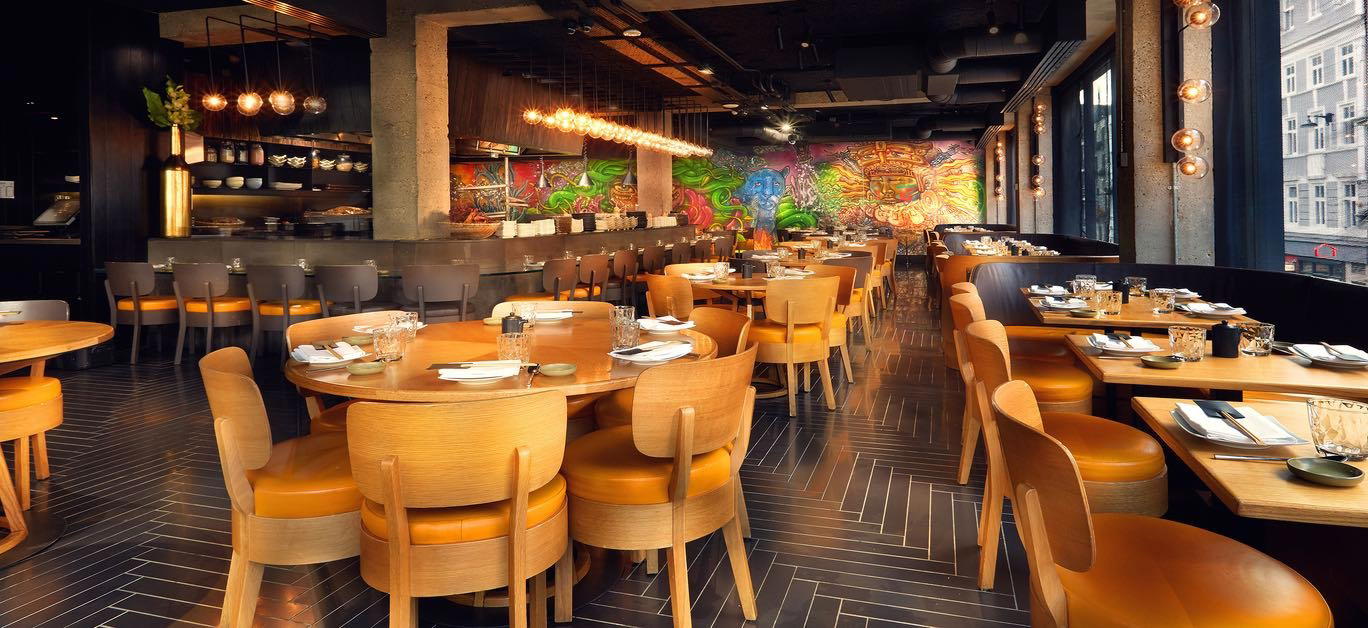
Frith Street and the Nikkei Moment in London
Soho has always absorbed culinary arrivals before the rest of London catches up. Greek Street, Dean Street, Frith Street, and their connecting alleys have housed Chinese roast-meat counters, Italian trattorias, French brasseries, and members-facing cocktail bars in overlapping succession since the postwar decades. When Nikkei cuisine, the Japanese-Peruvian hybrid that developed in Lima's Japanese immigrant communities over more than a century, began reaching Western dining capitals, Soho was an obvious landing point. Chotto Matte, operating from 11-13 Frith Street, arrived as part of that wave, and its trajectory over the years since opening tracks closely with how London absorbed, tested, and eventually accepted fusion formats that once attracted easy critical suspicion.
What Nikkei Actually Means, and Why It Matters Here
Nikkei is not a marketing category. It refers to the cooking traditions that developed among Japanese immigrants and their descendants in Peru, a community that arrived in significant numbers from the 1890s onward. The cuisine that emerged blends Japanese technique, particularly precision knife work and the handling of raw fish, with Peruvian ingredients: ají amarillo, leche de tigre, choclo, lucuma. It is a cuisine shaped by scarcity, adaptation, and eventually pride. By the time Gastón Acurio brought Peruvian cooking to international attention in the 2000s, Nikkei was already well-established in Lima's better restaurants as a distinct sub-tradition rather than a novelty. London's adoption of the format from the early 2010s onward followed the city's broader appetite for Latin American food that had previously struggled to gain traction outside South American communities in outer boroughs.
Within London's current eating landscape, Nikkei sits in an interesting position. The city's elite restaurant tier, populated by addresses like CORE by Clare Smyth, Restaurant Gordon Ramsay, Sketch, The Lecture Room and Library, The Ledbury, and Dinner by Heston Blumenthal, operates through tasting menus, formal service architecture, and Michelin credentialing. Chotto Matte competes in a different register entirely: a louder, more social format where the kitchen ambition is real but the room's energy is the first thing you sell. That is not a lesser proposition. It is a different one, and in Soho specifically, it is often the more durable one.
The Evolution: From Novelty to Fixture
The trajectory of Nikkei dining in London mirrors patterns seen in other fusion formats. Initial critical reception tends toward skepticism, particularly from reviewers whose reference point is either pure Japanese cooking, which has its own strict hierarchy in the city, or Peruvian cooking, which London has understood less well. The early years for any venue operating in this space involve a kind of category-building alongside menu refinement. The question of whether Nikkei belongs in the same conversation as, say, the disciplined kaiseki counters of Mayfair, or whether it should be assessed against the more relaxed Latin American restaurants of Fitzrovia and Marylebone, shapes how both critics and repeat visitors orient themselves.
Chotto Matte's longevity on Frith Street, in a neighbourhood where restaurant turnover can be aggressive, suggests that the format found an audience and held it. Soho rewards consistency and atmosphere in roughly equal measure. The venues that survive a decade in the area tend to be those that built social rituals around their rooms: the after-work group booking, the birthday dinner, the lunch that extends. A Nikkei format with a strong bar program and a kitchen capable of producing ceviche, tiradito, and sushi-adjacent plates in the same service suits that social eating mode effectively.
The expansion of the Chotto Matte name beyond London to cities including Miami, Toronto, and Riyadh provides a useful lens on the original Frith Street address. Multi-city expansion in the informal-luxury dining space tends to work when the format is genuinely replicable, meaning the kitchen logic and the room concept hold across different populations and regulatory environments. It also tends to flatten the original location's identity slightly, shifting it from discovery to known quantity. For a Soho address, that shift is not necessarily negative. Known quantities fill tables in the middle of the week.
Where It Sits Now
London's mid-tier international restaurant scene has become considerably more competitive since Chotto Matte first opened. The growth of omakase counters in Mayfair and Fitzrovia has raised the standard of Japanese-leaning cooking available at multiple price points. Simultaneously, Peruvian restaurants have gained critical respect, with the city's appreciation for ceviche and leche de tigre no longer dependent on explanation. Into that more sophisticated context, a Nikkei venue has to work harder than it did in the format's novelty phase.
What the restaurant offers, in that context, is a room and a format with enough history that it has outlasted the novelty premium. The comparison set for the Soho address is less the Michelin-focused dining of Mayfair and more the style-conscious group-dining venues that have proliferated across Soho and Fitzrovia. Against that peer group, the kitchen's Japanese-Peruvian specificity remains a point of differentiation. You can find comparable atmosphere in several nearby rooms. The Nikkei framework is less common.
For those exploring the wider UK dining scene, the editorial benchmark shifts considerably toward the tasting-menu tradition: Waterside Inn in Bray, L'Enclume in Cartmel, Moor Hall in Aughton, Gidleigh Park in Chagford, Hand and Flowers in Marlow, Hide and Fox in Saltwood, Midsummer House in Cambridge, Opheem in Birmingham, Ynyshir Hall in Machynlleth, and Restaurant Andrew Fairlie in Auchterarder all represent formal dining in a different register. Internationally, the comparison is closer to social-format venues like Le Bernardin in New York City in terms of fish-handling ambition, or the communal energy of Lazy Bear in San Francisco in terms of room format. Our full London restaurants guide maps the broader field.
Planning Your Visit
Address: 11-13 Frith Street, Soho, London W1D 4RB. Getting there: Tottenham Court Road (Elizabeth, Central, Northern lines) and Leicester Square (Northern, Piccadilly lines) are both within a short walk. Reservations: Book via the restaurant's website or third-party platforms; weekend evenings, particularly Fridays and Saturdays, fill earliest, and group bookings of six or more typically require advance notice of at least two to three weeks. Dress: Smart casual is the operative standard; the room skews style-conscious. Timing: The bar program functions as a destination in its own right for post-dinner drinking, and many visitors extend their evenings into the cocktail menu after eating. Weekday lunch bookings are substantially easier to secure than weekend dinner slots.
How Chotto Matte London compares with similar nearby venues.
| Venue | Cuisine |
|---|---|
| Noble Rot Soho | Modern European |
Continue exploring
More in London
Restaurants in London
Browse all →
Bars in London
Browse all →
Hotels in London
Browse all →

At a Glance
- Trendy
- Lively
- Modern
- Energetic
- Sophisticated
- Date Night
- Group Dining
- Special Occasion
- Late Night
- Open Kitchen
- Craft Cocktails
- Sake Program
Current opening hours
- Monday
- 12 PM–1 AM
- Tuesday
- 12 PM–1 AM
- Wednesday
- 12 PM–1 AM
- Thursday
- 12 PM–1 AM
- Friday
- 12 PM–1 AM
- Saturday
- 12 PM–1 AM
- Sunday
- 12 PM–1 AM
Hours can change for holidays and private events. Last verified .
Bold bright colors, pop art decor, bustling open kitchen, soft lighting, modern design, and magnetic energy.