

Chinois in Shibuya holds a 3-Star Accreditation from the World of Fine Wine Awards, placing it among a select tier of Tokyo restaurants where Chinese cuisine is taken at the same level of seriousness as the city's celebrated French and Japanese fine-dining traditions. Located on the eighth floor of a building in Udagawacho, the restaurant represents a broader shift in how Tokyo's dining scene treats non-Japanese culinary traditions at the summit end of the market.
Pearl is the En Primeur Club membership app — saves, bookings, and concierge access live there. Same editors, same standards.
- Address
- Japan, 〒150-0042 Tokyo, Shibuya, Udagawacho, 28−3 8F
- Phone
- +81 3-5457-2412
- Website
- chinois.jp
- Directions
- Get directions
 Saves & bookings on Pearl
Chinese Fine Dining in a City That Takes Every Cuisine Seriously
Chinois (Shibuya) is a French Wine Bar in Tokyo's Shibuya district, with a price point of about $100 per person. Below, Udagawacho hums with the concentrated commercial energy that defines this part of the city: record shops, concept stores, the slow churn of pedestrians moving between the station and Koen-dori. Up at the level where Chinois operates, that noise recedes, and what takes over is the quieter, more deliberate world of Tokyo's premium restaurant tier.
What Chinois represents in this context matters more than its address. Tokyo has spent two decades building a fine-dining ecosystem that is, by any measurable standard, as technically demanding as any city on earth. Its kaiseki tradition, represented at the leading end by restaurants like RyuGin, sets the pace for multi-course Japanese dining globally. Its French restaurants, including L'Effervescence and Sézanne, compete at the same level as their counterparts in Paris and New York. Into that environment, Chinois positions Chinese cuisine as a peer discipline, not a secondary one.
The Case for Chinese Fine Dining in Tokyo
Chinese cuisine has a long and substantive history in Japan. The port city of Nagasaki received Chinese trading communities centuries before Japan opened to the West, and the culinary exchange that followed shaped everything from ramen to the Japanese understanding of braising technique. But high on Tokyo's restaurant hierarchy, Chinese cooking has historically occupied a smaller share of the prestige tier than its cultural weight would suggest. That is changing.
The shift follows a pattern visible in other global cities: as dining culture matures and audiences become more technically literate, the criteria for what constitutes serious cooking expand beyond the dominant local tradition. In London and New York, this produced a wave of Chinese fine-dining restaurants that stopped apologizing for their cuisine category and started competing directly with European tasting-menu formats on terms of ingredient quality, course architecture, and wine program depth. Tokyo's version of that shift is more selective and more exacting, because the baseline across all categories is higher. A Chinese restaurant that holds a 3-Star Accreditation from the World of Fine Wine Awards is not simply a good Chinese restaurant in a city of many. It is a restaurant that has been assessed against the standards that govern fine wine pairing and table-level drink service at the summit tier of global hospitality.
That accreditation, awarded by the World of Fine Wine, is the primary external credential in Chinois's public record. The World of Fine Wine's accreditation program evaluates restaurants on the depth and curation of their wine offering, the coherence between kitchen and cellar, and the overall level at which drink service is conducted. A 3-Star result places Chinois in a bracket shared by a small number of restaurants globally, and within Tokyo, it signals a wine program operating at the level one expects from the city's most serious French and Japanese houses. For context, L'Effervescence and Sézanne occupy the same premium French fine-dining tier in Tokyo, and both take their wine programs with similar seriousness. That Chinois competes in the same accreditation tier as those restaurants, rather than in a separate category for Asian cuisine, says something precise about where it has positioned itself.
Shibuya as a Fine-Dining Address
Shibuya is not the first neighbourhood that appears in conversations about Tokyo's leading restaurants. Ginza commands the longest list of prestige addresses. Minami-Aoyama and Nishi-Azabu have developed strong followings for chef-driven formats. Marunouchi draws business-dining trade with deep pockets and deep wine cellars. Shibuya, by contrast, has traditionally been associated with youth culture, retail, and entertainment, and its fine-dining presence has grown more quietly.
That quietness has its own logic. Rents in Shibuya's secondary streets, including the Udagawacho area, allow for the kind of intimate, high-specification spaces that the premium dining tier requires without the overhead pressure that comes with a ground-floor Ginza location. A restaurant on the eighth floor of a building in this part of Shibuya is making a deliberate choice about its audience: it is not relying on street-level footfall or tourist proximity. It expects guests to come specifically, which is the condition under which serious cooking tends to happen.
Placing Chinois Within Tokyo's comparable set
Tokyo's upper-tier restaurant market sorts into a number of distinct competitive sets. The omakase sushi tier, represented by counters like Harutaka, operates at a specific price and format register. Kaiseki at the level of RyuGin represents the apex of the Japanese multi-course tradition. French fine dining at the level of L'Effervescence or Sézanne competes directly with Europe. Innovative cross-category work, as at Crony, operates in a separate register again.
Chinois occupies a position that cuts across several of those categories. The cuisine is Chinese in its cultural roots, but the accreditation and address suggest a format and price point that place it closer to the French fine-dining tier than to the casual end of the Chinese restaurant spectrum. This cross-category positioning is itself a statement about how the restaurant wants to be read: not as the leading Chinese restaurant in Shibuya, but as a fine-dining address that happens to draw from Chinese culinary tradition in the same way that Tokyo's French restaurants draw from European tradition.
Japan's broader fine-dining geography rewards this kind of clarity of position. Restaurants at this tier exist in Osaka, Kyoto, Nara, and beyond: HAJIME in Osaka and Gion Sasaki in Kyoto both demonstrate how regional Japanese cities sustain fine dining at an international level. Further afield, akordu in Nara, Goh in Fukuoka, and more specialist operations like Bleston Court Yukawatan in Nagano and giueme in Akita each show how Japan's commitment to ingredient and technique extends well beyond the capital. The international comparison set, at the level where Chinese cuisine meets European fine-dining standards, includes houses like Le Bernardin in New York City and Emeril's in New Orleans, restaurants where a clearly rooted culinary tradition is executed with the technical discipline and cellar depth that fine-dining audiences expect globally.
Planning a Visit
Chinois is located at 28-3 Udagawacho, Shibuya, Tokyo, on the eighth floor. The building is a short walk from Shibuya Station, which is served by multiple JR, Tokyo Metro, and private railway lines, making access from most parts of the city direct. Reservations are recommended.
Cost Snapshot
Comparable venues nearby, for context on price, style, and recognition.
| Venue | Cuisine | Price | Notes |
|---|---|---|---|
| Chinois (Shibuya)This venue — the venue you are viewing | Shibuya, French Wine Bar | $$$$ | Not listed |
| l' Equator | Minato, Innovative French Fusion | $$$$ | Not listed |
| Daikanyama Ogawaken | Not listed | $$$$ | Shibuya, Classic Yoshoku & French-Influenced Western Cuisine |
| フルヤ オーガストロノム | Minato, Modern French Fine Dining | $$$$ | Not listed |
| レラン | Shibuya, Modern French Fine Dining | $$$$ | Not listed |
| élan vital | Not listed | $$$$ | Shibuya, Modern French with Japanese Influences |
Recognition history
Dated appearances from independent guides and award organizations, with the underlying list record or original source where available.
Wine Spectator Best of Award of Excellence
Wine Spectator
World's Best Wine Lists Awards WBWL 3-Star
World's Best Wine Lists Awards














At a Glance
- Elegant
- Sophisticated
- Cozy
- Intimate
- Date Night
- Special Occasion
- Private Dining
- Extensive Wine List
- Sommelier Led
Current opening hours
- Monday
- 6 PM–2 AM
- Tuesday
- 6 PM–2 AM
- Wednesday
- 6 PM–2 AM
- Thursday
- 6 PM–2 AM
- Friday
- 6 PM–2 AM
- Saturday
- 12–4 PM, 6 PM–2 AM
- Sunday
- 12–4 PM, 6 PM–12 AM
Hours can change for holidays and private events. Last verified .
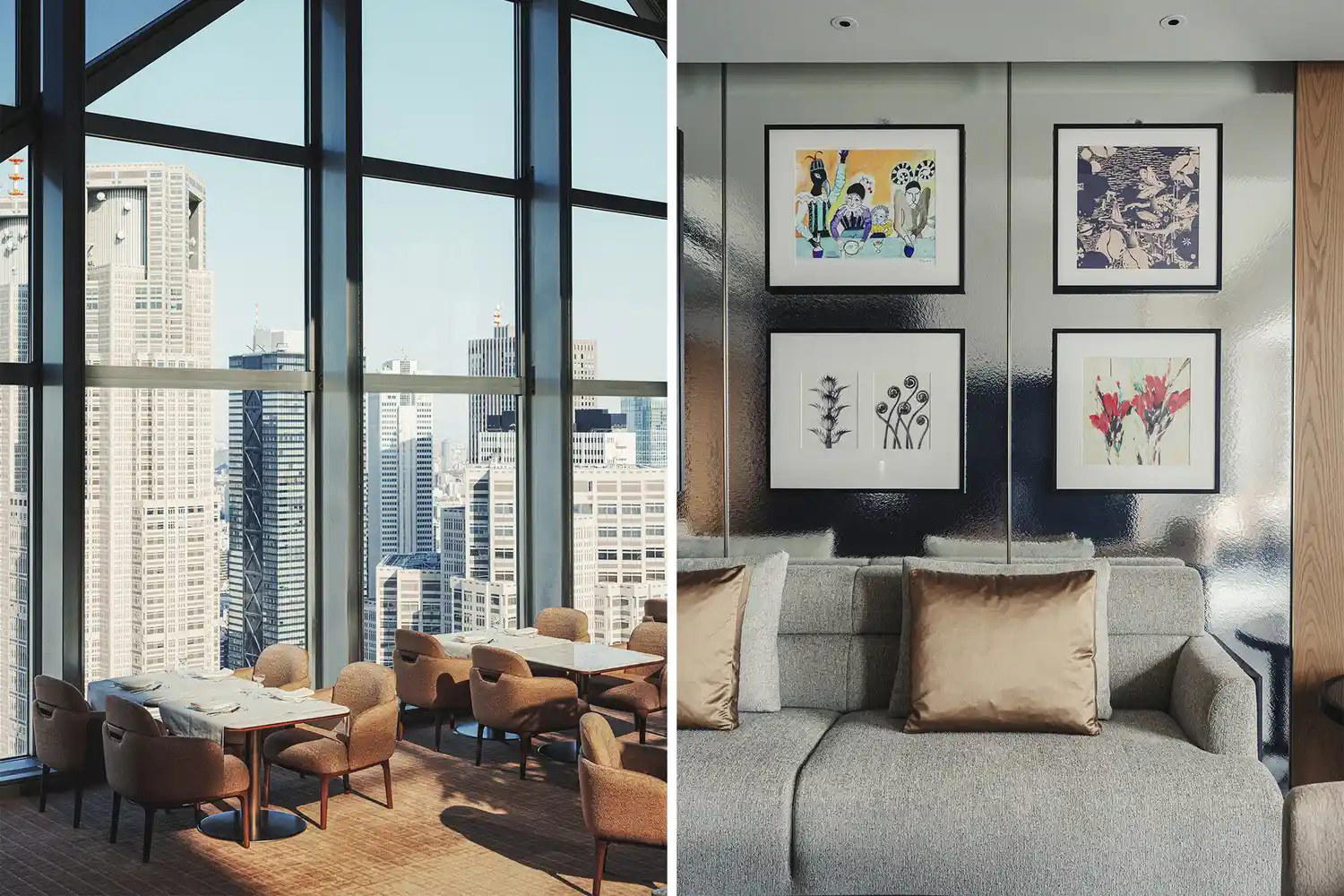
Spacious, comfortable, and relaxing with stylish, relaxing space that provides a sophisticated hideout atmosphere.