



A Cantonese institution in Central's Landmark Atrium, China Tang earned an Opinionated About Dining Top Restaurants in Asia ranking in 2024 under chef Menex Cheung. The menu reads as a considered survey of Hong Kong Chinese cooking across dim sum, roasted meats, and longer-format banquet dishes, positioned firmly in the formal tier of the city's dining hierarchy.
Pearl is the En Primeur Club membership app — saves, bookings, and concierge access live there. Same editors, same standards.
- Address
- Shops 411-413 4/F Landmark Atrium, 15 Queen's Road Central, Central, Hong Kong
- Phone
- +852 2522 2148
- Website
- chinatang.hk
- Directions
- Get directions
 Saves & bookings on Pearl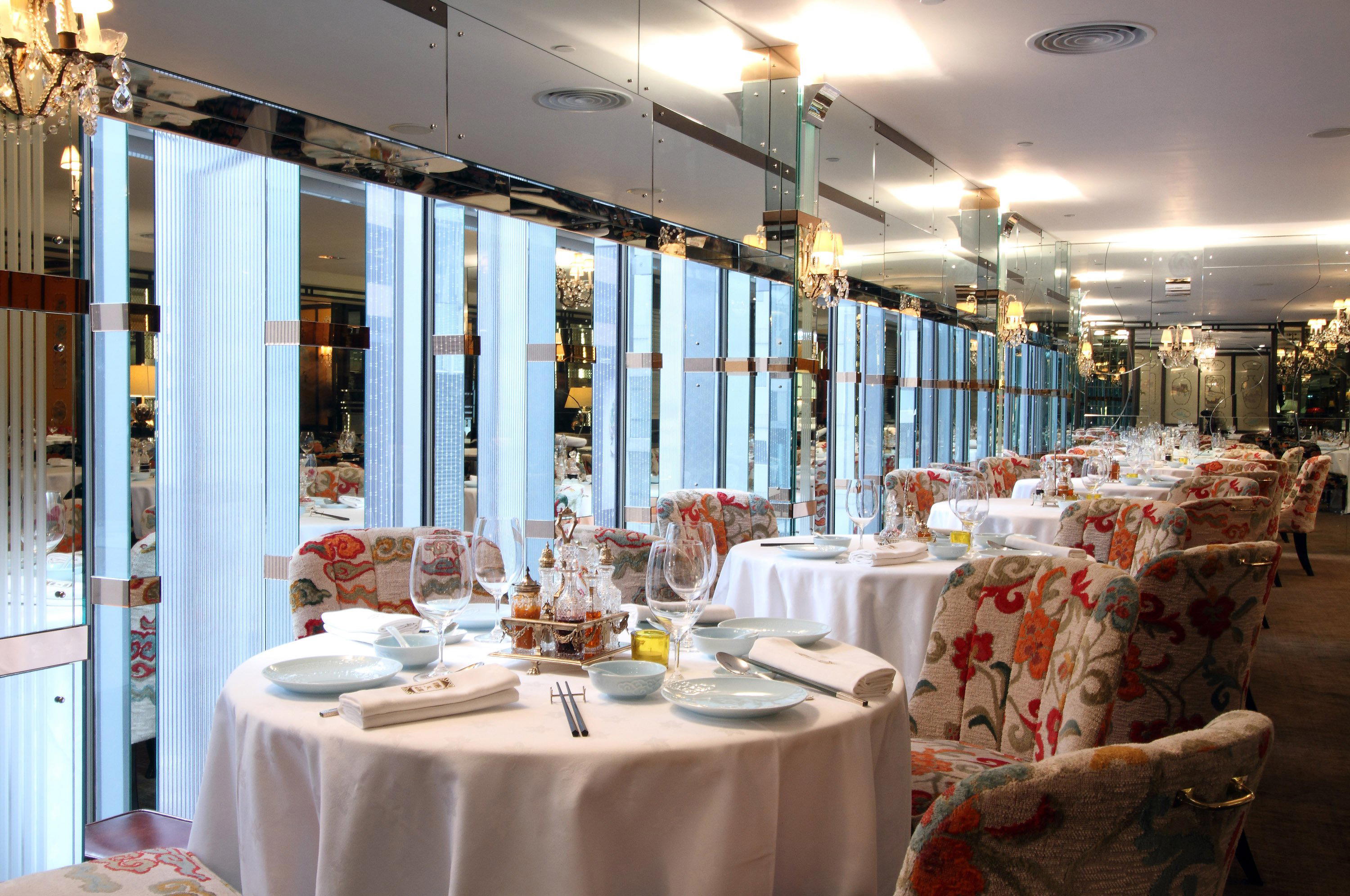
The Weight of the Room
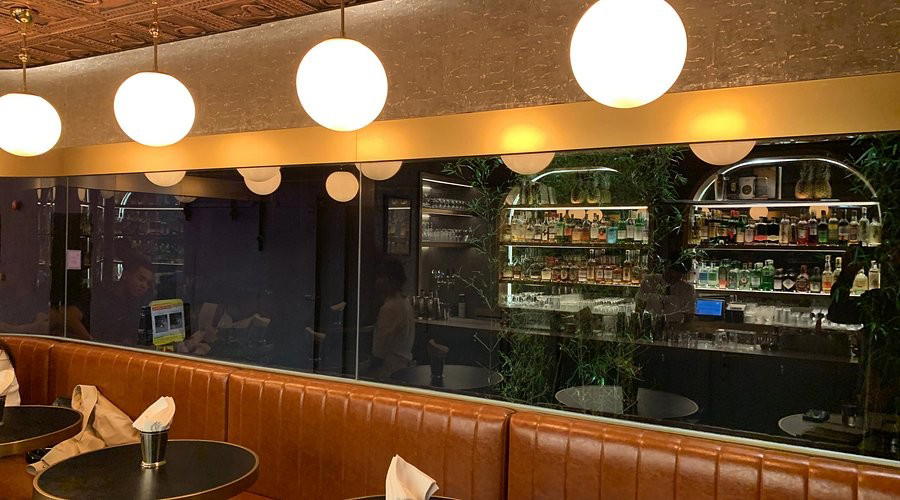
There is a particular register of Chinese dining in Hong Kong that has no real equivalent elsewhere: the grand Cantonese room, built for ceremony, where the table layout, the trolley service, and the quality of the porcelain all signal to the diner that something deliberate is happening. China Tang, on the fourth floor of Landmark Atrium at 15 Queen's Road Central, occupies that register. The setting carries the kind of considered formality that Central's financial district has historically demanded of its restaurants, and the room delivers a visual vocabulary, lacquer, darkwood, considered lighting, that places it squarely in the tradition of Hong Kong's great Chinese dining halls rather than in the contemporary minimalist wave that has reshaped much of the city's high-end market.
Walking into China Tang, the room does the work first. Before any dish arrives, the room makes an argument for a certain version of Hong Kong identity: cosmopolitan but rooted, international in its ambitions but Cantonese in its fundamentals. That tension is the defining characteristic of premium Chinese dining in this city, and it is a useful frame for reading the menu.
How the Menu Is Built
In Hong Kong's formal Chinese restaurant tier, the menu structure itself is a statement. At China Tang, the architecture follows the classical Cantonese model: dim sum and lighter items at lunch, longer composed dishes for dinner, with a banquet logic underpinning both services. This is not a fusion menu, nor is it an abbreviated selection designed for quick covers. The breadth signals a kitchen comfortable across the full range of Cantonese technique, roasted meats, wok-fried dishes, steamed preparations, and braised items that require time and product knowledge.
That breadth matters in context. Hong Kong's premium Chinese dining scene has diverged over the past decade. One cohort has moved toward tasting-menu formats with limited seatings, chasing Michelin recognition through innovation and portion control. A second, older cohort maintains the banquet-style structure, betting that the format's social function, the shared table, the rotating dishes, the ritual of ordering, is irreplaceable. The restaurant belongs to the second cohort, and the menu reflects that commitment. The format works well for groups, and the room is configured accordingly.
Under chef Menex Cheung, the kitchen's orientation is toward classicism rather than reinterpretation. In a city where Cantonese cooking is documented across generations of technique, that positioning carries a specific kind of authority. The menu at this level is a demonstration of accumulated craft rather than a manifesto for something new.
Where It Sits in Central's Dining Hierarchy
The Landmark Atrium address is significant. Central has long concentrated Hong Kong's most ambitious restaurants, and Landmark specifically functions as a statement location, it is where international luxury brands and premium dining rooms coexist with the same logic of high-net-worth foot traffic. The building houses serious competition across cuisines: the address implies a certain price and quality threshold before a diner even walks through the door.
Within that competitive environment, the restaurant's Chinese identity is its differentiator. Most of Landmark's dining options orient toward European or Japanese cooking. A formal Cantonese room at this address captures a specific demand: the business lunch requiring Chinese food at the formal end, the family celebration that needs both the ceremony of a grand room and a kitchen capable of executing classic Hong Kong Chinese dishes at a high level.
The Opinionated About Dining recognition contextualises this positioning precisely. OAD's ranking of #136 in Asia in 2024, following a Highly Recommended citation in 2023, reflects sustained regard from an informed, critical audience. That trajectory, moving from Highly Recommended to a ranked position, suggests a kitchen maintaining consistency across multiple assessment cycles. For context, OAD's Asia list competes against some of the continent's most scrutinised dining rooms; placement at any rank requires repeated visits and positive assessments from multiple voters.
The restaurant sits in a well-defined competitive set where execution and product quality are the primary differentiators.
The Larger Context: Cantonese Dining and Its Diaspora
Hong Kong's Chinese restaurants occupy a peculiar position in the global dining conversation. The city's Cantonese cooking tradition is among the more technically demanding in Chinese cuisine, and the diaspora of Hong Kong-trained chefs has shaped Chinese dining from London to Sydney. Internationally, restaurants like Mister Jiu's in San Francisco and Restaurant Tim Raue in Berlin demonstrate how Chinese cooking techniques travel and transform in foreign contexts. In Asia, the tradition fragments differently: VELROSIER in Kyoto, Chi-Fu in Osaka, and Chugoku Hanten Fureika in Tokyo each represent distinct local inflections of Chinese cooking, while Chugoku Hanten Kohakukyu in Tokyo, Chugokusai Naramachi Kuko in Nara, and Hakkasan Dubai show how the format adapts across geographies. Against all of these, Hong Kong's source-tradition rooms, places operating within the originating culture rather than transplanting it, carry a different authority.
The restaurant sits in that source-tradition category. It is not reinterpreting Cantonese cooking for a foreign audience, nor is it positioning itself as an experimental reimagining of the form. It is a formal Hong Kong Chinese room that takes its mandate from the city's own dining culture, and it competes on those terms.
Planning Your Visit
The restaurant operates daily lunch and dinner service.
The Landmark Atrium address places the restaurant on the fourth floor of one of Central's primary luxury retail complexes. Reservations at this tier of Hong Kong Chinese dining are advisable, particularly for weekday lunches and weekend dinners when the room operates at demand from both business and family traffic.
For other dining options in Central's premium tier, The Sports Club represents a distinct alternative in the same neighbourhood.
Cuisine Context
Comparable venues nearby, for context on price, style, and recognition.
| Venue | Cuisine | Price | Notes |
|---|---|---|---|
| China TangThis venue — the venue you are viewing | Classic Cantonese Fine Dining | $$$$ | Not listed |
| Hoi King Heen | Modern Cantonese & Hakka Fine Dining | $$$$ | Yau Tsim Mong South |
| Tasting Court Chinese Cuisine | Traditional Cantonese Private Kitchen | $$$$ | Wan Chai |
| Shanghai Tang 上海灘 | Modern Shanghainese | $$$$ | Central |
| Dynasty | Award-Winning Cantonese | $$$$ | Wan Chai |
| Imperial Court | Modern Lingnan Cantonese Fine Dining | $$$$ | NAPE |
Recognition history
Dated appearances from independent guides and award organizations, with the underlying list record or original source where available.
Michelin 1 Star
Michelin
Opinionated About Dining Top Restaurants in Asia Recommended
Opinionated About Dining
SCMP 100 Top Tables Restaurants
SCMP 100 Top Tables
Chinese Restaurant Awards — Top 30 Honouree Asia: Top 30 Honouree Asia
Chinese Restaurant Awards
Opinionated About Dining Top Restaurants in Asia Ranked #136
Opinionated About Dining
Opinionated About Dining Top Restaurants in Asia Highly Recommended
Opinionated About Dining
Continue exploring
More in Hong Kong
Restaurants in Hong Kong
Browse all →
Bars in Hong Kong
Browse all →
At a Glance
- Elegant
- Classic
- Sophisticated
- Ornate
- Well Known
- Business Dinner
- Special Occasion
- Date Night
- Group Dining
- Hotel Restaurant
- Historic Building
- Design Destination
- Extensive Wine List
Current opening hours
- Monday
- 12–2:30 PM, 6–10:30 PM
- Tuesday
- 12–2:30 PM, 6–10:30 PM
- Wednesday
- 12–2:30 PM, 6–10:30 PM
- Thursday
- 12–2:30 PM, 6–10:30 PM
- Friday
- 12–2:30 PM, 6–10:30 PM
- Saturday
- 12–2:30 PM, 6–10:30 PM
- Sunday
- 12–2:30 PM, 6–10:30 PM
Hours can change for holidays and private events. Last verified .
Chic and elegant with classic Chinese decor, impressive 'wow factor' interiors featuring mirrors, blue tones, and nostalgic colonial touches; warmly lit for sophisticated dining.