China Boy
China Boy occupies a corner of Washington D.C.'s Chinatown at 815 6th St NW, operating in a neighborhood that has seen its Chinese-American dining scene shrink considerably over recent decades. For visitors oriented around D.C.'s serious restaurant circuit, venues like Jônt, minibar, and Albi, China Boy represents the older, less curated end of the corridor, worth understanding for what it signals about the area's evolving character.
Pearl is the En Primeur Club membership app — saves, bookings, and concierge access live there. Same editors, same standards.
- Address
- 815 6th St NW, Washington, DC 20001
- Phone
- +12023711661
- Website
- chinaboynoodledc.com
- Directions
- Get directions
 Saves & bookings on Pearl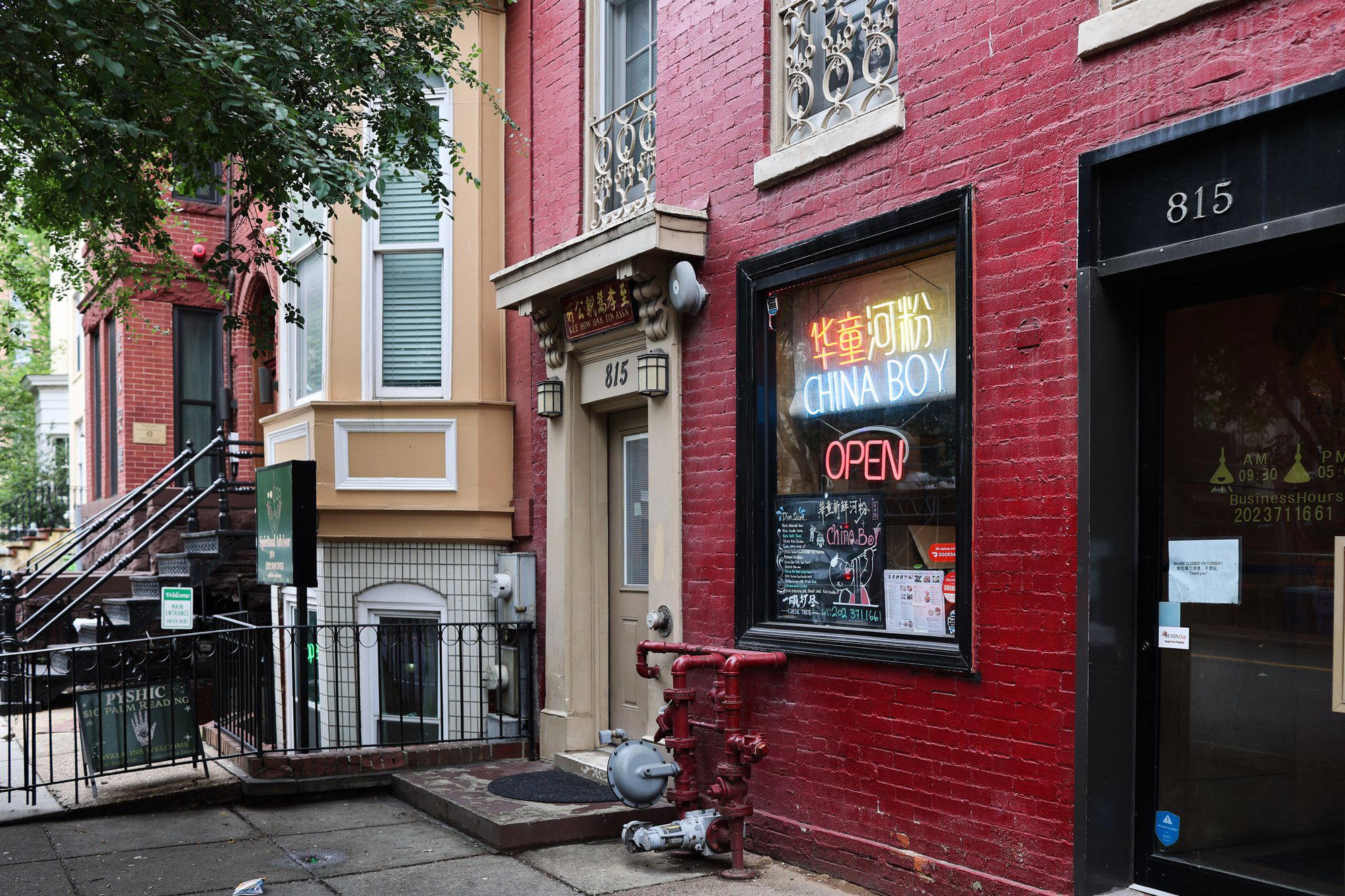
A Corner of Old Chinatown
The stretch of 6th Street NW between H and I streets tells a particular story about Washington, D.C. that no amount of redevelopment has quite erased. Where Chinatown once held dozens of family-run Chinese and Chinese-American operations, the neighborhood has contracted into something closer to a tourist corridor, the Verizon Center (now Capital One Arena) pulling foot traffic, chain restaurants filling the gaps, and a handful of older spots holding their ground on corners they have occupied for years. China Boy at 815 6th St NW sits inside that story, at the intersection where Chinatown's actual Chinese character and the neighborhood's current commercial reality press against each other.
Approaching the address on foot from Gallery Place station, the sensory register is distinctly urban D.C.: the noise of pre-game crowds on event nights, the low hum of delivery vehicles, the particular smell of a city block cycling between lunch and dinner service. Chinatown here is less a dining district and more a memory of one, which shapes how any remaining spot reads to a visitor arriving with context. That context matters when placing China Boy within D.C.'s wider restaurant geography.
What the Neighborhood Has Become
Washington's Chinatown is, by any measure, among the more diminished in the United States. At its peak, the neighborhood supported well over 60 Chinese businesses; that number has fallen into the single digits by most accounts, with the remaining Chinese signage on storefronts functioning largely as cosmetic preservation rather than operational identity. The dining options that remain in the immediate area range from fast-casual chains to a small number of sit-down spots that predate the arena-driven transformation.
This compression has had a clear effect on how visitors experience the corridor. Diners who arrive at Chinatown looking for the kind of regional Chinese cooking available in Flushing, the San Gabriel Valley, or even the Eden Center in Falls Church, Virginia, are typically redirected. What Chinatown D.C. offers instead is a specific kind of Chinese-American cooking with roots in the neighborhood's mid-century demographics, accessible, familiar, positioned around convenience and proximity rather than culinary depth.
For the D.C. dining visitor planning around Michelin-recognized restaurants, the Chinatown block is more of a transit zone than a destination. The city's serious contemporary dining scene operates further afield: Jônt, with its tasting-menu format on 14th Street NW, and minibar near Penn Quarter represent the high-concept end. Albi on the Wharf and Causa on 14th Street place D.C. firmly on the national map for contemporary Middle Eastern and Peruvian cooking respectively. Oyster Oyster has built a reputation for sustainable New American cooking that draws comparisons to farm-driven programs at venues like Blue Hill at Stone Barns in Tarrytown. China Boy operates in a different register from all of these.
Placing China Boy in Context
What is documentable is the address, a block that operates within D.C.'s most transformed dining corridor, and the broader pattern that spot represents. Older Chinese-American operations on this street have tended toward counter-service or casual table formats, positioning around rice plates, noodle dishes, and the kind of steam-table efficiency that suits arena-adjacent foot traffic rather than destination dining.
That positioning is not a criticism so much as a category distinction. The Chinatown corridor serves a real function for visitors moving between Capital One Arena and the Penn Quarter hotel zone. It operates at speed and volume, at price points typically well below the $$$ threshold that marks D.C.'s mid-tier contemporary restaurants. The restaurant at 815 6th St NW sits within that function, for visitors whose itinerary passes through the neighborhood rather than centers on it.
The French Laundry in Napa, Le Bernardin in New York City, Smyth in Chicago, and Single Thread Farm in Healdsburg all represent the high-structure, multi-week-booking end of U.S. dining. D.C.'s own Inn at Little Washington, about an hour outside the city, belongs to that same tier. The restaurant is not a point of comparison with those programs; it sits in the everyday, neighborhood-utility tier that every functioning city requires alongside its flagship restaurants.
Penn Quarter, the Wharf, 14th Street NW, and Shaw each carry a distinct restaurant character, and the choice of where to base a meal depends heavily on what kind of dining experience the visit is built around.
The Broader American Chinatown Conversation
D.C.'s Chinatown compression is an extreme case of a pattern visible in several American cities: neighborhoods that historically housed immigrant dining communities have seen that character eroded by real-estate pressure, demographic shift, and the arrival of arena or convention infrastructure. What distinguishes D.C. is the speed and degree of that erosion. The few remaining spots are not operating in a thriving ethnic food district; they are operating against the grain of the neighborhood's current commercial identity.
That gives any visit to the restaurant a particular texture, not the buzz of a functioning Chinatown, but something quieter and more residual. The sounds here on a non-event night are different from an event night, the foot traffic dropping considerably once arena programming ends. The experience of the block is as much about what is no longer there as what remains. Across the country, spots operating in similar Chinatown-remnant contexts, from Boston's Chinatown to smaller versions in cities like Providence or Indianapolis, tell a related story about how American urban dining communities form, contract, and sometimes disappear entirely.
Atelier Moessmer Norbert Niederkofler in Brunico shows how far the European high-concept model has pushed the format internationally. The restaurant is not competing in that space.
Cost and Credentials
Comparable venues nearby, for context on price, style, and recognition.
| Venue | Cuisine | Price | Notes |
|---|---|---|---|
| China BoyThis venue — the venue you are viewing | Not listed | $ | Not listed |
| Dolan Uyghur Restaurant | Cleveland Park, Authentic Uyghur | $$ | Not listed |
| The Well Dressed Burrito | Dupont Circle, Southwestern Burritos | $ | Not listed |
| Chinatown Garden | Not listed | $$ | Chinatown, Modern Chinese with Szechuan & Cantonese |
| Jam Doung Style | Bloomingdale, Jamaican Caribbean | $ | Not listed |
| Blondie’s Bakery | Washington DC, Bakery Cafe | $ | Not listed |
Continue exploring
More in Washington DC
Restaurants in Washington DC
Browse all →
Bars in Washington DC
Browse all →
Hotels in Washington DC
Browse all →
At a Glance
- Cozy
- Rustic
- Casual Hangout
- Solo
- Standalone
Current opening hours
- Monday
- 9:30 AM–5 PM
- Tuesday
- Closed
- Wednesday
- 9:30 AM–5 PM
- Thursday
- 9:30 AM–5 PM
- Friday
- 9:30 AM–5 PM
- Saturday
- 9:30 AM–5 PM
- Sunday
- 9:30 AM–5 PM
Hours can change for holidays and private events. Last verified .
Minimal, no-frills interior with twinkling lights in the window; sparse seating (two small tables accommodating 6-8 people total); most business is takeout; casual and unpretentious.