Chin Huat Live Seafood Restaurant sits in Clementi's Sunset Way, where Singapore's hawker-rooted seafood tradition meets the kind of live-tank sourcing that defines the city's most serious seafood houses. The restaurant draws a local crowd for its fresh catch, cooked in the broad repertoire of sauces and techniques that characterise zi char dining across the island.
Pearl is the En Primeur Club membership app — saves, bookings, and concierge access live there. Same editors, same standards.
- Address
- 105 Clementi Street 12, Sunset Wy, #01-30, Singapore 120105
- Phone
- +65 6775 7348
- Website
- chinhuatliveseafood.com
- Directions
- Get directions
 Saves & bookings on Pearl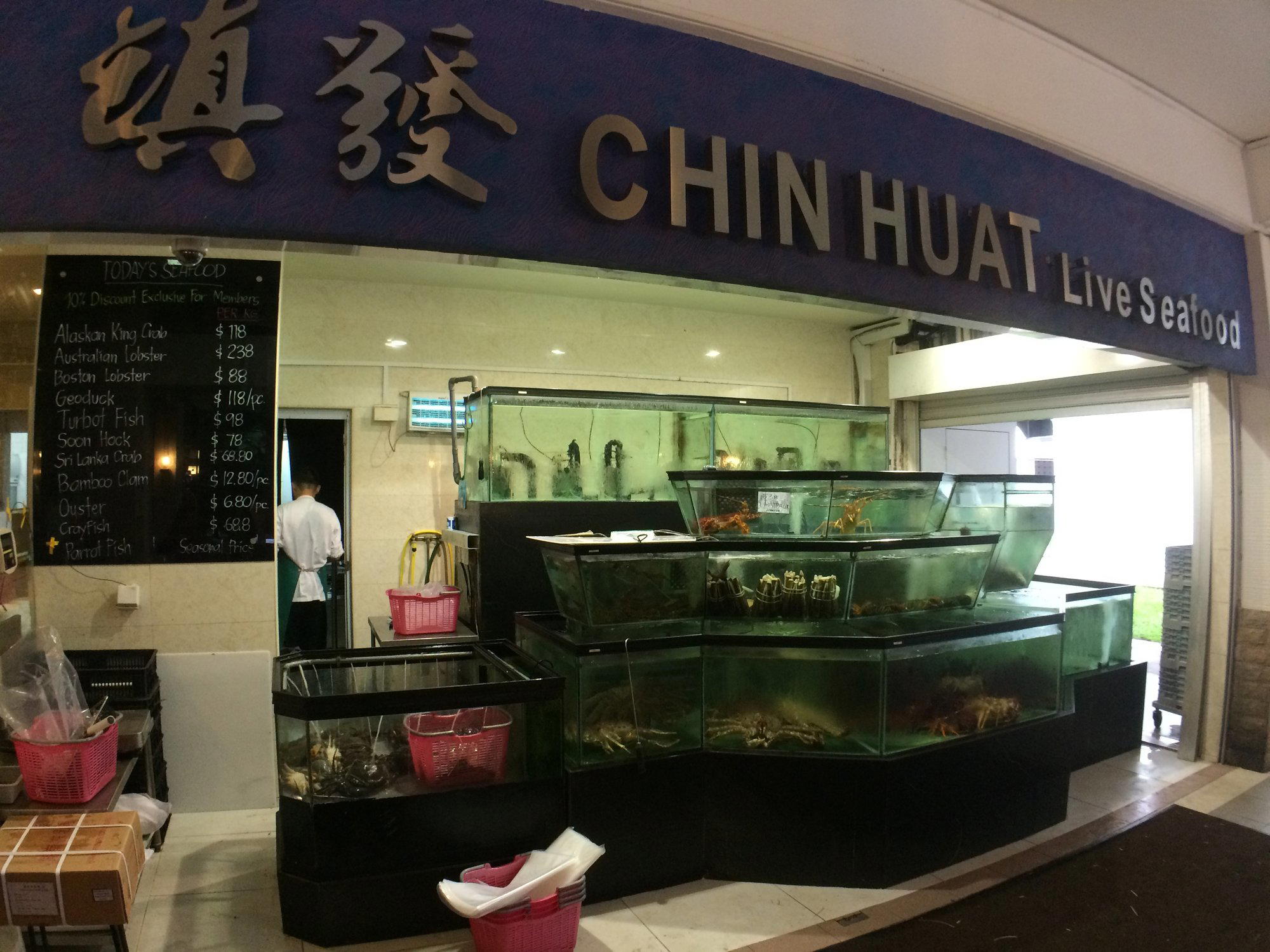
Where Clementi Eats: The Zi Char Seafood Tradition in Context
Singapore's seafood dining splits along a clear fault line. At one end sit the white-tablecloth interpretations, where chefs trained in European kitchens reframe local catch through French technique, the kind of cooking you find at Odette or Les Amis, where the ingredient is a vehicle for a chef's broader argument. At the other end sits the zi char house: a format built around high heat, a live-tank full of crabs and fish, and a menu that treats the ingredients as the entire point. Chin Huat Live Seafood Restaurant, at #01-30 of the Sunset Way HDB estate in Clementi, belongs firmly in the latter category,
Zi char, which translates loosely from Hokkien as "cook and fry," is the dominant mode of casual group dining across the island. It is not a simplified or lesser tradition. The leading zi char kitchens operate with the same ingredient discipline as any formal restaurant: live tanks rather than chilled storage, whole fish rather than fillets, sauces built from scratch rather than poured from bottles. What differs is the context, round tables, shared plates, fluorescent lighting, and a crowd that arrives hungry rather than ceremonious. Clementi's Sunset Way, a residential precinct that has sustained a cluster of neighbourhood eating institutions over decades, is exactly the kind of location where this format thrives without compromise.
The Live-Tank Sourcing Model and What It Means at the Table
The defining feature of a seafood zi char operation is the live tank. Across Singapore, the gap between venues that source live and those that work from iced or frozen product is the single largest quality variable, more significant than cooking technique, sauce repertoire, or kitchen pedigree. Live-sourced seafood, cooked the same day it leaves the tank, produces a different texture profile entirely: firmer muscle structure in fish, sweeter flesh in crustaceans, and a cleaner finish across all shellfish preparations.
Chin Huat operates on this live-sourcing model, which puts it in the comparable set of seafood houses across Singapore's residential estates rather than the tourist-facing seafood enclaves at East Coast or the Sentosa waterfront. This is the format that neighbourhood dining across Queenstown and similar estates has long relied on, and which Singapore's food culture has kept commercially viable even as fine dining has expanded at the leading end.
The intersection of live-sourced local ingredients with a broad technical repertoire is where zi char cooking does its most interesting work. A Sri Lankan crab prepared in black pepper sauce requires sustained high wok heat, precise sauce reduction, and timing discipline that any serious kitchen would respect. Steamed whole fish demands attention to the animal's condition in ways that chilled sourcing cannot replicate. These are not simple preparations, they are techniques refined across generations of professional zi char cooking, and the live-tank model is what makes them fully achievable.
Clementi's Sunset Way: A Neighbourhood That Eats Seriously
Sunset Way occupies a slice of Clementi that has remained residential and relatively low-profile compared to Singapore's better-known dining corridors. That is partly what preserves it. The eating establishments along this stretch serve the surrounding HDB population, families, older residents, working adults, which means the selection pressure for quality is local reputation rather than tourist footfall or social media visibility. A place that does not cook well does not survive in this context, because its customer base walks back the same night and talks to the same neighbours.
The format at venues like Chin Huat reflects how this demographic eats: groups of four to eight, shared plates arriving across an extended meal, cold Tiger or Tsingtao alongside the food. This is meaningfully different from the solitary dining or couples-focused format that drives Singapore's fine dining scene, represented at the leading end by places like Zén or Jaan by Kirk Westaway. At Chin Huat, the meal is a social architecture first and a culinary event second, which is, for most Singaporeans, precisely the right order of priorities.
Other neighbourhood dining options in the broader Singapore picture, from Jurong West's zi char options to the hawker stalls of the Downtown Core, operate within a similar logic of local trust and daily volume. What distinguishes the dedicated seafood house from the general hawker offering is the tank: a capital investment that signals commitment to a specific, perishable product category.
Planning a Visit
Chin Huat sits at 105 Clementi Street 12, Sunset Way, #01-30. The address places it within Singapore's western residential corridor, The restaurant is open Monday and Wednesday through Sunday from 11 AM to 2:30 PM and 5 to 10:30 PM, and closed on Tuesday. Reservations are recommended. Expect about US$50 per person.
Those exploring the city's full spectrum will find instructive contrasts between the zi char format and the high-technique end of Singapore's restaurant scene: Meta in the city centre represents the kind of Korean-European crossover that dominates Singapore's innovative tier, while at the neighbourhood level, operations like KTMW in Bedok and Bugis Street Ah Huat show how deeply local eating traditions persist across the island's residential estates. Internationally, the emphasis on live product and minimal intervention in prime seafood connects conceptually to what kitchens like Le Bernardin in New York argue from a fine-dining position, that the quality of the raw material is the first and most important decision a kitchen makes.
Peers Worth Knowing
Comparable venues nearby, for context on price, style, and recognition.
| Venue | Cuisine | Price | Notes |
|---|---|---|---|
| Chin Huat Live Seafood Restaurant 镇发活海鲜This venue — the venue you are viewing | Singaporean Live Seafood Zichar | $$$ | Not listed |
| Yum Cha Restaurant | Best Dim Sum in Chinatown | Authentic Cantonese Dim Sum | $$ | CHINATOWN |
| Chatterbox | Singaporean Chinese | $$$ | SOMERSET |
| Roland Restaurant | Traditional Chinese Seafood with Singapore Chilli Crab | $$$ | MARINE PARADE |
| Shang Palace | Classic Cantonese Fine Dining | $$$$ | NASSIM |
| Chin Chin Eating House | Traditional Hainanese Chicken Rice | $$ | BUGIS |
Continue exploring
More in Singapore
Restaurants in Singapore
Browse all →
Bars in Singapore
Browse all →
At a Glance
- Lively
- Classic
- Group Dining
- Family
- Celebration
- Open Kitchen
- Sake Program
- Sustainable Seafood
Current opening hours
- Monday
- 11 AM–2:30 PM, 5–10:30 PM
- Tuesday
- Closed
- Wednesday
- 11 AM–2:30 PM, 5–10:30 PM
- Thursday
- 11 AM–2:30 PM, 5–10:30 PM
- Friday
- 11 AM–2:30 PM, 5–10:30 PM
- Saturday
- 11 AM–2:30 PM, 5–10:30 PM
- Sunday
- 11 AM–2:30 PM, 5–10:30 PM
Hours can change for holidays and private events. Last verified .
Casual lively atmosphere in a neighborhood HDB setting with focus on fresh seafood tanks and bustling seafood preparation.