
Our verdict
Ranked #80 on Opinionated About Dining Casual in Asia in 2023 before moving to #117 in 2024, it represents the kind of hawker-adjacent institution that Singaporean diners trust without needing a reservation system to prove it.

Pearl is the En Primeur Club membership app, where members save venues, book tables and use the concierge.
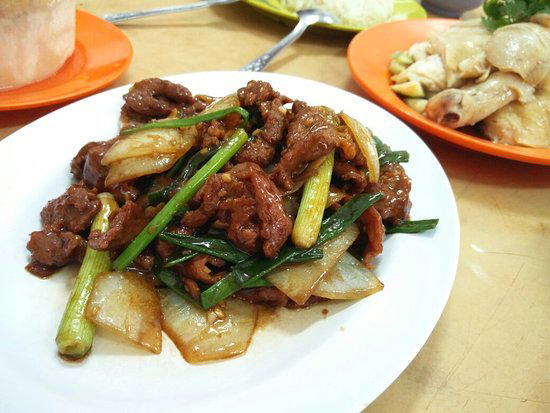
The menu
What to order
- Hainanese Chicken Rice
- Hainanese Pork Chop
- Prawn Paste Chicken
Why Regulars Come Back: The Logic of the Chicken Rice Devotee
In Singapore, loyalty to a specific chicken rice stall or eating house operates differently from loyalty to a fine dining restaurant. There are no tasting menus to revisit, no cellar lists to explore. The returning customer is testing for something harder to maintain than novelty: consistency. Hainanese chicken rice, at its core, asks the kitchen to poach whole birds at a controlled temperature, render fat from the skin, cook rice in the resulting stock, and prepare a trio of sauces, typically chilli, ginger paste, and dark soy, that calibrate the plate. The margin for error is narrow, and experienced eaters can detect deviations in rice texture, chicken temperature, and sauce balance without thinking too much about why they notice.
What keeps the regular at Chin Chin Eating House returning, as with its peers across Singapore, is the absence of those deviations. The dish at institutions like this one does not need to surprise. It needs to be exactly what it was last time. That reliability is the product, and it is harder to sustain than any seasonal menu rotation. For context, the kind of hawker-adjacent eating house format that Chin Chin occupies sits in a different competitive register from the destination restaurants in Singapore's formal dining tier, whether that means three-Michelin-star European kitchens or the creative cuisine operations drawing international attention. At institutions like Les Amis or Odette, the draw is transformation and progression. At a chicken rice eating house, the draw is the opposite: the comfort of knowing exactly what will arrive.
The Chicken Rice Category in Singapore: Where Chin Chin Sits
Singapore's chicken rice ecosystem is unusually competitive and unusually well-documented for a hawker category. The dish appears across food courts, independent stalls, kopitiam counters, and sit-down eating houses, with each format carrying different expectations around price, speed, and portion control. The eating house format, which Chin Chin operates within, typically offers a fuller service register: table seating, optional side dishes, and the ability to order roasted alongside poached versions of the bird. This positions it above the fastest-turnover hawker stalls while remaining clearly outside any restaurant pricing bracket.
Among its direct peers, Chin Chin competes with establishments like Ah Tai Chicken Rice and Wee Nam Kee Hainanese Chicken Rice, both of which draw similarly loyal followings from Singaporeans who have opinions about the category and act on them. The presence of Ah Heng Curry Chicken Bee Hoon in the broader neighbourhood conversation reflects how this part of the city sustains a market for legacy hawker formats that has not been fully absorbed by mall food courts or delivery platforms.
The Opinionated About Dining Casual in Asia ranking is the most relevant external credential for this category. OAD's casual Asia list operates through a surveyed network of experienced restaurant-goers and draws more credibility in Singapore's serious eating community than many mainstream travel rankings. Chin Chin appeared at #80 in 2023 and moved to #117 in 2024. A ranking shift in either direction on OAD's list is worth reading carefully: the 2024 position reflects a more densely contested list as the Asia casual category has grown, rather than any direct decline in quality. Both placements confirm the eating house's sustained recognition across years, not a single strong review cycle.
The Unwritten Menu: What Experienced Visitors Order
The core plate at any serious chicken rice eating house follows a known structure: sliced or chopped chicken, rice cooked in stock, and the sauce selection. The meaningful choices are in the variables: poached versus roasted bird, white meat versus darker cuts, portion size relative to table count. Regulars at eating houses like Chin Chin develop a relationship with these variables over time, arriving with a preference already formed rather than consulting the menu with fresh eyes. This is part of what the OAD casual category measures implicitly: not innovation, but the depth of relationship between a kitchen and its returning audience.
Side dishes, often including braised tofu, blanched vegetables, or pork accompaniments depending on the house, extend the meal beyond the centrepiece and give regulars additional reference points for quality. A table of two ordering for a full lunch will typically structure the meal around the chicken itself, with sides calibrated to appetite and familiarity with the kitchen's range. The eating house format gives time and table space that hawker stalls do not, which is why regulars who want to eat without pressure tend to migrate toward it. Lunch hours from midday onward tend to draw the densest crowds from the surrounding office and hotel district; arriving before noon or after the immediate lunch rush gives a smoother experience at the table. No booking information is listed, which is typical for the eating house format in Singapore, where walk-in service is the standard expectation. The full scope of what Singapore offers across categories is covered in our full Singapore restaurants guide, our full Singapore hotels guide, our full Singapore bars guide, our full Singapore wineries guide, and our full Singapore experiences guide.
Frequently asked questions
What is the signature dish at Chin Chin Eating House?
What do critics highlight about Chin Chin Eating House?
Side-by-Side Snapshot
A short peer table to compare basics side-by-side.
| Venue | Cuisine | Price | Awards | Notes |
|---|---|---|---|---|
| Chin Chin Eating HouseThis venue (the venue you are viewing) | Traditional Hainanese Chicken Rice | $10–20 | Not listed | Not listed |
| Zén | Yakitori & Japanese Izakaya | $50–100 | Tabelog 100 #92 | European Contemporary |
| Jaan by Kirk Westaway | Modern British Fine Dining | $200–300 | 2 Michelin Stars · Michelin Guide 2 Stars | British Contemporary |
| Burnt Ends | Modern Australian Barbecue | $100–150 | 1 Michelin Star · Michelin Guide 1 Star | Australian Barbecue, Barbecue |
| Summer Pavilion | Michelin-Starred Cantonese | $100–150 | 1 Michelin Star · Michelin Guide 1 Star | Cantonese |
| Born | Contemporary Fusion Fine Dining | $200–300 | 1 Michelin Star · Michelin Guide 1 Star | Creative Cuisine, Innovative |
Recognition history
Dated appearances from independent guides and award organizations, with the underlying list record or original source where available.
Opinionated About Dining Casual in Asia Highly Recommended
Opinionated About Dining
Full recognition history (3 entries)
Opinionated About Dining Casual in Asia Ranked #117
Opinionated About Dining
Opinionated About Dining Casual in Asia Ranked #80
Opinionated About Dining
Continue exploring
More in Singapore
More from Chef Various
Browse all →
Restaurants in Singapore
All restaurants in Singapore →
Bars in Singapore
All bars in Singapore →
Details
- Classic
- Lively
- Well Known
- Family
- Group Dining
- Casual Hangout
- Standalone
- A La Carte
Current opening hours
- Monday
- Closed
- Tuesday
- 11 AM–2:20 PM, 5–8:20 PM
- Wednesday
- 11 AM–2:20 PM, 5–8:20 PM
- Thursday
- 11 AM–2:20 PM, 5–8:20 PM
- Friday
- 11 AM–2:20 PM, 5–8:20 PM
- Saturday
- 11 AM–2:20 PM, 5–8:20 PM
- Sunday
- 11 AM–2:20 PM, 5–8:20 PM
Hours can change for holidays and private events. Hours as of .
Casual, functional coffee shop-style with basic decor, lively and crowded atmosphere filled with multi-generational local families.