Tucked above Trengganu Street in the heart of Chinatown, Yum Cha Restaurant occupies a familiar position in Singapore's dim sum circuit: a mid-floor address where the ritual of morning tea and stacked bamboo baskets plays out against the backdrop of one of the city's most historically dense neighbourhoods. The format is traditional, the setting is atmospheric, and the draw is the kind of unhurried weekend yum cha that Singaporeans have practised for generations.
Pearl is the En Primeur Club membership app — saves, bookings, and concierge access live there. Same editors, same standards.
- Address
- 20 Trengganu St, #02-01, Singapore 058479
- Phone
- +65 6372 1717
- Website
- yumcha.com.sg
- Directions
- Get directions
 Saves & bookings on Pearl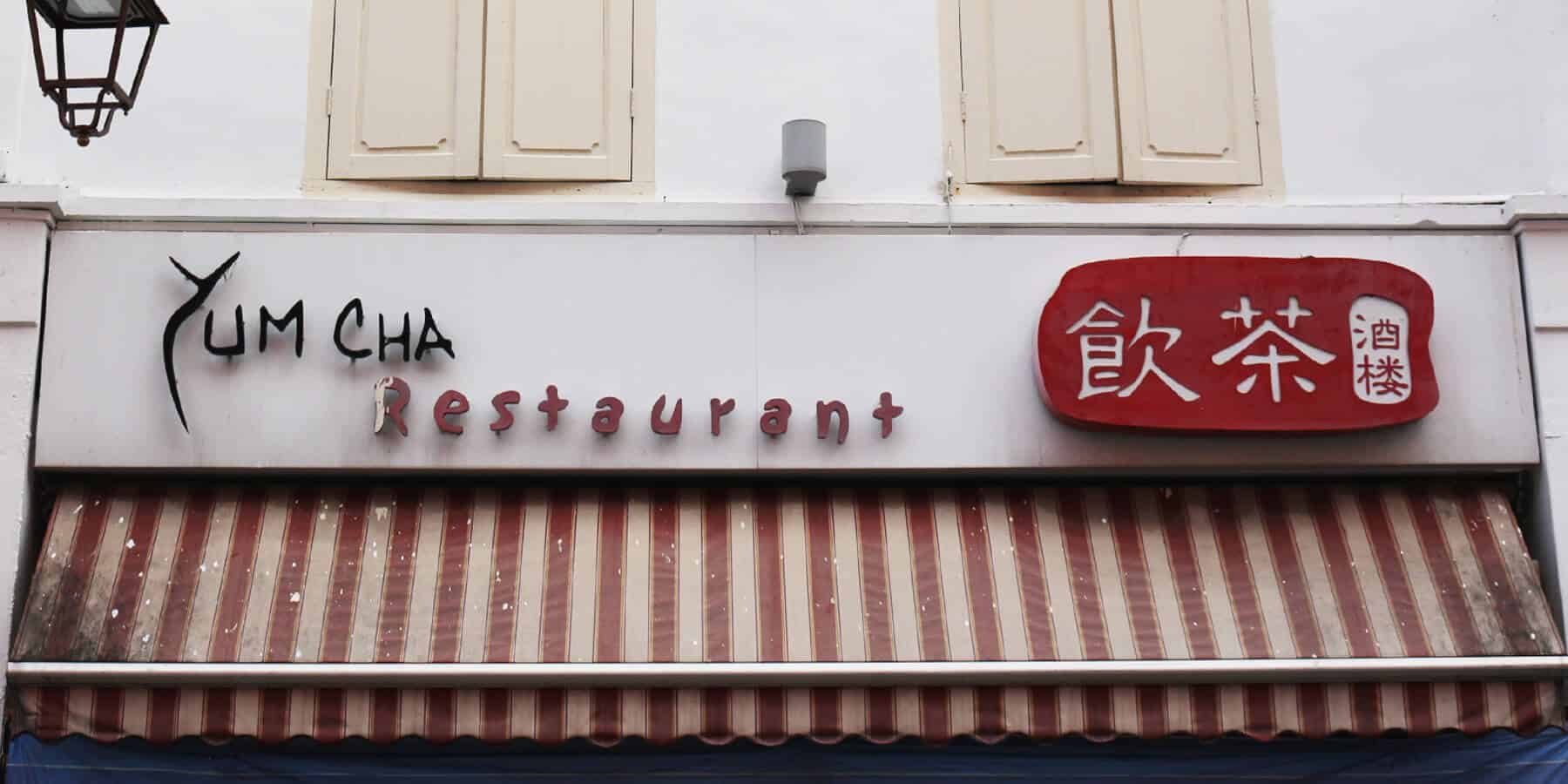
Chinatown's Trengganu Street operates on a rhythm that has changed less than most of Singapore. The shophouse blocks along this strip retain their proportions and their street-level noise, the clatter of a nearby market, the low hum of voices negotiating over tea, the scrape of metal steamers being reset for the next round of service. Yum Cha Restaurant sits at the second floor of number 20, above the street-level activity, which means arriving involves climbing a staircase into a room already underway with the organised ritual of dim sum service. That physical threshold matters: you step out of the street and into a scene that has its own pace and logic.
Dim Sum in Singapore's Chinatown: What the Setting Tells You
Singapore's Chinatown has been producing yum cha culture since Cantonese migrants established the neighbourhood's culinary identity in the early twentieth century. The tradition of gathering over tea, with dishes arriving in rotation rather than as a single meal, is one of the more durable dining formats the city has inherited. What distinguishes the better Chinatown addresses from more generic dim sum operations elsewhere in Singapore is proximity to that original context: the neighbourhood itself functions as ambient verification. Trengganu Street, running through the UNESCO-gazetted Chinatown conservation area, carries that historical weight without needing to perform it.
Within Singapore's broader dining map, Chinatown's mid-tier dim sum houses occupy a different register than the high-production Cantonese restaurants you find in hotel lobbies or along Orchard Road. They price differently, move differently, and attract a different rhythm of repeat visitor. For contrast, the city's upper-end tables, places like Les Amis, Odette, or Zén, operate in a register of formal tasting menus and advance reservation queues measured in months. Yum Cha sits at the opposite end of that formality spectrum, where the social logic of shared tables and rotating baskets is the point, not a concession to casual dining.
The Sensory Register of a Working Dim Sum Room
The atmosphere of an active dim sum service is specific in ways that matter. Bamboo steamer baskets conduct heat differently than ceramic or metal, and the faint woody-sweet smell that drifts from a trolley or open kitchen during peak service is one of the more immediate signals that a kitchen is working at volume. In the better Chinatown operations, that smell arrives before the food does, a reliable indicator of throughput and freshness. The sound profile is equally distinct: the rolling percussion of cart wheels, the brief metallic click of tong on basket, the overlapping conversations at tables where four or six people are working through a shared order simultaneously.
These sensory details are worth naming because they explain why dim sum is poorly served by the delivery format. The experience depends on the room operating as a whole, on other tables being in various stages of their own meals, on the visual rhythm of baskets appearing and stacking, on tea being replenished as a matter of course rather than on request. Yum Cha Restaurant, as a seated dim sum venue in an active neighbourhood, provides that room environment in a way that a café counter or hotel banquet setup cannot replicate.
Where Yum Cha Fits in Singapore's Chinese Dining Spread
Singapore's Chinese restaurant spectrum now spans from hawker-centre roast meats and fishball noodles, like the Ah Ter Teochew Fishball Noodles in Downtown Core, through neighbourhood Cantonese houses and up to Michelin-recognised fine dining. Yum cha as a format occupies a particular band in that spectrum: it is neither hawker-simple nor fine-dining-formal. It requires a kitchen capable of producing multiple steamed, fried, and baked preparations in parallel, and a floor team that can manage the logistics of rotating service across many tables simultaneously. That operational complexity is invisible when it works well, which is precisely when the room settles into its particular atmosphere.
For visitors building a broader Singapore eating itinerary, the neighbourhood context adds value. Chinatown's Trengganu and Smith Street area is walkable to a range of eating options across cuisines, from Etna Restaurant in neighbouring Outram to the Italian-leaning Cicheti in Rochor, a short distance north. The neighbourhood's density makes it practical to build a half-day around the area rather than treating a single meal as a standalone visit.
Cantonese Dim Sum and the Question of Seasonal Timing
In Cantonese tradition, certain dim sum preparations shift with the calendar. Sticky rice preparations, glutinous fillings, and richer baked items tend to feature more prominently in cooler months or around specific festivals, while lighter, broth-heavy soups appear alongside standard steamed repertoires during warmer periods. Singapore's equatorial climate compresses some of this seasonal logic, but Chinese New Year and the weeks immediately following represent the highest-demand period for Chinatown dim sum restaurants. Tables at neighbourhood venues along Trengganu Street during the festival window can be claimed an hour or more before the kitchen opens, particularly on weekend mornings. If you are visiting between late January and mid-February, adjusting your timing to arrive before 9am is not excessive planning, it is standard practice for the Chinatown area.
Outside the festival peak, weekend mornings remain busier than weekdays across the Chinatown yum cha circuit. The practical difference between a Saturday at 9am and a Tuesday at the same hour is significant in terms of atmosphere and wait time. The room at full weekend capacity produces the sociable noise and visual density that makes the dim sum ritual legible as a cultural event rather than just a meal. For those visiting Singapore primarily for its contemporary dining scene and booking ahead at places like Jaan by Kirk Westaway or Meta, a weekend dim sum session in Chinatown provides meaningful contrast as part of a fuller city eating picture.
Planning Your Visit
Yum Cha Restaurant is located at 20 Trengganu Street, #02-01, in the Chinatown conservation area. The nearest MRT station is Chinatown on the Downtown and North East lines, a few minutes' walk from Trengganu Street. Arriving in person and allowing time for a potential queue, particularly on weekends, is the practical approach. Bringing a group of four to six allows the table to work through a broader range of dim sum categories in one sitting, which is also how the format is most naturally experienced. For other eating options in the wider Singapore neighbourhood spread, the Asian Twist by 365 Food in Queenstown, Bugis Street Ah Huat Hainanese Chicken Rice, KTMW chicken rice tea-cafe in Bedok, Du Du Shou Shi in Jurong West, Haidilao Hot Pot in Sembawang, Little Italy - Katong in Marine Parade, and Béni in Orchard each represent distinct registers of the Singapore eating scene. Dim sum does the same thing, with different tools.
Peers in This Market
Comparable venues nearby, for context on price, style, and recognition.
| Venue | Cuisine | Price | Notes |
|---|---|---|---|
| Yum Cha Restaurant | Best Dim Sum in ChinatownThis venue — the venue you are viewing | Authentic Cantonese Dim Sum | $$ | Not listed |
| 545 Whampoa Prawn Noodle | Traditional Singapore Prawn Noodles | $ | BALESTIER |
| Soon Wah Fishball Kway Teow Mee | Teochew Fishball Noodles | $ | Newton Circus |
| FOOK KIN 福劲 | Cantonese Roast Meats | $$ | OXLEY |
| Ng Ah Sio Bak Kut Teh | Teochew-Style Peppery Bak Kut Teh | $$ | CLARKE QUAY |
| Lor 9 Beef Kway Teow | Singaporean Beef Kway Teow | $$ | ALJUNIED |
Continue exploring
More in Singapore
Restaurants in Singapore
Browse all →
Bars in Singapore
Browse all →
At a Glance
- Classic
- Cozy
- Brunch
- Family
- Casual Hangout
- Standalone
- Sake Program
Current opening hours
- Monday
- Closed
- Tuesday
- 10:30 AM–9 PM
- Wednesday
- 10:30 AM–9 PM
- Thursday
- 10:30 AM–9 PM
- Friday
- 10:30 AM–9 PM
- Saturday
- 9 AM–9 PM
- Sunday
- 9 AM–9 PM
Hours can change for holidays and private events. Last verified .
Cozy and nostalgic atmosphere with marble tables and wooden chairs, away from city hustle.