Chi-Latin
Our verdict
Chi-Latin sits on West Chicago Avenue in the Ukrainian Village corridor, where the city's Latin American dining scene meets a neighbourhood undergoing its own quiet reinvention. The restaurant draws on the cross-cultural energy that has long defined Chicago's West Side, presenting a menu where Latin American culinary traditions are the primary lens. It operates in a city whose restaurant scene ranges from Michelin-starred tasting menus to deeply rooted community dining rooms.

The menu
What to order
- Enchiladas
- Carne brava
- Caribbean fish with Peruvian chili and coconut rice
- Tamales
- Croquettes
- Short rib cake
West Chicago Avenue and What the Address Signals
The stretch of West Chicago Avenue that runs through Ukrainian Village and into the near-northwest side has spent the last decade absorbing the overflow from Wicker Park and River North without becoming either. It is the kind of address that still carries neighbourhood friction alongside newer restaurant openings, which tends to produce more interesting dining than the sanitised blocks closer to the lakefront. Chi-Latin occupies a position at 1421 W Chicago Ave that puts it inside this transitional zone, where the clientele is local-first and the competition is measured in blocks rather than zip codes.
For Chicago's Latin American restaurant category, location matters enormously. The city has multiple centres of gravity for this cuisine, from the Pilsen corridor to Humboldt Park, each with its own culinary character and community anchor. The near-northwest side operates differently: it is less historically defined by a single Latin American national tradition and more open to the kind of blended programming that the Chi-Latin name implies. That naming choice, pairing Chicago's shorthand with Latin as a culinary and cultural category, signals a restaurant that is positioning itself as a bridge rather than a specialist.
Where This Sits in Chicago's Broader Restaurant Picture
Chicago's restaurant scene is heavily stratified in ways that are easy to misread from the outside. At the upper end, the city runs a serious tasting-menu circuit: Alinea and Smyth operate at the technical and financial ceiling of the format, while Oriole and Kasama represent the Michelin-recognised tier that has expanded the city's credentialled dining beyond its traditional French and American fine-dining roots. Next Restaurant brought a theatrical menu-rotation concept that periodically resets visitor expectations.
Chi-Latin does not sit in that Michelin tier, at least not on current evidence. Its West Chicago Avenue address and neighbourhood positioning place it in a different competitive set: accessible, community-adjacent dining that draws on Latin American culinary traditions without the price architecture or booking friction of the city's tasting-menu counters. That is not a diminishment. Some of Chicago's most consistent cooking happens outside the starred circuit, in restaurants that serve the same neighbourhood four nights a week rather than chasing international press.
Nationally, the Latin American fine-dining conversation has moved substantially in the last decade. Restaurants in New York, Los Angeles, and San Francisco have pushed the category toward ingredient-led tasting formats with wine programs to match, and the resulting coverage has raised expectations for what Latin American-influenced cooking can look like at a mid-to-upper price point. Cities like Chicago absorb those trends with a slight lag, which means a restaurant opening now into this category has both an opportunity and a reference set to measure against. Comparisons with destinations like Le Bernardin in New York City or Lazy Bear in San Francisco illustrate how dramatically format and ambition can vary even within the broader category of serious American restaurant dining.
The Cross-Cultural Frame the Name Announces
The fusion or cross-cultural restaurant is one of the most contested formats in contemporary dining. At its weakest, it produces menus that satisfy neither tradition, pulling from multiple culinary vocabularies without fluency in any. At its strongest, it reflects a genuinely bicultural kitchen where two sets of techniques and flavour logic are in real dialogue. The Chi-Latin name proposes the latter: a Chicago sensibility applied to, or in conversation with, Latin American culinary traditions.
Chicago has the demographic and culinary infrastructure to support that kind of dialogue. The city's Mexican, Puerto Rican, and broader Latin American communities have maintained cooking traditions across generations, producing a street-level food culture that has influenced the city's restaurant scene in ways that often go undocumented. When a restaurant like Chi-Latin attempts to work in that space, it is entering a conversation that already has serious participants and strong opinions about authenticity, representation, and culinary authority.
Across the United States, the restaurants that have handled this kind of cross-cultural cooking most successfully tend to have clear points of view about which tradition is primary and which is inflecting. The ambiguity in the Chi-Latin positioning, whether Latin American cooking is the foundation or the flavouring agent, is the central question the restaurant has to answer through its menu. Venues like Atomix in New York City have demonstrated how a restaurant can draw on deep culinary heritage while operating in a format shaped by contemporary fine-dining conventions; the challenge is clarity of intent.
The Neighbourhood as Context for the Experience
Ukrainian Village, the neighbourhood the address most closely aligns with, has historically been defined by its Eastern European immigrant roots, but its restaurant character has broadened considerably. The area's dining now includes a mix of long-standing neighbourhood institutions and newer openings that reflect the demographic changes of the last fifteen years. West Chicago Avenue specifically functions as a commercial artery connecting several near-northwest neighbourhoods, which means foot traffic is genuine rather than destination-driven.
For a restaurant operating on this stretch, the local diner matters more than the visiting food tourist. That shapes everything from service tempo to portion logic to how the menu is priced relative to the neighbourhood's wage base. Restaurants that get this balance right on West Chicago Avenue tend to build loyal regulars rather than chasing the short-cycle press attention that drives openings in more media-saturated neighbourhoods. The risk is obscurity; the reward is sustainability.
This neighbourhood-first dynamic is worth holding against Chicago's more celebrated dining corridors. The same city that produces Alinea's modernist tasting menus also sustains dozens of neighbourhood restaurants that serve their communities with consistency and without fanfare. Chi-Latin's address puts it closer to that second category than the first, which is not a positioning problem as long as the cooking supports the implied promise. For more context on where Chi-Latin sits within the full range of Chicago dining, see our full Chicago restaurants guide.
Planning a Visit
Confirm current details directly with the venue before visiting.
| Venue | Neighbourhood | Price Range | Format | Booking |
|---|---|---|---|---|
| Chi-Latin | Ukrainian Village / W Chicago Ave | Not confirmed | Not confirmed | Not confirmed |
| Kasama | Ukrainian Village | $$$$ | Tasting menu / bakery cafe | Tock / advance booking required |
| Smyth | West Loop | $$$$ | Tasting menu | Tock / advance booking required |
| Next Restaurant | West Loop | $$$$ | Ticketed tasting menu | Ticketed / advance purchase |
Frequently asked questions
What's the overall feel of Chi-Latin?
Chi-Latin sits on West Chicago Avenue in the Ukrainian Village corridor, a stretch that runs outside Chicago's main destination-dining circuit in River North or the West Loop. That positioning shapes the experience: this reads as a neighbourhood restaurant first, with a cross-cultural Latin concept layered over a local-regular dynamic. The address at 1421 W Chicago Ave places it where foot traffic is residential rather than tourist-driven.
What part of town is Chi-Latin in?
Chi-Latin is located at 1421 W Chicago Ave, Chicago, IL 60642, Chicago.
How does Chi-Latin fit into Chicago's broader Latin dining scene?
Chicago has a well-documented Latin restaurant corridor concentrated in Pilsen, Little Village, and Humboldt Park, making a Latin concept on West Chicago Avenue in Ukrainian Village a geographic outlier by design. Chi-Latin's near-northwest address places it in a neighbourhood historically defined by Eastern European roots, which gives its cross-cultural premise a specific local context rather than a genre-cluster setting. That separation from the city's main Latin dining hubs either reads as a drawback or a draw, depending on what kind of room you want around you.
The Short List
A small set of peers for context, based on recorded venue fields.
| Venue | Cuisine | Price | Awards | Notes |
|---|---|---|---|---|
| Chi-LatinThis venue (the venue you are viewing) | Latin American Fusion | Not listed | Not listed | Not listed |
| Smyth | Modern American Tasting Menu | $200–300 | 3 Michelin Stars · World's 50 Best #1 | Progressive American, Contemporary |
| Alinea | Avant-Garde Molecular Gastronomy | $300–500 | 2 Michelin Stars · World's 50 Best #37 | Progressive American, Creative |
| Kasama | Modern Filipino | $30–50 | 2 Michelin Stars · World's 50 Best #31 | Filipino |
| Next Restaurant | Avant-Garde Themed Tasting Menus | Not listed | 1 Michelin Star · We're Smart World 2 Radishes | American Cuisine |
| Moody Tongue | Modern American with Beer Pairings | $200–300 | 1 Michelin Star · La Liste Top Restaurants | Contemporary |
Continue exploring
More in Chicago
Restaurants in Chicago
All restaurants in Chicago →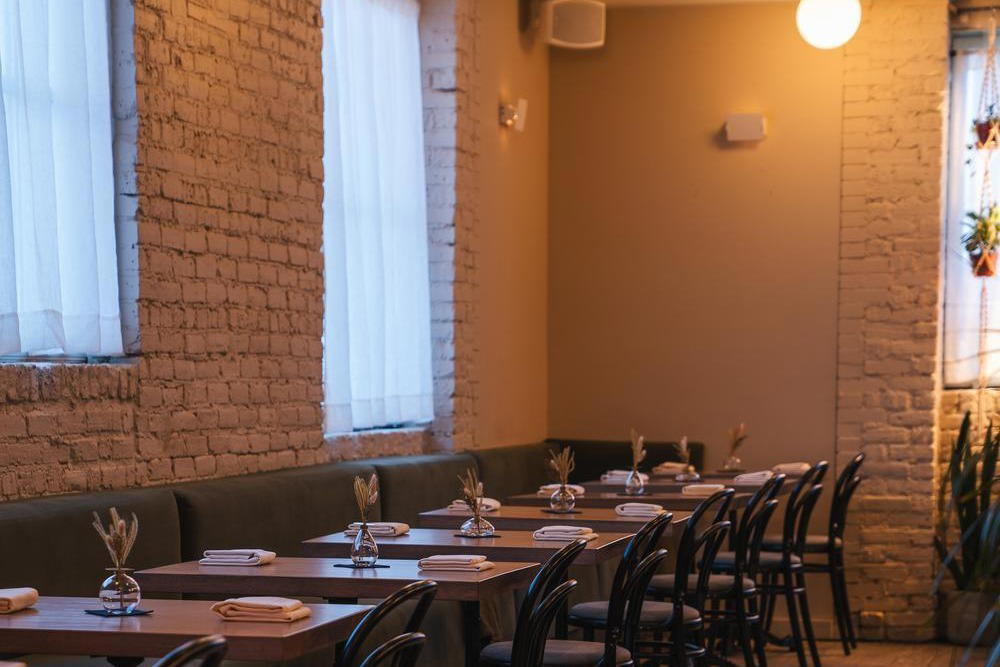
Bars in Chicago
All bars in Chicago →


Details
- Lively
- Bohemian
- Trendy
- Group Dining
- Casual Hangout
- Celebration
- Standalone
- Small Plates
- Family Style
- Tequila
Lively and welcoming atmosphere reflecting Latin American cultural heritage, with warm lighting and communal dining energy.