
Tabelog 100 #69
Our verdict
Chikusei Honten belongs to Takamatsu’s serious Sanuki udon circuit: low-cost, fast-moving, and judged on noodle craft rather than ceremony. Its Tabelog 100 Udon Kagawa 2024 selection, tempura pairing, and compact 27-seat format place it among the city’s defining everyday udon rooms, especially for travelers reading Kagawa through wheat, dashi, and queue discipline.

Pearl is the En Primeur Club membership app — saves, bookings, and concierge access live there. Same editors, same standards.
- Address
- 2-23 Kameokacho, Takamatsu, Kagawa 760-0006, Japan
- Phone
- +81 87-834-7296
- Hours
- Mon ClosedTue–Sun 10:45 AM–2:30 PM
- Website
- chikuseiudon.com
- Directions
- Get directions
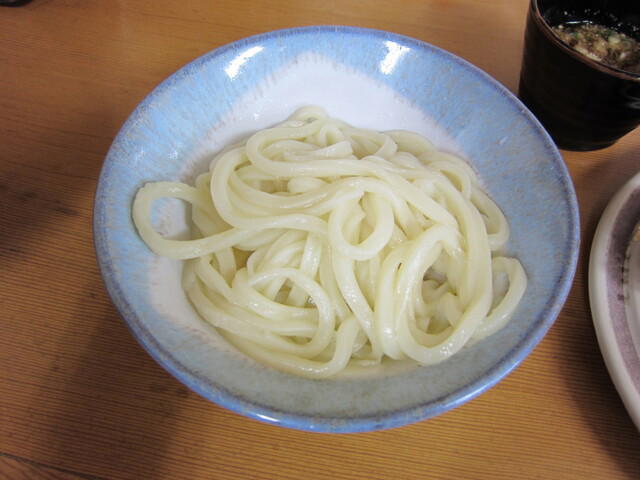
The menu
What to order
- Sanuki udon
- Kake udon
- Bukkake udon
- Tempura toppings
Approaching a serious Sanuki udon shop in Takamatsu, the cues are rarely luxurious: compact room, quick turnover, orders moving faster than conversation, and locals treating lunch as routine and proof. This is the frame for Chikusei Honten. Kagawa’s udon culture is not Kyoto-style ceremony; it is wheat, water, dashi, frying oil, and the confidence to keep a bowl inexpensive without making it careless.
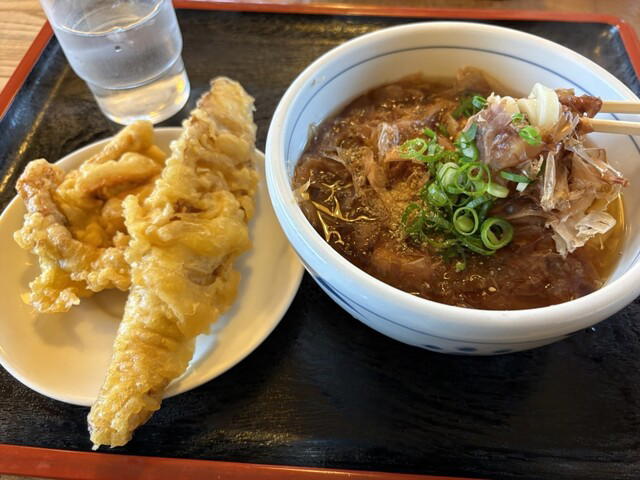
In Takamatsu, the noodle is not a side character. Sanuki udon’s reputation rests on texture, shaped by flour handling, hydration, resting, cutting, and cooking as much as sauce or topping. Tempura, when present, is contrast rather than decoration. Chikusei Honten’s udon-and-tempura pairing fits Kagawa grammar: wheat first, crispness second, speed throughout. A Tabelog 100 Udon Kagawa 2024 selection gives the shop a public marker in a prefecture where the category is fiercely competitive, not merely abundant.
Sanuki udon judged by wheat, not theatre
Kagawa is often reduced to Japan’s udon prefecture, but the scene is better read through repetition. Locals compare shops by minute differences in chew, broth balance, self-service rhythm, and tempura’s usefulness beside the bowl. That is why a low price bracket can carry serious critical weight. Menya Shichifuku Honten, Udon Sakaeda, Makoto Udon, and Matsushita Seimensho share Takamatsu’s everyday udon economy, while Renge Ryori Ten sits in a higher spend category and belongs to a different dining decision. Chikusei Honten is firmly in the former set: short-format, noodle-led, and measured against peers that ask more of craft than interior design.
Ingredient sourcing is not always publicized in fine-dining language, but udon makes the supply chain visible through outcome. Wheat flour is the architecture; water and salt control elasticity; dashi turns restraint into flavor; frying adds aroma and fat without changing the meal’s logic. In Kagawa, discipline matters because the dish has few places to hide. A cheap bowl exposes technical weakness immediately. Selection for Tabelog’s 2024 Kagawa udon list signals assessment within the prefecture’s demanding category, not praise from outside it.
For a Takamatsu food map, read Chikusei Honten alongside local staples rather than as an isolated trophy. Azuma, Furukawa Udon, and Furusato Udon show how many versions of the city’s noodle identity fit a narrow spend band. Fumiya Okonomiyaki Honten and Grill a Table widen the picture beyond udon, but the city’s culinary gravity still pulls back toward wheat.
A compact room built for turnover and local confidence
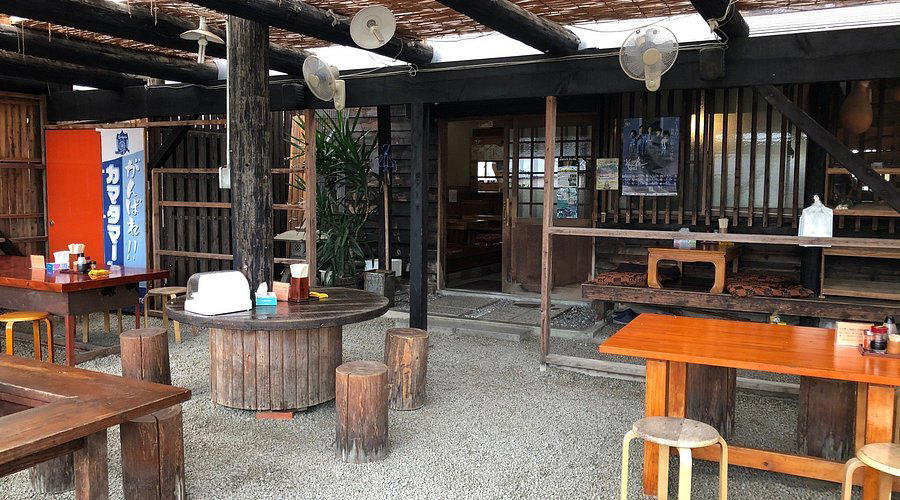
The 27-seat format matters because Sanuki udon culture rewards rhythm. Counter seats, standing spaces, and tables let solo diners, families, and small groups move through without long-meal pacing. This is not a hushed tasting menu or lingering wine conversation. It is a lunch-focused room where the experience is compressed: decide, eat, leave room for the next person. That compression is part of the appeal, keeping attention on the bowl and the local habit around it.
Reservations are unavailable, which suits the genre. Treat the meal as a timed stop, not a flexible evening plan. Public hours are daytime only and service runs until sold out, common in serious noodle shops where production sets the tempo. Parking is listed for nine cars, with paid parking nearby if full; the nearest rail point is Ritsurinkoen Kitaguchi Station. In Takamatsu, such details matter because the udon circuit rewards efficient movement more than restaurant-style booking control.
Payment also signals category. Credit cards, electronic money, and QR payments are not accepted, so cash is practical. The price band under JPY 999 places it with several everyday Takamatsu udon peers, but low cost is not low consequence. In Kagawa, this is a prestige category with modest bills. A sub-JPY 1,000 bowl can carry more local meaning than a much costlier dinner elsewhere.
How to place it in a Takamatsu itinerary
The right use case is a focused udon stop, not an all-purpose restaurant booking. Families are explicitly accommodated, solo dining is part of the rhythm, and the no-private-room setup keeps the room public and functional. The Tabelog score of 3.64 and repeated Udon 100 selections across earlier editions add context, but the stronger point is how the shop reflects Takamatsu’s confidence in ordinary forms. The city does not need to dress udon up to make it matter.
Visitors comparing categories across Japan can use this meal as a corrective to big-city habits. Tokyo counters and Kyoto dining rooms often turn scarcity into price; Takamatsu’s udon culture turns repetition into judgment. For a broader plan, start with our full Takamatsu restaurants guide, then branch into our full Takamatsu hotels guide, our full Takamatsu bars guide, our full Takamatsu wineries guide, and our full Takamatsu experiences guide. Readers extending the same ingredient-first lens across Japan and beyond might compare the narrower food-specialist formats at -Grilled beef Sukiyaki- KAMAKURA TANUKIAN 鎌倉 たぬき庵 in Kamakura. 鮪と炭火焼き うお炭 秋葉原店 in Tokyo.cafe in Osaka.know in Kumamoto, (Shoku) Vietnam in Kawasaki, [Curry Senmon Ten] Maruyama Kyoju. in Sapporo, Jōdo Saké Bar in Los Angeles, and Onigiri Time in Pasadena.
Chikusei Honten is strongest as a reading of place: Kagawa wheat culture, tempura as punctuation, a compact room, and a price point that keeps the meal democratic without making it anonymous. For travelers who care how a city eats on an ordinary day, that is the argument.
Frequently asked questions
Would Chikusei Honten be comfortable with kids?
Yes. The venue lists children welcome, with 27 seats and a mix of counter seats, standing seats, and table seats in Takamatsu.
Is Chikusei Honten better for a quiet night or a lively one?
Neither, since it operates only Tuesday to Sunday from 10:45 AM to 2:30 PM and closes on Monday. The setup suits a daytime udon stop more than a late-night meal.
What should I budget for a meal at Chikusei Honten?
Pricing at Chikusei Honten is listed as - JPY 999 - JPY 999 View spending breakdown.
What are the opening hours for Chikusei Honten?
Hours at Chikusei Honten: Mon: Closed; Tue: 10:45 AM–2:30 PM; Wed: 10:45 AM–2:30 PM; Thu: 10:45 AM–2:30 PM; Fri: 10:45 AM–2:30 PM; Sat: 10:45 AM–2:30 PM; Sun: 10:45 AM–2:30 PM.
What's the address for Chikusei Honten?
Chikusei Honten is located in Takamatsu.
What's Chikusei Honten best at?
Udon and tempura, which is the combination highlighted in its listing. The Tabelog 100 Udon Kagawa 2024 selection gives that focus clear local credibility in Takamatsu.
Fast Comparison
Comparable venues by cuisine and price in the same metro.
| Venue | Cuisine | Price | Awards | Notes |
|---|---|---|---|---|
| Chikusei HontenThis venue — the venue you are viewing | Traditional Sanuki Udon | $1–10 | Tabelog 100 #69 | Not listed |
| Makoto Udon | Traditional Sanuki udon noodle shop | $1–10 | Tabelog 100 #21 | Takamatsu |
| 両忘 | Modern Italian Omakase | $100–150 | Tabelog Bronze #375 | Takamatsu |
| Ueta Udon | Sanuki udon shop | $1–10 | Tabelog 100 #74 | Takamatsu |
| Sanuki Udon Kobo Ai Style | Sanuki udon noodle shop | $1–10 | Tabelog 100 #25 | Takamatsu |
| Kashimura Udon | Sanuki udon shop | $1–10 | Tabelog 100 #46 | Takamatsu |
Recognition history
Dated appearances from independent guides and award organizations, with the underlying list record or original source where available.
Tabelog 100 #69 · No. 69
Tabelog · Tabelog 100 - Udon - KAGAWA - 2024
Continue exploring
More in Takamatsu
Restaurants in Takamatsu
Browse all →
Bars in Takamatsu
Browse all →

Details
- Lively
- Classic
- Cozy
- Well Known
- Solo
- Family
- Casual Hangout
- After Work
- Group Dining
- Standalone
- Counter Dining
- A La Carte
Current opening hours
- Monday
- Closed
- Tuesday
- 10:45 AM–2:30 PM
- Wednesday
- 10:45 AM–2:30 PM
- Thursday
- 10:45 AM–2:30 PM
- Friday
- 10:45 AM–2:30 PM
- Saturday
- 10:45 AM–2:30 PM
- Sunday
- 10:45 AM–2:30 PM
Hours can change for holidays and private events. Last verified .
Bright, functional, and bustling canteen-like atmosphere focused on quick self-serve udon, with counter and table seating and minimal decor that highlights its role as a local udon institution rather than a leisurely dining spot.