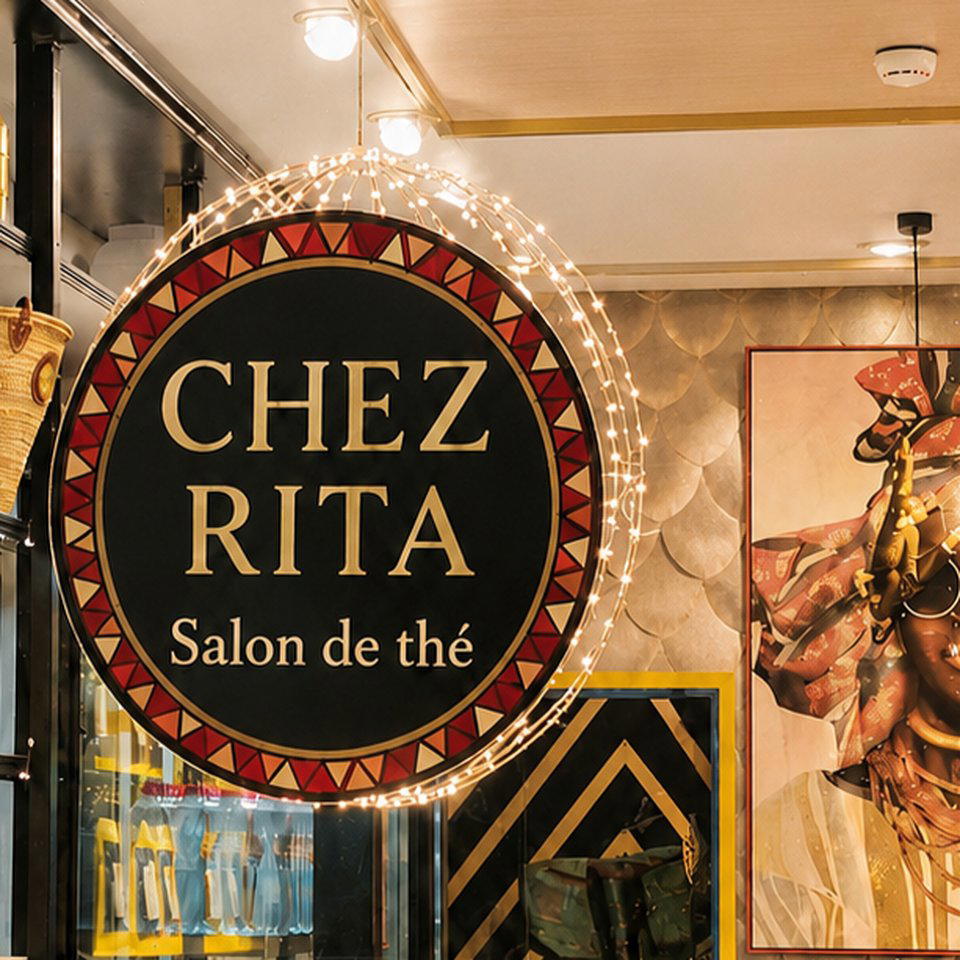
Chez Rita
Our verdict
On Rue des Tonneliers in Strasbourg's Grande Île, Chez Rita occupies a stretch of the city where Alsatian bistro tradition and contemporary dining operate in close proximity. The address places it inside one of France's most coherent historic centres, a UNESCO-listed quarter where the density of serious restaurants per block is genuinely high. Planning ahead is advisable before making the trip.

Pearl is the En Primeur Club membership app — saves, bookings, and concierge access live there. Same editors, same standards.
- Address
- 7 Rue des Tonneliers, 67000 Strasbourg, France
- Phone
- +33637151279
- Website
- chez-rita.eatbu.com
- Directions
- Get directions
The menu
What to order
- Falafel
- Fatayer
- Hummus
- Baba ganouj
- Tabouleh
- Mint tea
A Street With Serious Credentials
Rue des Tonneliers runs through the heart of Strasbourg's Grande Île, the UNESCO World Heritage-listed island at the centre of the city where medieval timbered façades and cobbled lanes form one of the most architecturally intact urban cores in France. The street itself takes its name from the coopers who once traded here, and the area has long supported a density of eating and drinking establishments that reflects Strasbourg's unusual position: an Alsatian city with deep Germanic food roots, a French administrative identity, and a European political significance that keeps a well-travelled, demanding clientele in residence year-round. Chez Rita, at number 7, sits inside that context. This is a neighbourhood where expectations are calibrated by proximity to serious competition, and where a restaurant earns its regulars on merit rather than foot traffic alone.
Strasbourg's dining scene has a structural split that any visitor planning a serious trip should understand before booking. At the upper end, places like Au Crocodile and 1741 operate in the €€€€ tier, where tasting menus, formal service, and Michelin recognition define the offer. A tier below, addresses such as Les Funambules and Umami work in the €€€ range with modern cuisine that draws a local and European Parliament crowd. Creative operators like de:ja have carved out a position for format-driven dining that doesn't map neatly onto either tier. Chez Rita exists within this ecosystem, on a street where the conversation about where to eat is a daily and sometimes heated one.
Planning Your Visit: What to Know Before You Go
The editorial angle that matters most for a restaurant on this particular stretch of Strasbourg is not the menu but the approach to getting there and securing a table. Grande Île addresses are walkable from Strasbourg's central train station in under fifteen minutes, and the tram network — one of the most extensive in France for a city of this size — deposits visitors within a few blocks of Rue des Tonneliers without the complications of driving into a car-restricted historic core. That logistical ease is one reason the area sustains a high volume of first-time and return visitors. It is also why tables at credible addresses here are rarely waiting empty on a Friday or Saturday evening.
Strasbourg sits on the rail corridor between Paris and Frankfurt, with TGV connections from Paris Est running in approximately one hour fifty minutes. From Basel and Zurich, the city is accessible in under two hours. This cross-border catchment means the dining public includes a significant proportion of European travellers who plan with more lead time than a local walking past the door. Contacting the venue directly ahead of travel, by phone if a number becomes available, or by arriving in person during off-peak hours to enquire, remains the most reliable approach when online booking infrastructure is not confirmed. For Strasbourg restaurants in the mid-to-upper range, weekend tables booked on the day are the exception rather than the rule, particularly between May and the Christmas market season in late November and December, when hotel occupancy across the city regularly exceeds ninety percent.
Alsace's food calendar gives Rue des Tonneliers its seasonal rhythm. Asparagus from the Rhine plain arrives in April and dominates menus through May. Game anchors autumn dishes from September onwards. The Christmas market period, running from late November into late December, transforms the Grande Île into one of the most visited public spaces in France, and any dining plan that includes this window needs to account for the corresponding pressure on reservations across the city. Booking weeks rather than days ahead is standard practice during that stretch, and restaurants that would otherwise accommodate same-evening calls tend to operate at full capacity for the duration.
What the Address Signals in the French Dining Conversation
France's serious dining geography has historically concentrated in Paris, with regional expressions at addresses like Auberge de l'Ill in Illhaeusern, Flocons de Sel in Megève, and Bras in Laguiole making the case that regional French cooking at its most committed operates independently of the capital. Alsace has always had a stronger argument than most regions, with a culinary identity built on choucroute, baeckeoffe, and foie gras, on Riesling and Pinot Gris from vineyards thirty minutes south of the city, and on a tradition of winstub dining that has no direct equivalent elsewhere in France. The winstub format, a wine tavern serving regional food in timbered rooms with communal tables, is the structural ancestor of much of what gets called bistro dining across Alsace today. It is a format built on directness: wine by the carafe, food that doesn't reach for complexity it hasn't earned, service that assumes you know why you're there.
For comparison, the upper tier of French dining referenced above, from Alléno Paris au Pavillon Ledoyen to Troisgros in Ouches and Paul Bocuse outside Lyon, operates at a register defined by decades of institutional recognition, multi-generational legacy, and tasting menu formats that require an evening's commitment and a day's notice at minimum. Les Prés d'Eugénie in Eugénie-les-Bains, Georges Blanc in Vonnas, and La Table du Castellet occupy a similar register of formal regional ambition. Chez Rita on Rue des Tonneliers is not operating in that tier, nor is it trying to. The Grande Île's mid-register addresses serve a different function: they are where the city eats on a Tuesday, where the MEP has lunch between sessions, where the visiting academic from Freiburg returns because the carafe was good and the bill was honest. That function has its own rigour, and it is where Strasbourg's dining identity is most legibly Alsatian.
Internationally, the format has counterparts in cities where neighbourhood restaurants sustain a serious local conversation without entering the award-circuit tier. Mirazur in Menton and Le Bernardin in New York demonstrate what the upper ceiling looks like; Lazy Bear in San Francisco shows how format experimentation operates in a different city context. The value of understanding where Chez Rita sits is precisely that it helps calibrate expectations before the trip: this is a Grande Île address, a walkable UNESCO quarter, a street with genuine culinary density, and a restaurant whose planning deserves the same advance attention you would give any serious stop on a well-constructed French itinerary. Our full Strasbourg restaurants guide maps the city's dining tiers in more detail for anyone building an itinerary around the region.
Frequently asked questions
Where is Chez Rita located?
Chez Rita is located at 7 Rue des Tonneliers, 67000 Strasbourg, France, Strasbourg.
Is Chez Rita a good option for dining near Strasbourg's historic centre?
The address at 7 Rue des Tonneliers puts Chez Rita within the Grande Île, the medieval island at the core of Strasbourg's UNESCO World Heritage zone — meaning proximity to the city's major landmarks is as close as it gets in this city. What is not yet confirmed is cuisine type, price range, or any awarded status, so travellers prioritising a specific dining format should verify current details before visiting. For context, Strasbourg's broader dining scene includes high-end Alsatian references like Auberge de l'Ill roughly 20 kilometres south, setting a regional benchmark that frames how local addresses are evaluated.
What do regulars order at Chez Rita?
Contacting the restaurant directly is the most reliable way to get current menu information.
Can I walk in to Chez Rita?
The restaurant sits at 7 Rue des Tonneliers on the Grande Île, one of Strasbourg's most visited corridors, which means walk-in availability on weekends or during peak tourist periods is uncertain. Calling ahead or checking in person during off-peak hours is the practical approach until booking details are formally published.
Quick Comparison
| Venue | Cuisine | Price | Awards | Notes |
|---|---|---|---|---|
| Chez RitaThis venue — the venue you are viewing | Authentic Lebanese Mezza | $10–20 | Not listed | Not listed |
| Au Crocodile | Classic French Fine Dining with Alsatian Influences | $100–150 | 1 Michelin Star · Relais Chateaux Award | French - Alsatian, Modern Cuisine |
| Colbert | Modern French Bistro | $50–100 | Michelin Plate | French Brasserie, Modern Cuisine |
| Ondine | Modern Plant-Based French Fine Dining | $100–150 | Michelin Plate | Seafood, Modern Cuisine |
| de:ja | Modern Alsatian Fine Dining | $150–200 | 1 Michelin Star | Creative |
| Les Funambules | Modern French with Asian Influences | $50–100 | 1 Michelin Star | Modern Cuisine |
Continue exploring
More in Strasbourg
Restaurants in Strasbourg
Browse all →

Bars in Strasbourg
Browse all →


Hotels in Strasbourg
Browse all →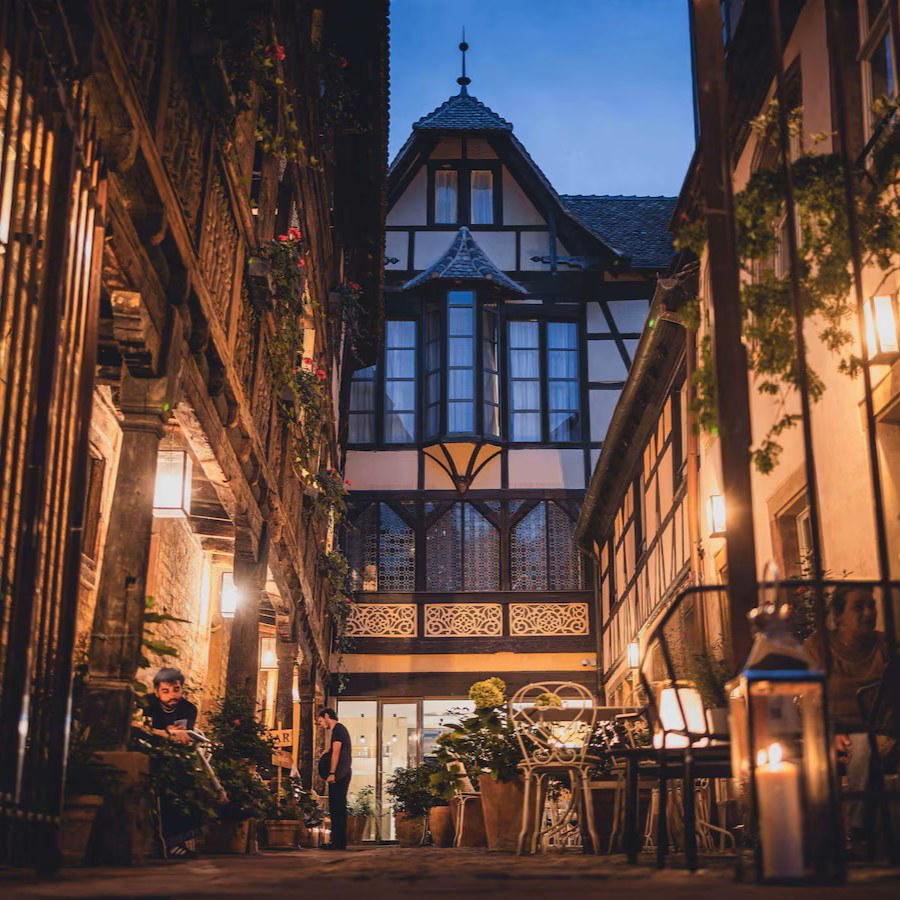
Details
- Cozy
- Casual
- Casual Hangout
- Group Dining
- Family
- Standalone
- A La Carte
- Small Plates
- Traditional Tea
- Vegetarian Friendly
- Vegan Options
- Halal
Warm and welcoming with a casual, intimate atmosphere; described as a friendly Lebanese embassy offering authentic Mediterranean hospitality.