Chez Lui serves French bistro cooking with natural wine and an open kitchen, in a casual, conversational setting that works for lunch, dinner, or late night.
Pearl is the En Primeur Club membership app — saves, bookings, and concierge access live there. Same editors, same standards.
- Address
- 67 Rue Saint-Maur, 75011 Paris, France
- Phone
- +33695033845
- Directions
- Get directions
 Saves & bookings on Pearl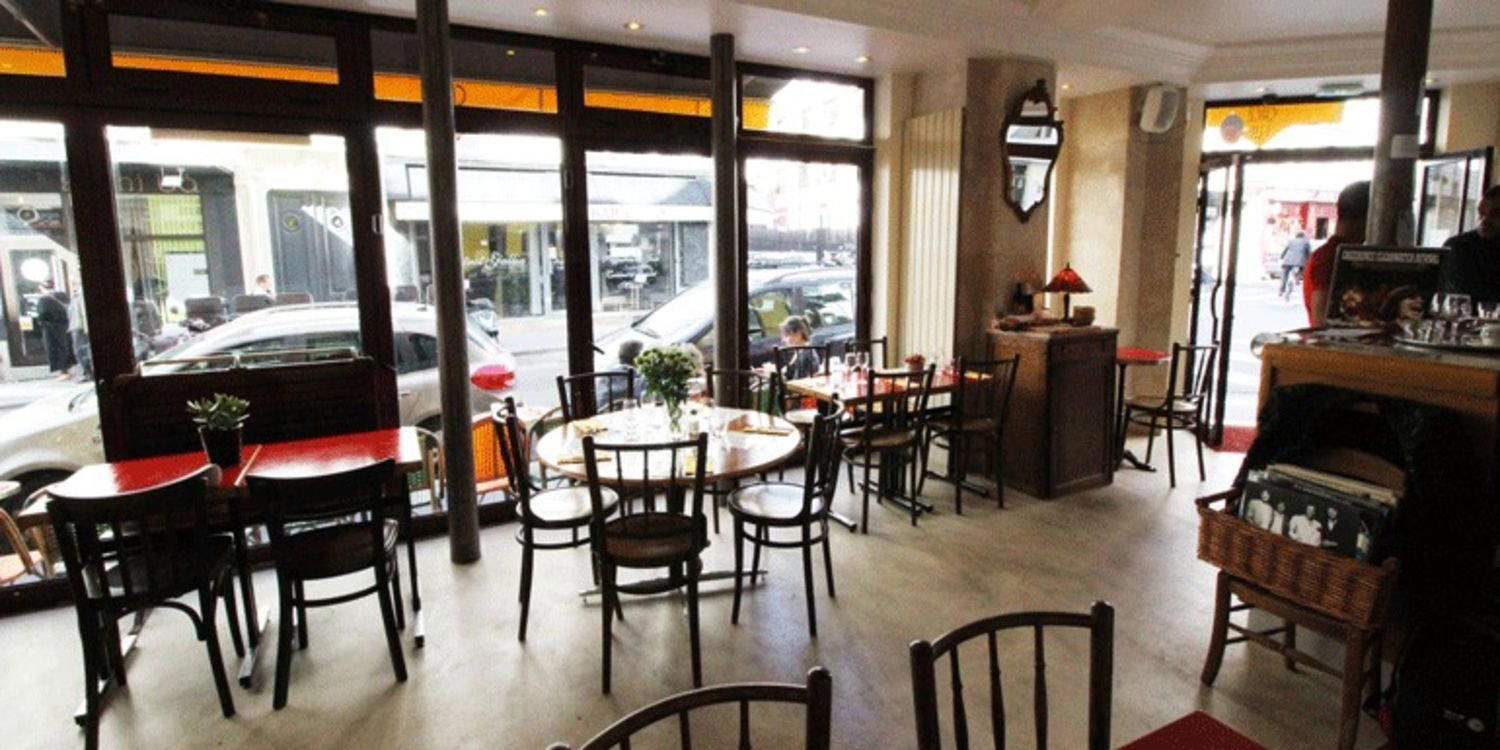
Rue Saint-Maur and the Quiet Register of the 11th
The 11th arrondissement does not announce itself the way the Marais does, or perform the studied grandeur of the 8th. Along Rue Saint-Maur, the rhythm is neighbourhood rather than tourist circuit: wine shops with handwritten chalk boards, small covered terraces, the occasional queue that forms without fanfare. It is in this register that Chez Lui operates, at number 67, where the street retains the character of a working Parisian quartier rather than a curated dining destination. That placement is the first signal about what kind of meal awaits.
French bistro culture, in its original form, was built around the rituals of unhurried eating. A table held for the duration. A meal structured by courses arriving in sequence, not stacked or rushed. Conversation as part of the occasion. These habits have been eroded in many parts of the city by turnover pressure and tourist demand, but they survive most reliably in addresses like this one, embedded in residential streets rather than on boulevard corners optimised for visibility.
The Architecture of the Meal
The dining ritual that defines the serious French table is less about individual dishes and more about pacing. In high-end Paris, addresses like L'Ambroisie on Place des Vosges or Le Cinq at the Four Seasons George V enforce that pacing through staff ratios and room design. At the neighbourhood level, it is enforced by culture rather than infrastructure: the assumption that you came to eat properly, and that the kitchen will proceed accordingly.
The structure of a French meal, even at this scale, follows a grammar that has changed less than fashion suggests. A pre-dinner drink, or at minimum a moment of settling. An amuse or a small first course to calibrate appetite. Then the arc from lighter to richer, from raw or cured to braised or roasted, resolved by cheese or dessert depending on the house's inclination. Wine is poured to accompany rather than to showcase, and the server's job is to read the table's pace, not impose a standardised sequence. When this works, time folds differently inside the room than it does on the street outside.
For a point of comparison outside Paris, consider how this rhythm operates at Auberge de l'Ill in Illhaeusern, where the meal is an extended event built around the Alsatian landscape and ingredient cycle, or at Bras in Laguiole, where Michel Bras's gargouillou changed French ideas about what a course could mean. The neighbourhood bistro occupies a different tier in this tradition, but it draws from the same well: the belief that eating should have a shape, a beginning, a middle, an end.
The 11th in Context
The 11th has emerged over the past decade as one of Paris's most active arrondissements for independent restaurants, driven partly by lower rents than the central arrondissements and partly by a clientele that tends to be local, repeat, and informed. This has produced a concentration of addresses with genuine kitchen ambition operating at accessible price points, alongside longer-established neighbourhood restaurants that predate the wave.
The contrast with the 8th arrondissement's formal dining axis is instructive. Alléno Paris au Pavillon Ledoyen, with its terrace on the Champs-Élysées gardens and its three Michelin stars, occupies a different category entirely: a destination restaurant drawing international visitors and operating at a price point that places it in conversation with Arpège and Kei rather than with anything on Rue Saint-Maur. The 11th's identity is built on something else: the assumption that the person eating here lives in the city, knows the city, and wants a meal that fits into a life rather than interrupting it.
That positioning matters for how you read an address like Chez Lui. It is not positioning itself against the grands restaurants. The relevant comparison set is the other serious neighbourhood tables in the 11th and surrounding arrondissements, not the starred rooms of the 6th or 8th.
French Bistro Tradition and What It Demands
The leading French bistro cooking requires discipline of a particular kind. The repertoire is largely fixed, which means there is nowhere to hide. A properly executed blanquette, a terrine sliced to the right thickness, a carafe wine that does not let the kitchen down: these things are harder to get right consistently than they look, and the French dining public in residential quartiers notices when they are wrong.
Provincial France has produced some of the most demanding versions of this tradition. Troisgros in Ouches and Paul Bocuse's Auberge du Pont de Collonges represent the formal, historic end of that provincial ambition. At a different register, Les Prés d'Eugénie in Eugénie-les-Bains and Georges Blanc in Vonnas operate as destination addresses where the meal itself is the reason for the journey. The Parisian neighbourhood bistro serves a different social function: it is the place you return to, not the place you travel to.
For international reference points, the community-meal-as-ritual idea surfaces in very different forms at Lazy Bear in San Francisco, where the communal table format structures the entire social experience, and at Le Bernardin in New York City, where the formal pacing of a French service model was transplanted into an American context and held there for decades. The common thread is a conviction that the order and rhythm of the meal communicates something separate from any individual dish.
Planning a Visit
Chez Lui sits at 67 Rue Saint-Maur in the 11th arrondissement, reachable from the Saint-Maur or Rue Saint-Maur metro stations on line 9, or from Oberkampf on lines 5 and 9. The street sits between Oberkampf to the west and the eastern reaches of the 11th toward Nation, in a section of the arrondissement that is dense with independent restaurants and wine bars rather than tourist amenity. Visits earlier in the week tend to be quieter than Thursday through Saturday, when neighbourhood residents fill the room. For a broader survey of Paris dining with detailed practical information, our full Paris restaurants guide covers the city's major arrondissements and price tiers.
For those extending travel beyond Paris, the French regional table is represented in our guides to Flocons de Sel in Megève, Mirazur in Menton, La Table du Castellet in Le Castellet, and Auberge du Vieux Puits in Fontjoncouse.
Quick reference: 67 Rue Saint-Maur, 75011 Paris. Nearest metro: Saint-Maur or Oberkampf (line 9). Confirm hours and booking directly with the venue.
Fast Comparison
| Venue | Cuisine | Price | Awards |
|---|---|---|---|
| Chez LuiThis venue — the venue you are viewing | This venue | Not listed | Not listed |
| Alléno Paris au Pavillon Ledoyen | Creative | €€€€ | Michelin 3 Star |
| Kei | Contemporary French, Modern Cuisine | €€€€ | Michelin 3 Star |
| L'Ambroisie | French, Classic Cuisine | €€€€ | Michelin 3 Star |
| Le Cinq - Four Seasons Hôtel George V | French, Modern Cuisine | €€€€ | Michelin 3 Star |
| Pierre Gagnaire | French, Creative | €€€€ | Michelin 3 Star |
Continue exploring
More in Paris
Restaurants in Paris
Browse all →
Bars in Paris
Browse all →
Hotels in Paris
Browse all →



At a Glance
- Cozy
- Modern
- Lively
- Intimate
- Date Night
- Casual Hangout
- Group Dining
- Open Kitchen
- Natural Wine
- Organic
- Local Sourcing
Current opening hours
- Monday
- 5 PM–1 AM
- Tuesday
- 5 PM–1 AM
- Wednesday
- 5 PM–12 AM
- Thursday
- 5 PM–1 AM
- Friday
- 5 PM–1 AM
- Saturday
- 11 AM–1 AM
- Sunday
- 11 AM–1 AM
Hours can change for holidays and private events. Last verified .
Cozy and energetic atmosphere with a friendly, welcoming vibe like a hipper version of Cheers, featuring an open kitchen view.
Know Before You Go
- Getting there
- 67 Rue Saint-Maur, 75011 Paris, France