Chef Art Smith's Reunion
At Navy Pier, Chef Art Smith's Reunion brings Southern-inflected American cooking to one of Chicago's most trafficked public spaces. The restaurant draws on Smith's well-documented career cooking for notable figures and his James Beard Award recognition, placing comfort-driven cuisine at a waterfront address that serves both destination diners and casual visitors to the pier.
Pearl is the En Primeur Club membership app — saves, bookings, and concierge access live there. Same editors, same standards.
- Address
- Navy pier, 600 E Grand Ave, Chicago, IL 60611
- Phone
- +13122241415
- Website
- reunionrestaurants.com
- Directions
- Get directions
 Saves & bookings on Pearl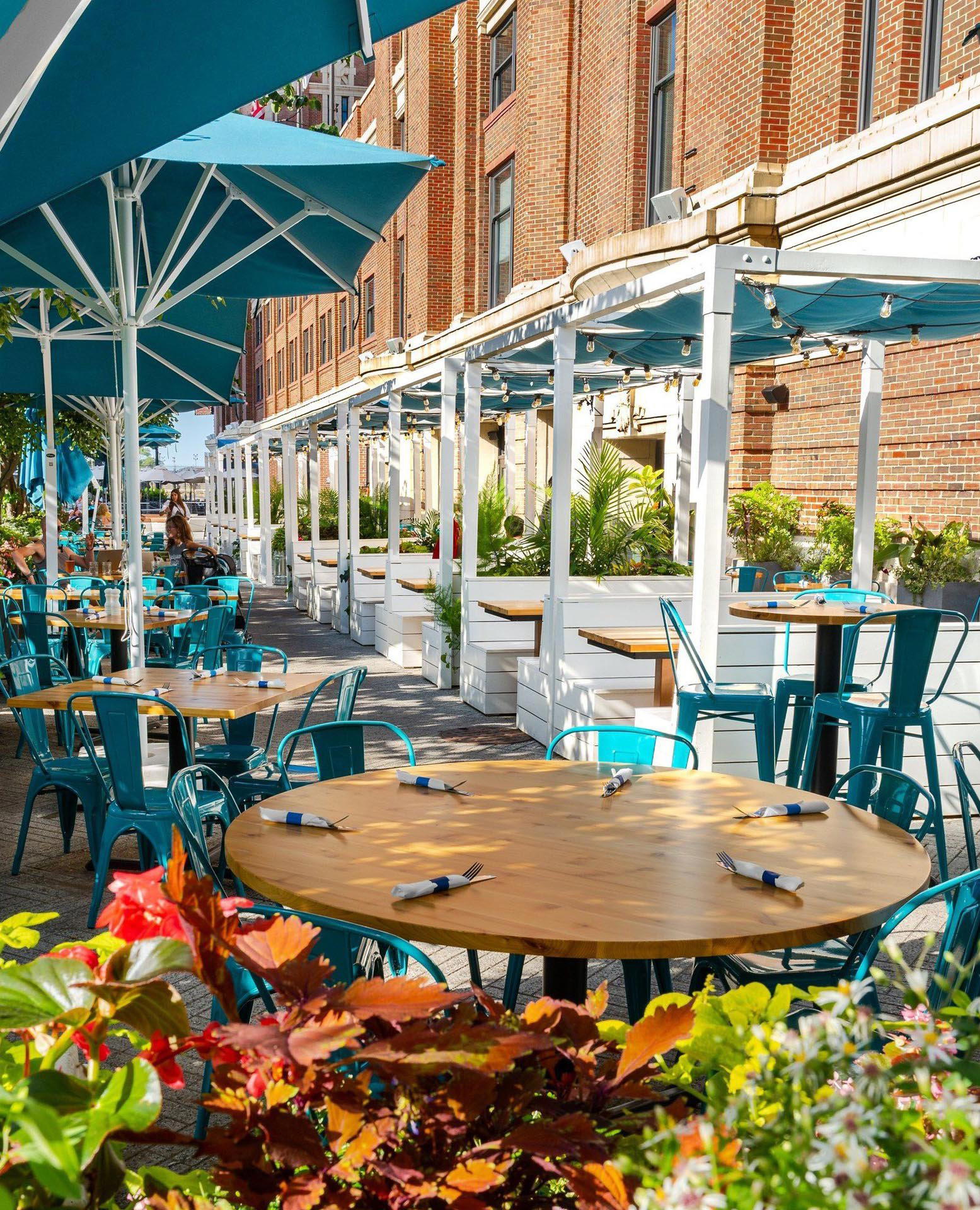
Southern Comfort at the Water's Edge
Chef Art Smith's Reunion is a Chicago restaurant at Navy Pier, serving Southern Comfort Food at a mid-range price point. Arriving at Chef Art Smith's Reunion from the Grand Avenue entrance, the scale of the pier itself does most of the atmospheric work before you reach the door. Lake Michigan stretches east, the Ferris wheel turns overhead, and the building places the restaurant at an address that few Chicago dining rooms can claim. That waterfront orientation shapes everything about how a meal here is framed, from the approach to the pacing once you're seated.
The broader category this restaurant occupies is worth establishing early. Southern-inflected American comfort cooking in a major city tends to operate across two distinct tiers: neighborhood-scale spots where the food carries the weight, and destination-format rooms where the chef's name and story anchor the concept. Reunion sits in the second tier. Art Smith's profile, built through years cooking for prominent figures in public life, gives the restaurant a credential structure that places it alongside concept-driven dining rooms rather than casual Southern tables. That positioning matters for how you read the room and how you approach the meal.
The Ritual of the Southern Table
The dining customs that define Southern American cooking are specific: meals move at a deliberate pace, dishes arrive in formats designed for sharing, and the expectation is that the table accumulates over time rather than being orchestrated in tight courses. That tradition sits at the core of what Reunion attempts, and it shapes the etiquette of eating here in ways that differ from Chicago's more technically progressive dining rooms.
At the city's tasting-menu addresses, like Alinea, Smyth, or Oriole, the meal is choreographed by the kitchen. Course order, pace, and portion size are not negotiable. The dining ritual is essentially theatrical: the guest surrenders control and receives an experience in return. Reunion operates differently. The Southern table tradition asks guests to make choices, to order generously, and to treat the meal as an occasion for gathering rather than a performance to witness. That shift in agency changes how you sit, how you order, and how long you stay.
This format places Reunion in a different conversation than Next Restaurant or Kasama, both of which operate within more structured formats. The comparison that reads more clearly is with restaurants like Emeril's in New Orleans, where a named chef's identity anchors a comfort-forward menu at a high-traffic address, and the dining proposition is built on generosity and recognizability rather than restraint and surprise.
What the Address Requires
Navy Pier presents a specific challenge for serious restaurant concepts. The pier draws millions of visitors annually, and the dining footprint that surrounds any restaurant there skews heavily toward casual and fast-casual formats. Operating a chef-driven room in that context requires a deliberate signal that the restaurant belongs to a different category, communicated through service pace, menu depth, and the degree to which the kitchen resists simplification for volume.
The tension is not distinctive to Chicago. Waterfront and high-traffic destination addresses in most American cities carry similar dynamics. Le Bernardin in New York City has spent decades maintaining technical seriousness at a midtown address surrounded by tourist infrastructure. Providence in Los Angeles holds its two Michelin stars in a city where the dining culture skews casual. The challenge Reunion faces is maintaining the integrity of its chef-driven premise in a context that pulls toward accessibility and throughput.
For the reader deciding whether to build an evening around this address, the question is less about whether the food meets a technical standard and more about whether the format suits the occasion. A Navy Pier dinner before a lake cruise or a summer evening on the waterfront maps well to what Reunion offers. A meal intended to sit alongside Chicago's most rigorous progressive kitchens is a different proposition, and the address itself will shape the experience in ways the kitchen cannot fully control.
Art Smith in the Broader American Chef Landscape
Smith's award recognition functions as a meaningful credential signal in the American restaurant context. It places a chef inside a vetted peer group without specifying the exact nature of the recognition. In Smith's case, the public record documents a career oriented around Southern American cooking and a significant period cooking for high-profile clients in Washington, D.C. That background connects Reunion to a tradition of cooking that treats hospitality as a form of personal expression rather than technical competition.
That tradition has parallels at other named-chef destinations across the country. Blue Hill at Stone Barns in Tarrytown and The Inn at Little Washington both operate in formats where the chef's accumulated identity and point of view are central to the proposition, even when the cooking style differs significantly. Frasca Food and Wine in Boulder demonstrates how a chef-driven concept can sustain depth at an address that might otherwise work against it. The question for any named-chef concept is whether the kitchen consistently delivers on the credential the name implies.
For Chicago visitors building a broader dining itinerary, Reunion occupies a clear and distinct position. Reunion's value is in what it offers that those rooms do not: a Southern-rooted dining ritual at a waterfront address, with a chef's credential that gives the concept a frame of reference beyond pure location convenience.
Planning Your Visit
| Venue | Format | Price Tier | Booking Lead Time | Address Type |
|---|---|---|---|---|
| Chef Art Smith's Reunion | Comfort / à la carte | Mid-range | Short to moderate | Navy Pier, waterfront |
| Alinea | Tasting menu only | $$$$ | Months in advance | Lincoln Park, residential |
| Smyth | Tasting menu | $$$$ | Weeks to months | West Loop, restaurant row |
| Next Restaurant | Ticketed tasting menu | $$$$ | Varies by release | West Loop, restaurant row |
| Kasama | Tasting menu / bakery | $$$$ | Weeks in advance | Ukrainian Village |
Reunion sits at Navy Pier, 600 E Grand Ave. Reservations are recommended, and the restaurant is open Monday through Thursday and Sunday from 11 AM to 8 PM, Friday and Saturday from 11 AM to 10 PM. The lakefront dining context makes this a natural choice for early summer evenings when the pier's outdoor environment adds to the meal rather than detracting from it.
Cuisine Lens
Comparable venues nearby, for context on price, style, and recognition.
| Venue | Cuisine | Price | Notes |
|---|---|---|---|
| Chef Art Smith's ReunionThis venue — the venue you are viewing | Southern Comfort Food | $$ | Not listed |
| Tiny Tapp & Tiny Café | Contemporary American Riverside Café | $$ | Theater District |
| Punch Bowl Social | Modern American Gastropub | $$ | West Loop |
| Community Tavern | Contemporary American with Pan-Asian Influences | $$ | Portage Park |
| Chapel Street Cafe | Australian-Style All-Day Cafe | $$ | Streeterville |
| DJ's Great Room | Polished American Comfort Food | $$ | River North |
At a Glance
- Rustic
- Cozy
- Lively
- Family
- Brunch
- Casual Hangout
- Celebration
- Waterfront
- Private Dining
- Hotel Restaurant
- Craft Cocktails
- Local Sourcing
- Waterfront
- Street Scene
Current opening hours
- Monday
- 11 AM–8 PM
- Tuesday
- 11 AM–8 PM
- Wednesday
- 11 AM–8 PM
- Thursday
- 11 AM–8 PM
- Friday
- 11 AM–10 PM
- Saturday
- 11 AM–10 PM
- Sunday
- 11 AM–8 PM
Hours can change for holidays and private events. Last verified .
Rustic chic farmhouse atmosphere with chicken-themed art, warm welcoming vibe, and huge beautiful outdoor patio.